Fine motor skills (writing) Grade 2 Addition & Subtraction Worksheets
6 filtered results
-
From - To
Enhance your second grader's fine motor skills with our engaging Addition and Subtraction Worksheets! Designed specifically for Grade 2 students, these worksheets combine key math concepts with writing practice to boost both handwriting and arithmetic skills. Children will enjoy tracing numbers, forming equations, and solving problems as they refine their dexterity and coordination. Each worksheet focuses on engaging activities, making learning fun and effective. Perfect for classroom use or at-home practice, our resources cater to diverse learning styles. Support your child's educational journey with these essential skill-building worksheets, crafted to foster confidence and proficiency in math and writing.
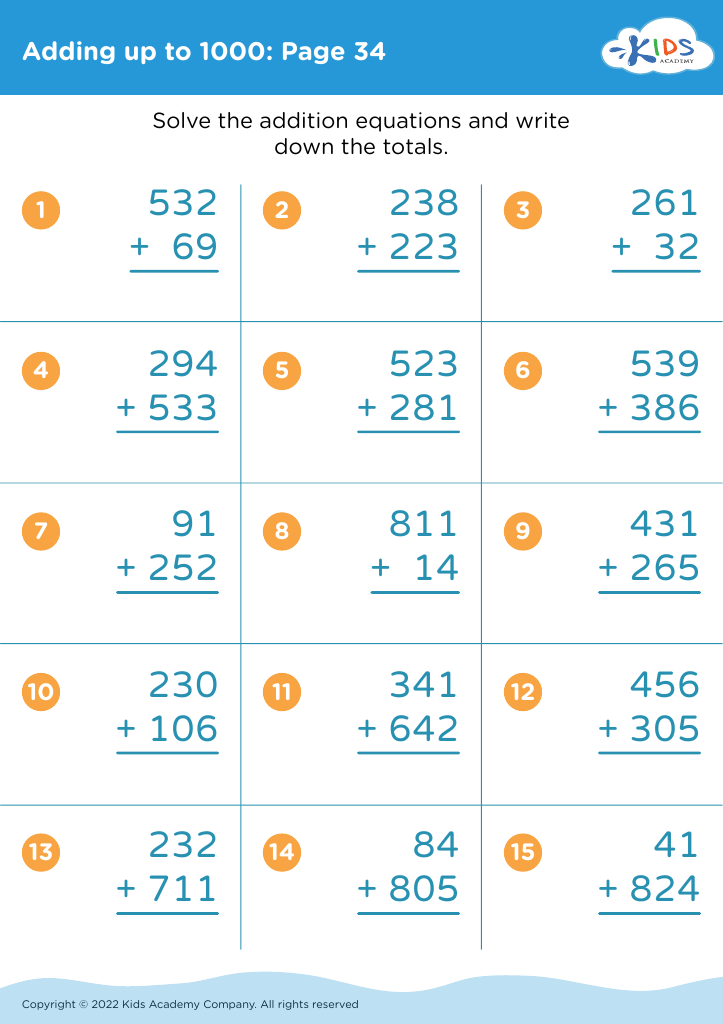
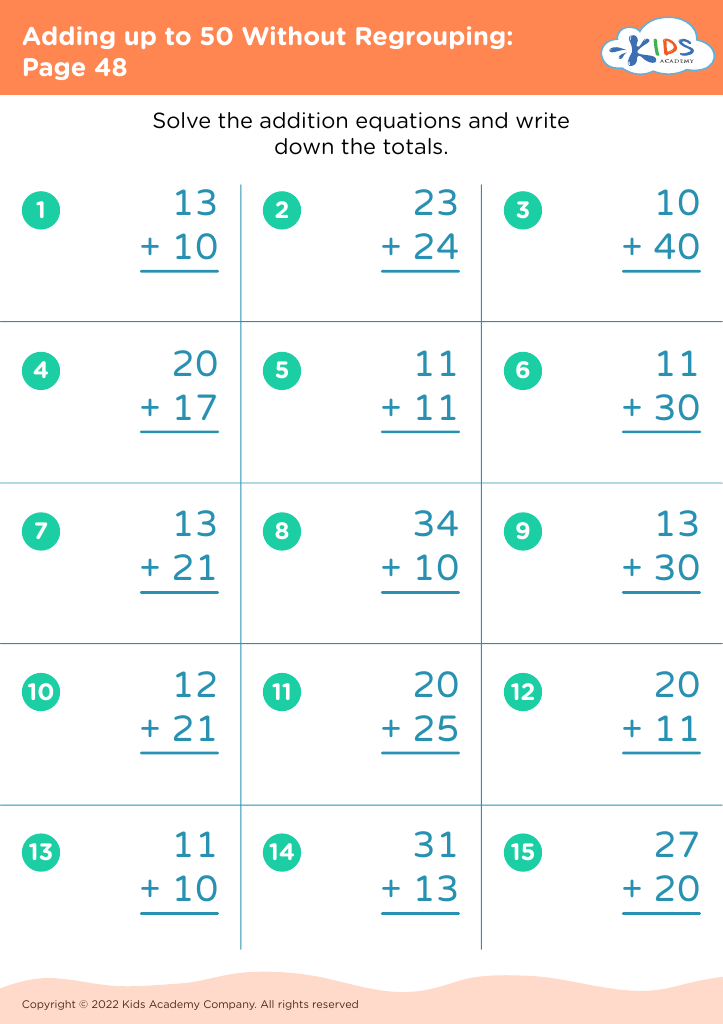








Fine motor skills are crucial for Grade 2 students, especially as they engage in writing and mathematical tasks such as addition and subtraction. At this age, children are building the foundational skills needed for more complex academic tasks. Here's why parents and teachers should prioritize fine motor development:
Firstly, strong fine motor skills enhance a child's ability to write legibly and efficiently, which is essential for expressing thoughts and ideas clearly. When students can write comfortably, they can focus more on the content rather than the mechanics of writing.
In addition, fine motor skills are closely connected to cognitive development. Activities that promote these skills, like drawing or manipulating objects, help reinforce concepts of addition and subtraction through hands-on learning. For example, using counters or writing numbers while practicing math problems can deepen understanding and retention.
Furthermore, fine motor activities foster self-confidence and independence. As young learners improve their writing and math skills, their beliefs in their abilities grow, encouraging a positive attitude toward future learning.
Finally, supporting the development of fine motor skills prepares children for everyday life tasks, fostering independence as they move towards more advanced education. Thus, investing in fine motor skills is an investment in a child's overall academic success and personal growth.