Learning number patterns Grade 2 Addition & Subtraction Worksheets
3 filtered results
-
From - To
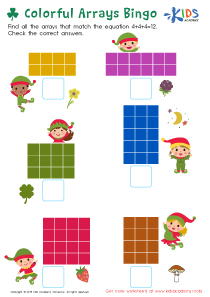
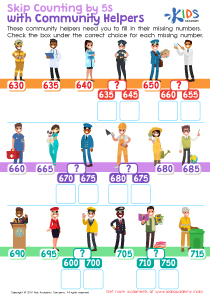
Enhance your Grade 2 students' understanding of number patterns with our engaging Addition and Subtraction Worksheets! Designed specifically for young learners, these worksheets focus on developing essential math skills through fun and interactive activities. Students will explore number sequences, recognize patterns, and practice arithmetic operations, making math both exciting and enjoyable. Our diverse range of worksheets promotes critical thinking while reinforcing foundational concepts, ensuring your students build confidence in their abilities. Perfect for classroom use or homework assignments, these resources support personalized learning and cater to different learning styles. Dive into the world of number patterns and watch your students thrive in math!
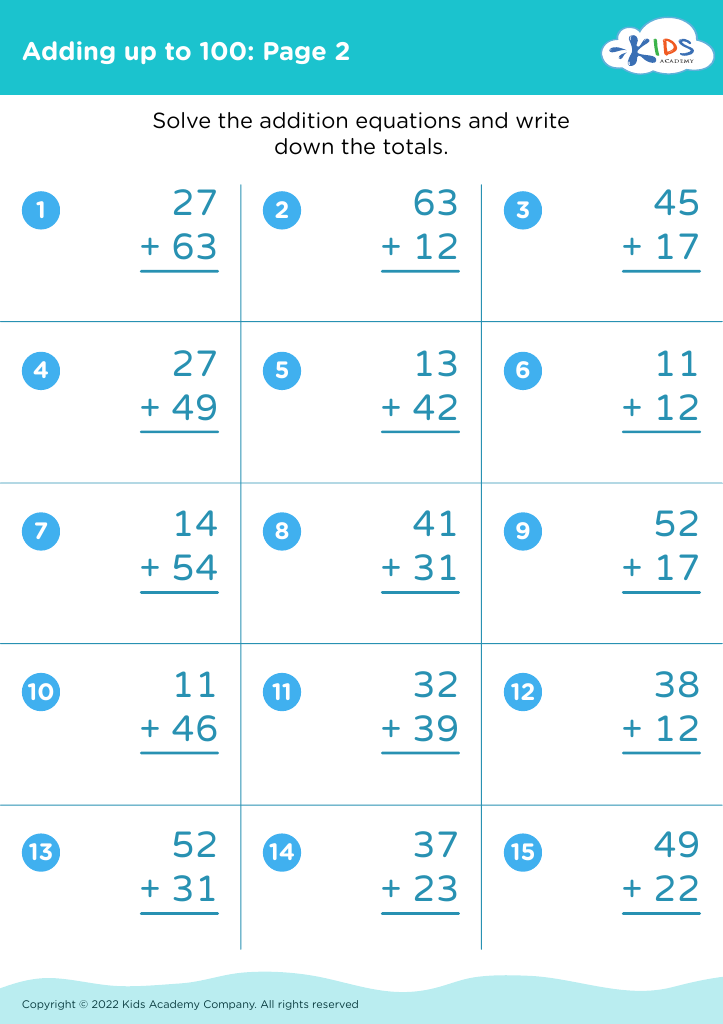
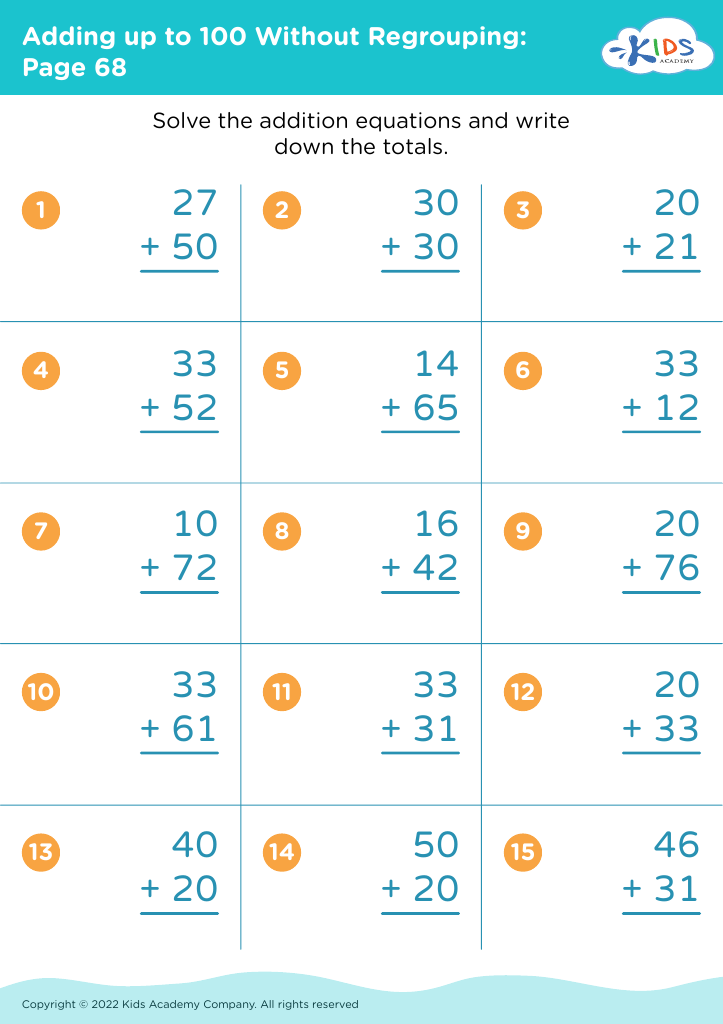
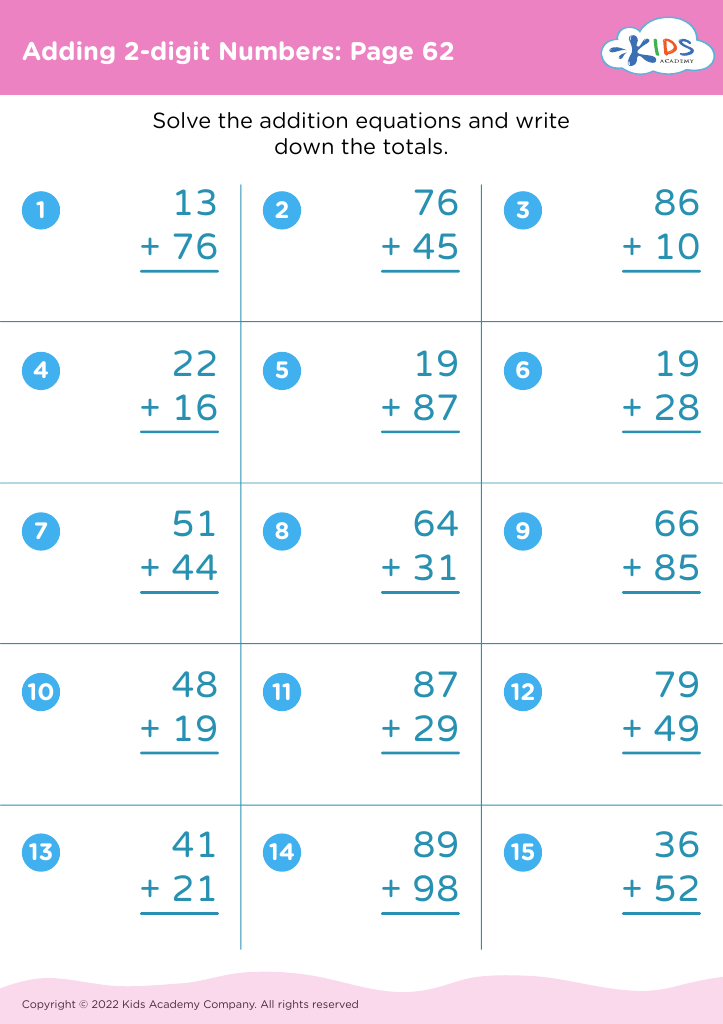








Learning number patterns in addition and subtraction is essential for Grade 2 students as it lays the foundation for their mathematical understanding and problem-solving skills. Parents and teachers should care about this because recognizing patterns can enhance children’s abilities to perform arithmetic calculations efficiently and accurately. When children learn number patterns, they begin to see relationships among numbers, which aids in mental math and fosters a deeper comprehension of the number system.
For instance, understanding how adding or subtracting certain numbers results in predictable outcomes helps students develop strategies, such as knowing that adding zero keeps the number the same or how to leverage doubles (like 2 + 2 or 3 + 3) to aid in computation. This skill also empowers students to recognize and work with patterns in larger contexts, supporting their understanding for future mathematical concepts, like multiplication or division.
Additionally, pattern recognition is a crucial skill across subjects; it encourages logical thinking and the ability to make predictions, benefiting students in science, art, and music as well. Overall, fostering number patterns not only prepares students for academic success but also instills confidence and enthusiasm for mathematics.