Visual perception Grade 2 Addition & Subtraction Worksheets
5 filtered results
Difficulty Level
Grade
Age
-
From - To
Subject
Activity
Standards
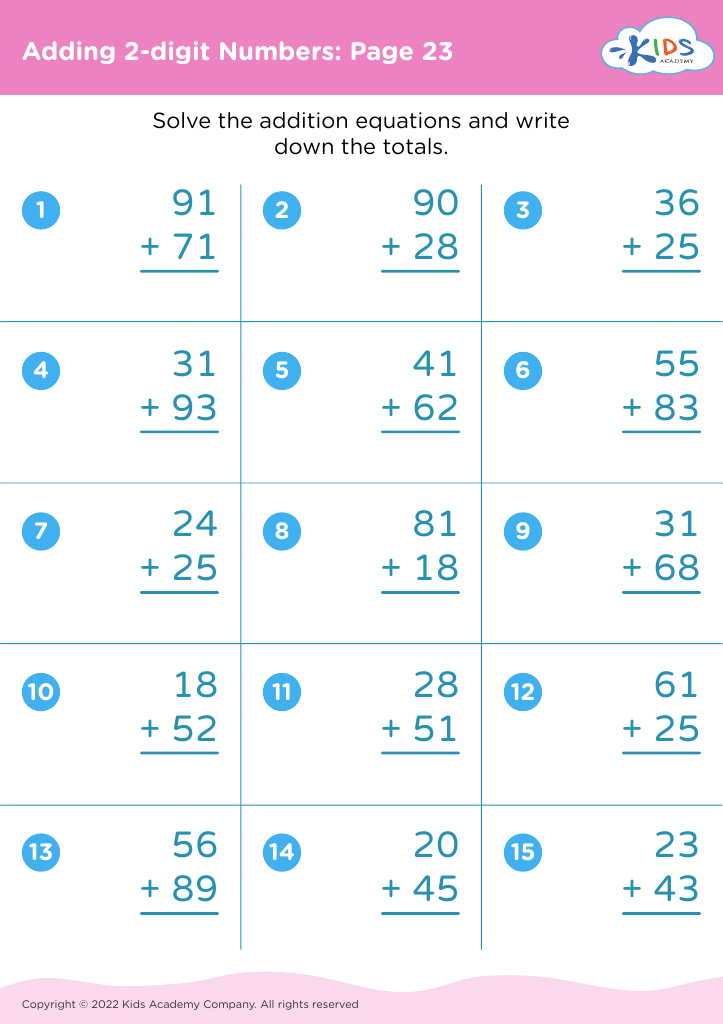
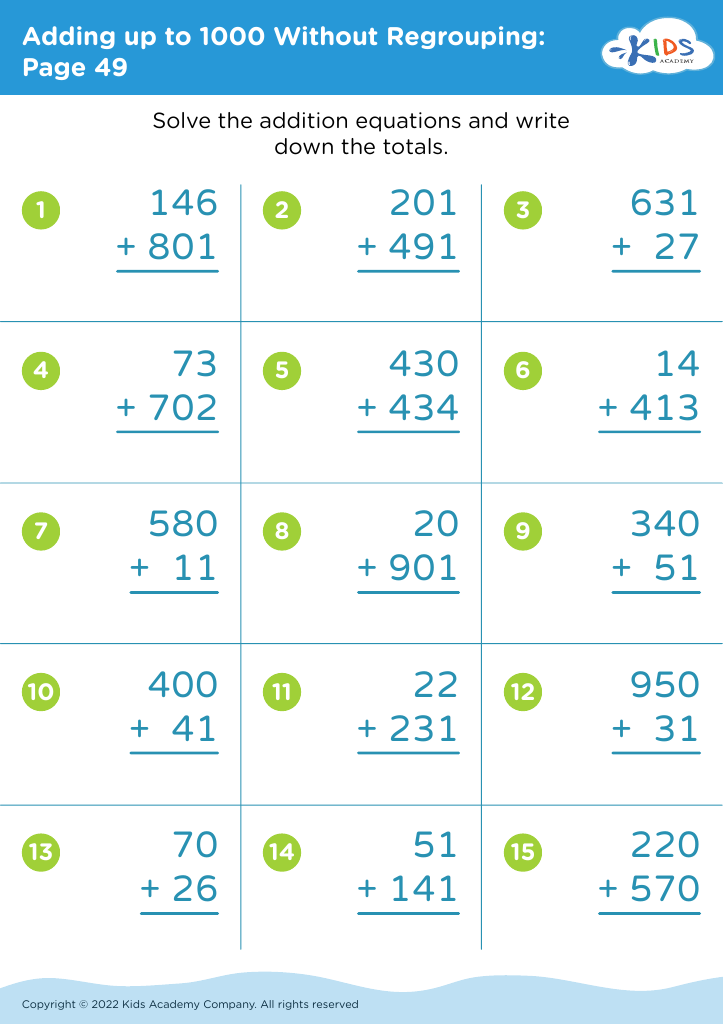
Enhance your child’s math skills with our Visual Perception Grade 2 Addition & Subtraction Worksheets. Designed to combine visual learning and mathematical problem-solving, these worksheets engage young minds through colorful, interactive problems that strengthen both arithmetic understanding and visual memory. Perfect for second graders, they help children seamlessly bridge the gap between conceptual math and practical application. Implementing these exercises in your child's daily routine will boost confidence, sharpen focus, and ignite a love for numbers. Explore our selection today and transform math practice into an exciting adventure. Make learning math a visual and enjoyable experience!
Favorites
With answer key
Interactive
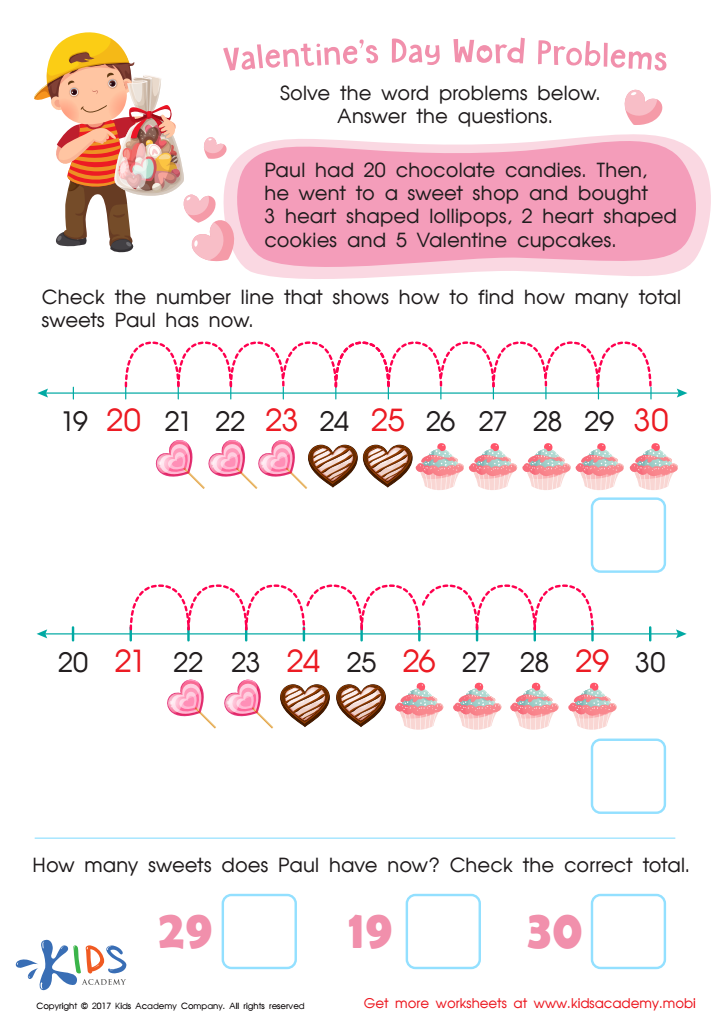
Valentines Day 2 Printable
This PDF worksheet uses a number line to help solve the problems. Your child will be ready for Valentine's Day after completing it. Counting and adding from 20 is also reinforced.
 Assign to My Students
Valentines Day 2 Printable
Worksheet
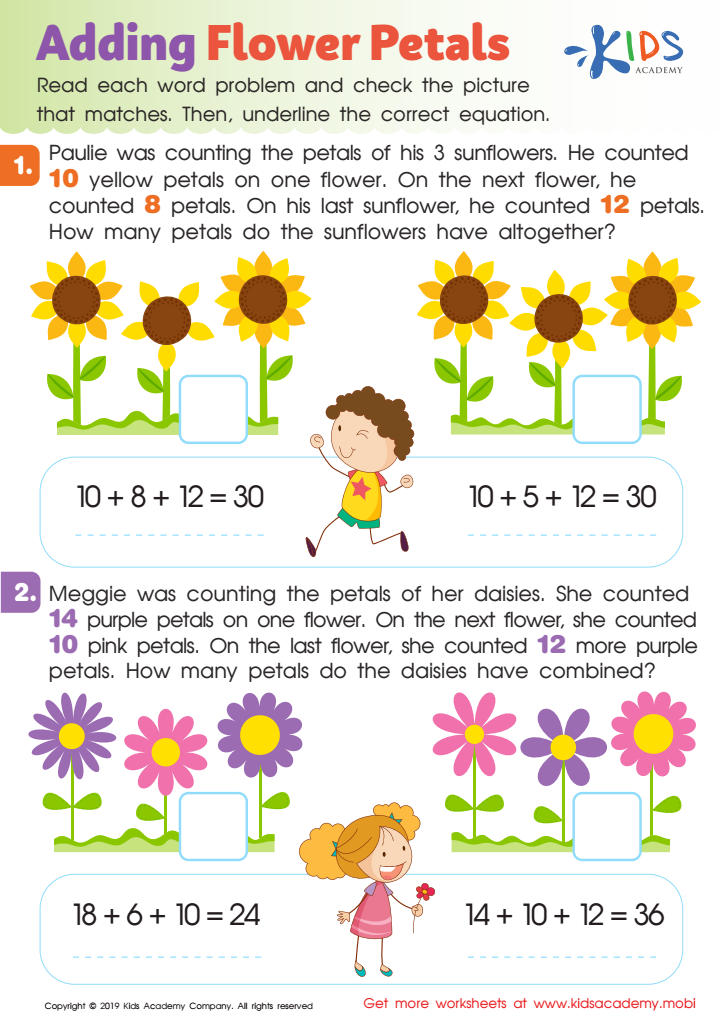
Adding Flower Petals Worksheet
This free worksheet helps little mathematicians learn to understand word problems. They'll read each one and match it to the corresponding picture. Important info is highlighted, teaching kids to look for key info when solving problems. Then they'll underline the correct number equation that matches the picture. A great way to practice problem-solving skills!
Adding Flower Petals Worksheet
Worksheet
Join Kids Academy for Free
Who is primarily going to use this learning content?








Visual perception in second grade addition and subtraction is crucial for young learners' overall cognitive development and future academic success. It involves the ability to interpret and make sense of visual information, which directly impacts how children understand and solve mathematical problems. When children develop strong visual perception skills, they can more effectively recognize numbers, patterns, and relationships between objects, which are fundamental to arithmetic.
In the context of second grade, addition and subtraction tasks often require children to visualize quantities, mentally manipulate shapes and numbers, and comprehend spatial relationships. For example, understanding that combining two groups of objects involves both addition and a mental representation of the sum. Similarly, they need to visually decode number sentences and apply appropriate strategies, like using number lines or ten frames, to find solutions.
By focusing on enhancing visual perceptual skills, parents and teachers can help children build a solid foundation in math, which is essential for tackling more complex mathematical concepts in later grades. Additionally, strong visual perception skills contribute to improved reading, writing, and spatial reasoning abilities. Encouraging activities that develop visual perception, such as puzzles, drawing, and games that involve matching and sorting, supports a child's holistic learning experience and fosters a positive attitude toward math.