Basic arithmetic practice Grade 2 Addition Worksheets
3 filtered results
-
From - To
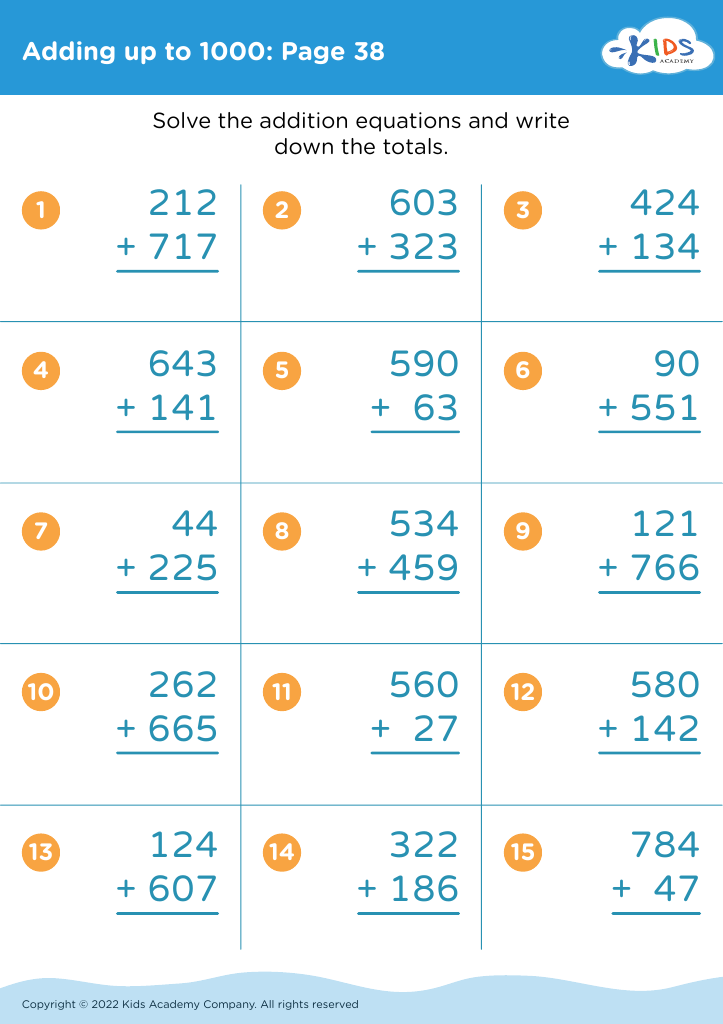
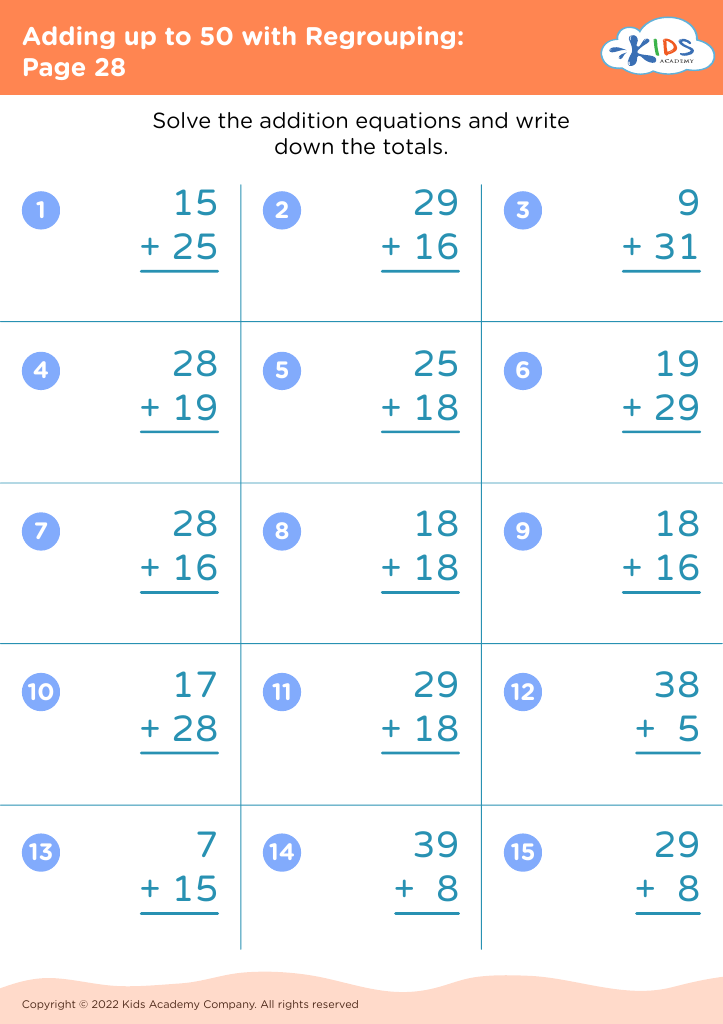
Welcome to our Basic Arithmetic Practice Grade 2 Addition Worksheets! Designed to help young learners master addition skills, these worksheets offer a fun and engaging way for second graders to enhance their math abilities. Each printable activity focuses on essential addition concepts, such as adding single and double-digit numbers. With colorful visuals and varied problem types, students will develop their confidence and fluency in arithmetic. Perfect for homework or classroom use, our worksheets cater to different learning paces, ensuring all students can succeed. Encourage a strong foundation in math with our interactive and enjoyable addition practice resources for Grade 2!
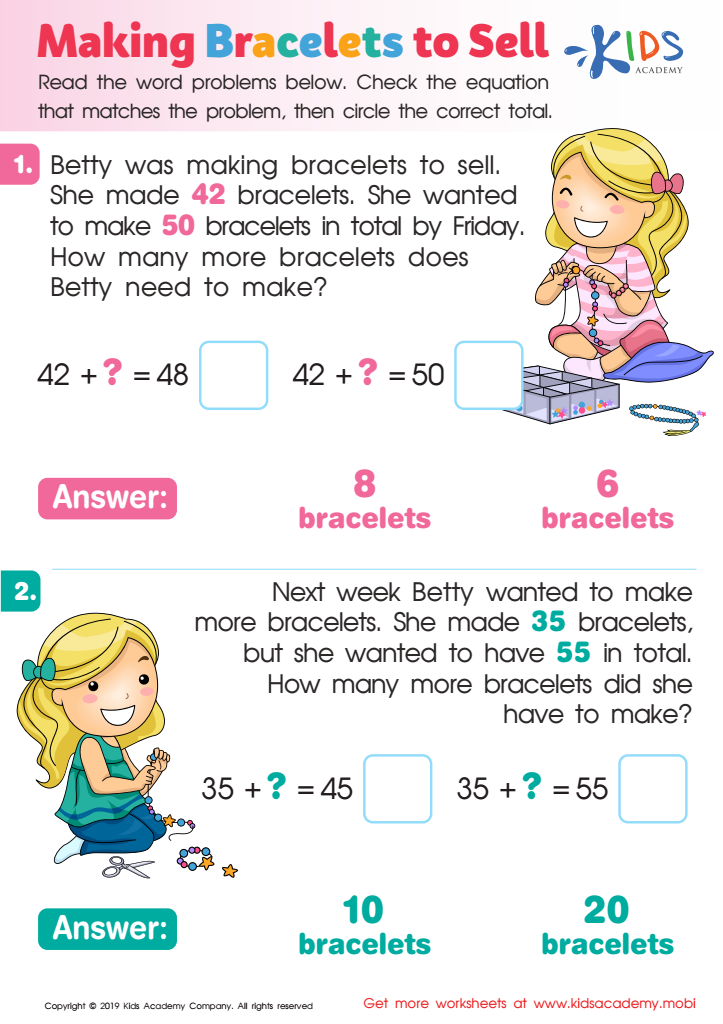
Making Bracelets to Sell Worksheet
 Assign to My Students








Basic arithmetic practice, particularly Grade 2 addition, is fundamentally important for several reasons. First, mastering addition lays the groundwork for more advanced math concepts in later grades. As students begin to tackle complex computation, a solid understanding of addition is essential for success in subtraction, multiplication, and division.
Moreover, fluency in basic addition boosts children’s confidence in mathematics. When students can quickly solve problems, they are more likely to engage positively with math, reducing anxiety around the subject. This early mastery also prepares them for real-life applications, such as budgeting, shopping, and daily problem-solving, fostering practical life skills.
Additionally, regular practice encourages critical thinking and problem-solving abilities. Children learn to approach challenges methodically, which can benefit them across subjects and in daily situations.
Lastly, practicing basic arithmetic strengthens parent-teacher collaboration. Engaging both parties ensures children receive consistent support, making learning more effective. By prioritizing Grade 2 addition practice, parents and educators can help young learners develop a firm mathematical foundation, set them on a path toward academic success, and cultivate a lifelong appreciation for mathematics.