Cognitive Development Grade 2 Addition Worksheets
13 filtered results
-
From - To
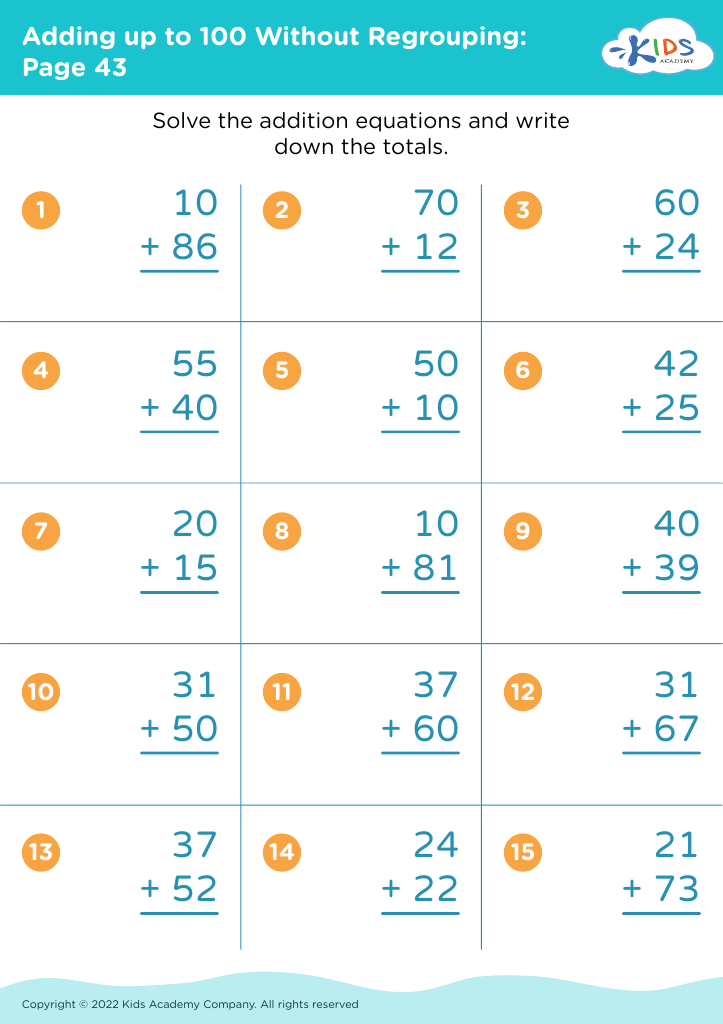
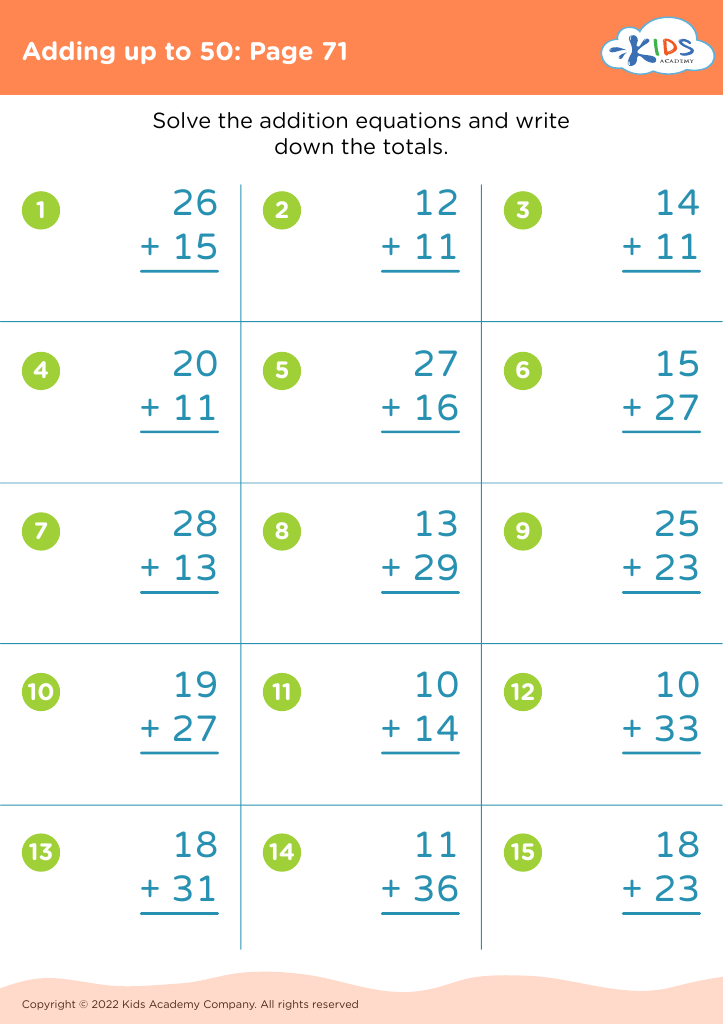
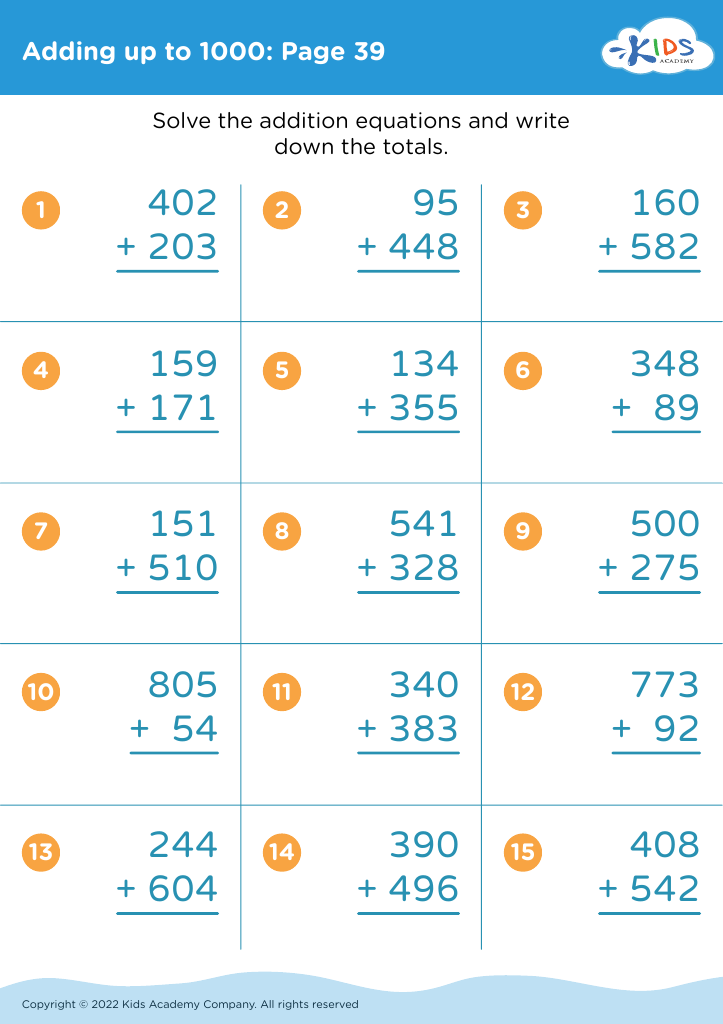
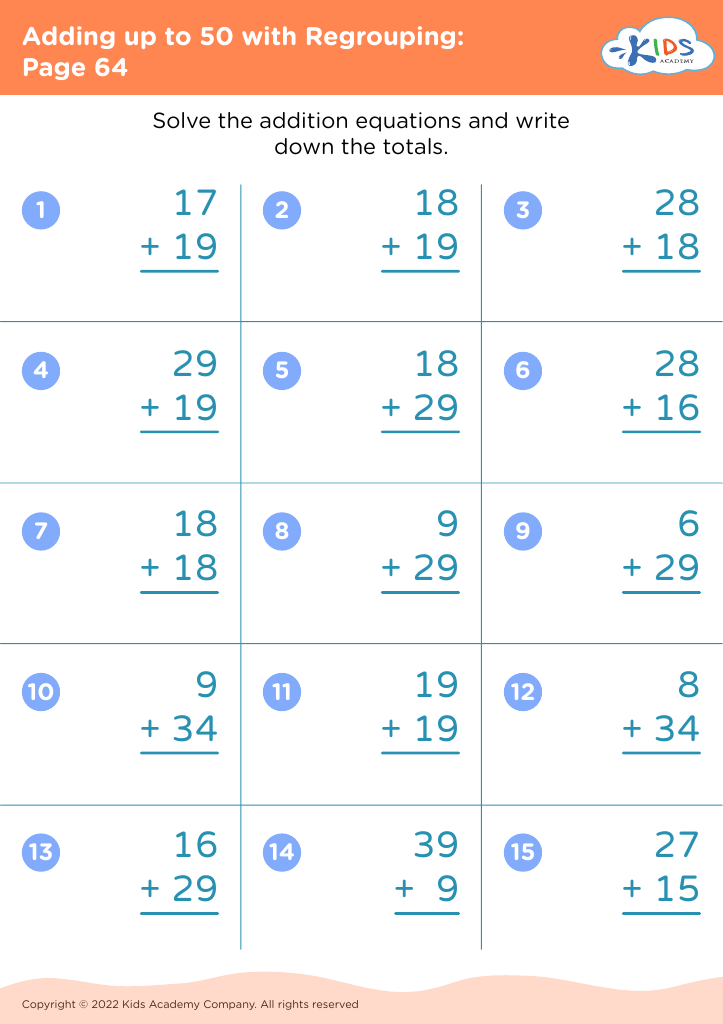
Enhance your second grader's cognitive development with our engaging addition worksheets! Designed specifically for Grade 2 students, these worksheets focus on building essential math skills through fun and interactive activities. They promote critical thinking, problem-solving, and number sense while providing varied exercises that cater to different learning styles. From simple addition problems to word problems and puzzles, these resources help children grasp foundational concepts in mathematics. Perfect for both classroom and home learning, our cognitive development worksheets aim to motivate young learners and foster a love for math. Explore our collection today to make learning addition exciting and effective!
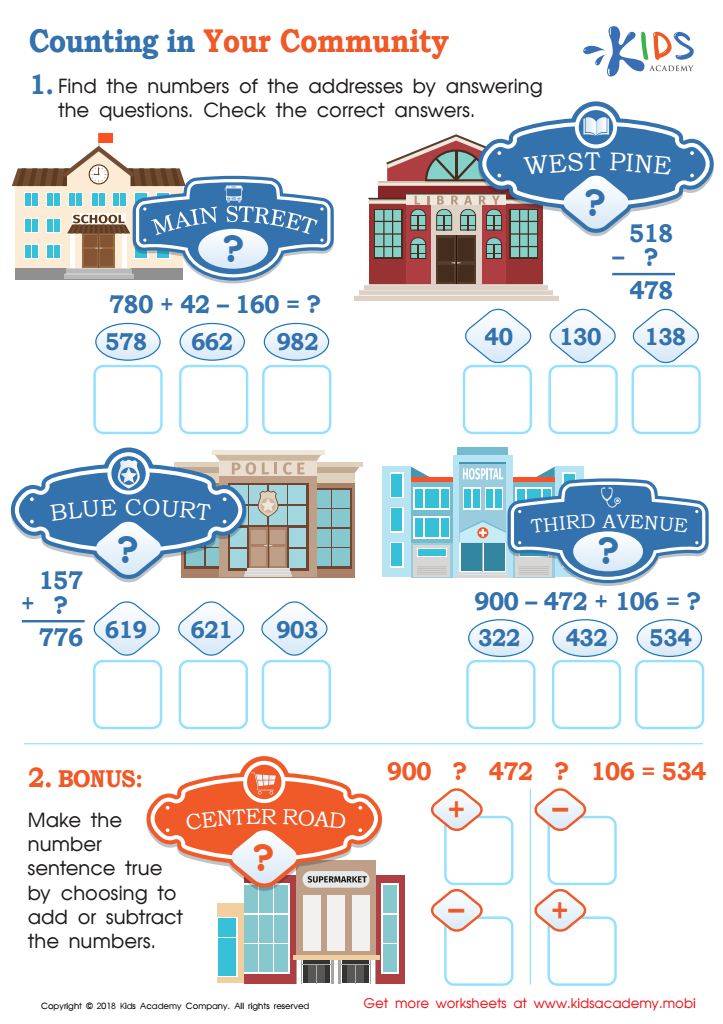
Counting in Your Community Worksheet
 Assign to My Students
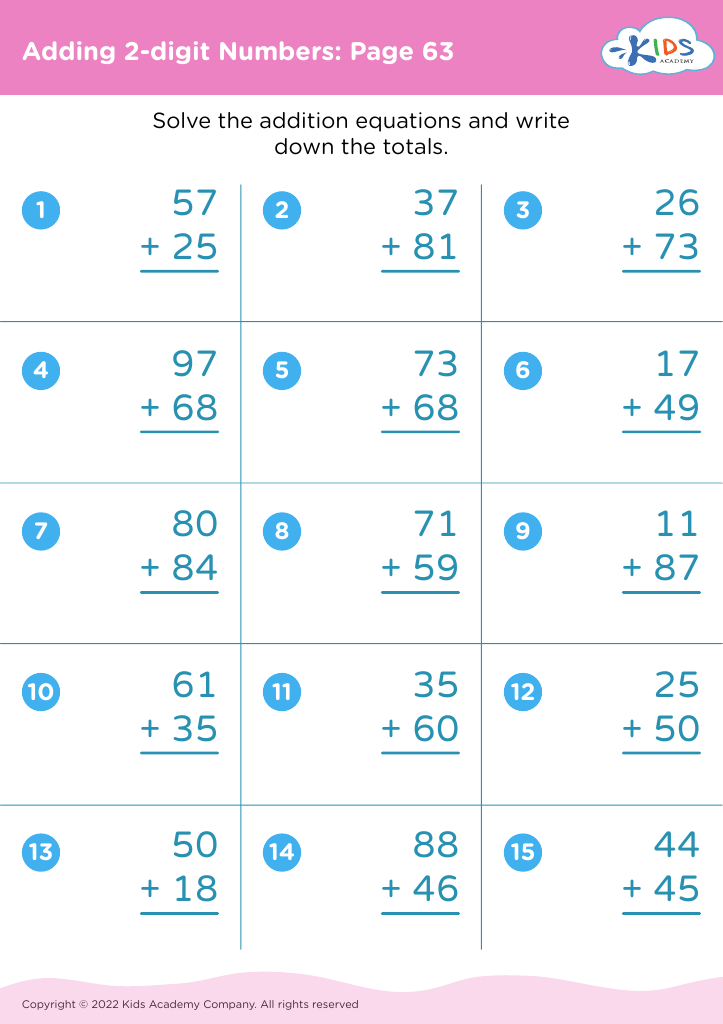
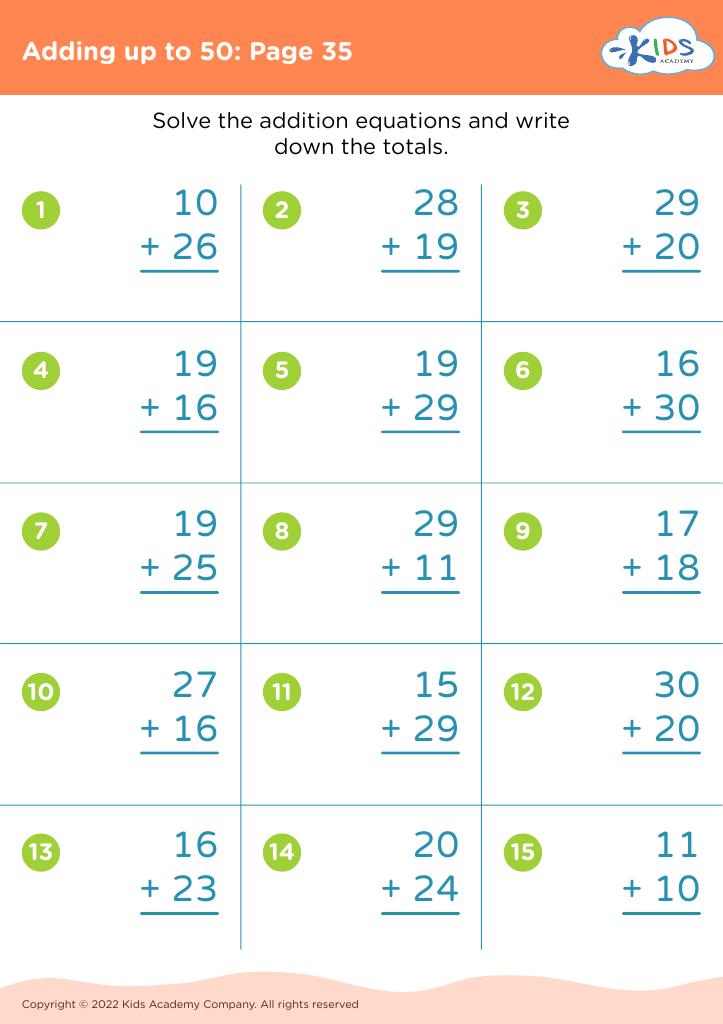
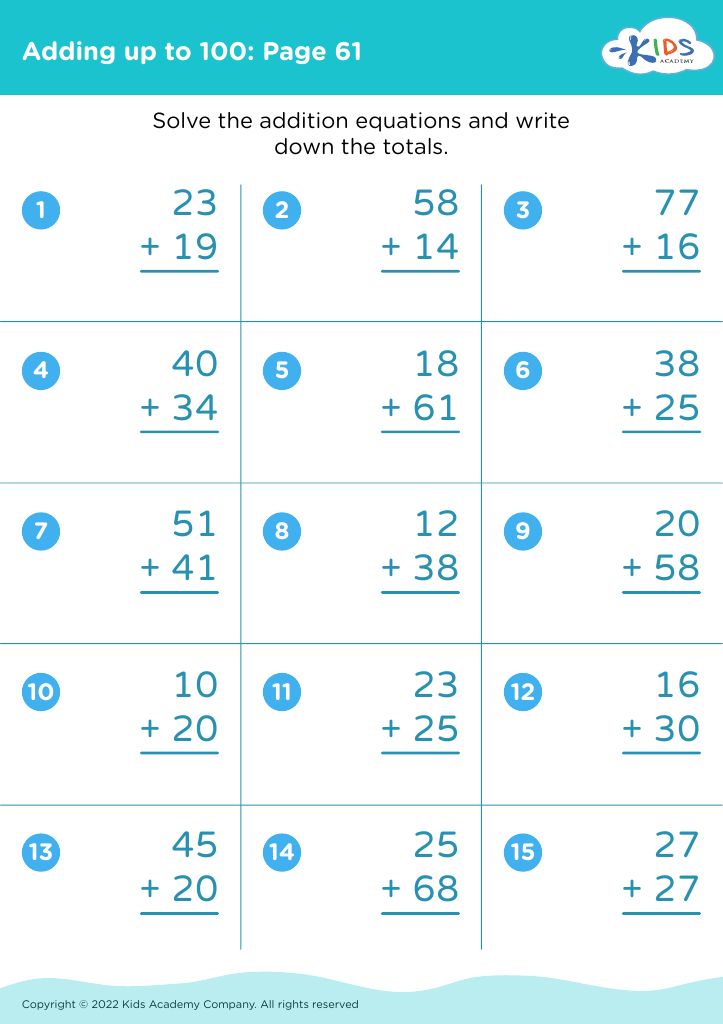








Cognitive development is crucial for Grade 2 students, especially in subjects like addition. At this age, children's brains are undergoing significant changes that facilitate critical thinking, problem-solving, and conceptual understanding. Mastering addition lays the groundwork for more complex mathematical skills, fostering a strong mathematical foundation.
Parents and teachers should care about cognitive development in addition because it enhances children's confidence and engages them in learning. When students grasp key concepts, they become enthusiastic learners, more willing to tackle new challenges. Cognitive development in addition also aids in promoting logical reasoning, which has far-reaching implications beyond mathematics—such as in reading comprehension and science.
Additionally, understanding how children conceptualize and internalize mathematical relationships allows educators and parents to tailor instruction to meet individual needs, providing support where necessary. By fostering strong cognitive skills in this critical learning stage, we encourage better academic performance, social skills, and emotional resilience.
Furthermore, recognizing the importance of cognitive development promotes collaboration among parents and teachers, creating a supportive educational environment conducive to growth.
Together, we can help children progress through their educational journeys and develop a lifelong passion and aptitude for learning, starting with the essential skill of addition.