Comparing numbers Grade 2 Addition Worksheets
4 filtered results
-
From - To
Our "Comparing Numbers Grade 2 Addition Worksheets" are designed to help second graders grasp essential math skills with ease. These engaging worksheets support young learners in practicing addition while mastering the comparison of numbers. Through a series of meticulously crafted exercises, students will enhance their ability to compare values and solve addition problems simultaneously. Ideal for classroom use or at-home practice, these worksheets aim to strengthen foundational math skills, ensuring students build confidence and proficiency in their arithmetic abilities. Explore our collection and watch your child or students thrive in their math journey!
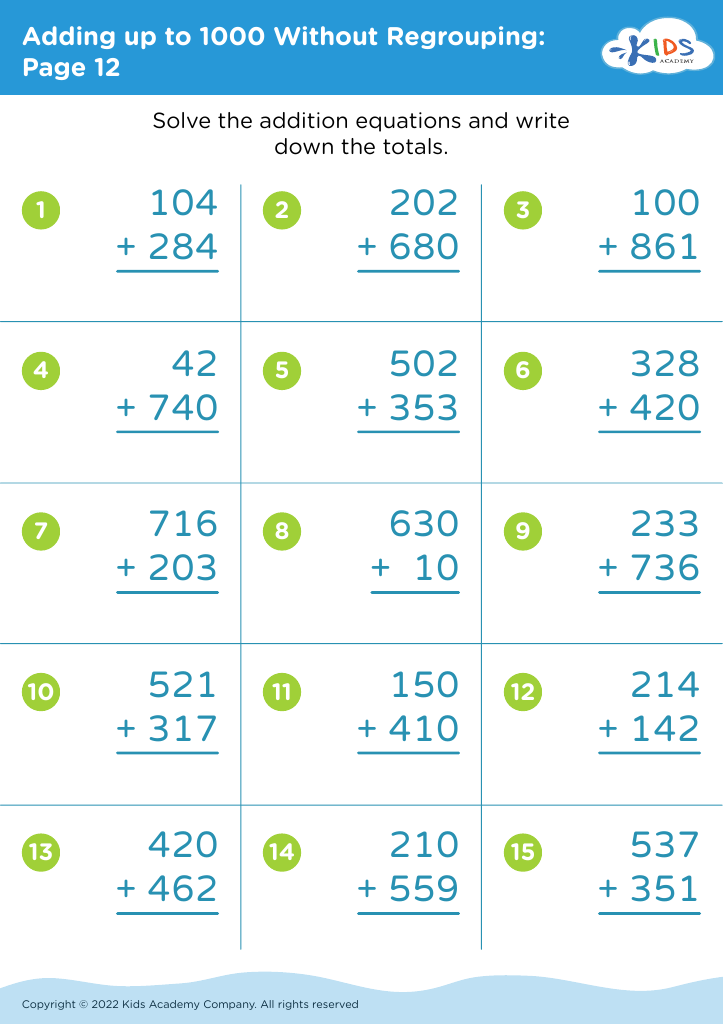
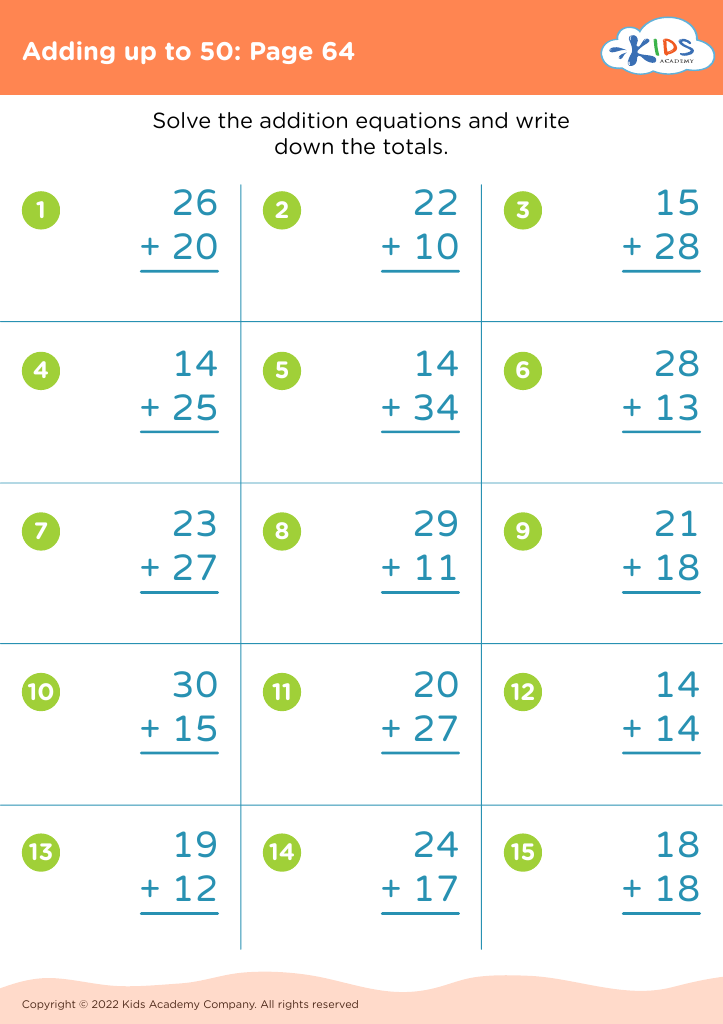
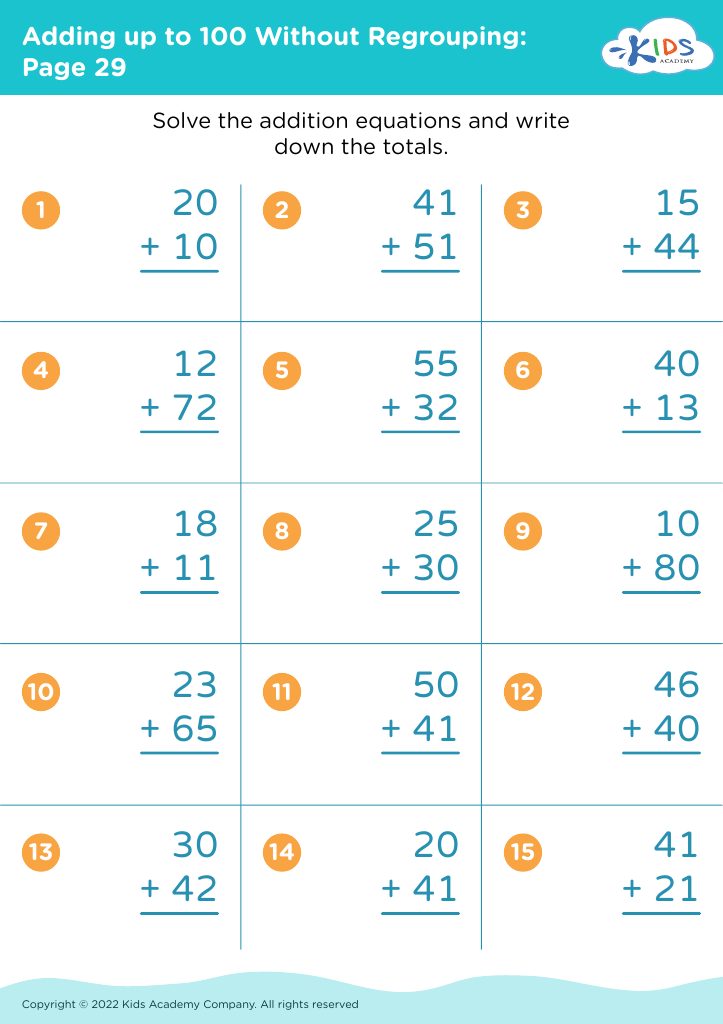
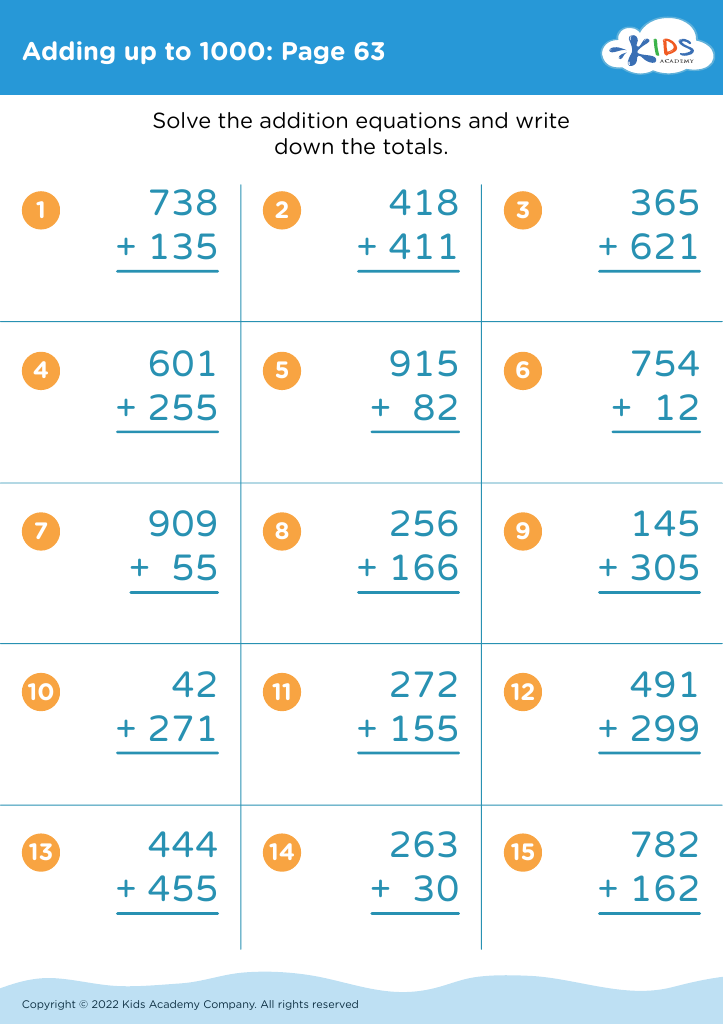








Comparing numbers in Grade 2 is a fundamental skill that helps young learners develop their basic understanding of mathematics, essential for their academic growth. Parents and teachers should care deeply about this aspect of math because it fosters critical thinking and problem-solving abilities. By comparing numbers, children begin to grasp concepts like greater than, less than, and equal to, which are crucial for everyday decision-making and real-world applications.
Integrating addition with number comparison enriches this learning experience. Students learn to add numbers and then compare the sums, deepening their understanding of the relationship between numbers. This dual focus not only strengthens their arithmetic skills but also enhances logical thinking. For instance, comparing the sum of 8+5 with 11 forces children to apply both their addition skills and their understanding of numerical order.
Fostering these skills at an early age lays a strong foundation for more complex mathematical concepts encountered in higher grades, such as subtraction, multiplication, and division. Moreover, gaining confidence in comparing numbers can help children overcome math anxiety, making math enjoyable rather than intimidating. Given these benefits, dedicating time and effort to teaching and encouraging proficiency in comparing numbers and addition is invaluable for young learners' overall educational development.