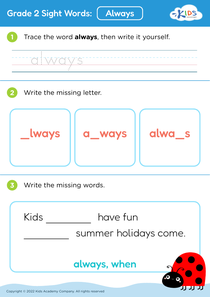
Develop analytical thinking Grade 2 Addition Worksheets
3 filtered results
-
From - To
Enhance your second grader's analytical thinking skills with our specialized Grade 2 Addition Worksheets. Designed to engage young learners, these worksheets encourage critical thinking through fun and challenging addition problems. Students will explore various strategies to solve equations, recognize patterns, and develop reasoning skills. By integrating analytical tasks into their math practice, children will gain confidence in their abilities while improving their problem-solving skills. Perfect for classroom activities or home practice, these worksheets provide an interactive way to build a strong foundation in mathematics. Help your child thrive with this essential resource that supports growth in cognitive development and mathematical understanding!
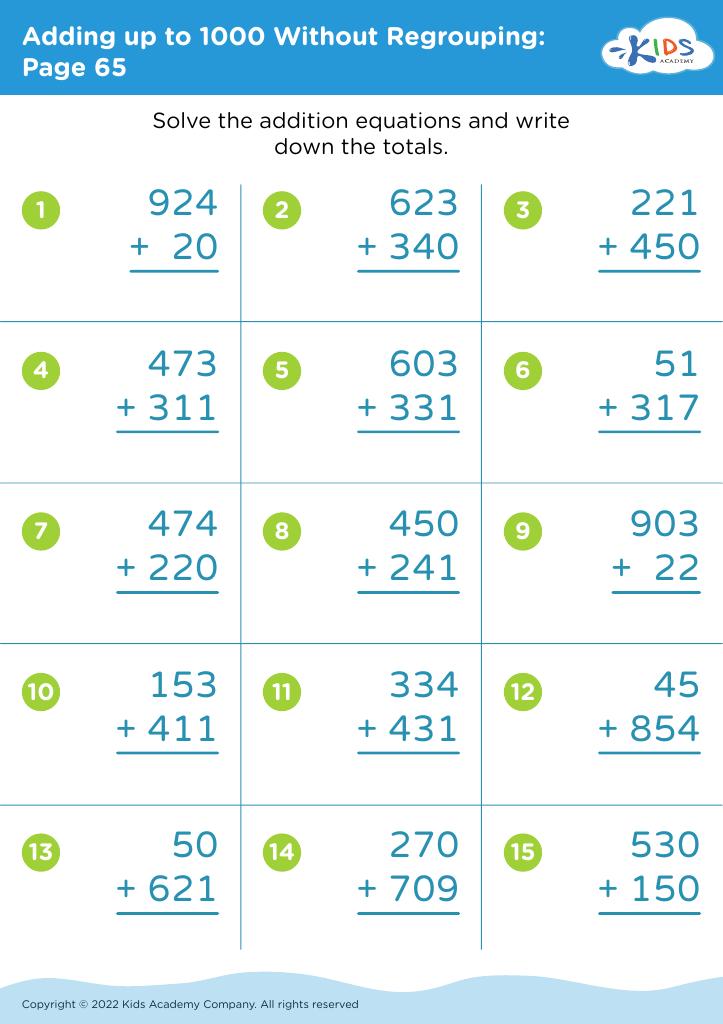
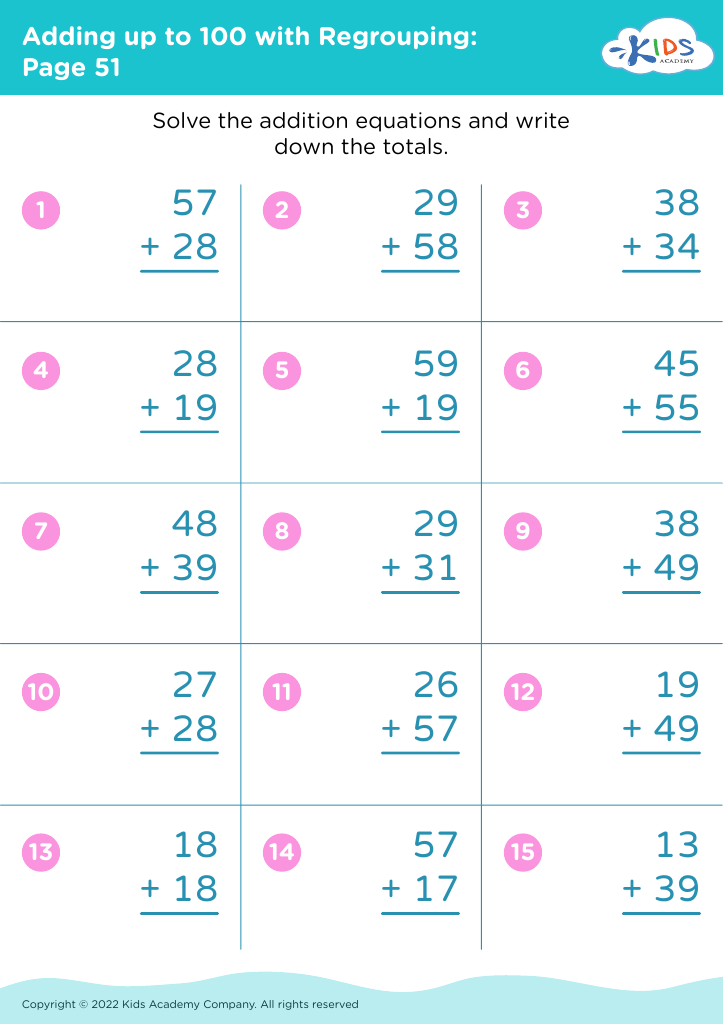
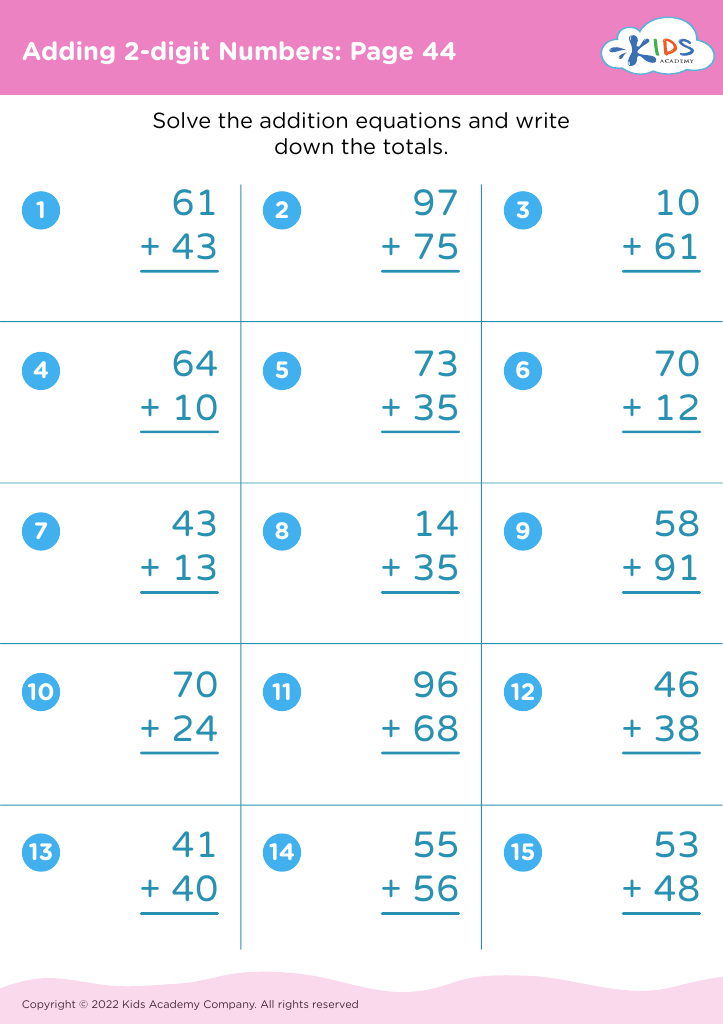






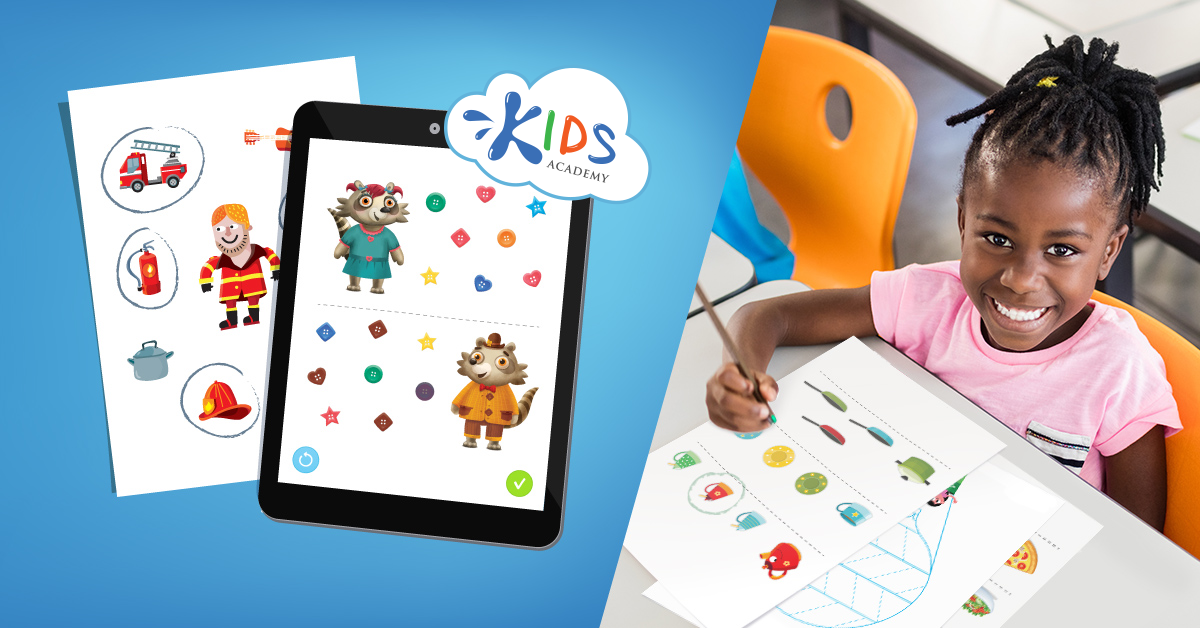

Developing analytical thinking skills in Grade 2 addition is crucial for several reasons. At this stage, children are starting to build a foundation for more complex math concepts, and enhancing their analytical capabilities equips them to approach problems systematically. Analytical thinking encourages students to not only perform arithmetic but to understand the 'why' behind addition. This deeper comprehension aids in problem-solving and fosters critical thinking skills.
When parents and teachers guide children to explore addition through various strategies, like using visual aids or manipulatives, they help students recognize patterns and relationships between numbers. This approach not only makes learning more engaging but also cultivates confidence in their mathematical abilities. Furthermore, strong analytical skills are transferable to other subjects and life situations, enabling children to tackle diverse challenges more effectively.
In a rapidly changing world, fostering analytical thinkers is essential. These skills will serve students well beyond elementary school, laying the groundwork for future academic and life success. Ultimately, when parents and teachers actively engage in nurturing these skills, they collaborate to inspire curiosity and resilience in young learners, helping them become adept problem solvers as they progress through their education.