Develop counting skills Grade 2 Addition Worksheets
5 filtered results
Difficulty Level
Grade
Age
-
From - To
Subject
Activity
Standards
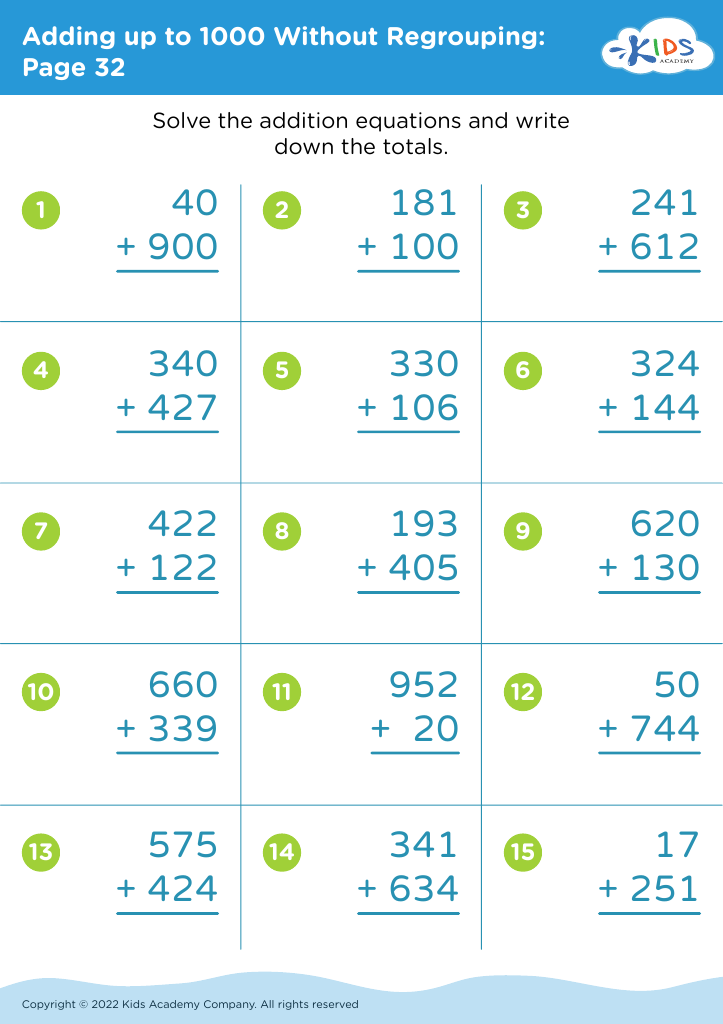
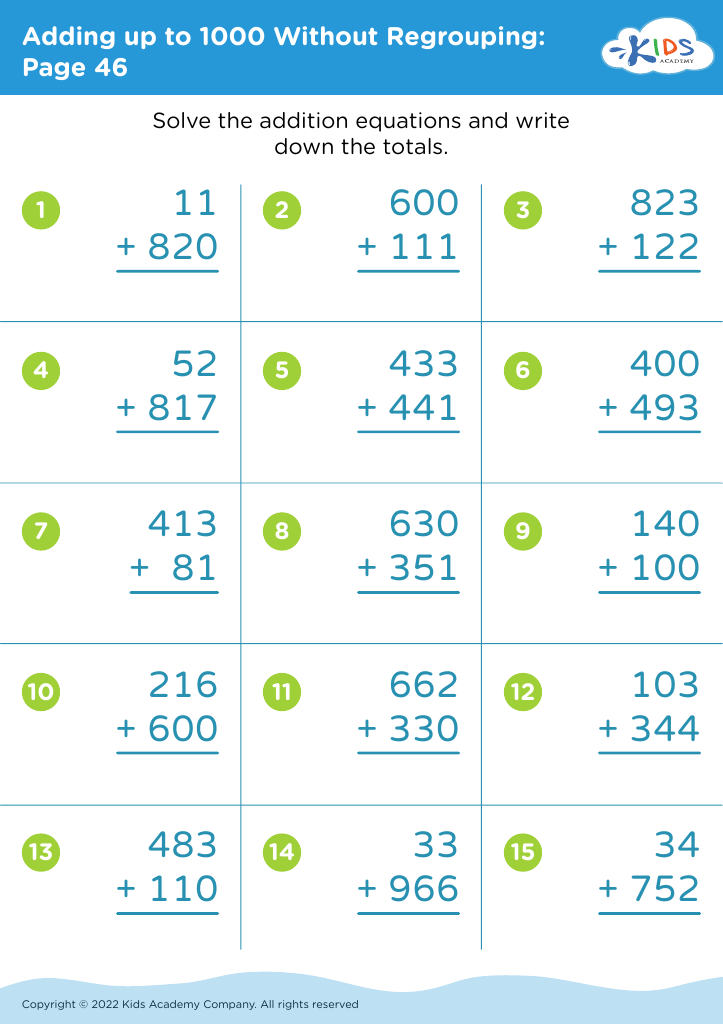
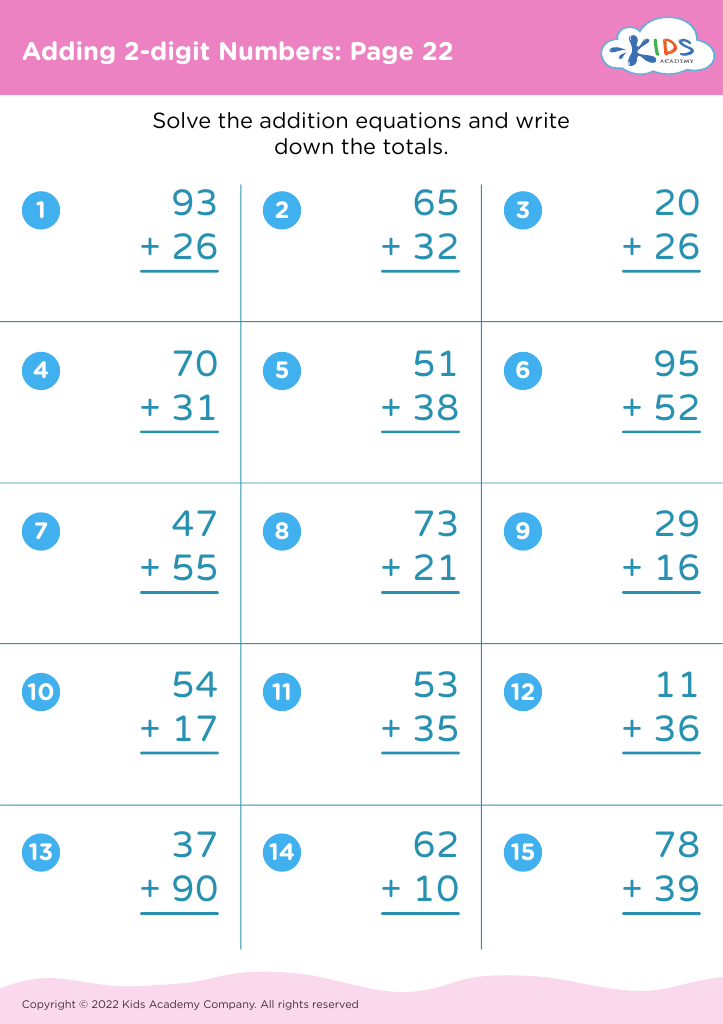
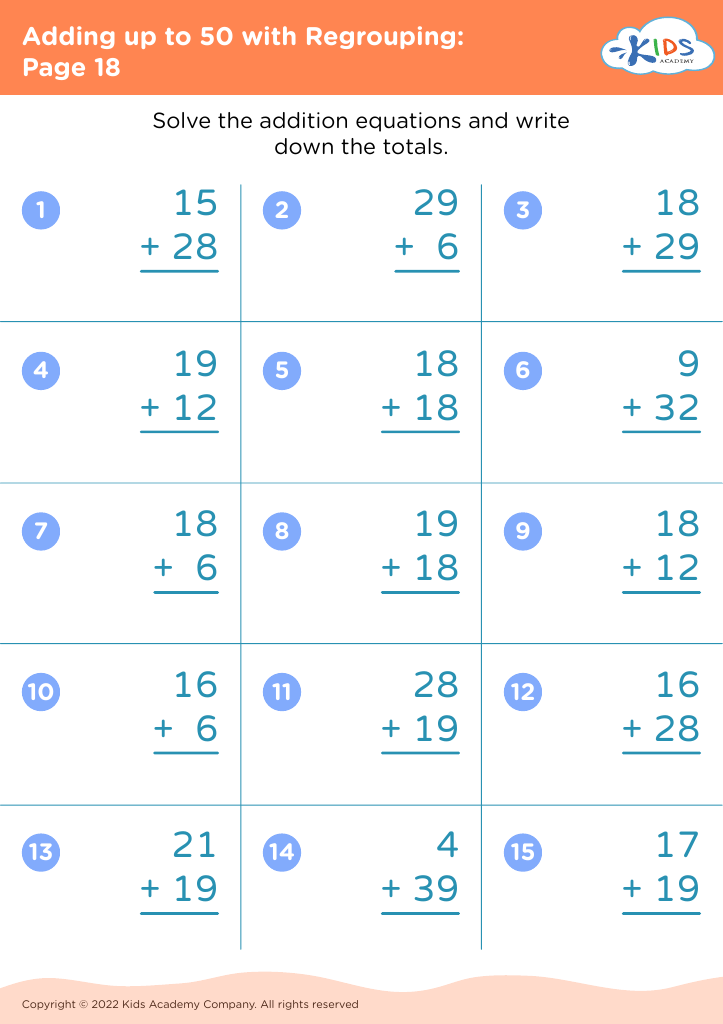
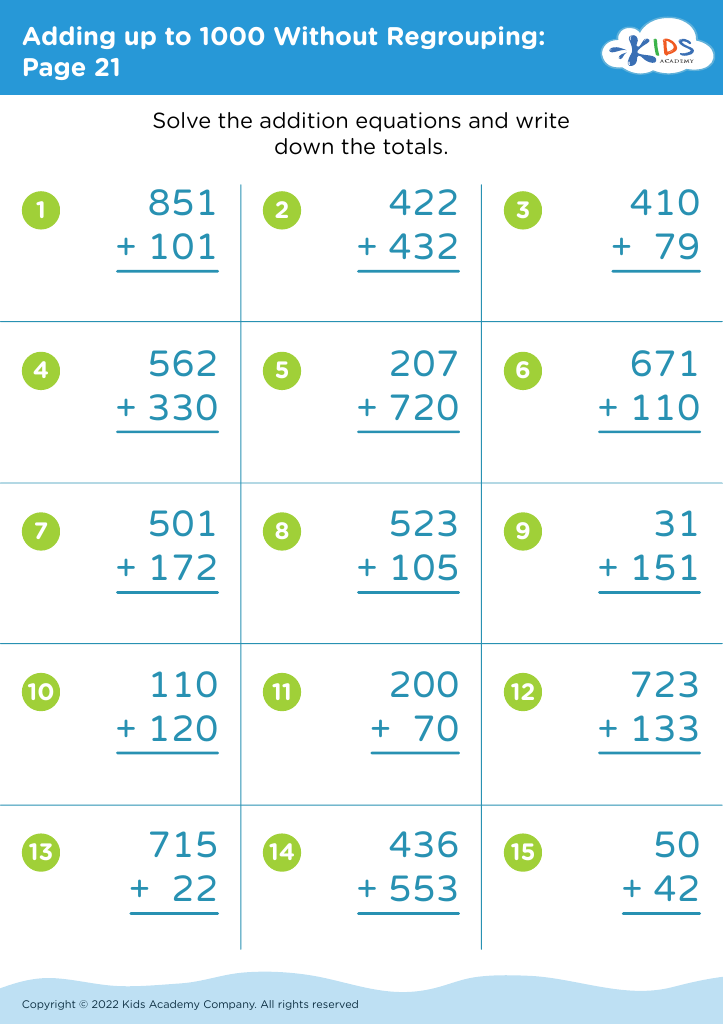
Enhance your Grade 2 learners' counting skills with our engaging Addition Worksheets designed specifically for developing math concepts. Our collection features a variety of fun and interactive activities that promote number recognition and fluency in addition. Through engaging exercises, students will practice counting objects, and learn to add single and double digits effortlessly. These worksheets cater to diverse learning styles, ensuring every child boosts their confidence in math. Ideal for classroom use or at-home practice, our resources foster a strong foundation in mathematics, setting the stage for future learning. Help your students thrive in their math journey with our expertly crafted materials!
Favorites
With answer key
Interactive
Join Kids Academy for Free
Who is primarily going to use this learning content?








Developing counting skills and mastery of addition in Grade 2 is crucial for several reasons that should concern both parents and teachers. First, these skills form the foundational building blocks for all subsequent mathematical learning. A solid understanding of addition is essential, as it is not only part of the broader mathematics curriculum but also vital in daily life scenarios, such as shopping and budgeting.
Second, counting and addition enhance critical thinking and problem-solving abilities. When students engage in these skills, they learn to analyze problems, develop strategies, and arrive at solutions—transferable skills applicable across subjects and real-world situations.
Furthermore, a strong grasp of addition can significantly boost a child's confidence in math. Children who struggle with these fundamentals may develop a negative self-image or aversion to the subject, possibly impacting their overall academic performance.
Additionally, mastery in counting and addition sets the stage for more complex concepts, such as subtraction, multiplication, and division, which are introduced in later grades. Therefore, parents and teachers should prioritize developing these essential skills to foster a love for mathematics, ensure academic success, and equip students with the necessary tools for lifelong learning.