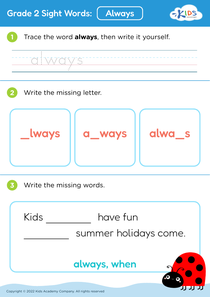
Develop fine motor skills Grade 2 Addition Worksheets
9 filtered results
-
From - To
Enhance your child's fine motor skills with our Grade 2 Addition Worksheets, designed for young learners. These printable resources from Kids Academy offer engaging exercises that not only bolster math proficiency but also develop hand-eye coordination and pencil control. Perfectly tailored for second graders, these worksheets integrate fun and educational activities that make learning addition enjoyable. Each carefully crafted sheet encourages precise and neat handwriting, fostering essential motor skills in an age-appropriate and enjoyable way. Ideal for at-home practice or classroom use, our collection ensures students build a strong foundation in both addition and fine motor abilities.
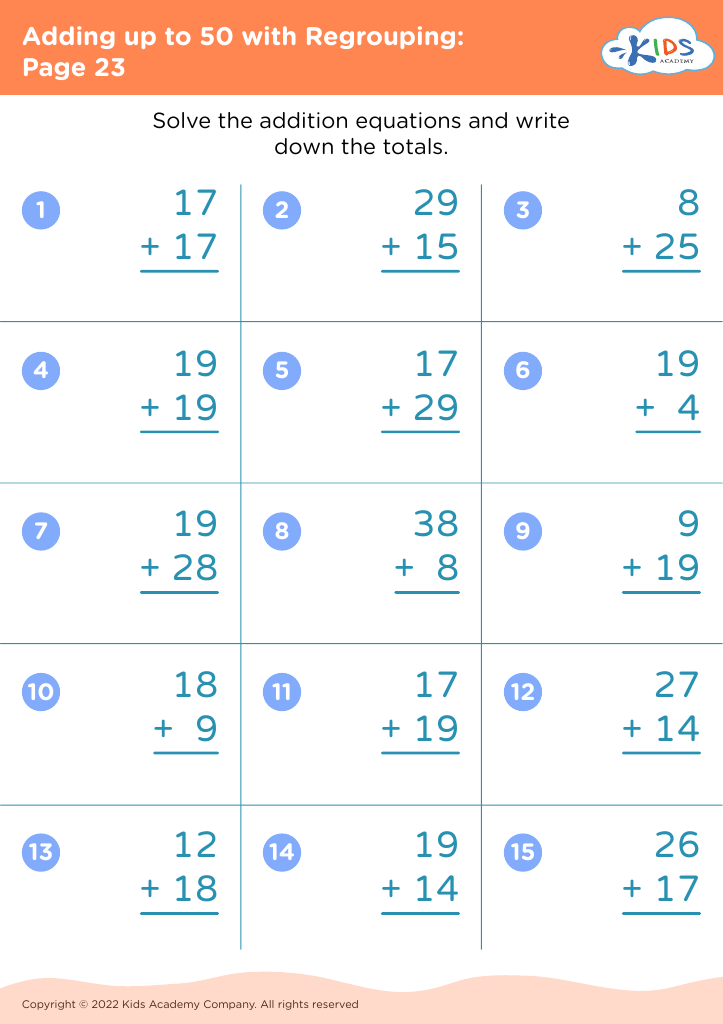
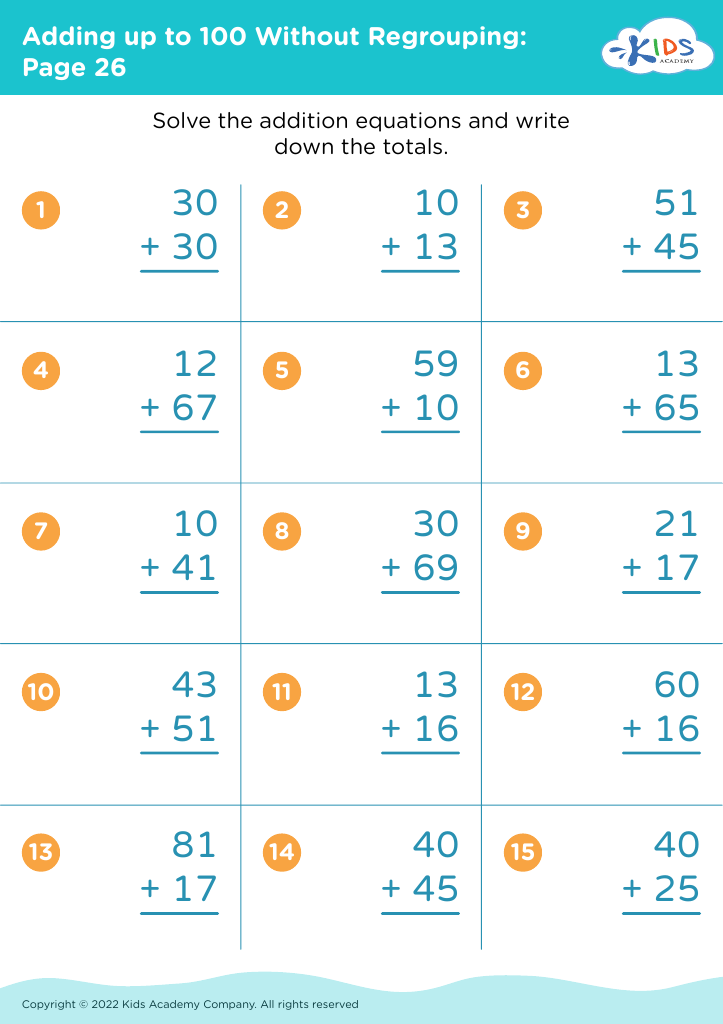
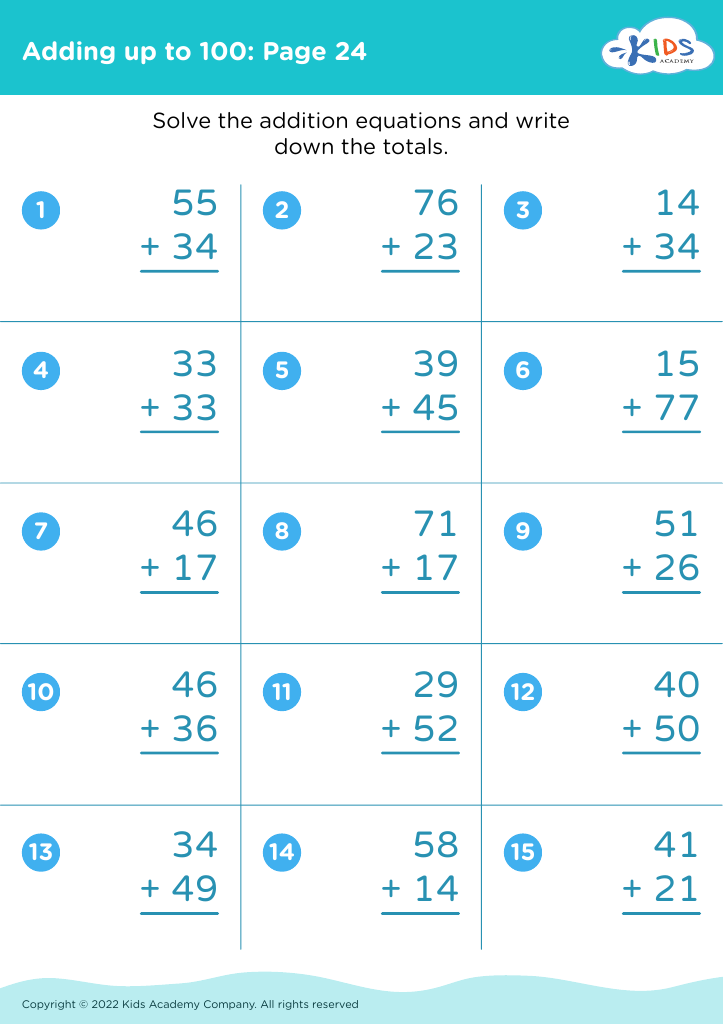
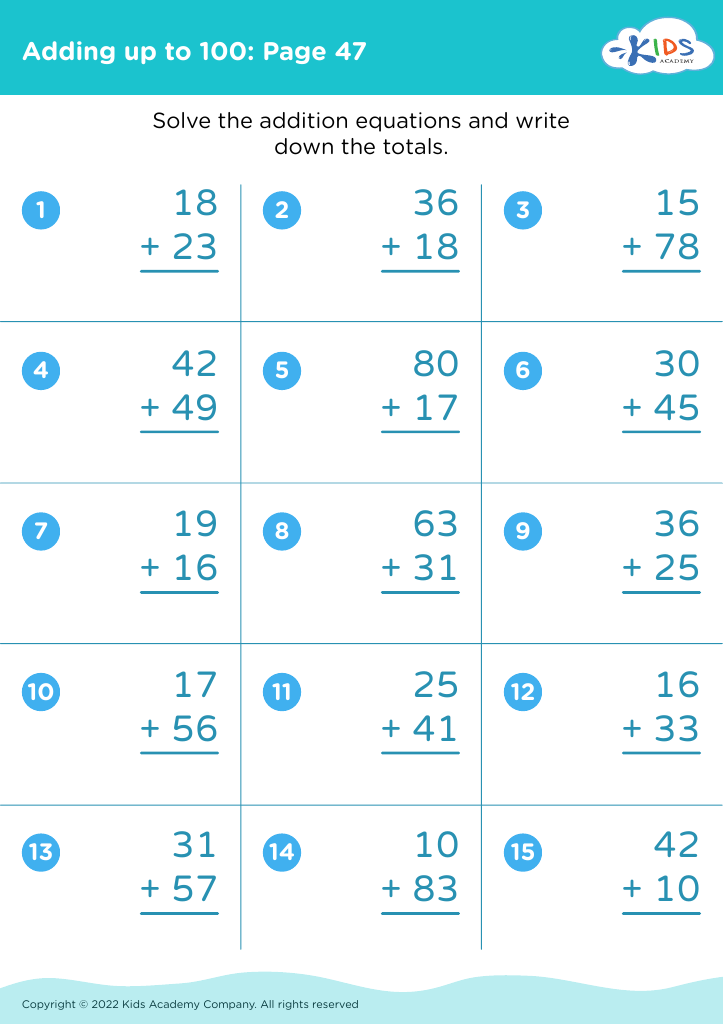
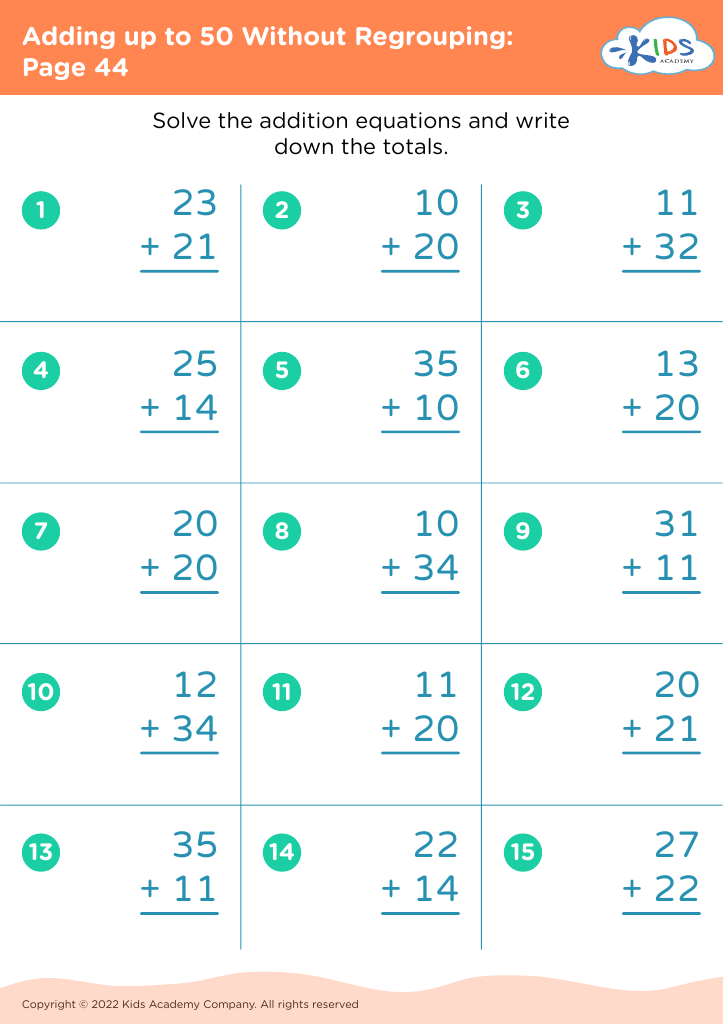
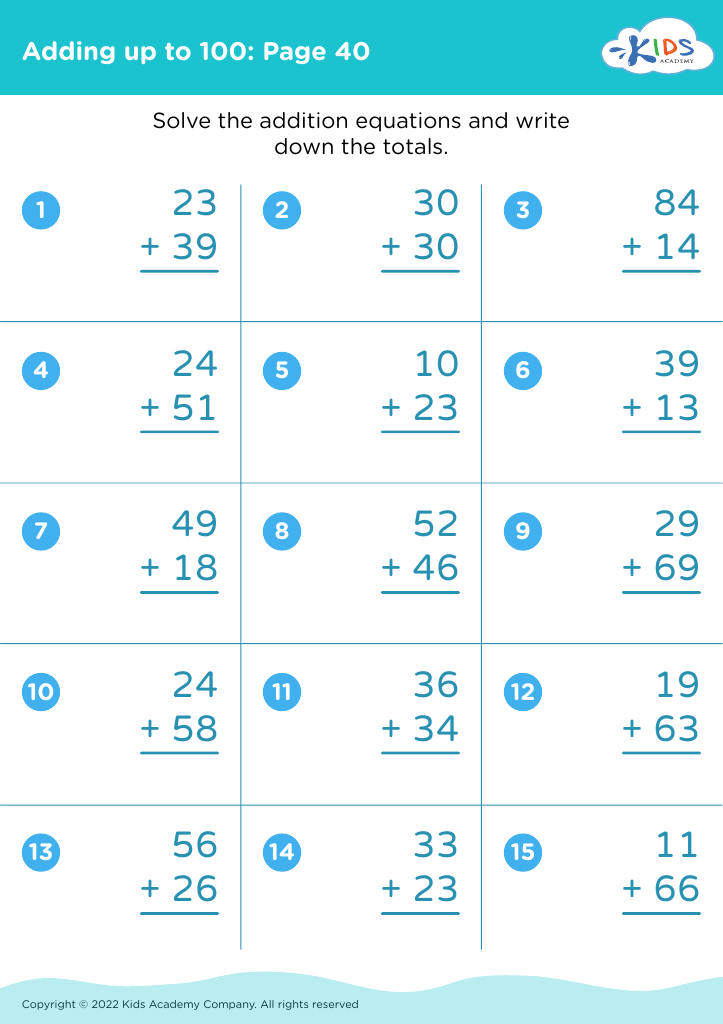
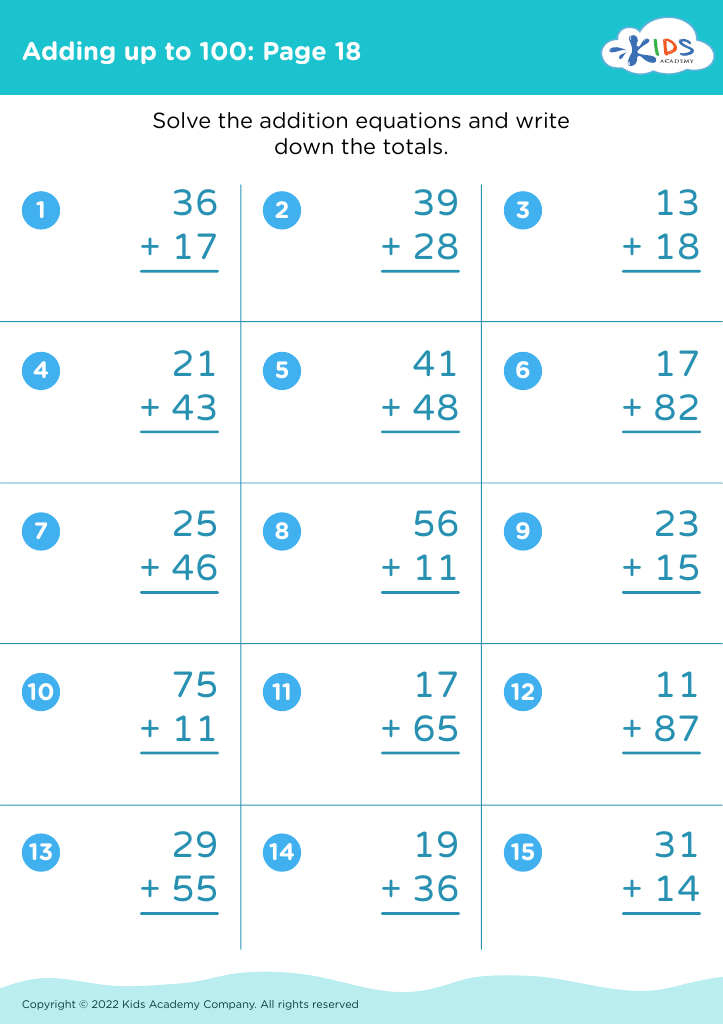
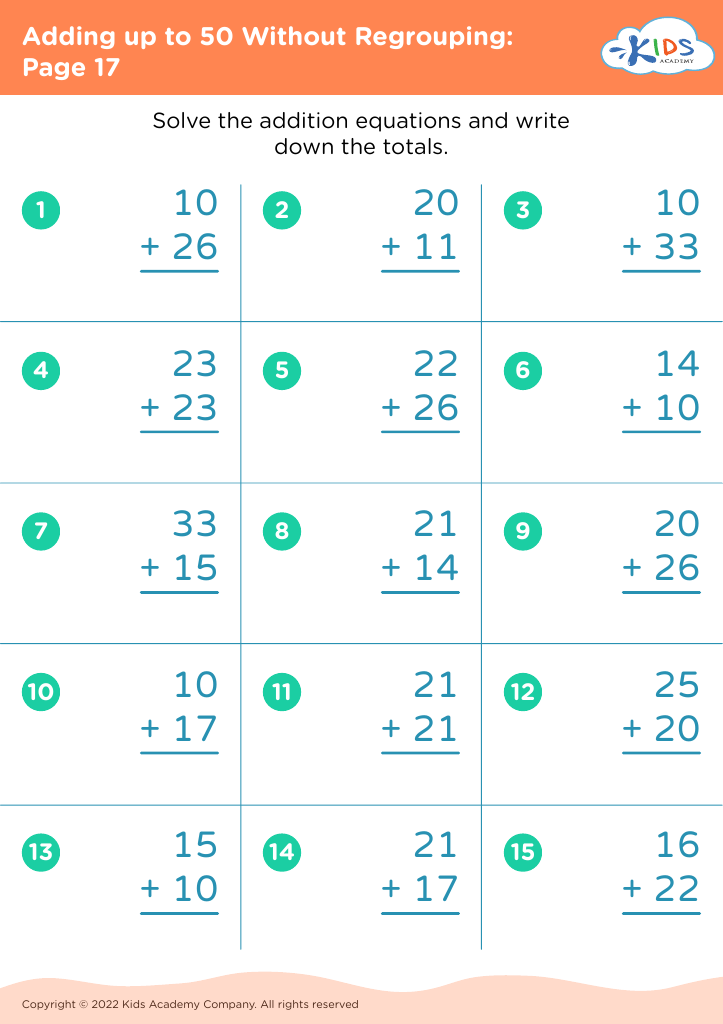
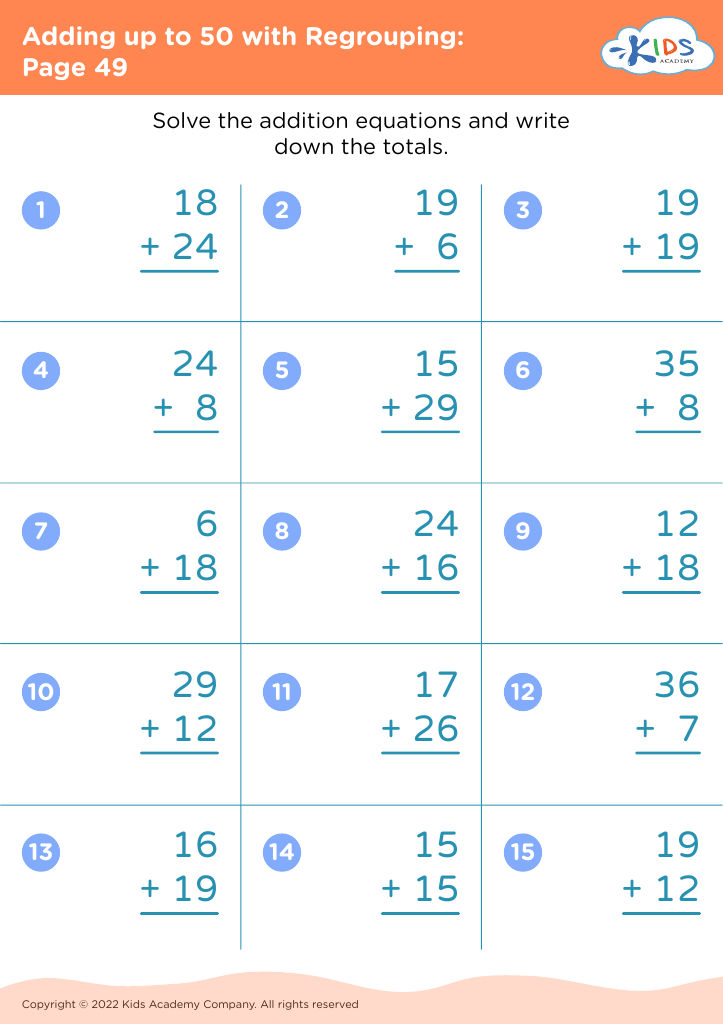








Developing fine motor skills is crucial for young children's overall development, particularly in educational activities such as Grade 2 addition. Fine motor skills involve the coordination of small muscles, particularly in the hands and fingers, which are essential for tasks like writing, using scissors, and manipulating objects. These skills profoundly affect a child's academic performance and daily activities.
Parents and teachers should care about fine motor skills for several reasons. First, proficient fine motor skills enable children to write more legibly and comfortably. This is particularly important in Grade 2 when the curriculum often includes adding larger numbers, which usually requires pencil-and-paper tasks. Poor fine motor skills can make these activities challenging, causing frustration and hindering learning.
Secondly, well-developed fine motor skills help children to complete tasks independently, boosting their confidence and self-esteem. For example, being able to hold and properly use a pencil or manipulative materials like counting blocks aids in understanding mathematical concepts better, making Grade 2 addition less daunting.
Lastly, developing fine motor skills also impacts social and emotional development. When children can perform tasks efficiently, they are more likely to participate in group activities and discussions, fostering a sense of inclusion and collaboration.
Investing in the development of fine motor skills early on lays a solid foundation for academic success and overall personal growth, ultimately helping children thrive both inside and outside the classroom.