Develop inference skills Grade 2 Addition Worksheets
3 filtered results
Difficulty Level
Grade
Age
-
From - To
Subject
Activity
Standards
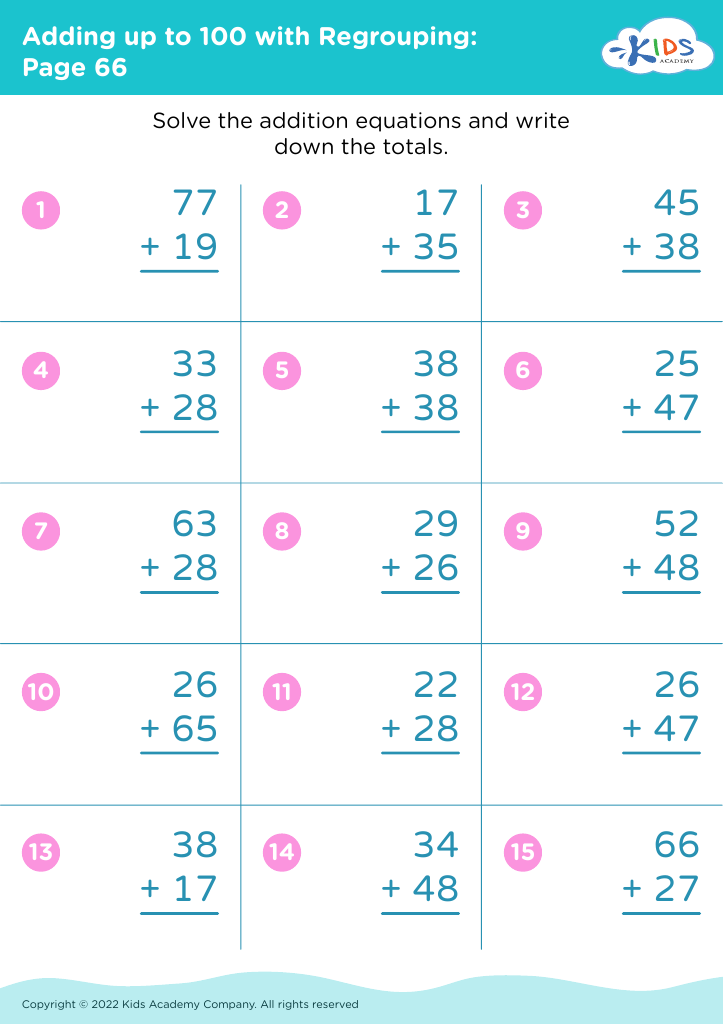
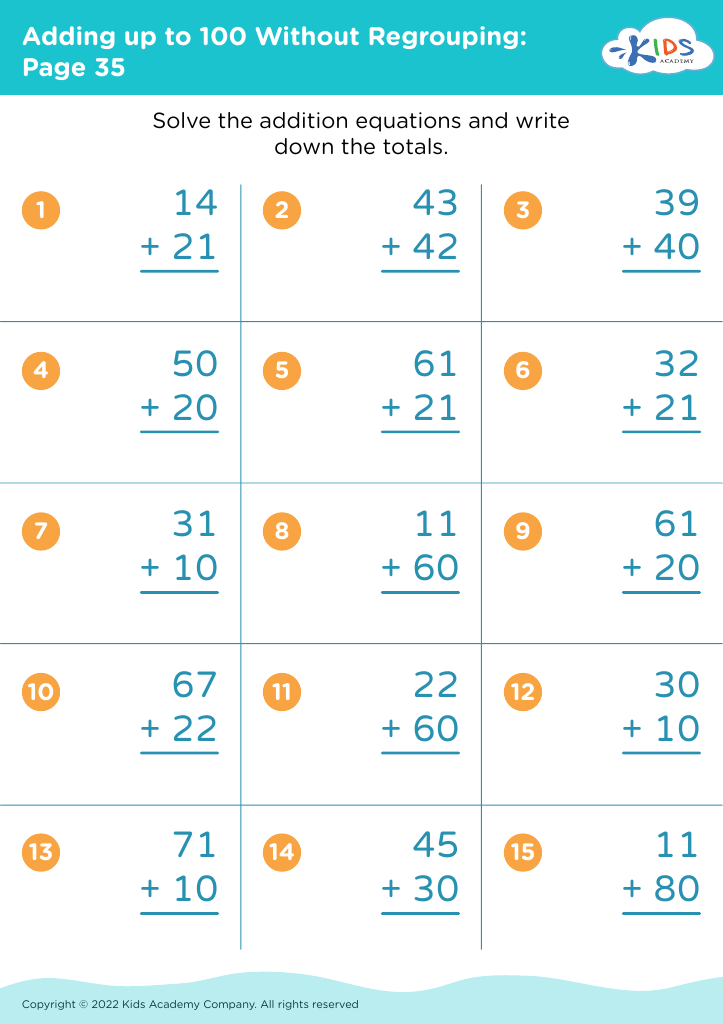
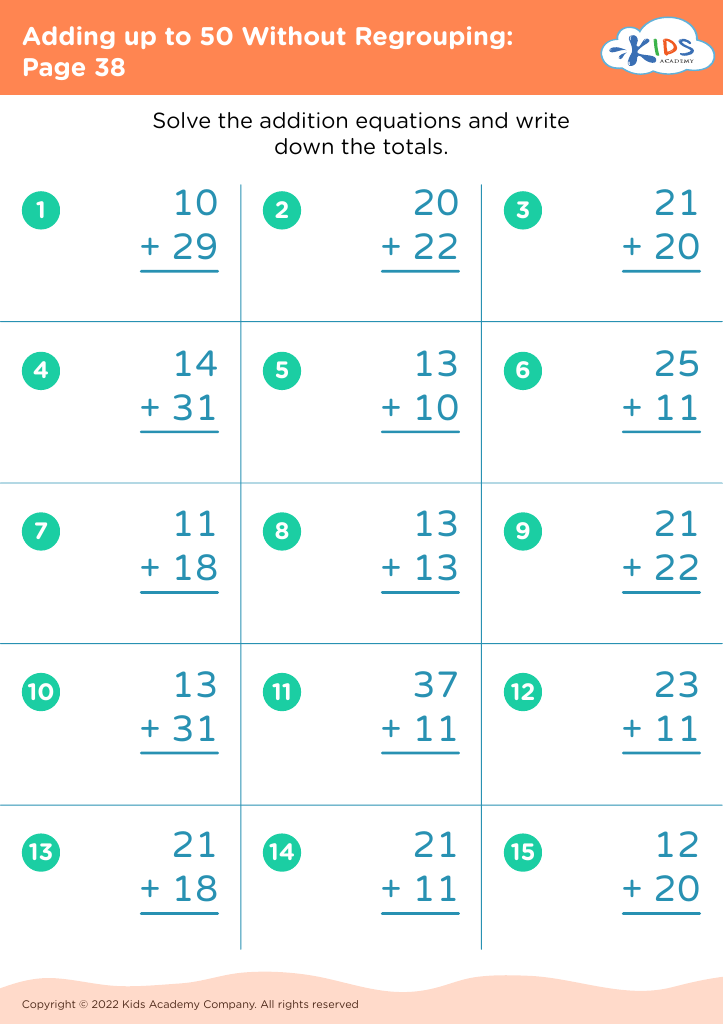
Boost your child's math and critical thinking with our Grade 2 Addition Worksheets focused on developing inference skills. These expertly designed activities encourage young learners to use logical reasoning and problem-solving strategies while practicing addition. Each worksheet presents engaging scenarios where kids must infer missing information and decide on the correct operation to apply. This dual approach not only strengthens their addition skills but also enhances their ability to draw conclusions and make educated guesses, essential for academic success. Ideal for classroom use or at-home practice, our worksheets make learning math both fun and intellectually stimulating.
Favorites
With answer key
Interactive
Join Kids Academy for Free
Who is primarily going to use this learning content?








Parents and teachers should prioritize developing inference skills in Grade 2 students, particularly through the lens of addition, because these skills are fundamental to both academic success and overall cognitive development. Inference, or the ability to draw conclusions from evidence and reasoning, enhances critical thinking and problem-solving abilities. When children work on addition problems that require more than rote memorization, they learn to analyze patterns, recognize relationships, and make educated guesses—skills that transcend mathematics and benefit broader learning contexts.
Learning to make inferences while doing addition also nurtures a child's numeracy skills. It requires them to understand the "why" behind the "what," ensuring they comprehend the concepts, not just procedures. This conceptual understanding is crucial for tackling more complex math problems in the future. For instance, solving a word problem necessitates recognizing relevant numeric information, inferring the required operations, and executing them effectively.
Moreover, developing these skills early on sparks intellectual curiosity and encourages a love for learning. It aids in reading comprehension and writing, as students start understanding context clues and subtexts, skills essential for mastering language arts. Therefore, fostering inference skills through grade-appropriate addition exercises lays a solid foundation for a child's holistic academic journey.