Develop number recognition Grade 2 Addition Worksheets
5 filtered results
-
From - To
Enhance your Grade 2 student's mathematical skills with our engaging Addition Worksheets focused on developing number recognition. These worksheets offer a fun and effective way for young learners to practice identifying numbers and performing addition. Each activity is designed to reinforce key concepts through visuals and various exercises that promote critical thinking. By integrating number recognition into addition practice, students will build a solid foundation in mathematics. Perfect for classroom use or homeschooling, these printable resources provide instant access to valuable learning tools. Discover the joy of learning with our comprehensive worksheets tailored to support every child's journey in becoming confident mathematicians!
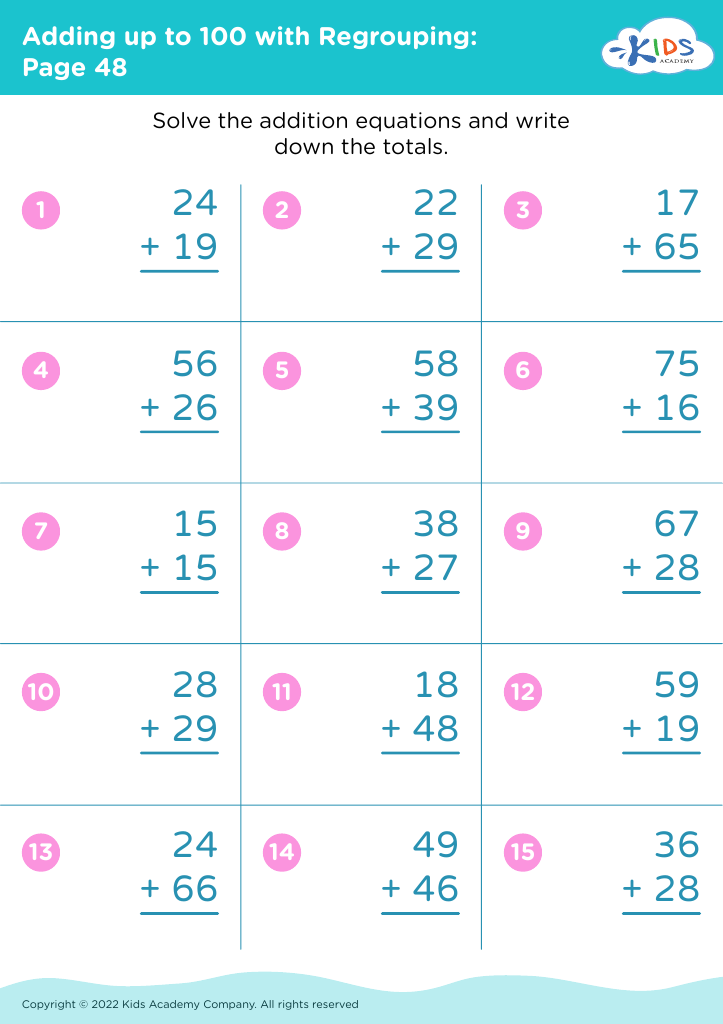
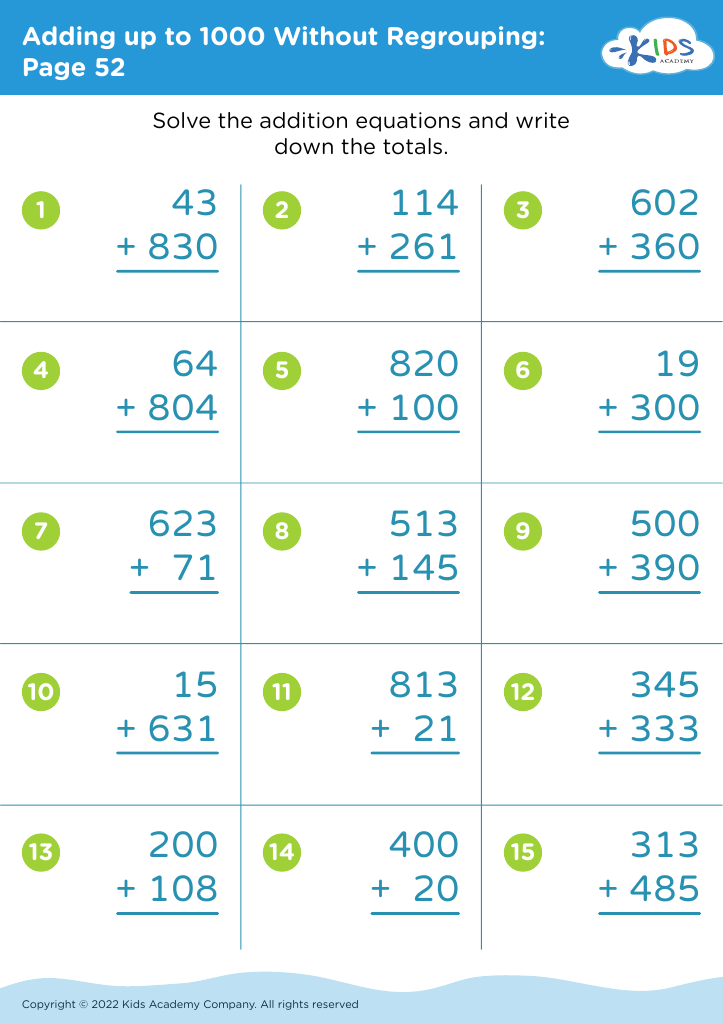
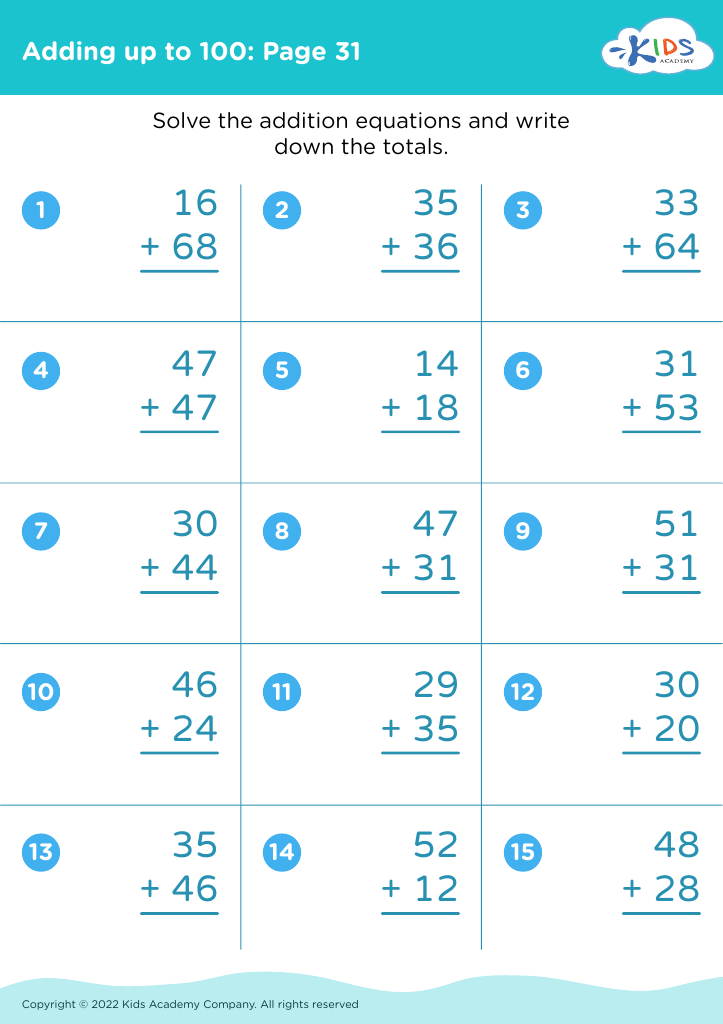
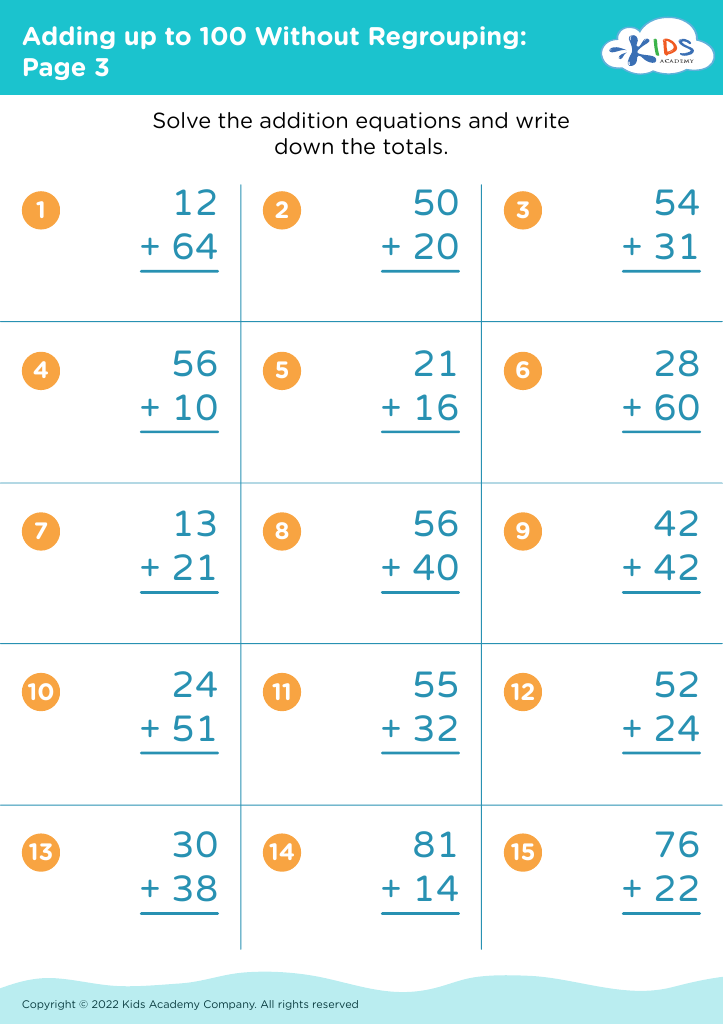
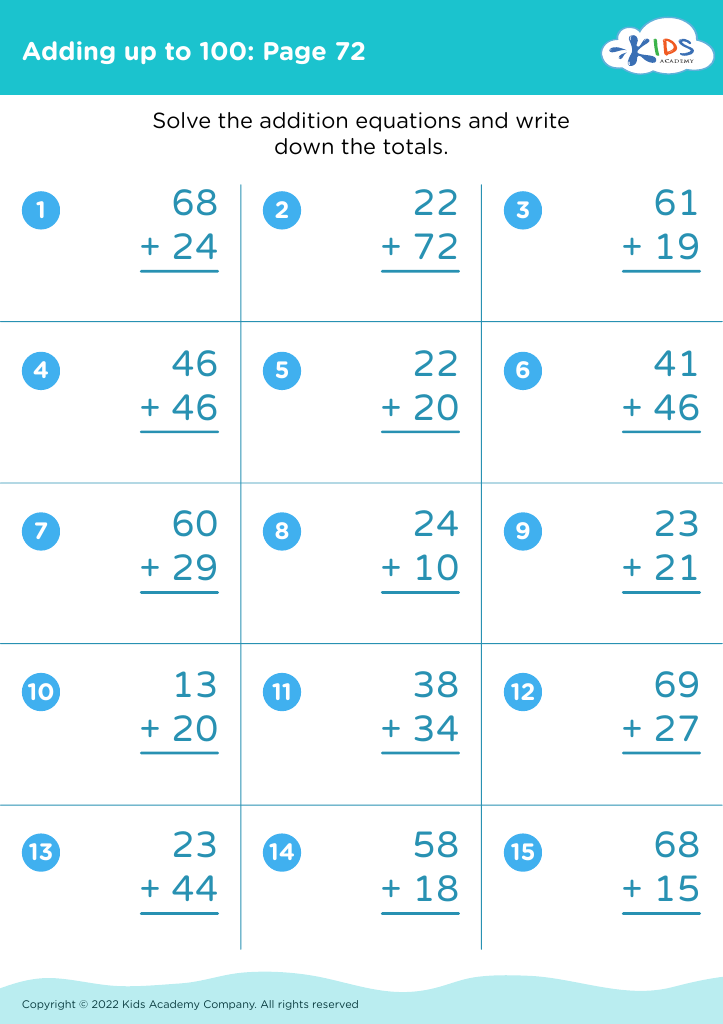








Developing number recognition and addition skills in Grade 2 is critical for several reasons. Firstly, number recognition serves as the foundation for more complex mathematical concepts. In Grade 2, students transition from counting to understanding numbers in a more abstract way, which is essential for future problem-solving and analytical skills. As they learn to recognize and manipulate numbers, they build confidence in their abilities, promoting a positive attitude towards math.
Moreover, addition is a fundamental operation that students use daily, be it in managing their allowances, identifying quantities, or solving real-world problems. Strengthening these skills ensures that children can perform calculations effortlessly, fostering independence and adaptability in everyday scenarios.
Teachers and parents play a crucial role in reinforcing these concepts through engaging activities involving games, real-life situations, and collaborative learning. Support outside the classroom also enhances students' understanding, making them more proficient in math.
Ultimately, fostering number recognition and addition prepares students not just for standardized tests but for lifelong skills in mathematics and critical thinking. Early investments in these areas lay the groundwork for academic success and cultivate a positive relationship with learning, contributing to holistic development as they progress in education.