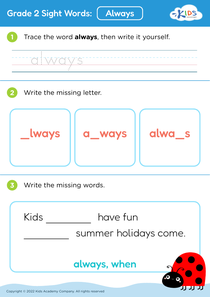
Developing problem-solving skills Grade 2 Addition Worksheets
5 filtered results
-
From - To
Unlock your child's mathematical potential with our Grade 2 Addition Worksheets focusing on developing problem-solving skills. Designed for young learners, these engaging worksheets help reinforce addition concepts while encouraging critical thinking. Through various real-world scenarios and word problems, students practice applying addition in different contexts, enhancing their understanding and confidence. Each worksheet is crafted to align with educational standards, making learning both effective and enjoyable. Foster a love for math as your child learns to approach challenges thoughtfully and creatively. Explore our comprehensive collection to support your second grader's journey in mastering essential problem-solving skills today!
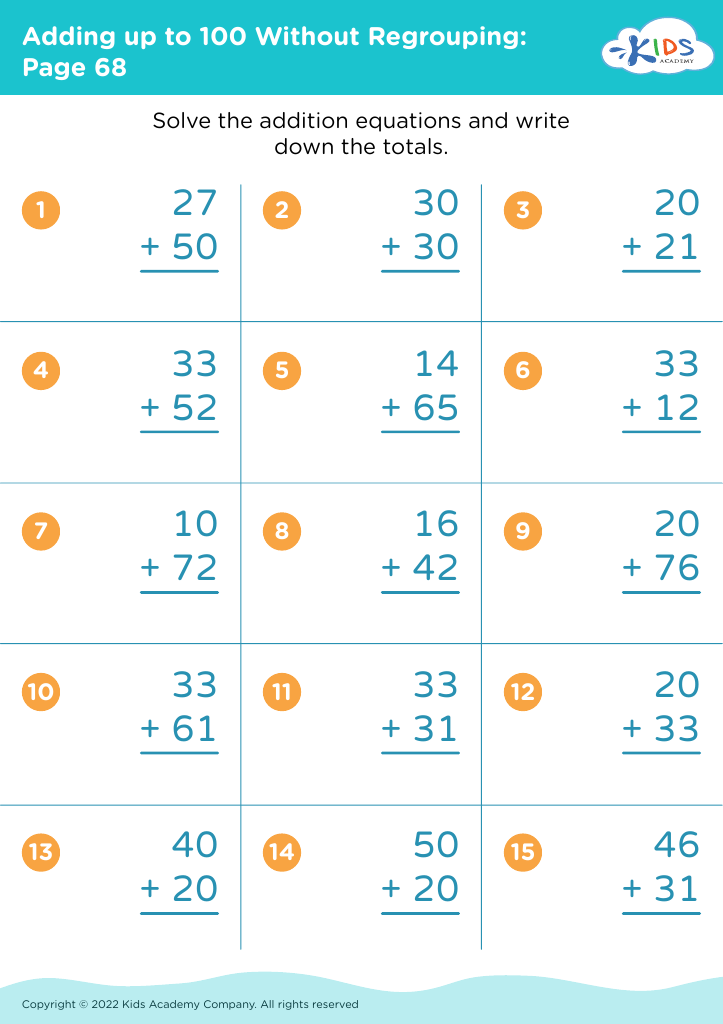
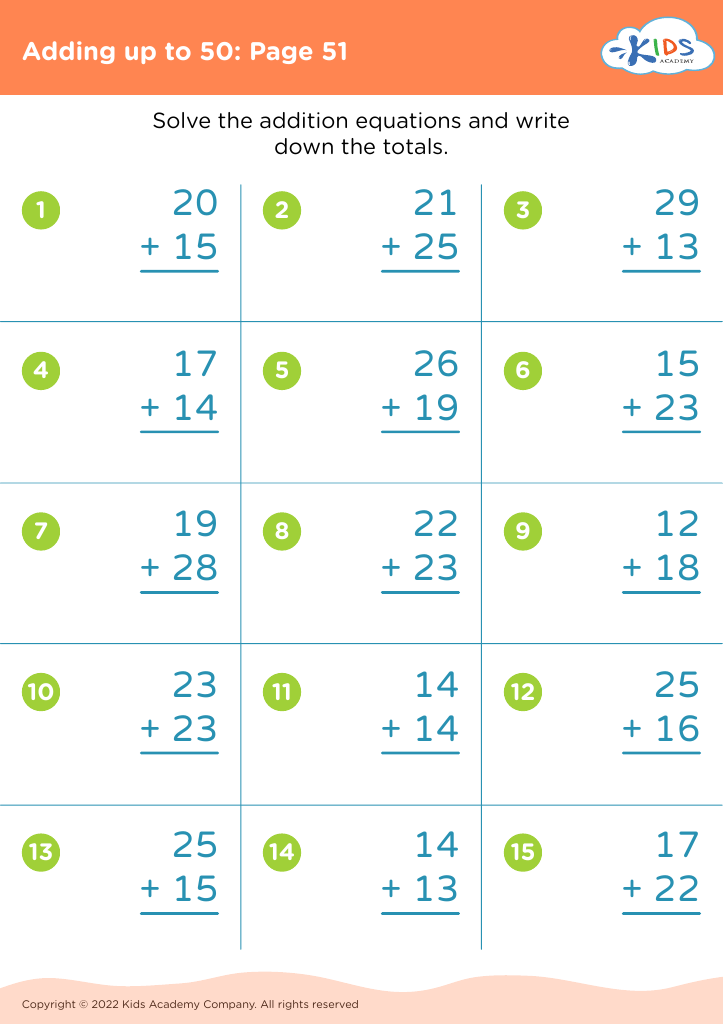
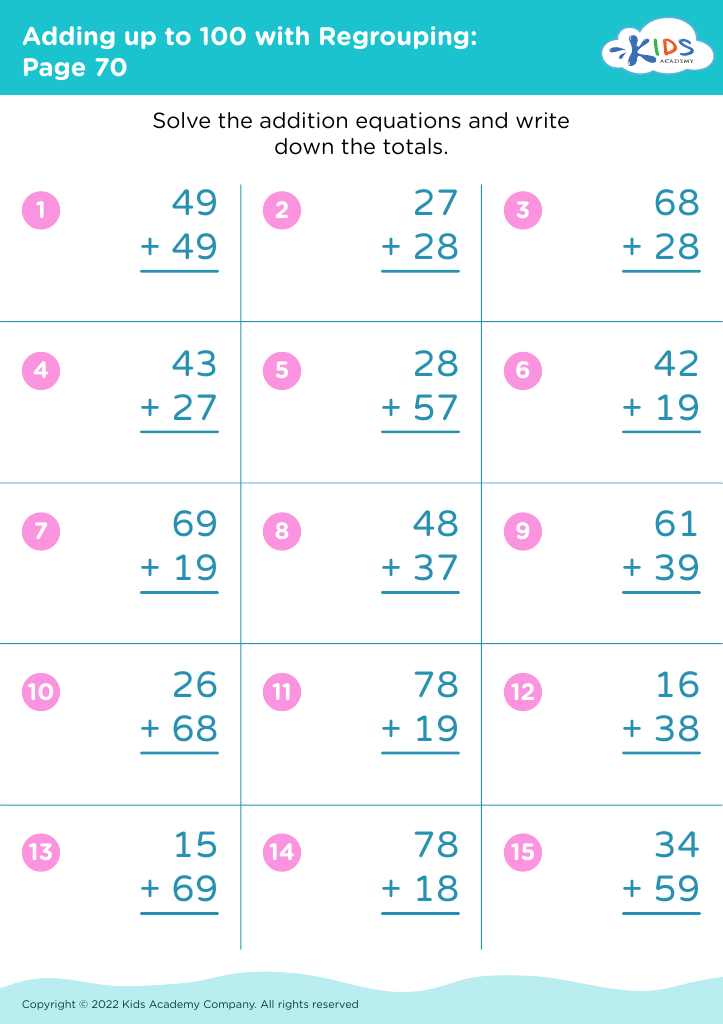
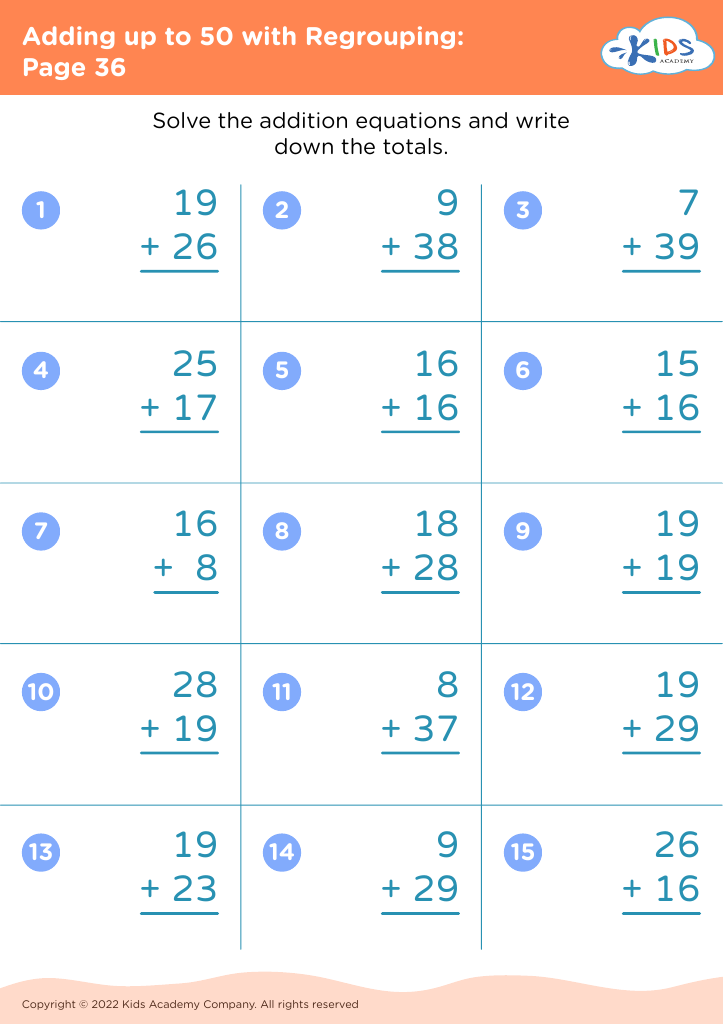
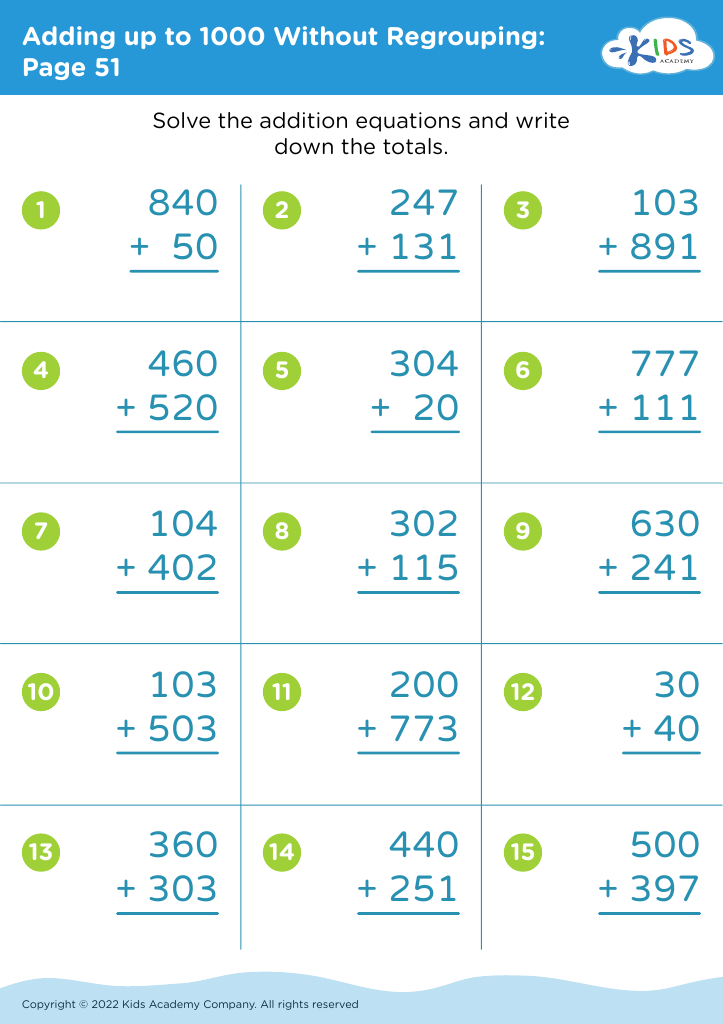








Developing problem-solving skills in Grade 2 addition is crucial for students' overall math fluency and confidence. At this stage, children are building a foundational understanding of mathematical concepts, and effective problem-solving enhances their ability to think critically. When parents and teachers emphasize problem-solving, they encourage students to explore various strategies for tackling additions, such as using manipulatives, drawing pictures, or mental math techniques.
Moreover, strong problem-solving skills in addition are transferable to other areas of mathematics and real-life situations. By tackling problems, children begin to view challenges as opportunities to learn, fostering resilience and persistence. As they navigate through different addition scenarios, they also improve their capacity for analytical thinking, which is essential for academic success across all subjects.
Additionally, focusing on problem-solving nurtures communication and collaboration skills, as children often work together to discuss their thought processes. Engaging parents in this approach allows them to reinforce these skills at home, creating a supportive learning environment. Ultimately, investing in the development of problem-solving skills in Grade 2 lays the groundwork for a child's lifelong learning and success in future educational endeavors. The skills they cultivate at this stage will benefit them well beyond the classroom.