Enhance fine motor skills Grade 2 Addition Worksheets
3 filtered results
-
From - To
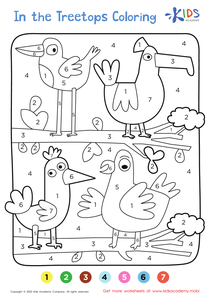
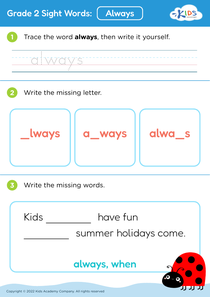
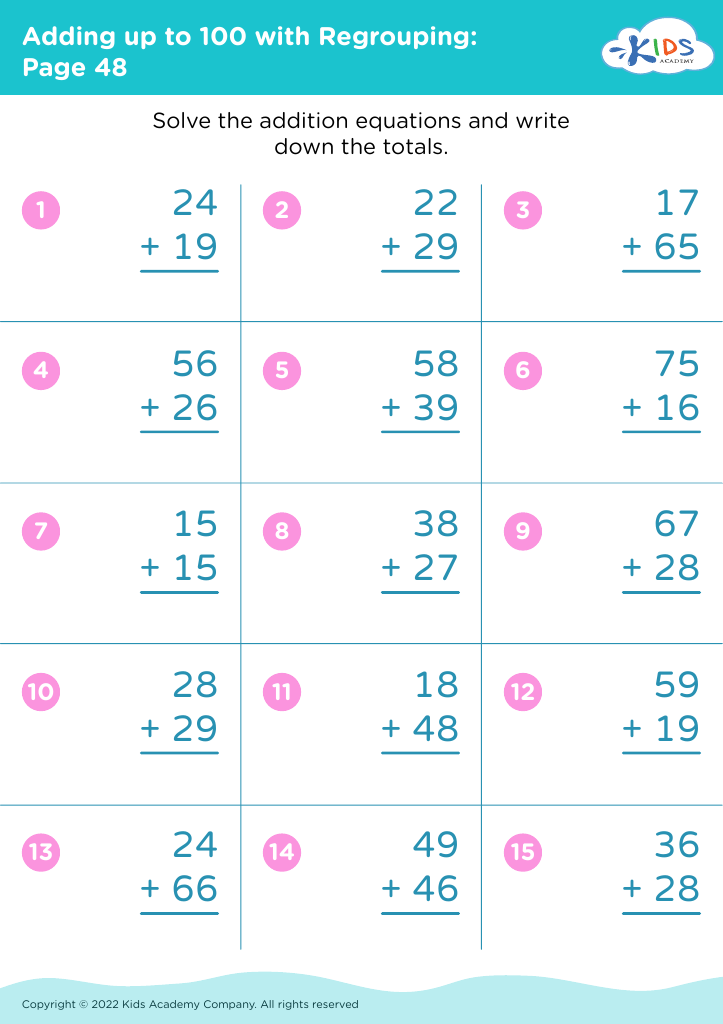
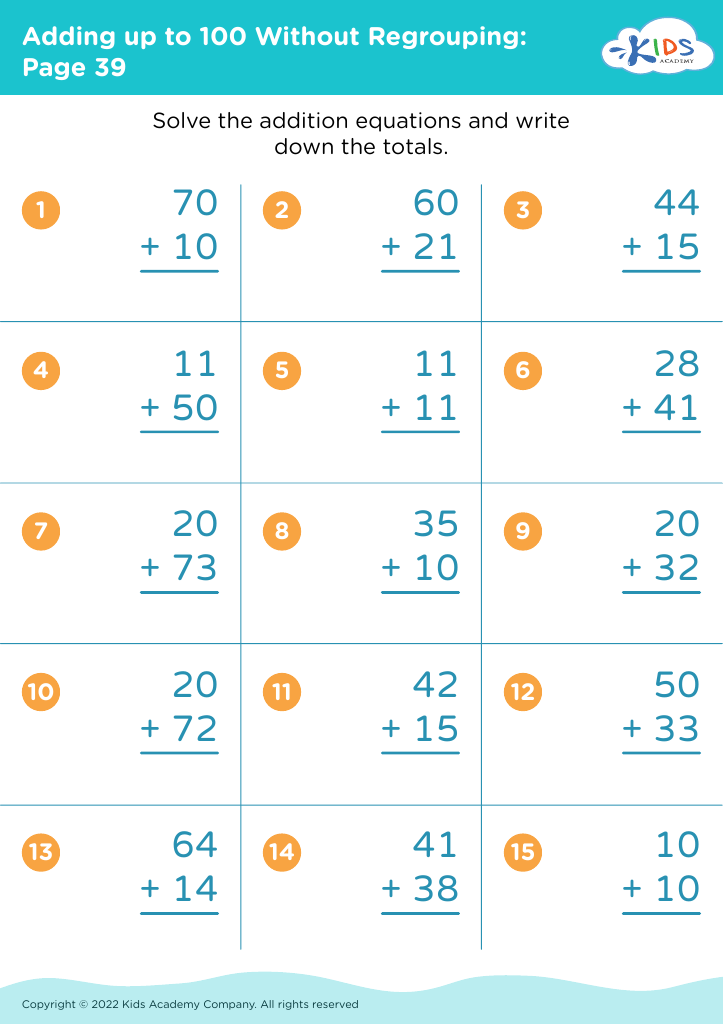
Enhance Fine Motor Skills with our Grade 2 Addition Worksheets! Specifically designed for second graders, these engaging, printable worksheets from Kids Academy help young learners practice math while developing crucial fine motor skills. Each worksheet incorporates fun, hands-on activities like coloring, tracing, and drawing to make learning addition enjoyable and effective. Ideal for classroom or home use, our worksheets support essential math foundations while simultaneously improving hand-eye coordination, pencil control, and muscle dexterity. Perfect for parents and educators looking to strengthen their students’ math skills and fine motor abilities in an interactive and stimulating way.
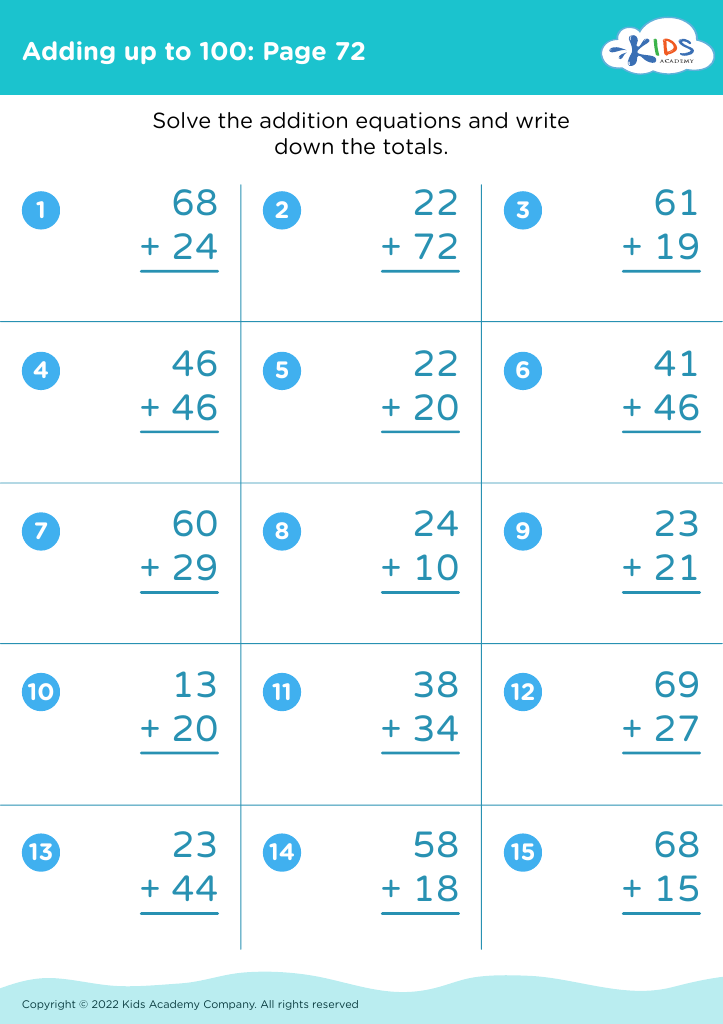








Fine motor skills are crucial for children’s overall development and success, especially in activities like writing, cutting, and other daily tasks. Encouraging the enhancement of fine motor skills in Grade 2, particularly through activities like addition, is vital for several reasons.
Firstly, fine motor skills directly affect children’s ability to write legibly and efficiently. Practicing addition with pencil and paper helps to refine their hand dexterity, grip strength, and hand-eye coordination. These skills are essential not just for math but for all subjects, as clear handwriting impacts their ability to communicate ideas effectively in written form.
Secondly, fine motor tasks integrated with academic content, such as solving addition problems, engage multiple areas of the brain. This multi-faceted engagement can enhance cognitive abilities, including problem-solving, logical thinking, and concentration. When children perform addition with physical manipulatives like counters or beads, they simultaneously improve their fine motor skills and deepen their understanding of mathematical concepts.
Lastly, honing fine motor skills can boost children’s confidence and independence. Success in tasks requiring fine motor control, such as mathematics exercises, allows children to tackle more complex activities with confidence. Therefore, parents and teachers should pay close attention to developing these skills through engaging grade-appropriate activities like addition, setting a strong foundation for future academic and personal growth.