Fine motor skills (writing) Grade 2 Addition Worksheets
6 filtered results
-
From - To
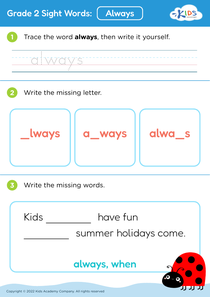
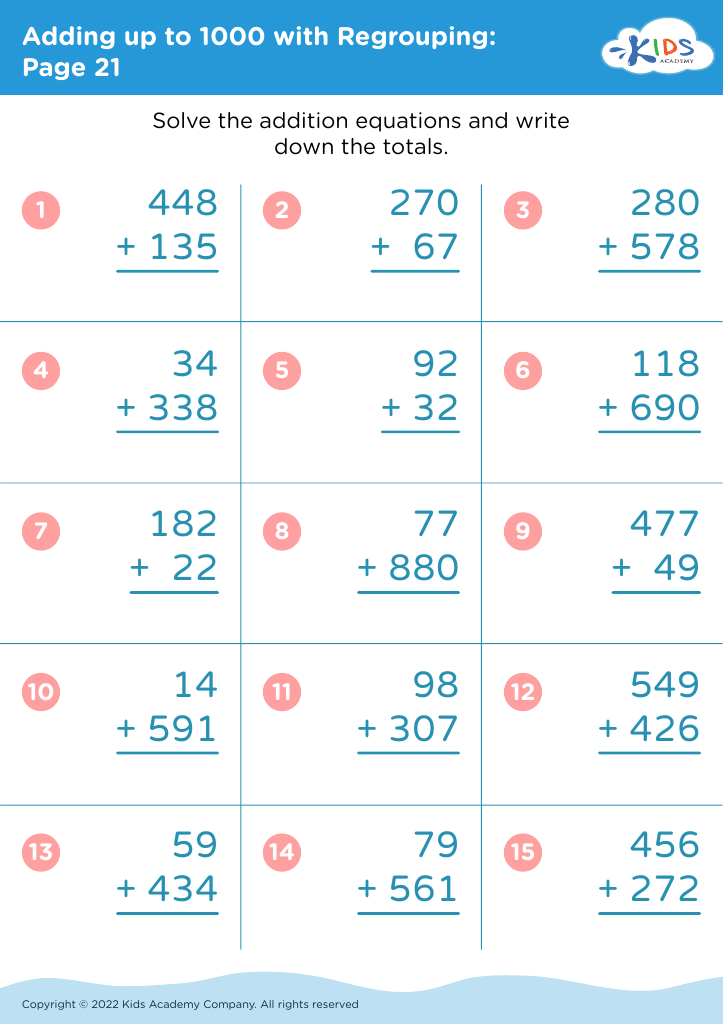
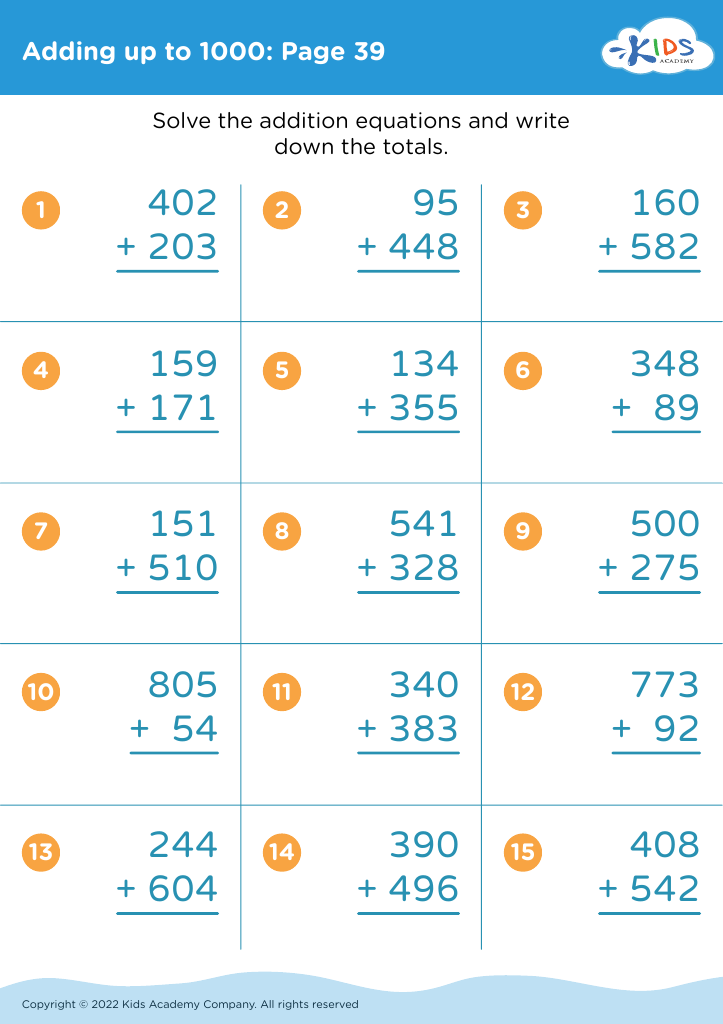
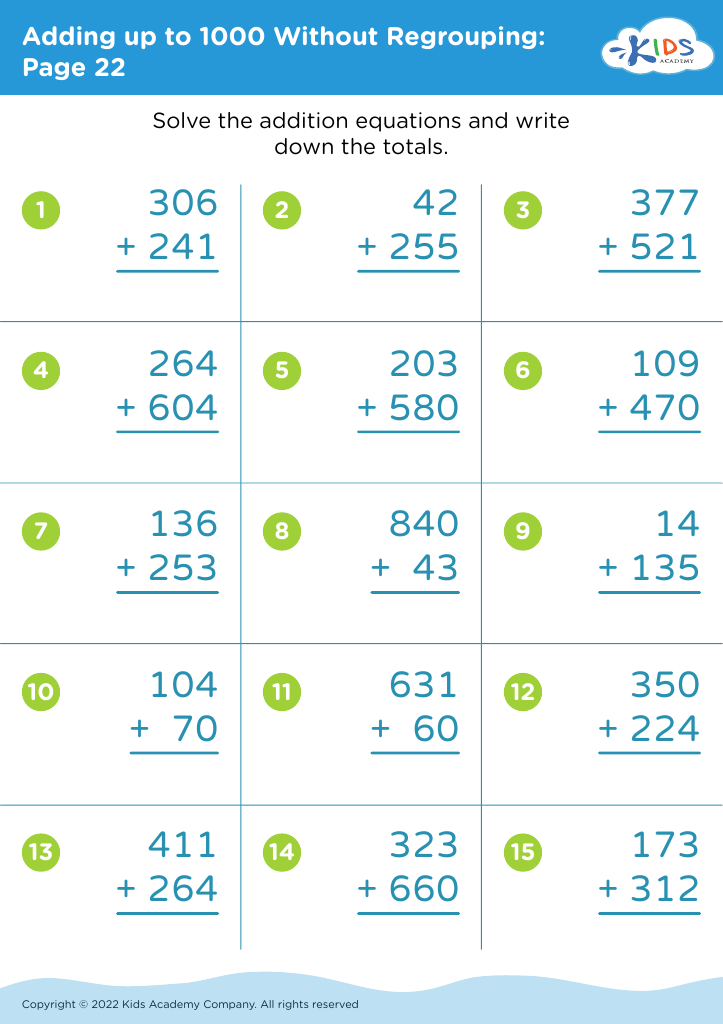
Enhance your child’s fine motor skills with our Grade 2 Addition Worksheets. Specifically designed to bolster dexterity and handwriting precision while reinforcing fundamental math concepts, these engaging worksheets offer a dual benefit. Each sheet incorporates addition problems tailored for second graders, promoting numerical fluency alongside motor control. The activities also include fun themes and illustrations, capturing their interest and making learning an enjoyable experience. Perfect for classroom or at-home practice, these worksheets from Kids Academy ensure your child develops critical fine motor skills and a solid math foundation. Download now and support their handwriting and math journey!
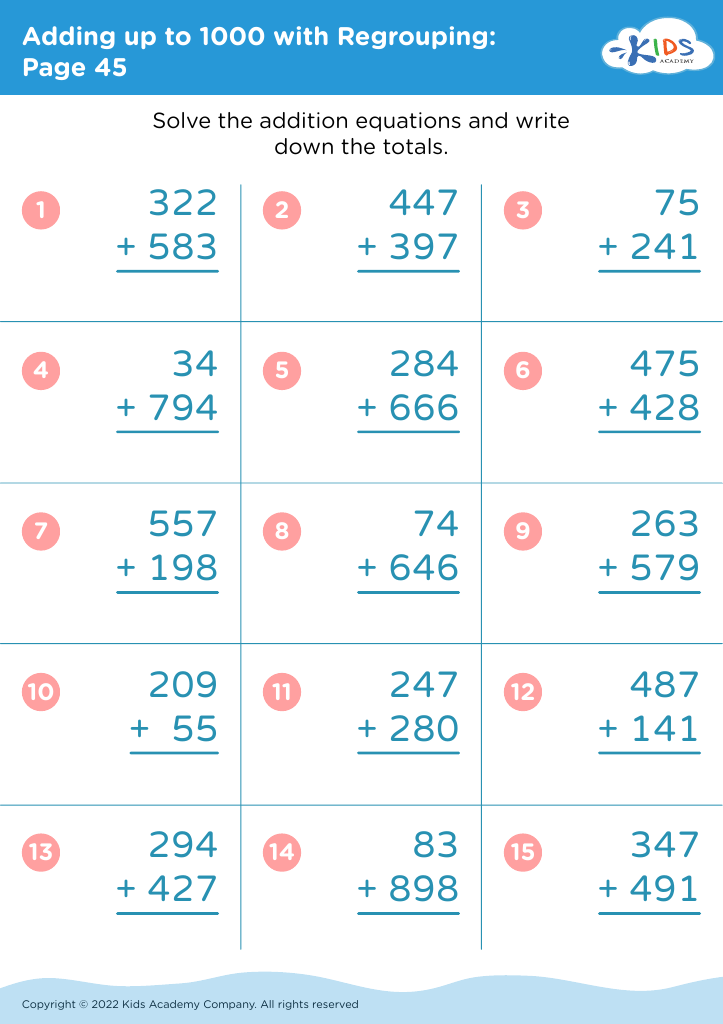
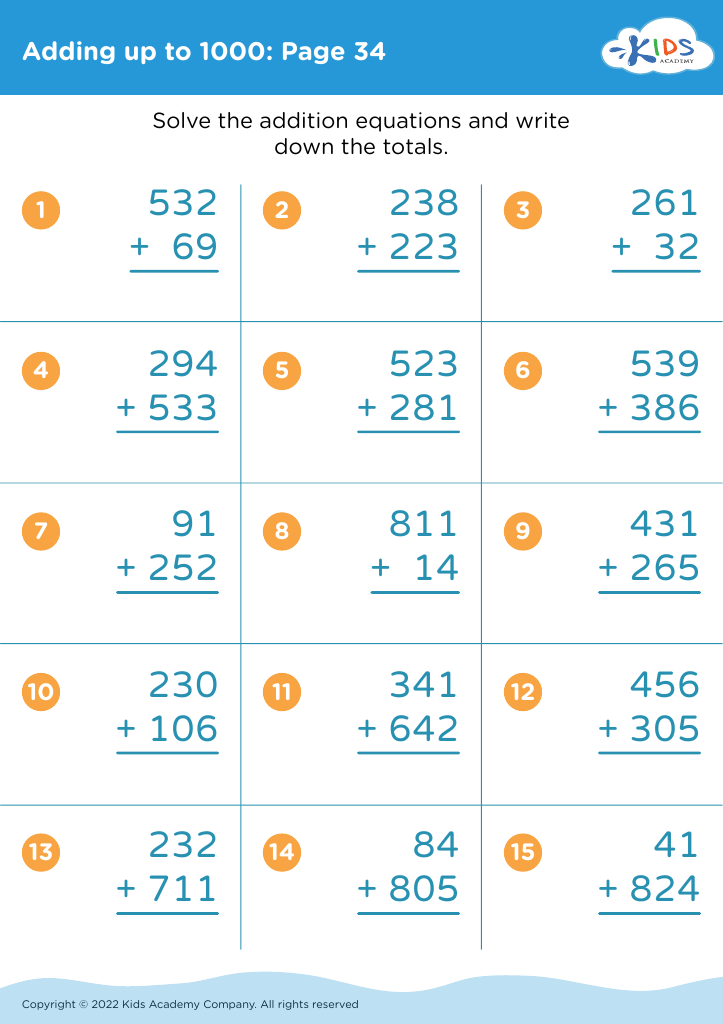
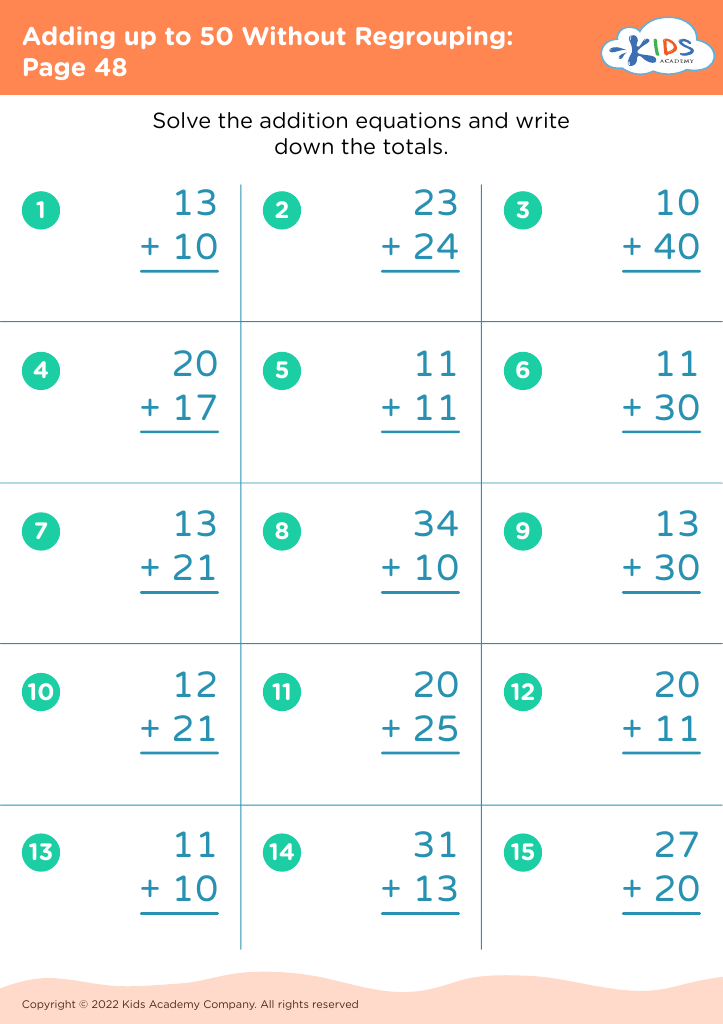








Fine motor skills are essential for second graders, as these skills are foundational for many critical tasks in both academic and everyday settings. In the context of writing, fine motor skills involve the coordination of small muscles in the hands and fingers, allowing children to hold a pencil, form letters, and write legibly. These skills directly influence a child's ability to complete assignments, participate in classroom activities, and develop self-confidence.
For parents and teachers, paying attention to fine motor skills means actively supporting a child's ability to communicate effectively through writing. This is particularly important in the second grade, where writing assignments become more complex and children's thoughts and ideas need to be expressed clearly and coherently. Good fine motor skills also lead to fewer frustrations and a more positive attitude toward learning and school in general.
Additionally, engaging in activities that enhance fine motor skills, such as coloring, cutting with scissors, and playing with building blocks, can indirectly benefit a child's mathematical abilities, including addition. For instance, writing numbers accurately is crucial for solving addition problems and understanding mathematical concepts. Hence, fostering these skills can lead to better academic performance and a more holistic development. Parents and teachers can therefore help children build strong academic foundations by integrating activities that promote fine motor skills into daily routines.