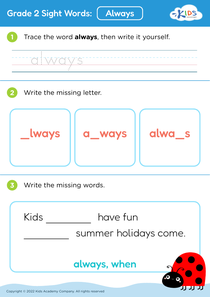
Fraction simplification Grade 2 Addition Worksheets - Page 3
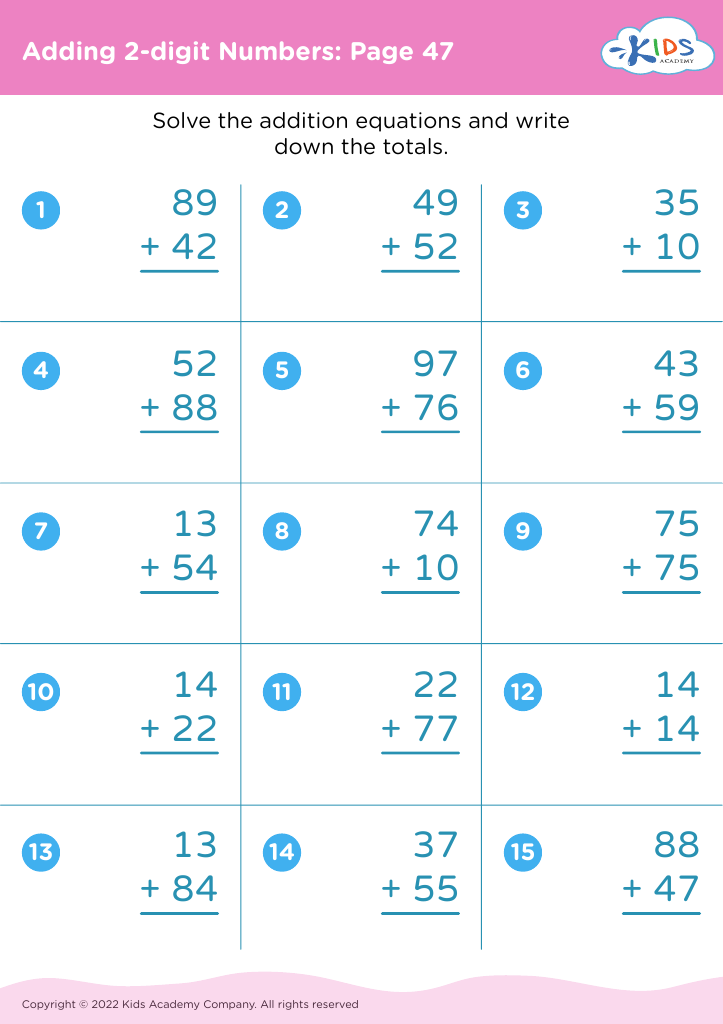
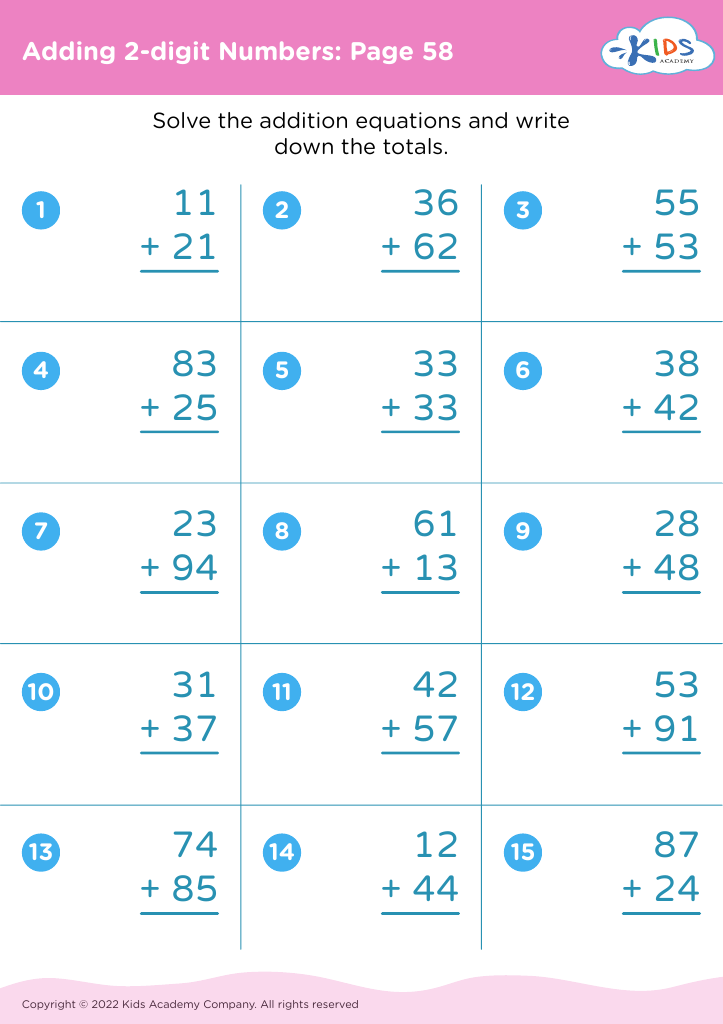
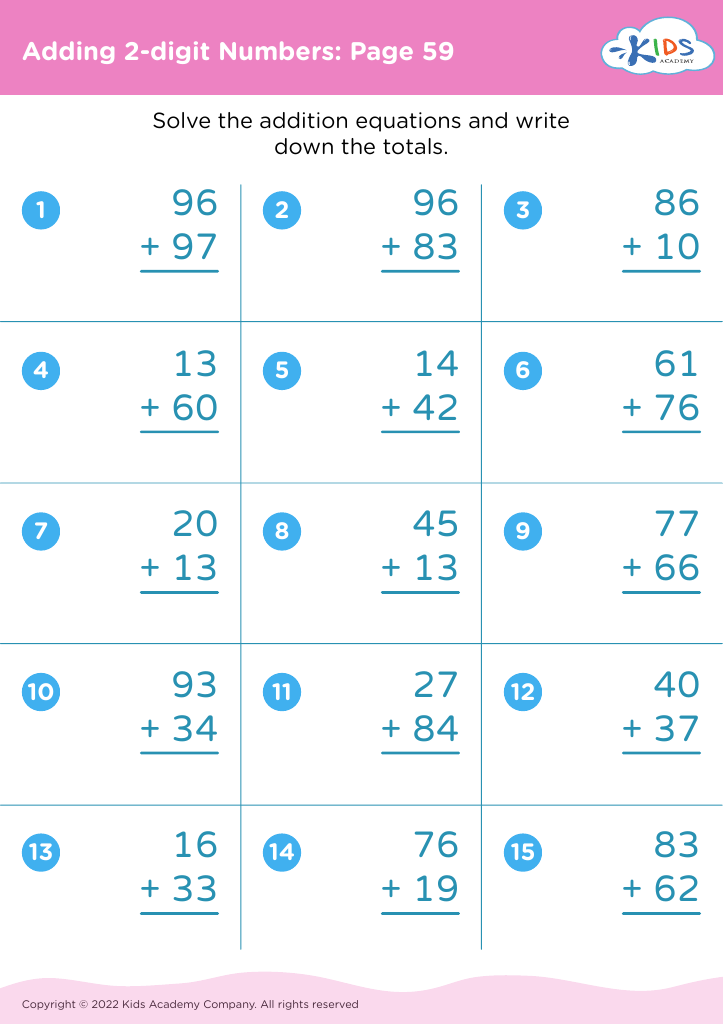
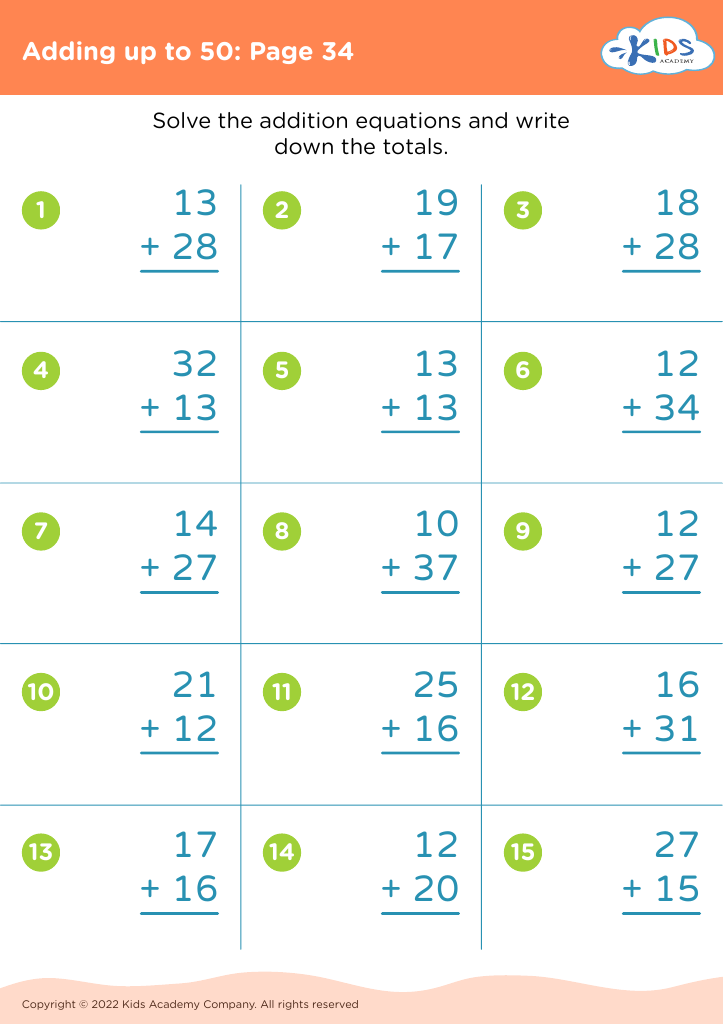








Parents and teachers should prioritize fraction simplification and related concepts in Grade 2 addition because these skills lay the foundation for critical mathematical understanding. At this level, children begin to encounter fractions, which can be abstract concepts for young learners. By teaching kids how to simplify fractions, we help them grasp the idea that numbers can vary in representation while still maintaining the same value. This concept not only nurtures mathematical fluency but also enhances problem-solving skills.
Understanding fractions is essential as it introduces children to the concepts of part-whole relationships, which occur frequently in daily life, from cooking to sharing objects among friends. Practicing fraction addition and simplification enables students to visualize and manipulate these concepts, boosting their confidence in math. Additionally, simplifying fractions encourages logical thinking, as students must analyze and break down components to their simplest forms.
As young learners transition to more complex mathematical subjects in later grades, having a solid foundation in fractions promotes a smoother and more successful learning path. By prioritizing these skills early on, parents and teachers can foster a lifelong appreciation for math, ensuring that children are well-prepared for future academic challenges.