Identifying equivalent fractions Grade 2 Addition Worksheets
7 filtered results
-
From - To
Welcome to our "Identifying Equivalent Fractions" worksheets for Grade 2! These engaging, interactive resources are designed to help students grasp the concept of equivalent fractions while enhancing their addition skills. Our thoughtfully crafted worksheets incorporate colorful visuals and practical exercises, making learning enjoyable and effective. Children will explore a variety of fraction representations and solve problems that reinforce their understanding. Ideal for classroom or home use, these worksheets cater to diverse learning styles, ensuring every child can succeed. Explore our collection now and empower your second grader to master equivalent fractions with confidence and ease!
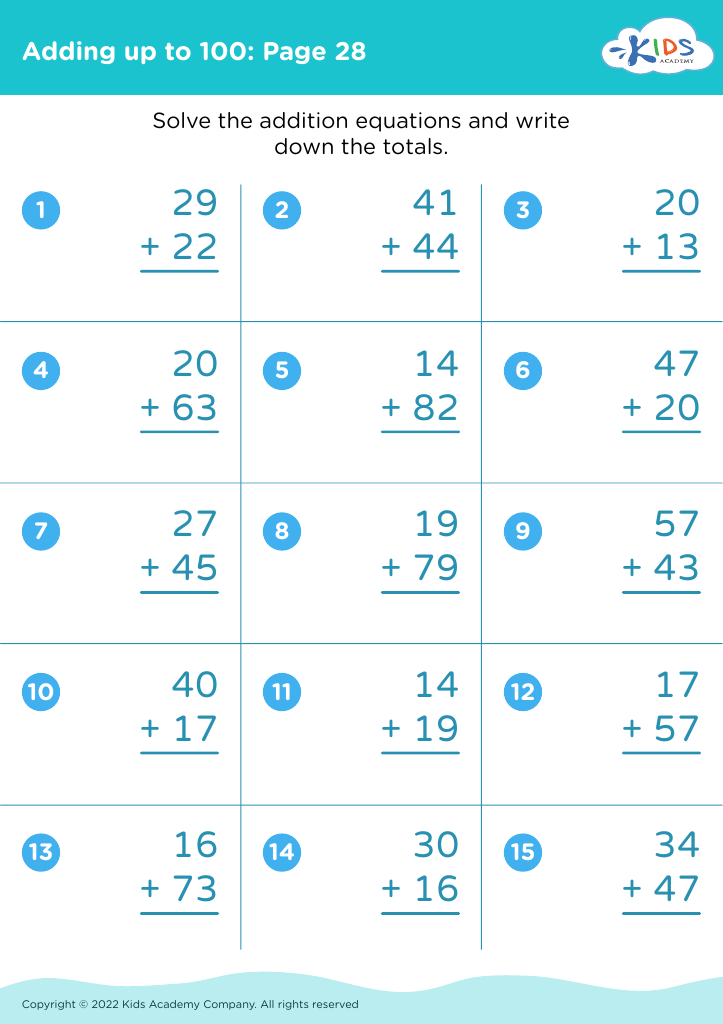
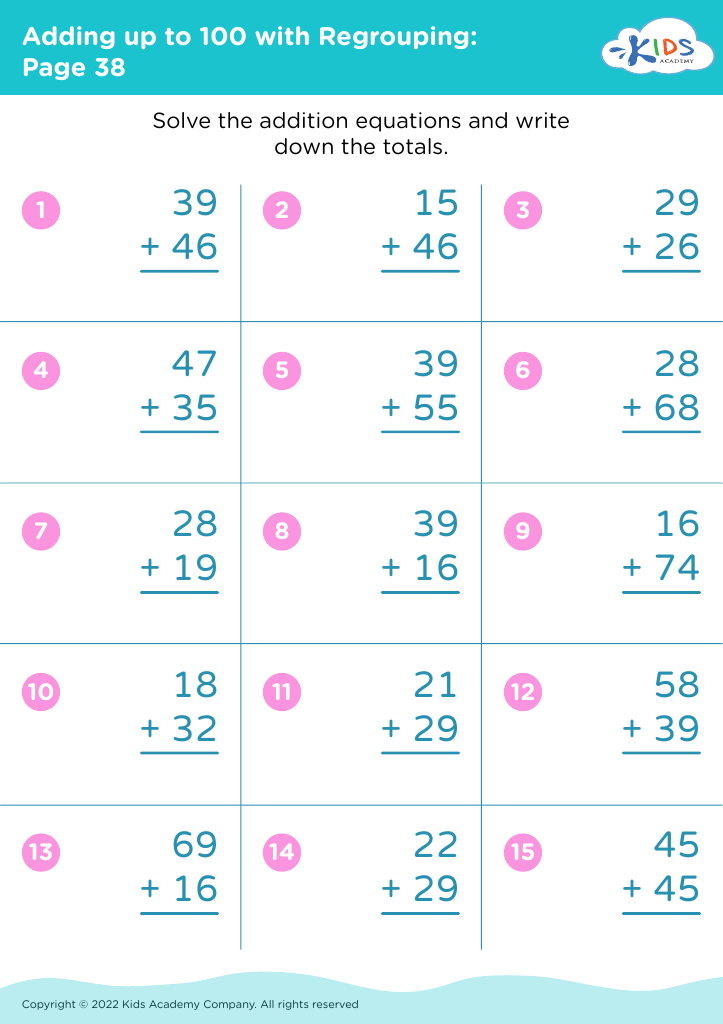
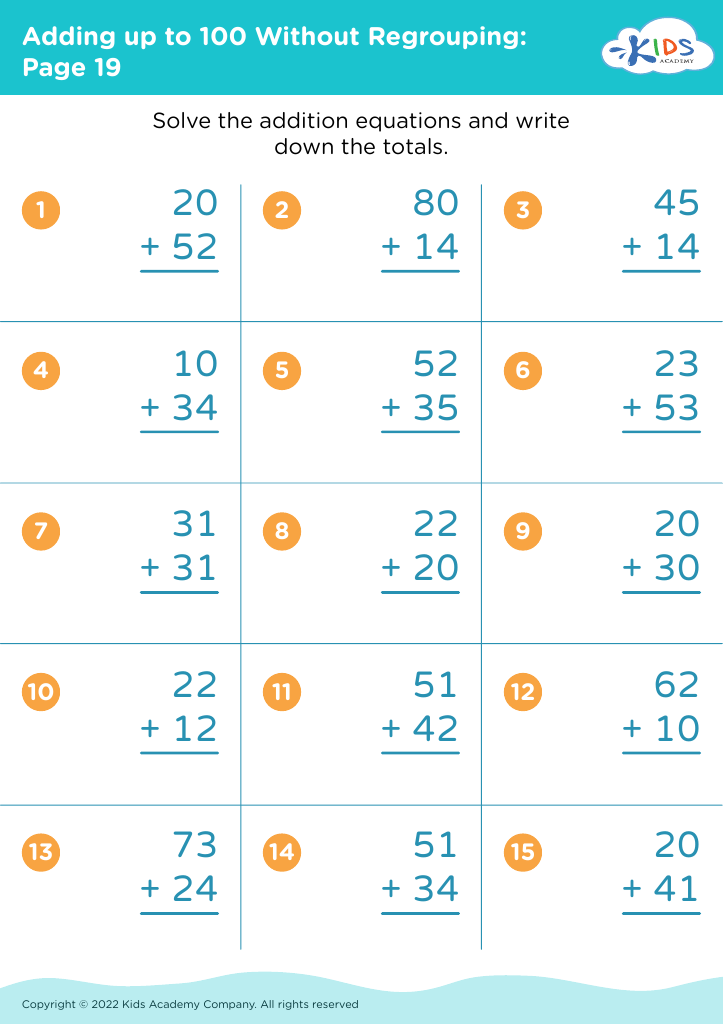








Identifying equivalent fractions is a fundamental concept in mathematics that plays a crucial role in a child's early education, particularly in Grade 2. Understanding equivalent fractions helps lay a strong foundation for more complex mathematical concepts that children will encounter later, such as addition, subtraction, multiplication, and division of fractions.
When parents and teachers take the time to emphasize this concept, they help students see relationships between numbers and understand that different fractions can represent the same value. For instance, recognizing that 1/2 is equivalent to 2/4 encourages students to view fractions not just as isolated numbers but as parts of a whole that relate to each other.
Additionally, teaching equivalent fractions aligns with developing problem-solving and critical-thinking skills. Students learn to manipulate fractions in various mathematical operations, paving the way for success in future topics like proper and improper fractions and mixed numbers. As children build confidence in handling fractions, they become more adept at reasoning mathematically, contributing to a more comprehensive understanding of the number system.
Ultimately, supporting students in identifying equivalent fractions equips them with essential skills that foster independent and confident learners, making arithmetic more accessible and enjoyable throughout their educational journey.