Improve counting Grade 2 Addition Worksheets
3 filtered results
-
From - To
Unlock the joy of math with our "Improve Counting Grade 2 Addition Worksheets." Designed specifically for second graders, these worksheets focus on enhancing counting skills while mastering addition. Our engaging activities promote practice in adding numbers, developing number sense, and building confidence in math. Each worksheet offers a variety of problems to ensure comprehensive learning and understanding, making it perfect for both classroom and home use. Help your child excel in their math journey through fun, interactive exercises that boost their counting abilities and pave the way for future success in mathematics. Explore our resources and support your child's learning today!
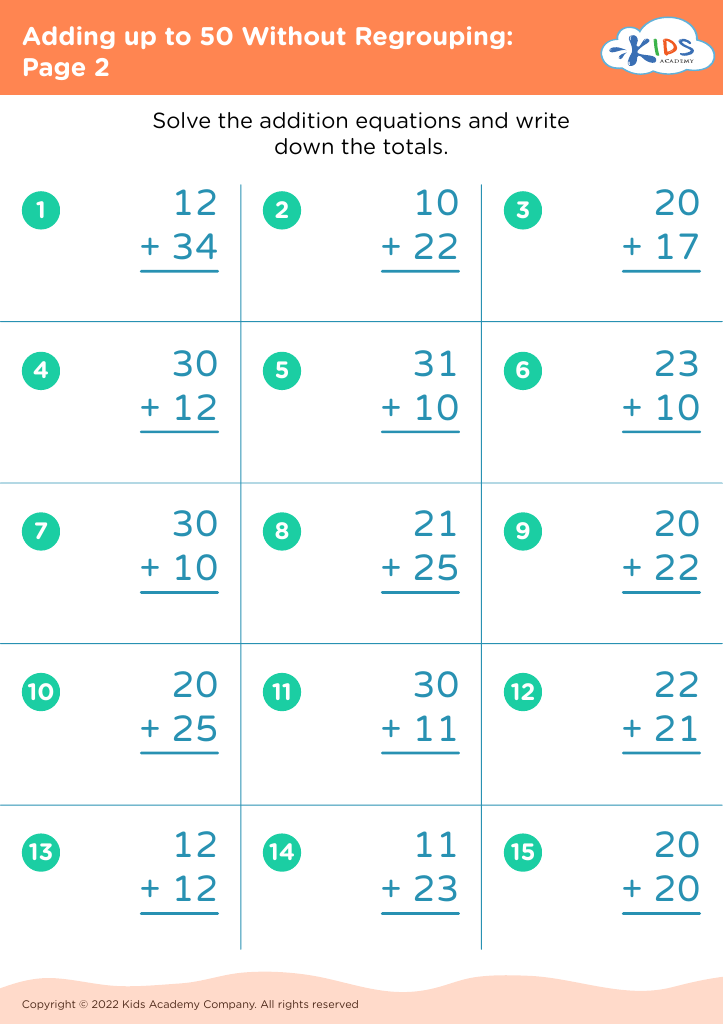
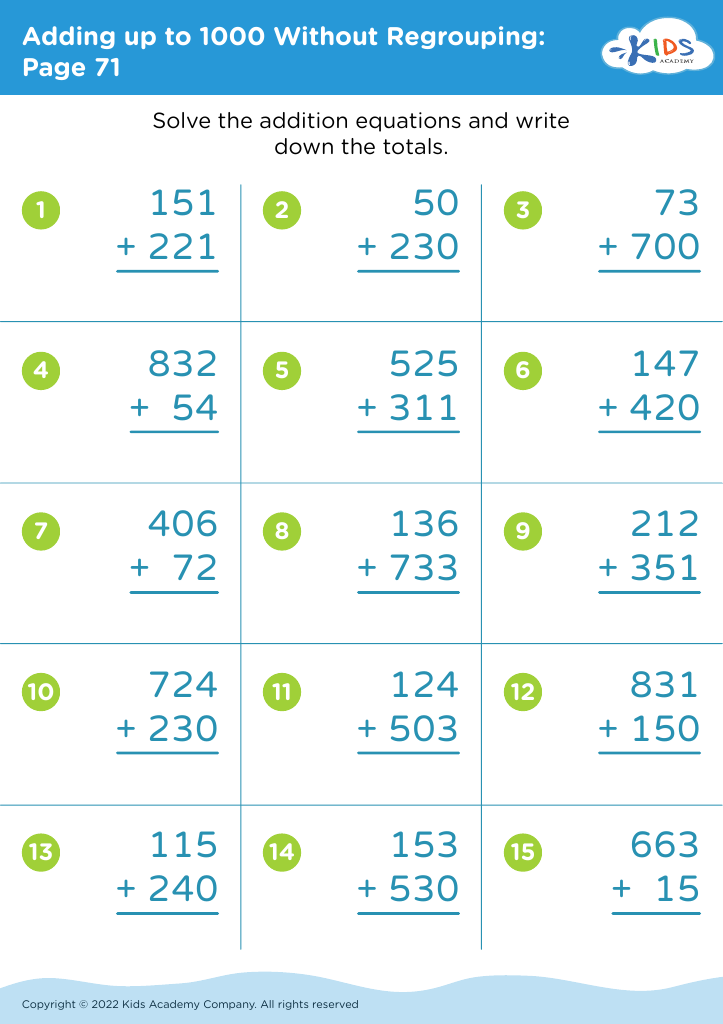
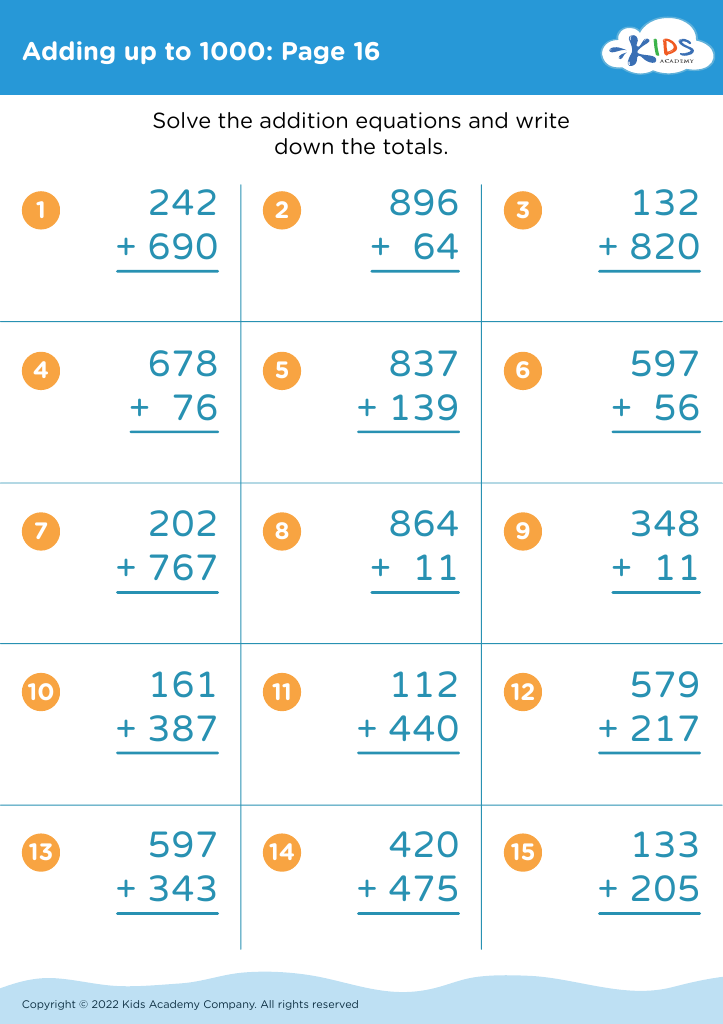








Improving counting and addition skills in Grade 2 is crucial for several reasons. At this stage, children develop foundational numerical understanding, which is essential for future mathematical concepts. Mastery of addition not only equips students with the ability to solve problems but also enhances their confidence in tackling more complex math concepts as they progress through school.
Strong counting skills aid in cognitive development, engaging children in critical thinking and promoting better problem-solving abilities. These foundational skills lay the groundwork for future topics like subtraction, multiplication, and division, ultimately influencing their performance in higher-level math.
Furthermore, children with solid counting and addition competencies tend to perform better academically, resulting in a positive cycle of increased motivation and success. Teachers and parents play a vital role in fostering these skills through engaging activities, games, and practical applications in everyday life, such as budgeting or cooking.
Additionally, investing time in improving these skills helps students develop a positive attitude toward math, reducing anxiety and promoting a lifelong love for the subject. In essence, ensuring proficiency in counting and addition not only encourages academic excellence but also equips children with essential skills for their daily lives.