Improve number recognition Grade 2 Addition Worksheets
15 filtered results
-
From - To
Boost your child's number recognition skills with our Grade 2 Addition Worksheets from Kids Academy. Designed to solidify foundational math knowledge, these engaging worksheets focus on improving number identification and addition proficiency. Each worksheet offers a variety of exercises, helping young learners practice number sequences, simple sums, and accurate calculations. The colorful, fun activities ensure a captivating and educational experience that encourages kids to enjoy math practice. Perfect for in-class or at-home learning, these worksheets will empower your second grader with confidence in their number recognition and addition abilities. Explore our collection now and watch your child excel!
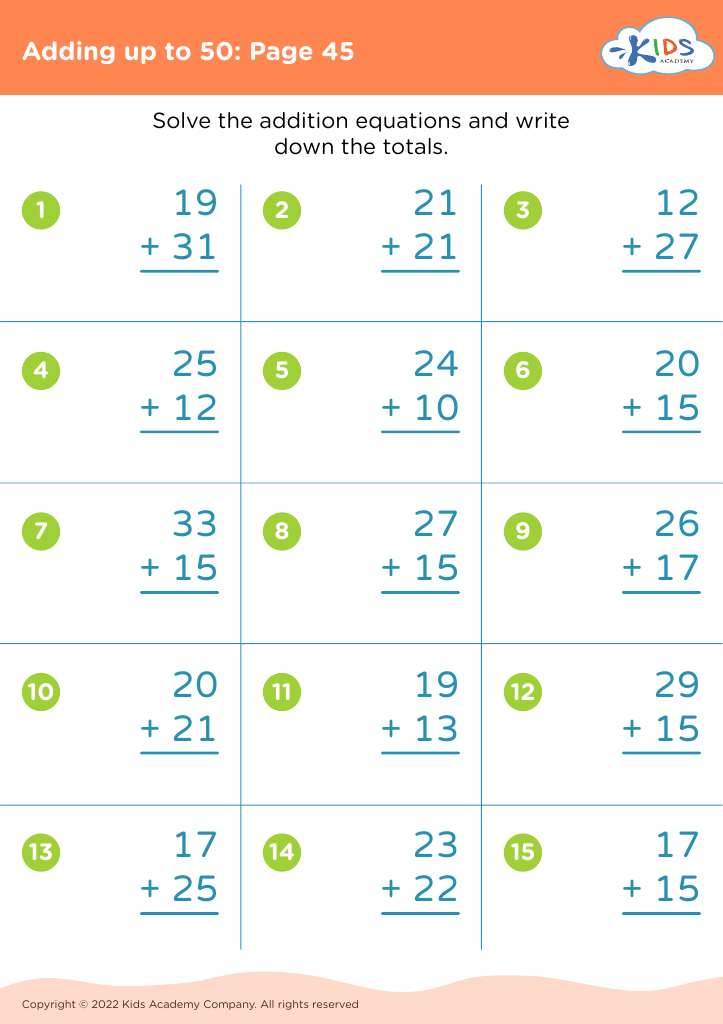
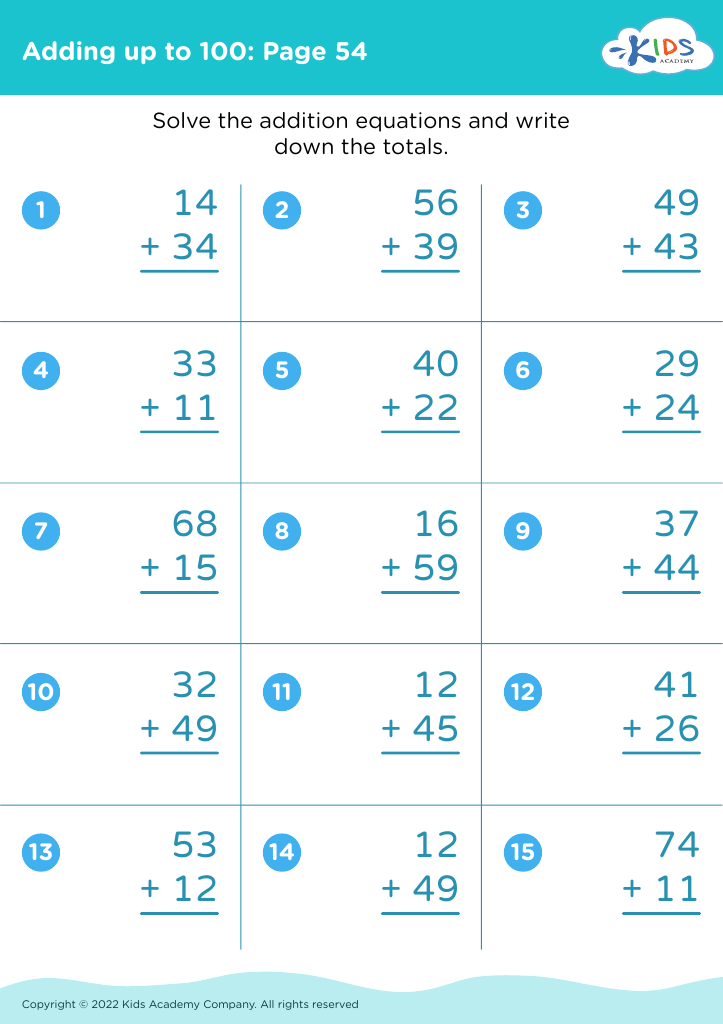
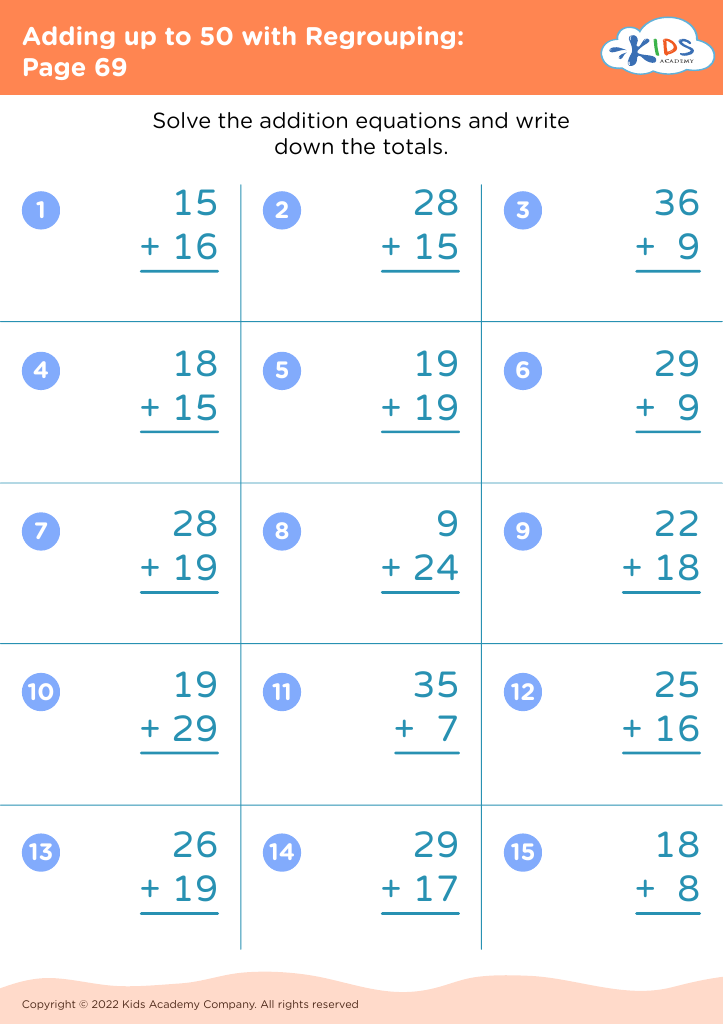
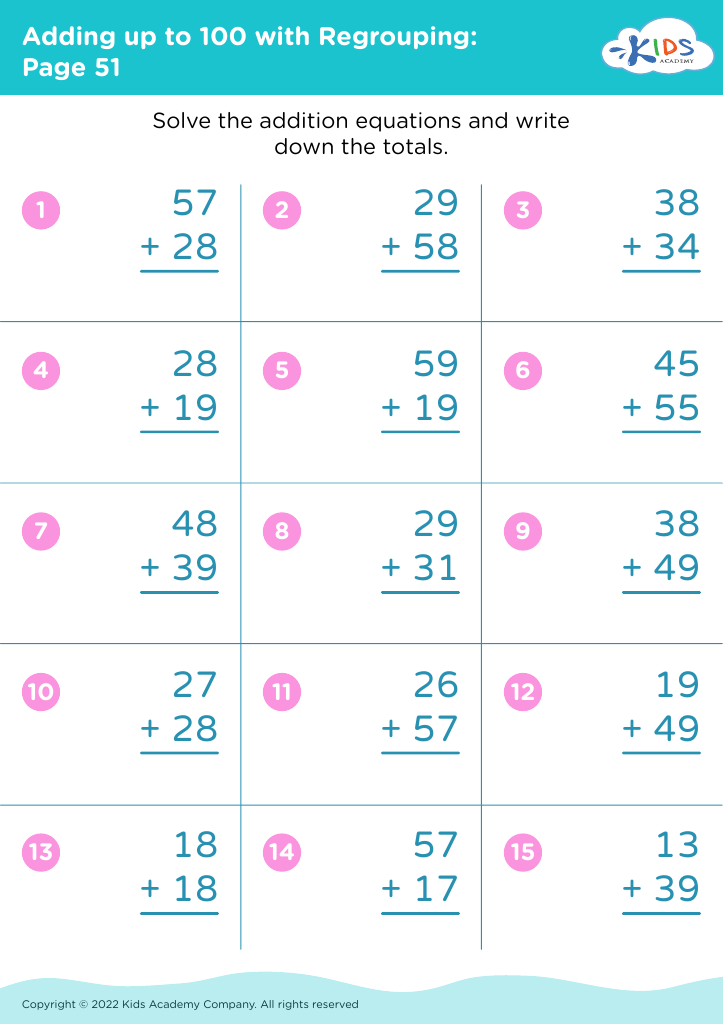
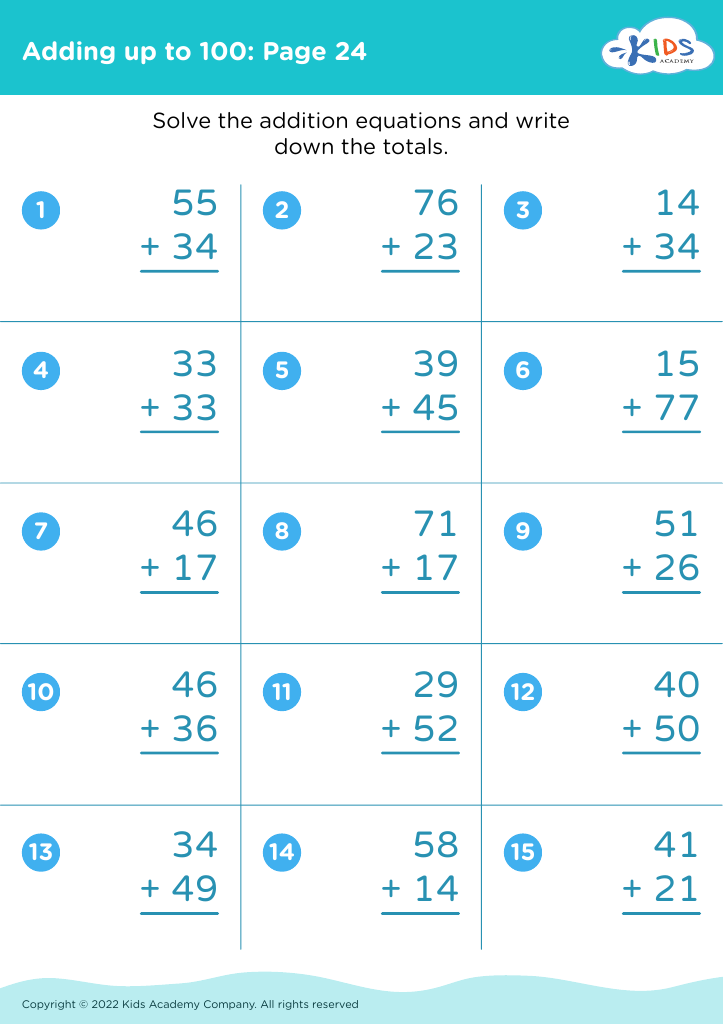
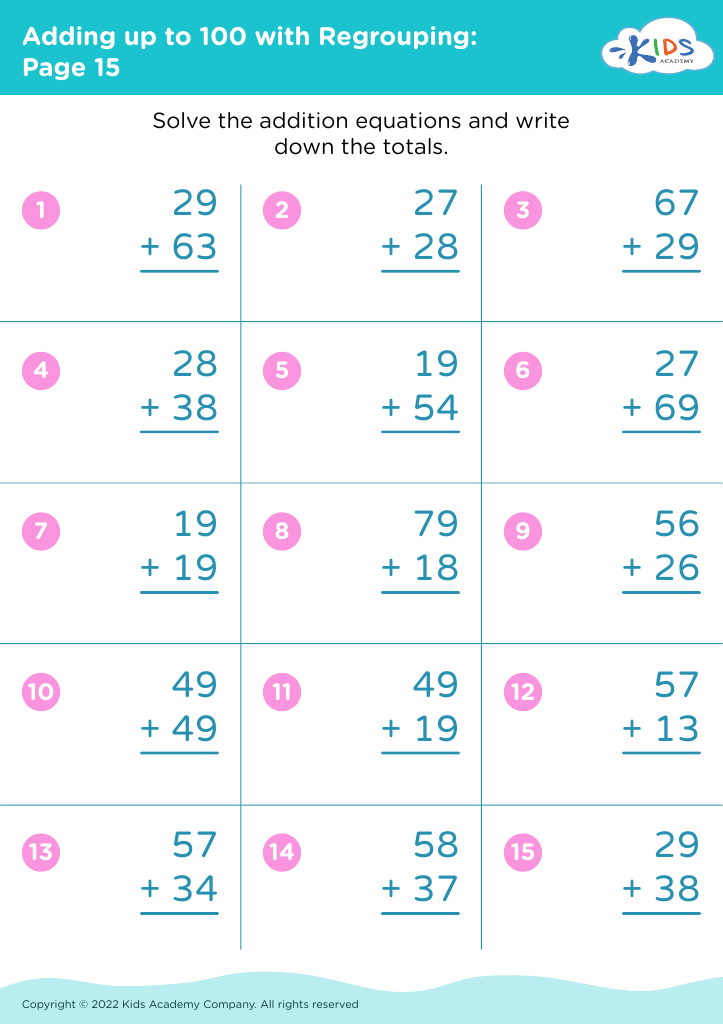
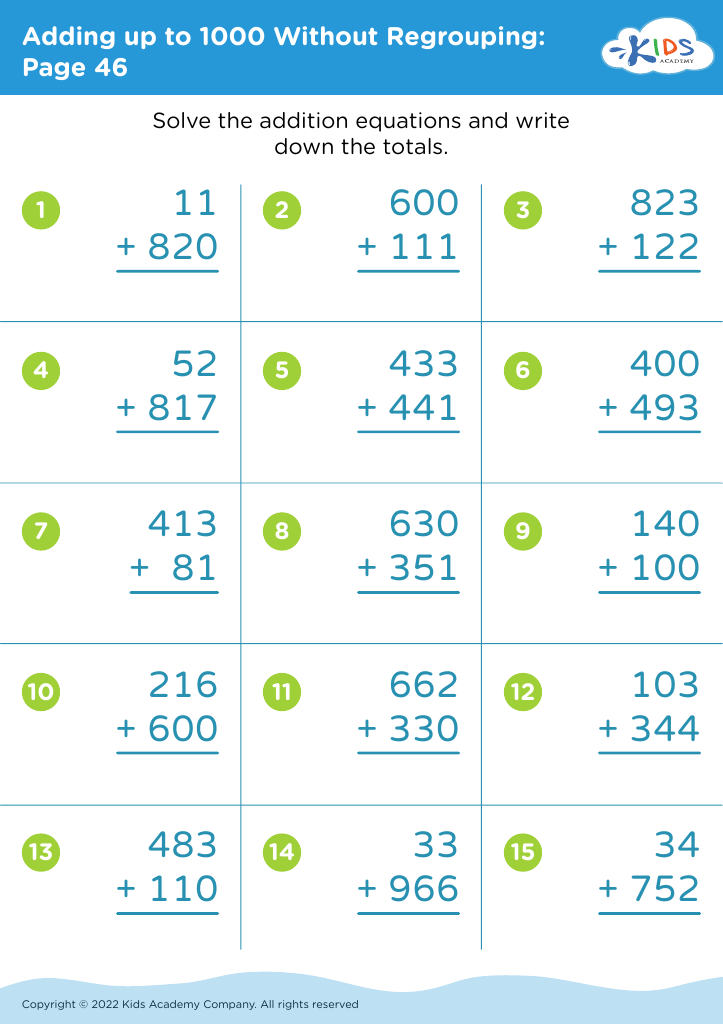
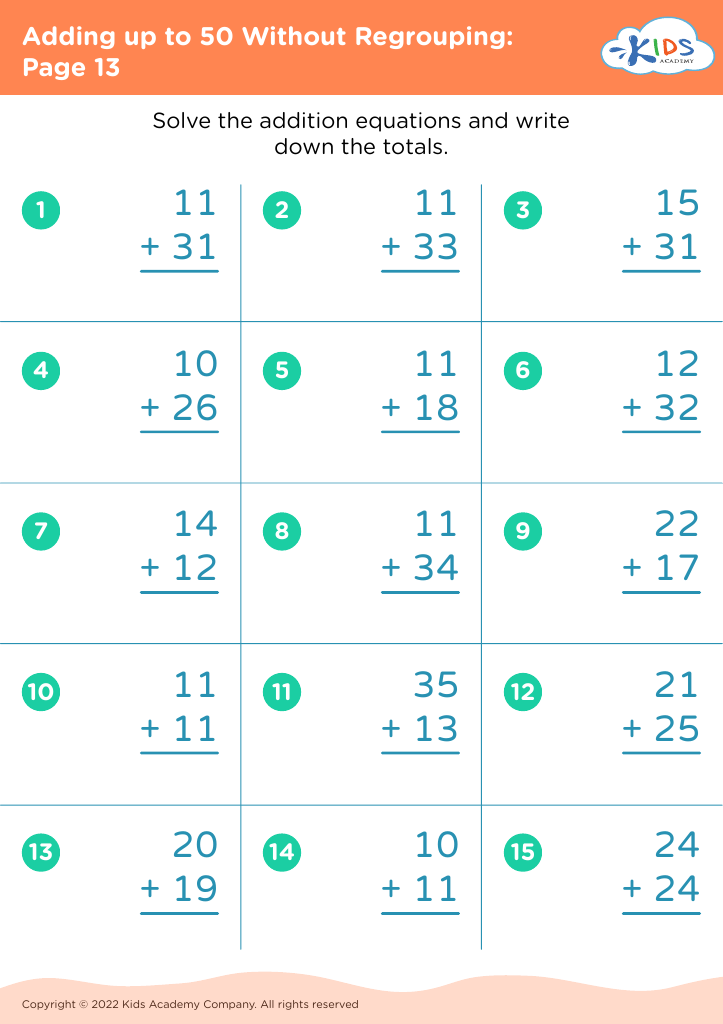
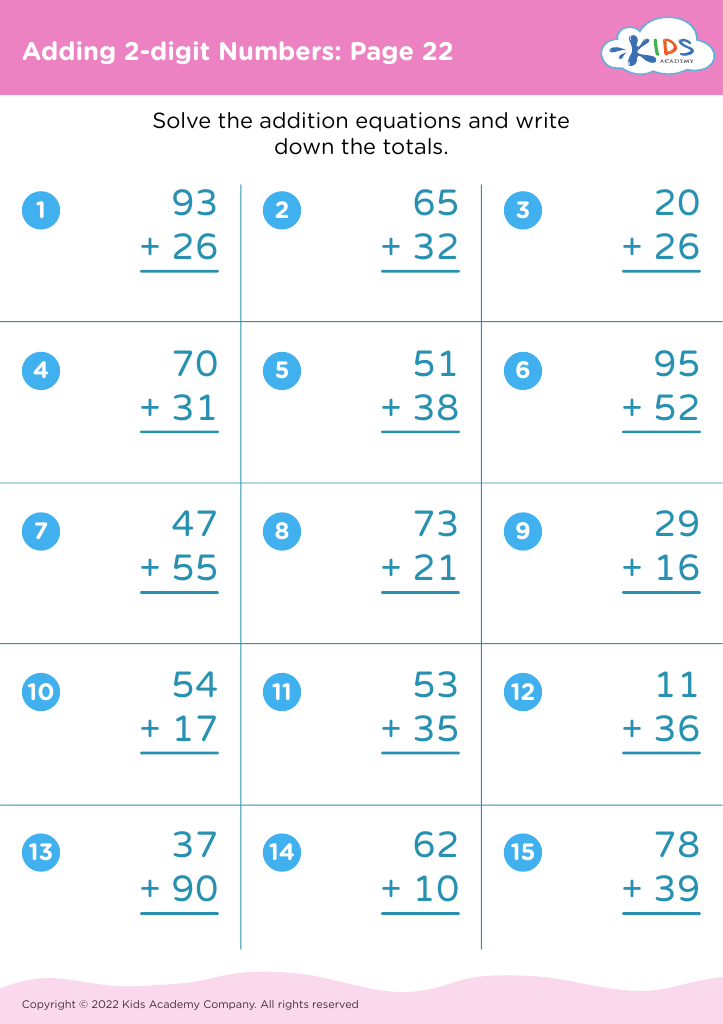
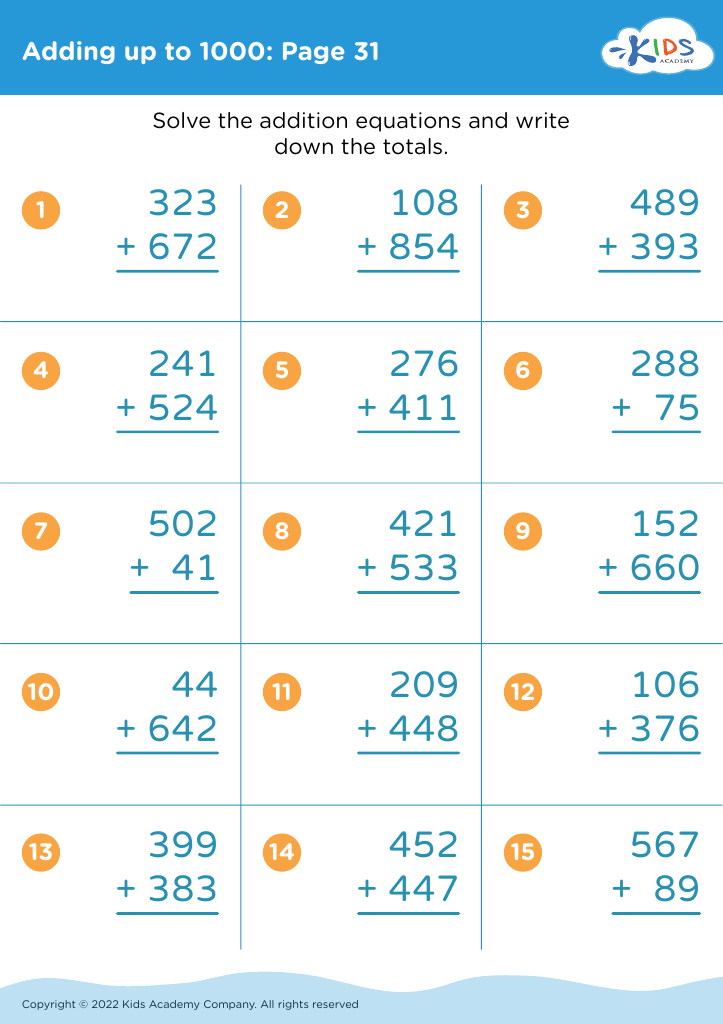
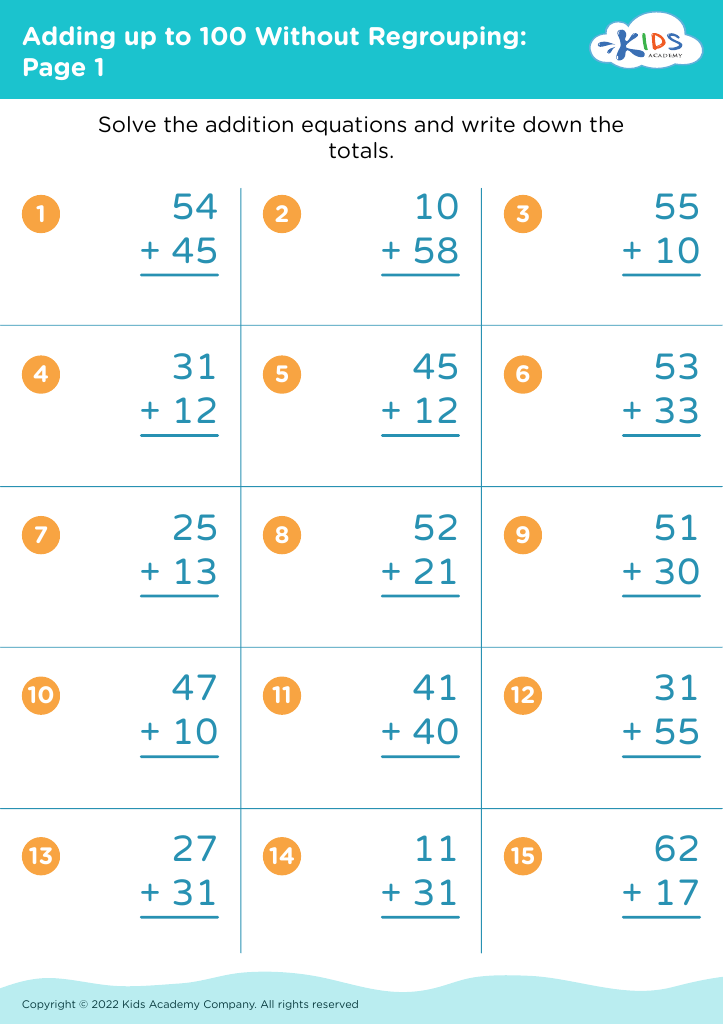
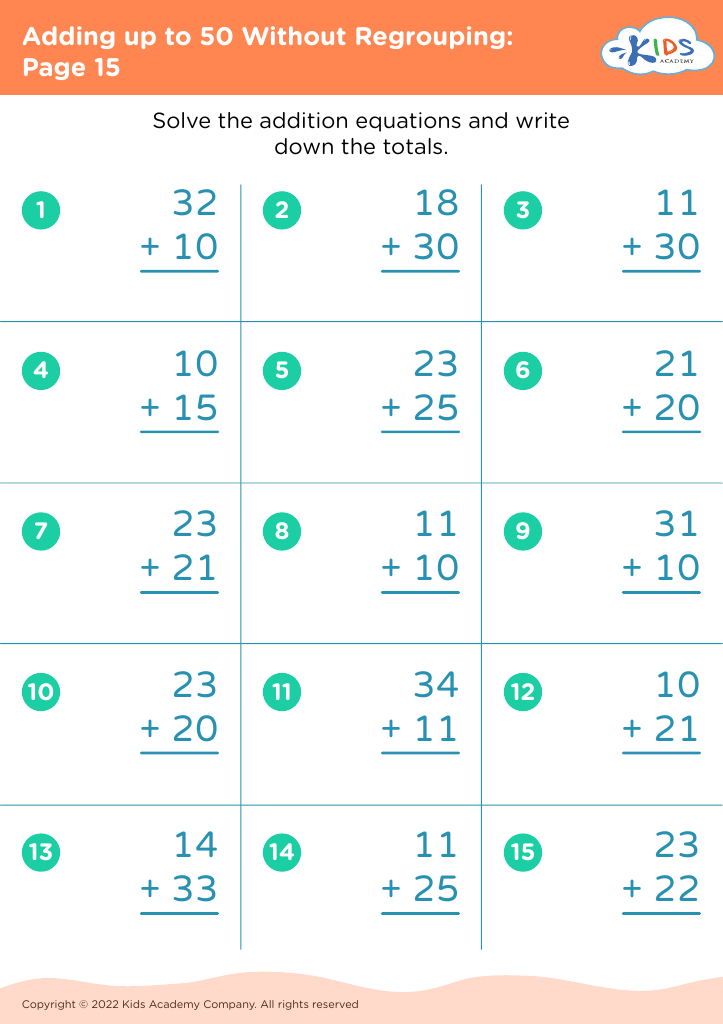
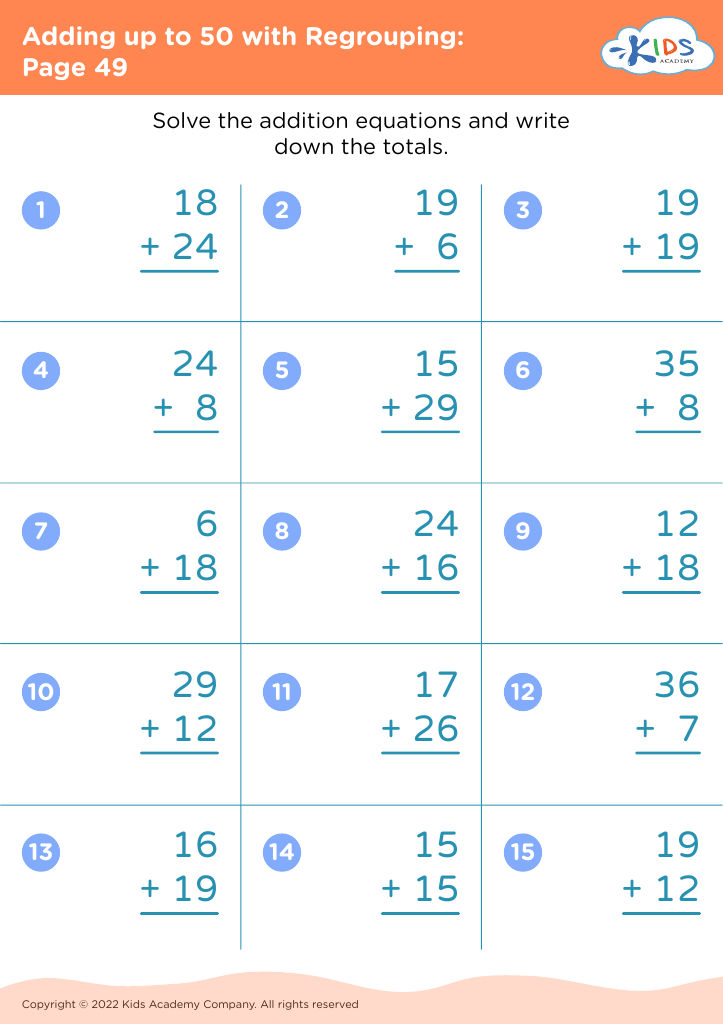
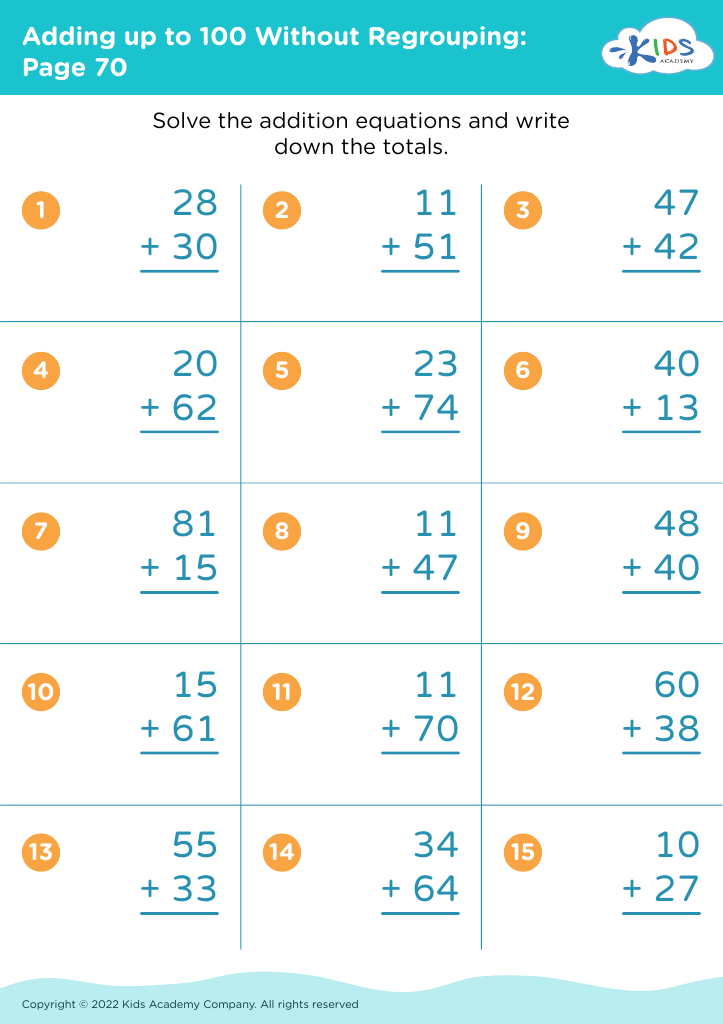
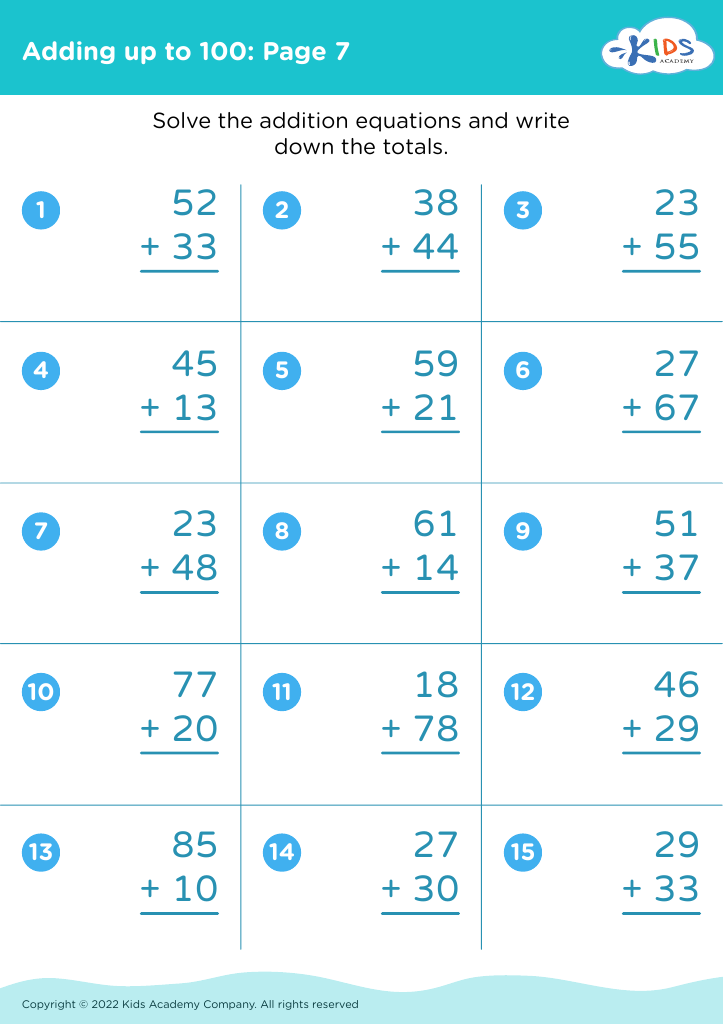








Parents and teachers should prioritize improving number recognition in second graders because it serves as a foundation for all future math learning. Recognizing numbers with accuracy enables children to perform fundamental calculations like addition and subtraction. In Grade 2, students transition from counting single digits to understanding more complex concepts such as regrouping and double-digit addition. If they cannot easily recognize numbers, their ability to perform these tasks is severely hampered.
Additionally, solid number recognition skills boost a child’s confidence in math. Confident learners are more likely to participate in class, tackle challenging problems, and develop a positive attitude toward mathematics, which can lead to long-term academic success. Enhanced number recognition also improves problem-solving skills. When students can quickly and correctly identify numbers, they can spend more mental energy on understanding and solving the problem, rather than getting bogged down by basic recognition errors.
Finally, early math skills offer lifelong benefits, including better job prospects and problem-solving abilities in daily life. By ensuring second graders have strong number recognition skills, parents and teachers are setting them up for future success, both academically and in their everyday routines. This early investment pays off as students progress through more advanced math levels and encounter increasingly complex concepts.