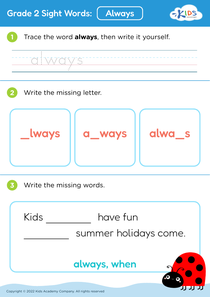
Letter recognition Grade 2 Addition Worksheets
3 filtered results
-
From - To
Welcome to our "Letter Recognition Grade 2 Addition Worksheets" page! Here, you'll find engaging and interactive worksheets designed to help second-grade students enhance their math skills while reinforcing their letter recognition. These worksheets combine fun addition problems with activities that promote letter identification, making learning enjoyable and effective. Perfect for classroom use or at-home practice, our resources support your child's development in both mathematics and literacy. With a variety of formats and challenges, these worksheets ensure that every young learner stays motivated and eager to improve. Explore our collection today to enrich your child's educational journey!
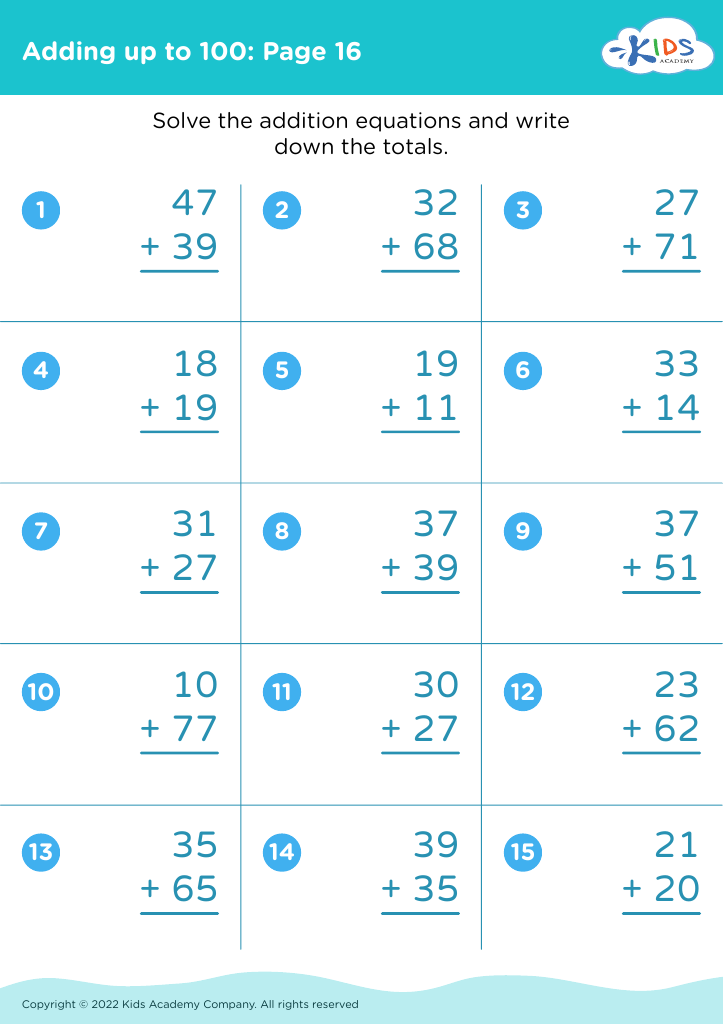
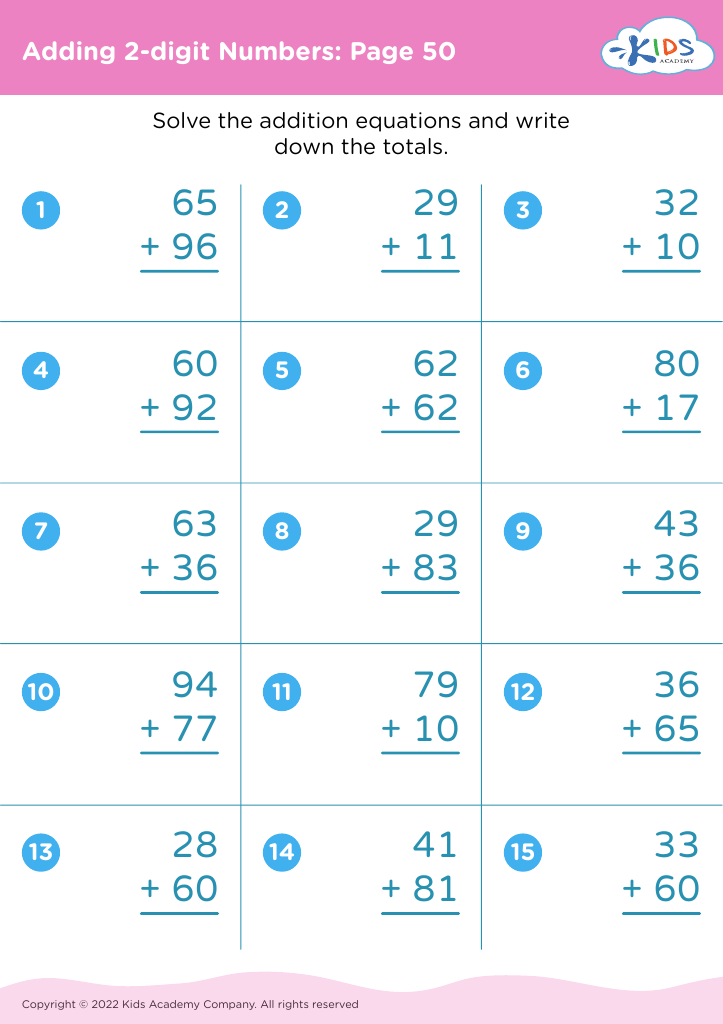
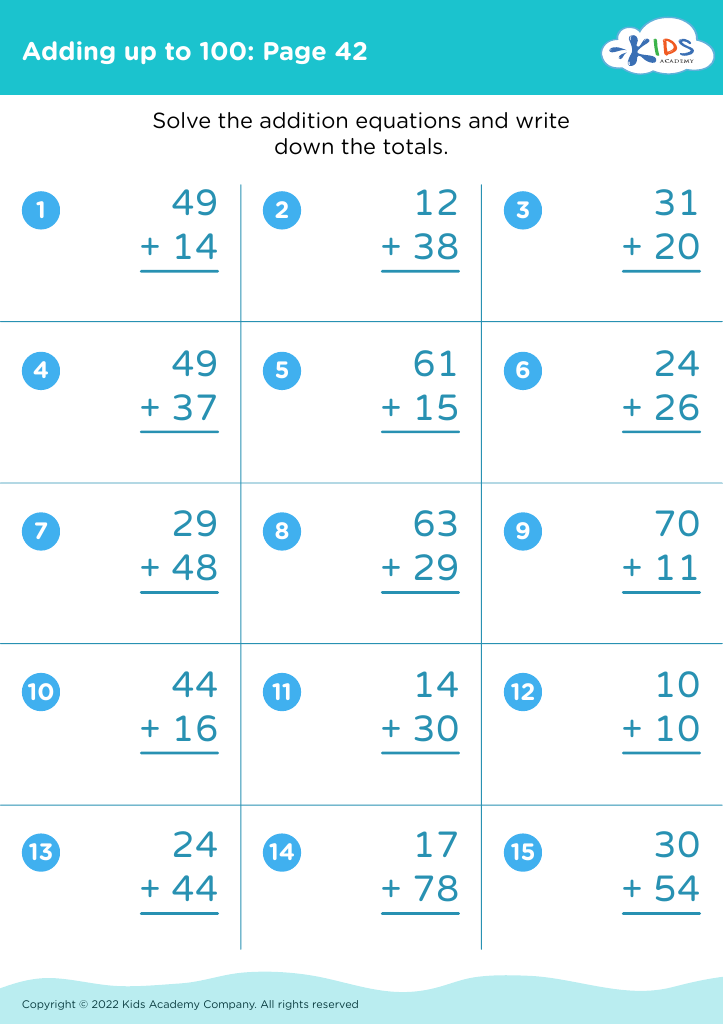








Letter recognition and basic arithmetic, like Grade 2 addition, are foundational skills essential for children's academic success. For parents and teachers, understanding this connection is crucial.
Firstly, letter recognition aids in literacy development. By the second grade, students are transitioning from learning to read to reading to learn. Strong letter recognition skills allow them to decode words efficiently, understand context, and improve overall comprehension. This literacy proficiency promotes a love for reading, which can enrich their educational experience and critical thinking skills.
Secondly, the ability to perform Grade 2 addition establishes a strong mathematical base. Mastering addition fosters not only confidence but also necessary skills for future math concepts such as subtraction, multiplication, and division. These basic arithmetic skills develop logical reasoning and problem-solving abilities, which are applicable in real-life situations.
Moreover, parents and teachers play vital roles in reinforcing these skills through engaging activities and supportive environments. By prioritizing letter recognition and addition, they lay the groundwork for lifelong learning, ensuring students develop the competencies needed to navigate advanced educational challenges and everyday life. Early investment in these skills pays dividends, enhancing both academic performance and overall student confidence.