Mathematical reasoning Grade 2 Addition Worksheets
20 filtered results
Difficulty Level
Grade
Age
-
From - To
Subject
Activity
Standards
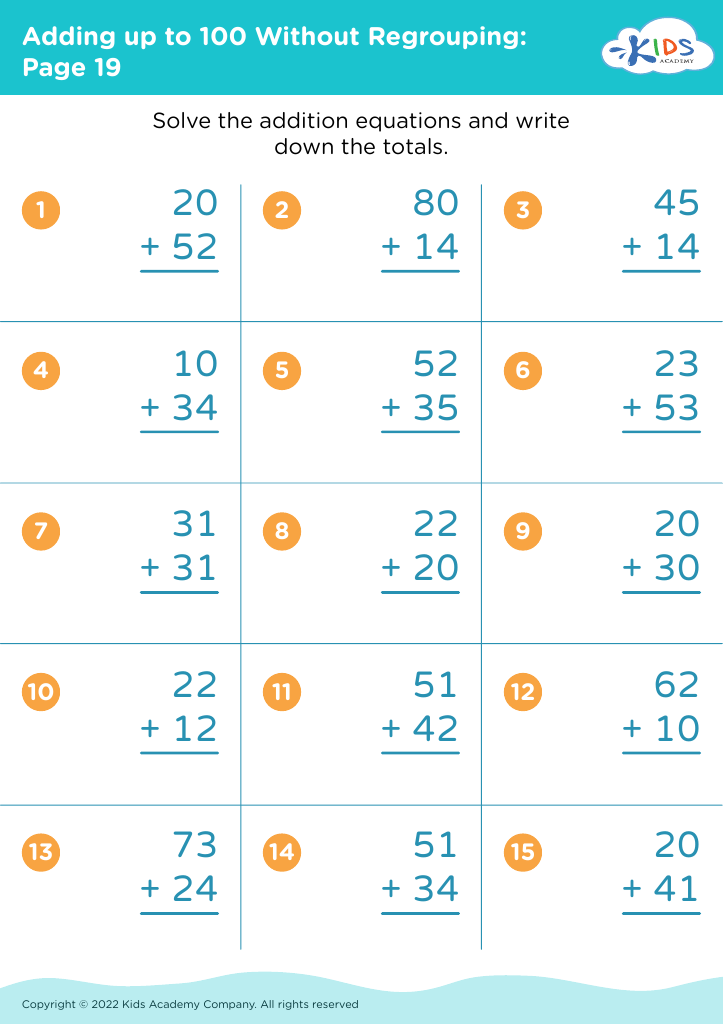
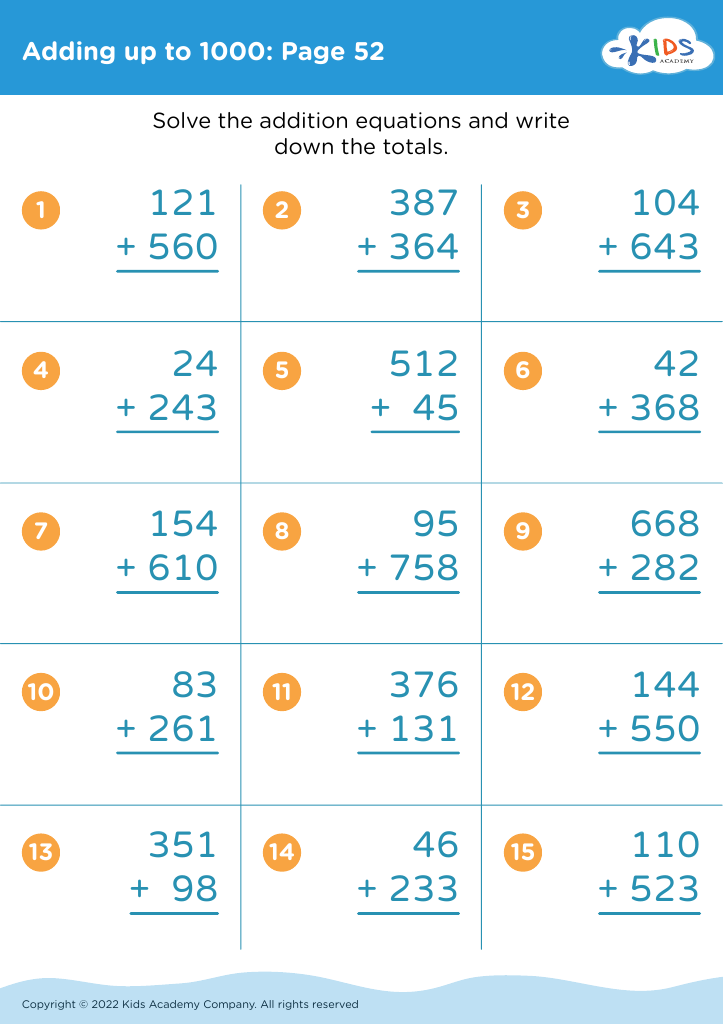
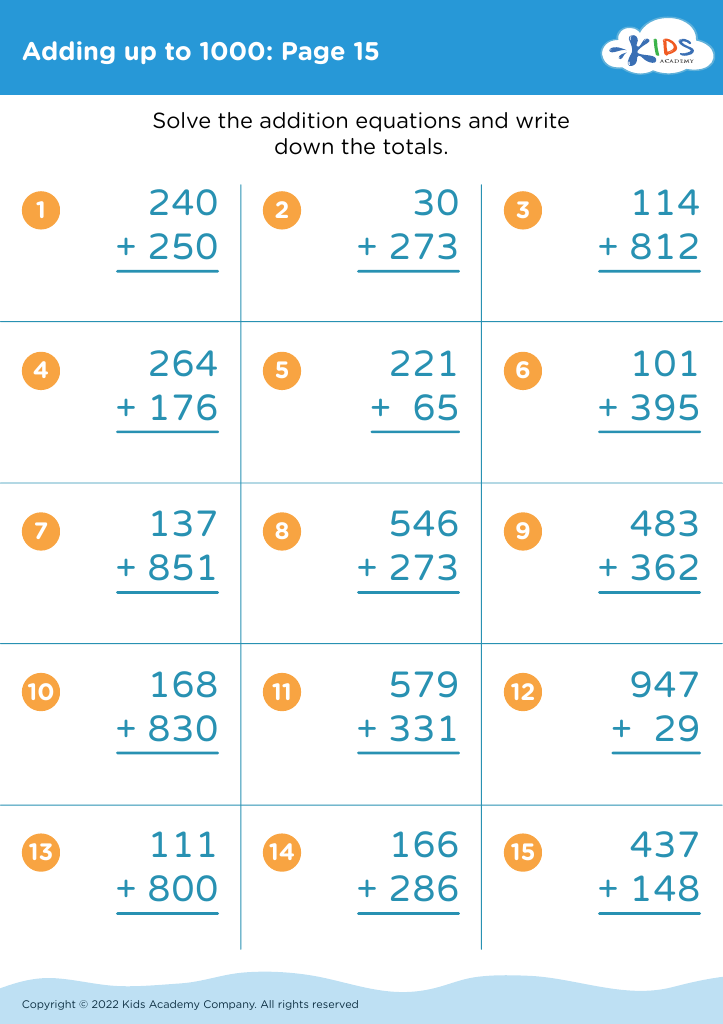
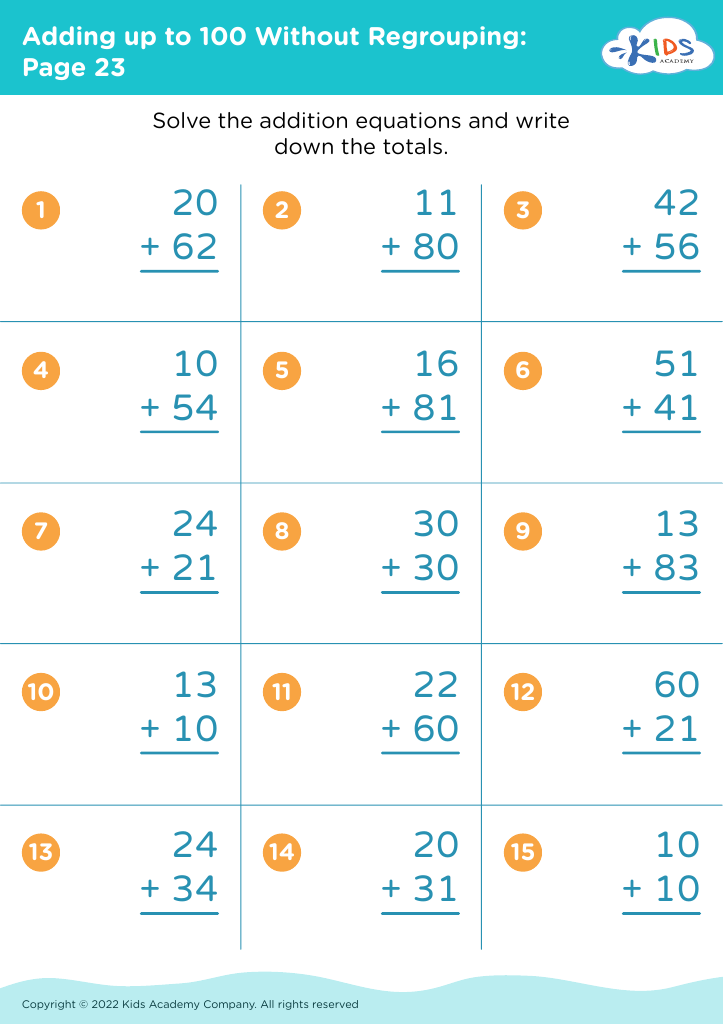
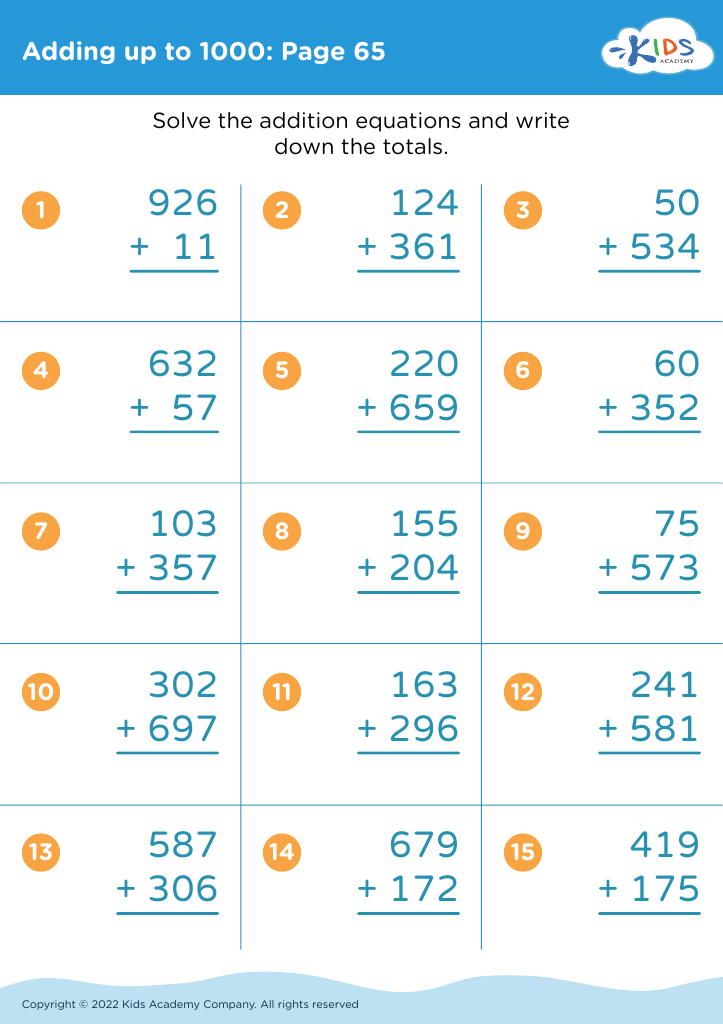
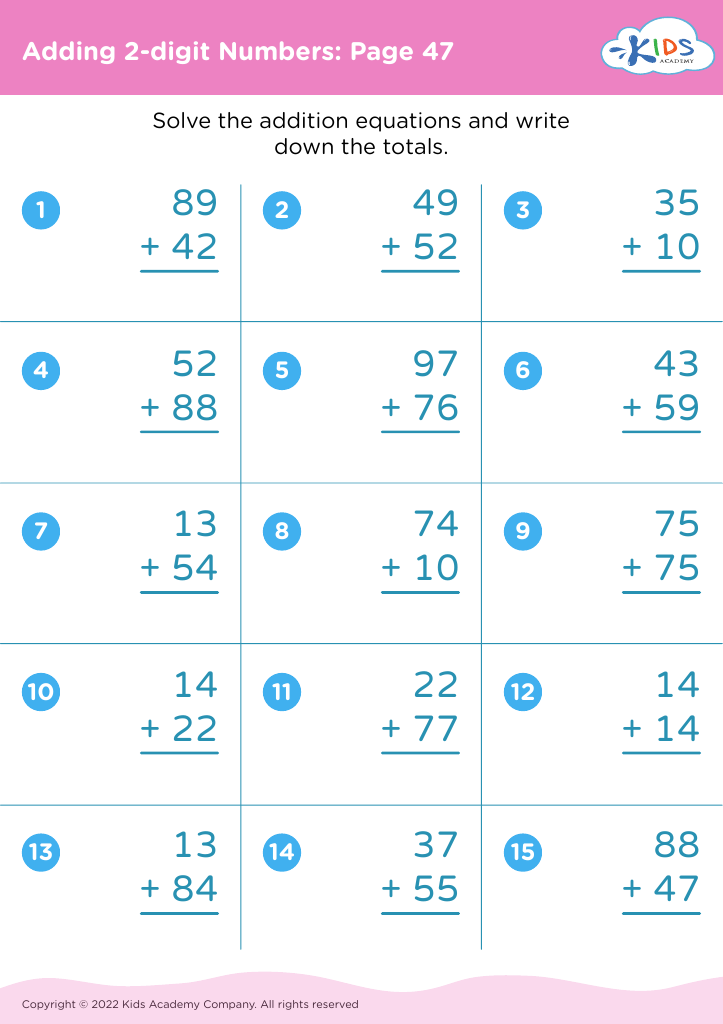
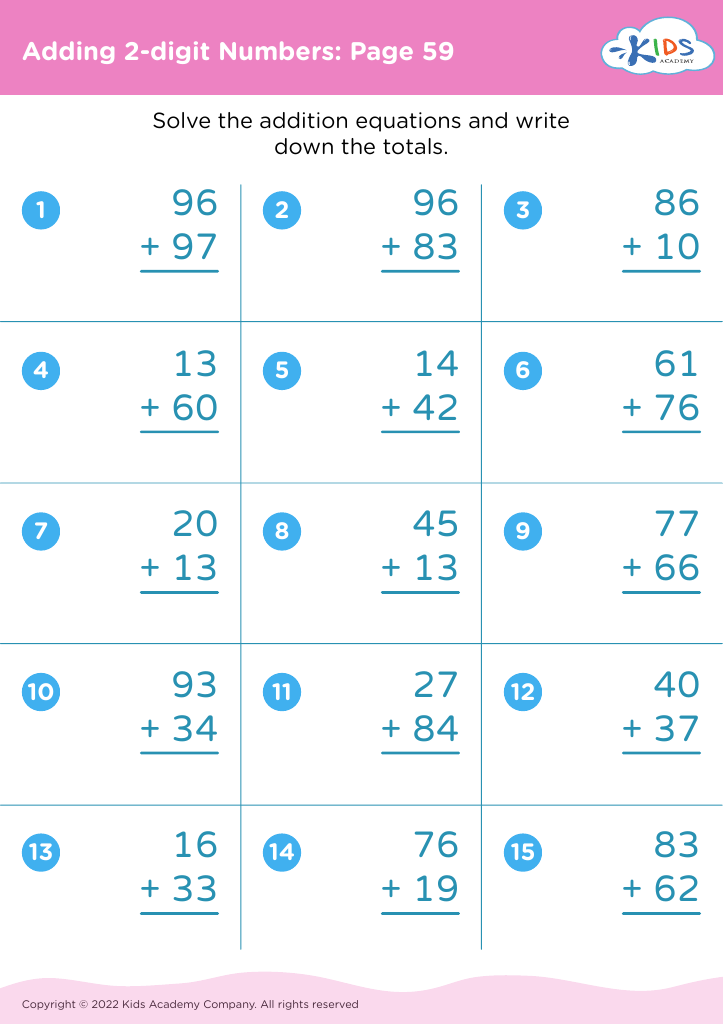
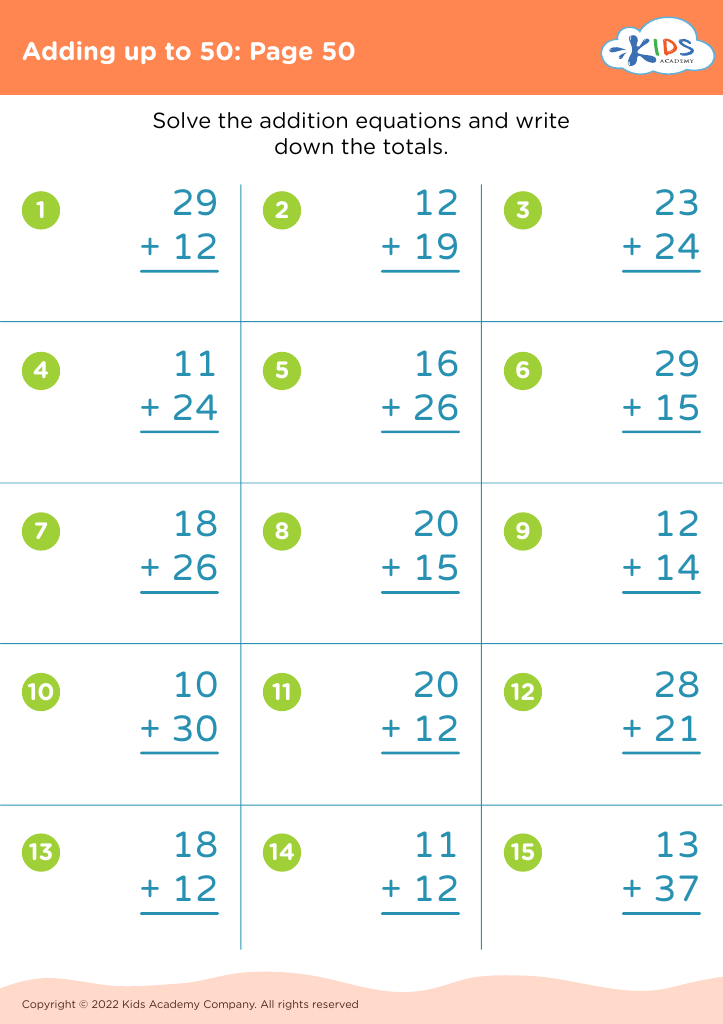
Unlock the joy of learning with our engaging Grade 2 Math Addition Worksheets focused on Mathematical Reasoning! Designed specifically for young learners, these worksheets help develop critical problem-solving skills through fun and interactive exercises. Children will explore addition concepts, enhance their computational abilities, and build a strong mathematical foundation. Our comprehensive resources include varied problem types, from simple addition to word problems, ensuring a well-rounded understanding of addition. Perfect for classroom use or at-home practice, these worksheets empower second graders to think critically and reason mathematically while gaining confidence in their math skills. Start exploring today and watch your child excel!
Favorites
With answer key
Interactive
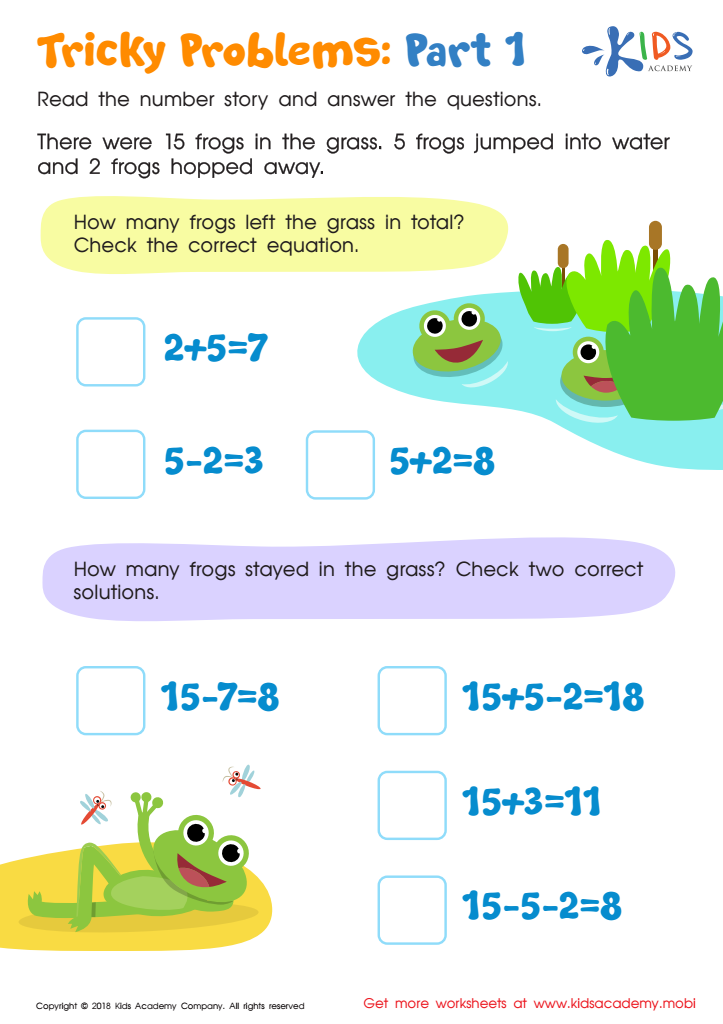
Tricky Problems Worksheet: Part 1
Visualizing word problems can help students solve them. This fun PDF worksheet encourages students to create mental images using math facts, then check boxes to match the equations for basic addition problems. It's a great way to build confidence in solving math.
 Assign to My Students
Tricky Problems Worksheet: Part 1
Worksheet
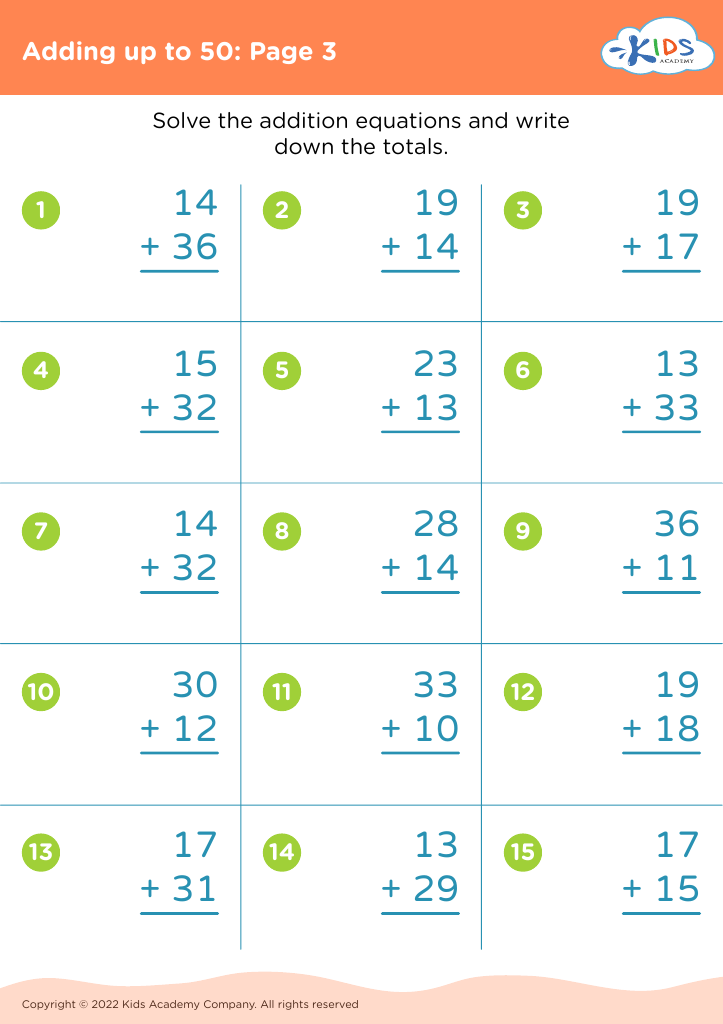
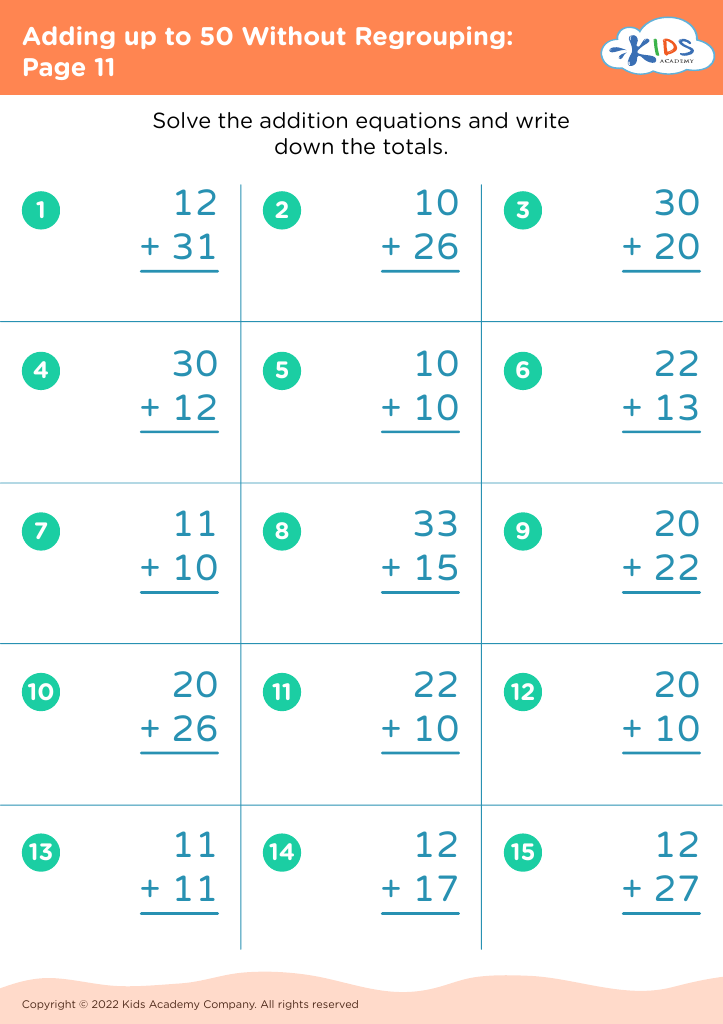
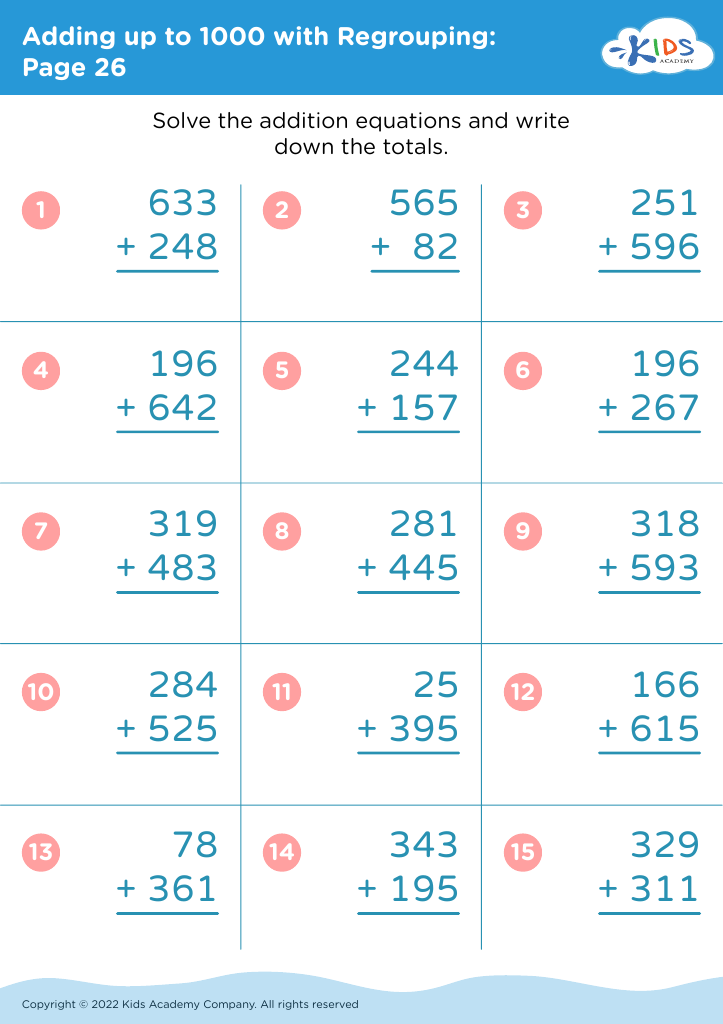
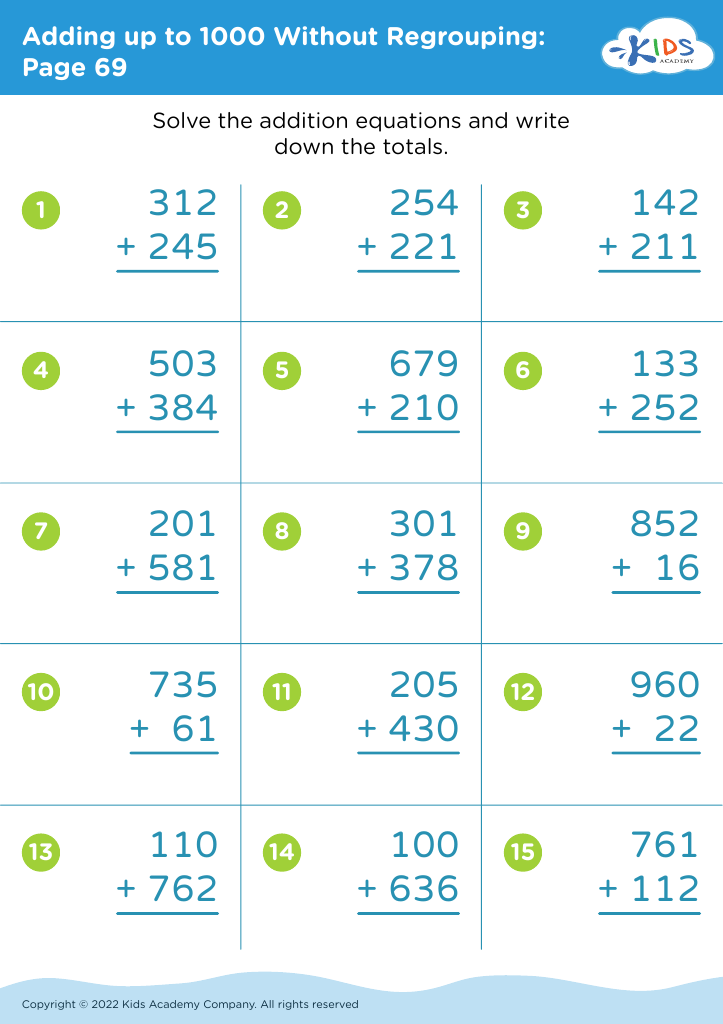
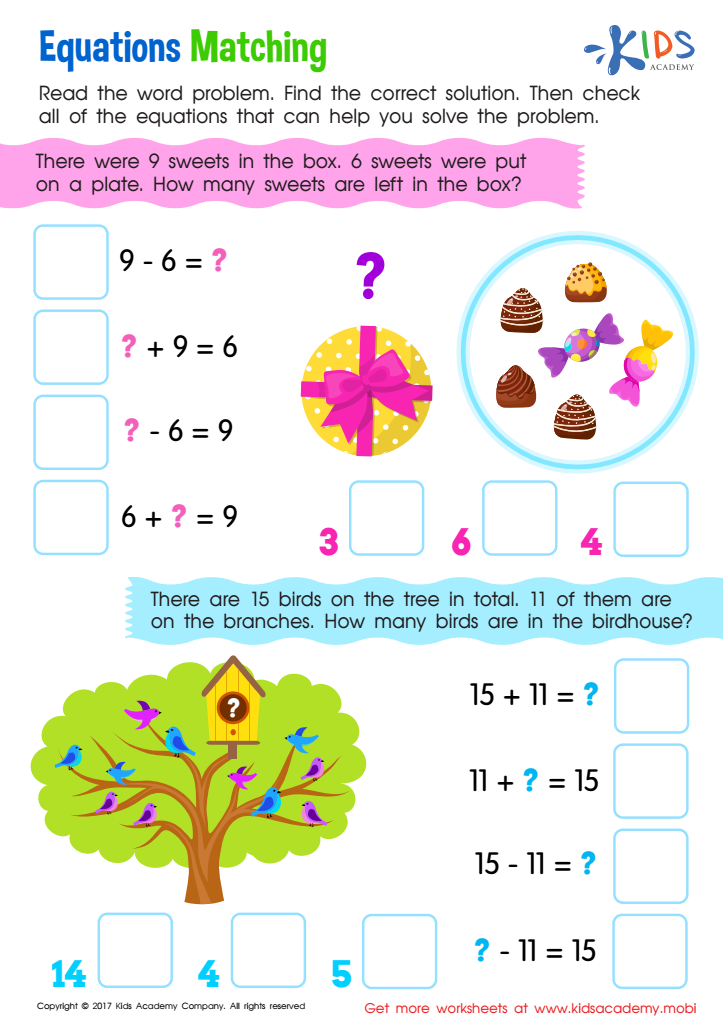
Equations Matching Word Problems Worksheet
Download this worksheet and give your young mathematician practice in solving equations using matching numbers and number family facts. They'll solve word problems, develop critical thinking and algebraic reasoning, and gain success with addition and subtraction.
Equations Matching Word Problems Worksheet
Worksheet
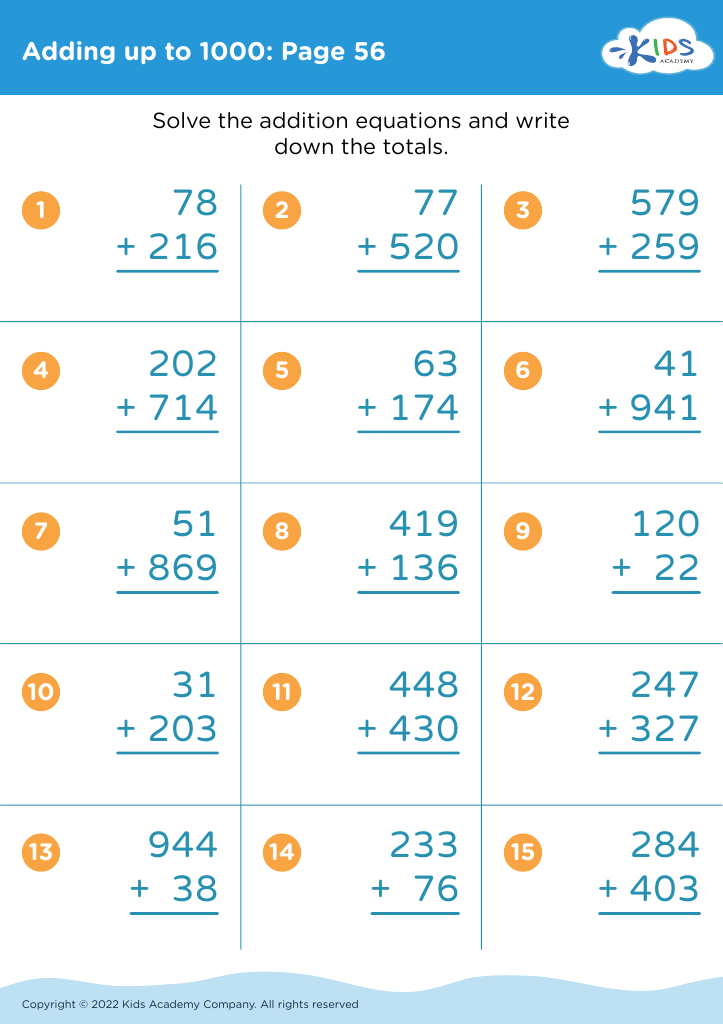
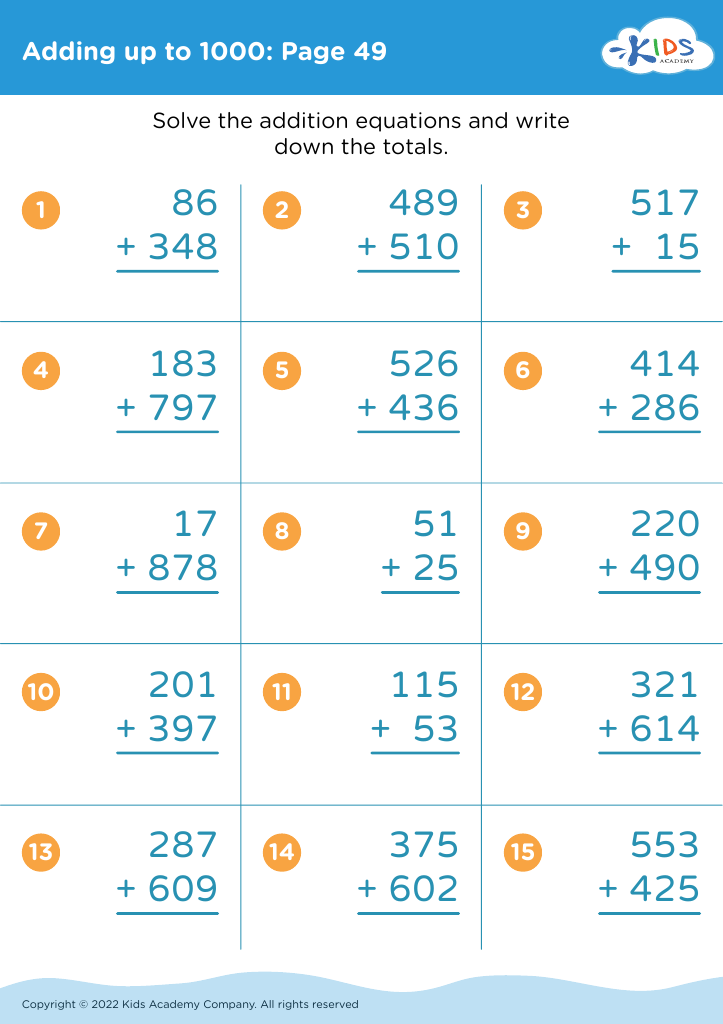
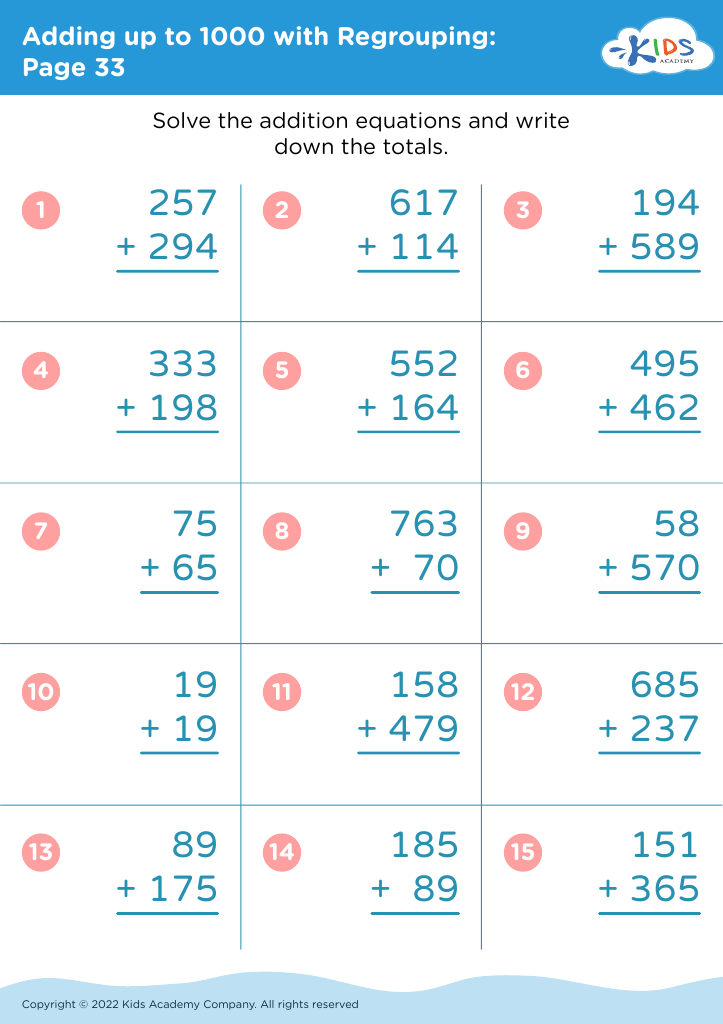
Join Kids Academy for Free
Who is primarily going to use this learning content?








Mathematical reasoning in Grade 2 addition is crucial for young learners as it lays a strong foundation for future math concepts and problem-solving skills. At this stage, children transition from simple calculations to understanding why and how numbers work together. By fostering mathematical reasoning, parents and teachers can help students grasp the relationships between numbers, recognize patterns, and explore different strategies for addition, such as using visual aids, manipulatives, or counting on their fingers.
Encouraging mathematical reasoning not only boosts confidence in their abilities but also cultivates a growth mindset, which is vital for tackling more complex math in later grades. Additionally, reasoning skills are connected to critical thinking, which is essential beyond math in everyday life. When children learn to justify their answers and begin to see math as a logical system rather than just memorization, they become more engaged and enthusiastic learners.
Moreover, a strong grasp of addition reasoning can lead to success in higher-level mathematics as students progress through school. For all these reasons, it's essential for parents and teachers to prioritize and support the development of mathematical reasoning in Grade 2 addition, ensuring students are well-prepared for future academic endeavors and real-world problem-solving.