Reading clocks Grade 2 Addition Worksheets
3 filtered results
-
From - To
Enhance your child's math skills with our 'Reading Clocks Grade 2 Addition Worksheets.' Perfect for second graders, these engaging worksheets help students master telling time and improve their addition skills simultaneously. Designed by education experts, each sheet includes vibrant clock illustrations and addition problems tailored to the foster essential time-keeping and arithmetic abilities. With clear instructions and progressive difficulty levels, our worksheets make learning fun and effective. Ignite a passion for math and time management in your young learner today with our expertly crafted printable resources.
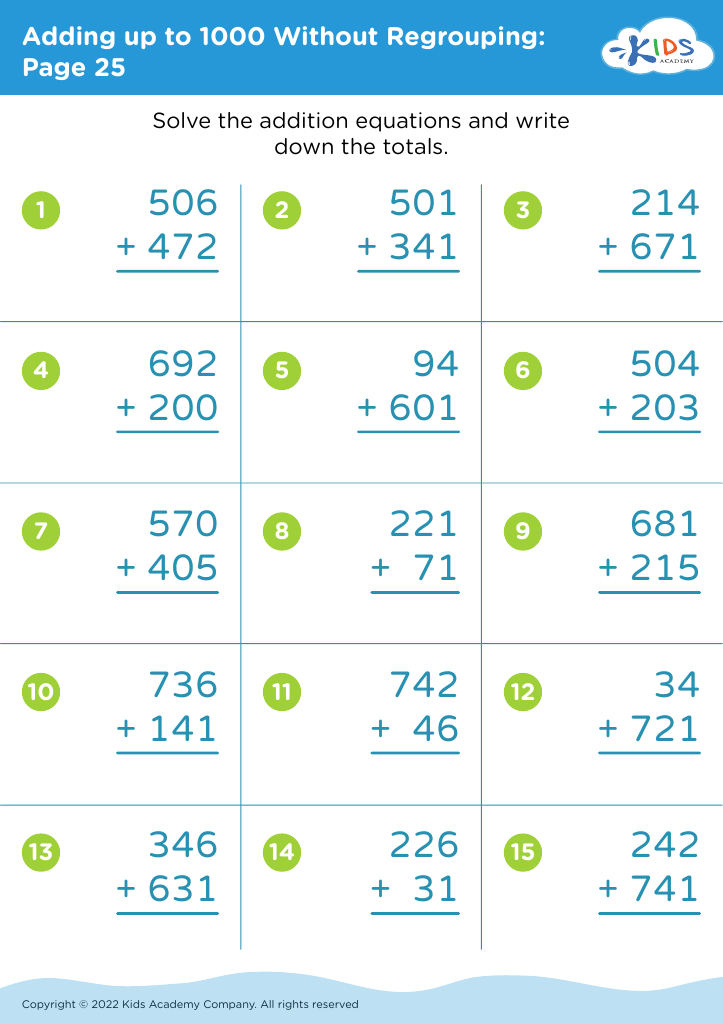
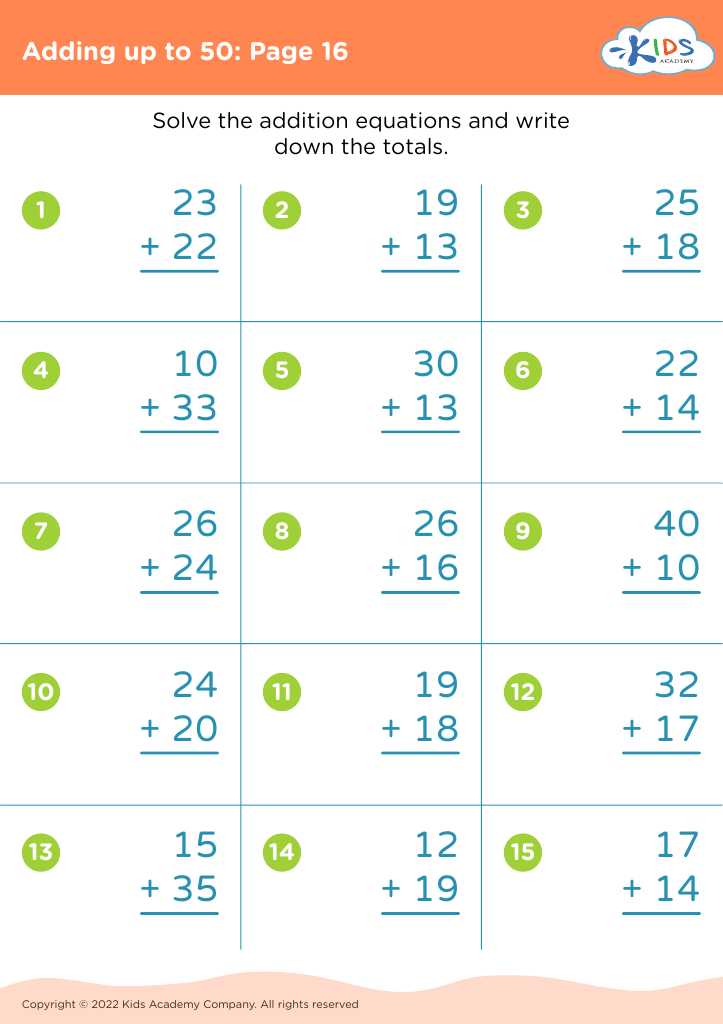
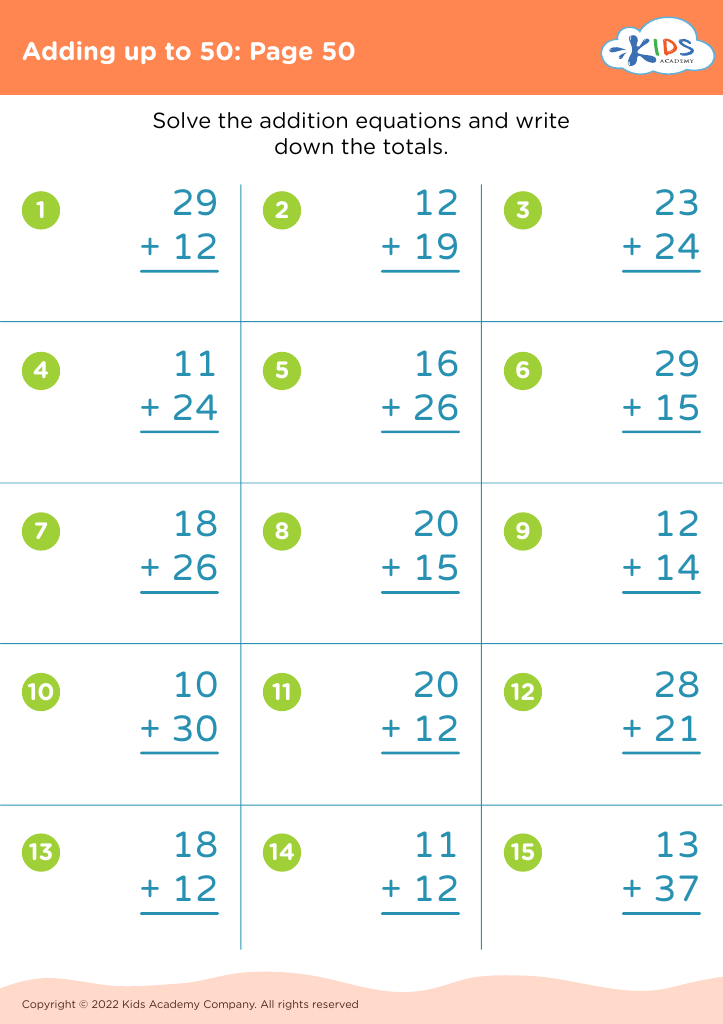








Understanding how to read clocks and perform addition by the end of grade 2 is foundational for a child's academic and everyday life skills. Time-telling introduces children to the concept of time management and punctuality, which are essential lifelong skills. It helps them understand daily routines and the passage of time, boosting their organizational abilities and responsibility. Additionally, reading clocks enhances cognitive skills such as short-term memory and logic, as they need to interpret clock hands and numbers accurately.
Grade 2 addition is equally crucial. Developing a strong foundation in basic arithmetic boosts a child's confidence and encourages a positive attitude toward more complex math in the future. Addition skills are applied in various real-life situations, from calculating money to measuring ingredients in a recipe, making them practical and necessary skills. Through addition, children also improve problem-solving abilities and logical thinking.
Moreover, both skills invite family engagement—not only can parents help children practice, but they can also demonstrate practical uses in daily routines. Whether packing lunch by a specific time or summing up items during shopping, these moments are opportunities for bonding and learning. Ultimately, proficiency in these early grade skills sets the stage for future academic success and personal independence.