Understand patterns Grade 2 Addition Worksheets
6 filtered results
-
From - To
Unlock the power of addition with our Grade 2 Understand Patterns Worksheets! Designed to enhance mathematical skills, these engaging and interactive worksheets allow students to explore and identify patterns in addition. Through a variety of exercises, children will learn how to recognize sequences, utilize addition strategies, and develop problem-solving skills. Perfect for both classroom and at-home learning, these resources encourage critical thinking and reinforce essential math concepts. With colorful visuals and age-appropriate challenges, our worksheets make learning fun and motivating. Equip your second graders with the tools they need to excel in math by diving into the world of patterns today!
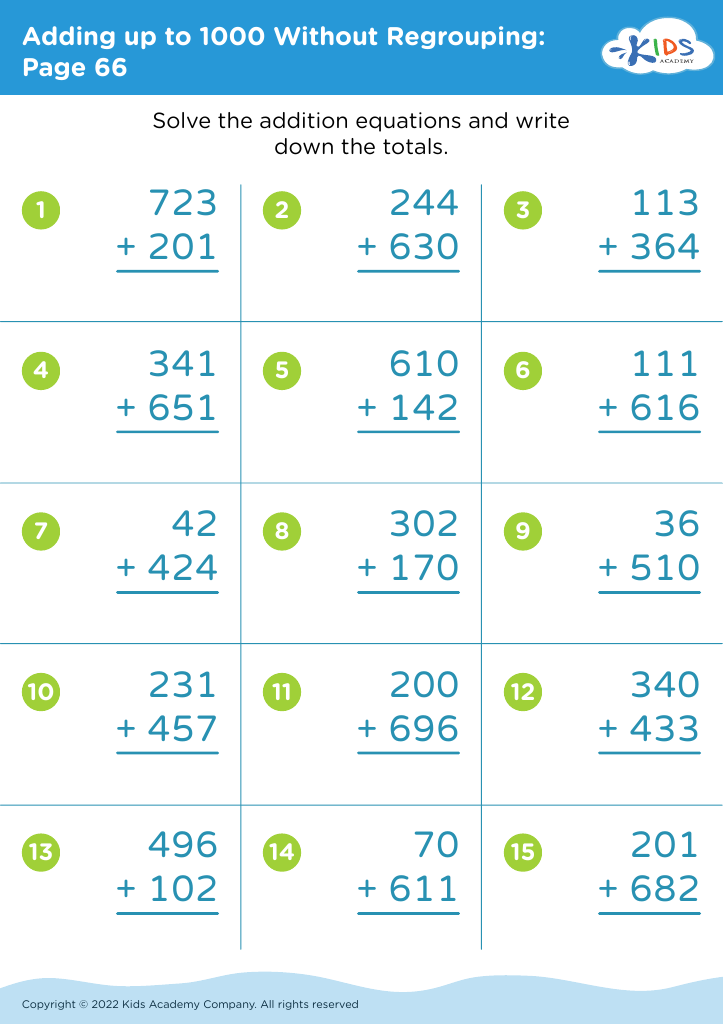
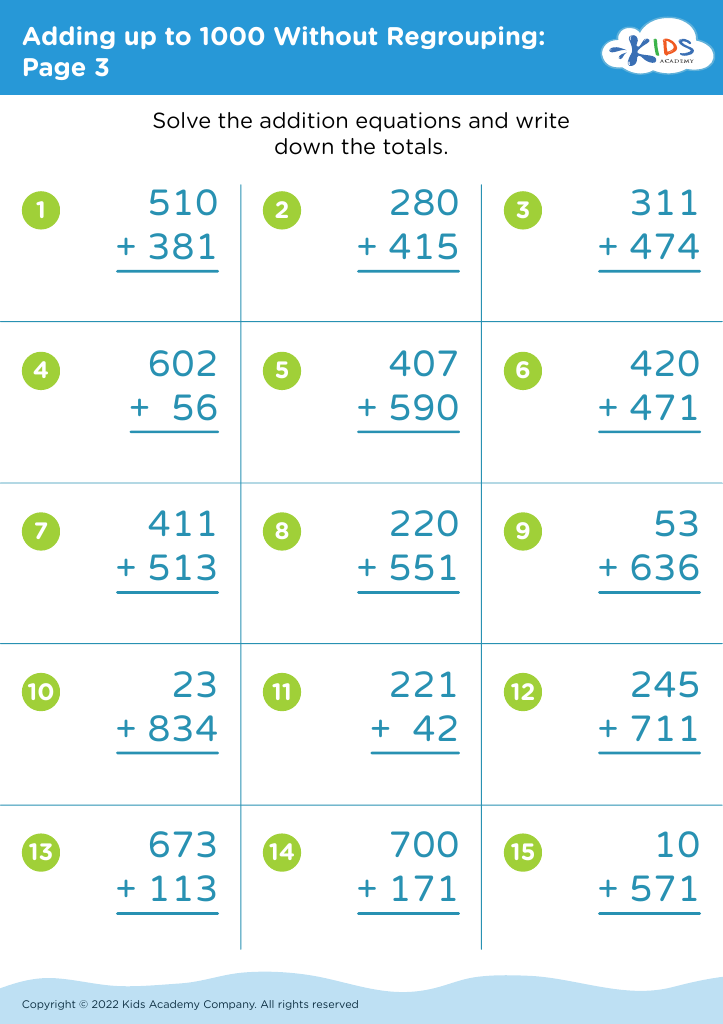
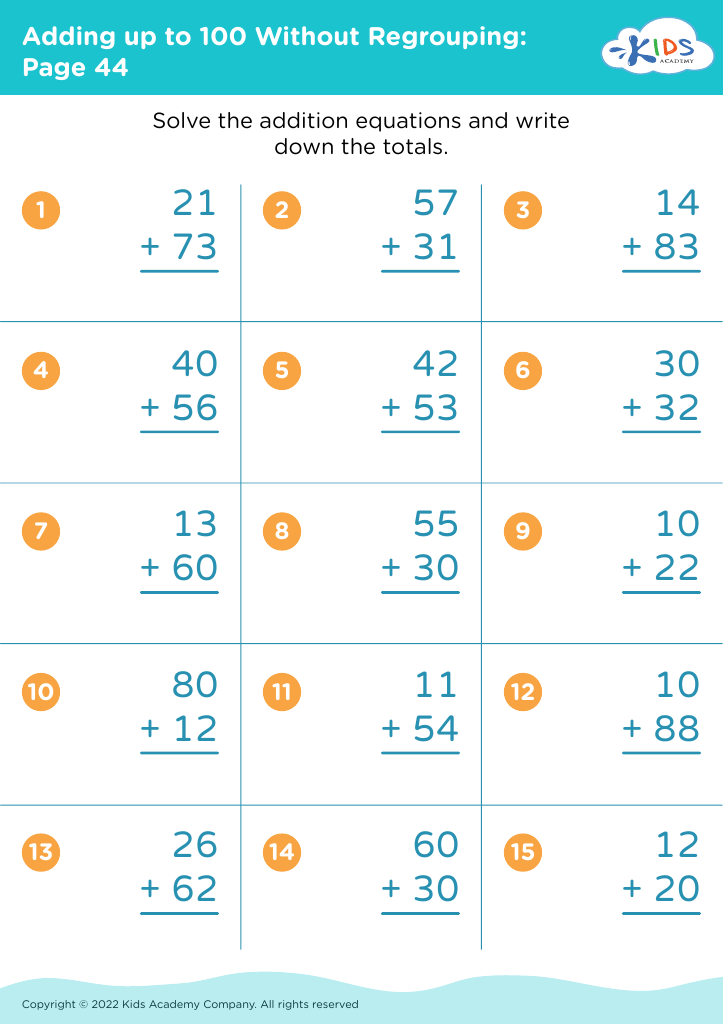
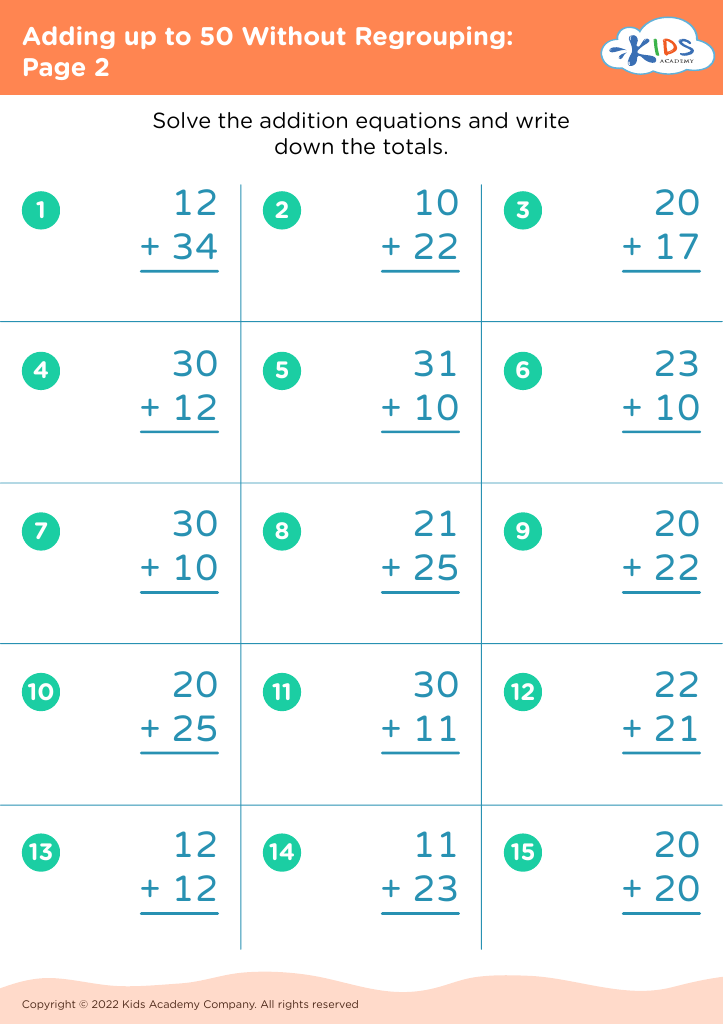
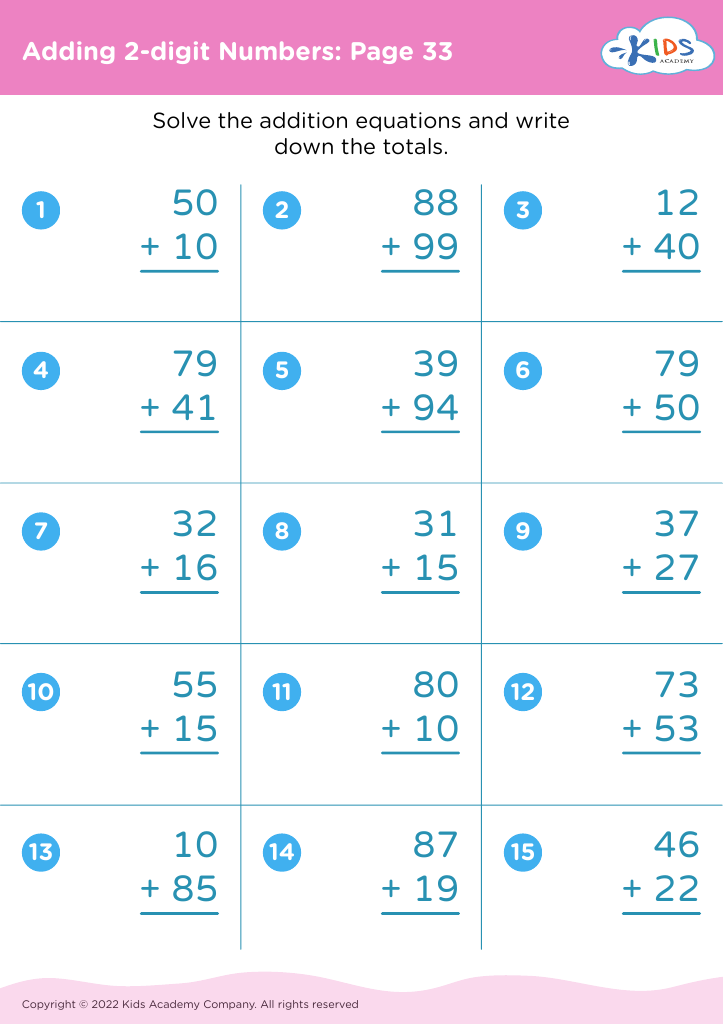
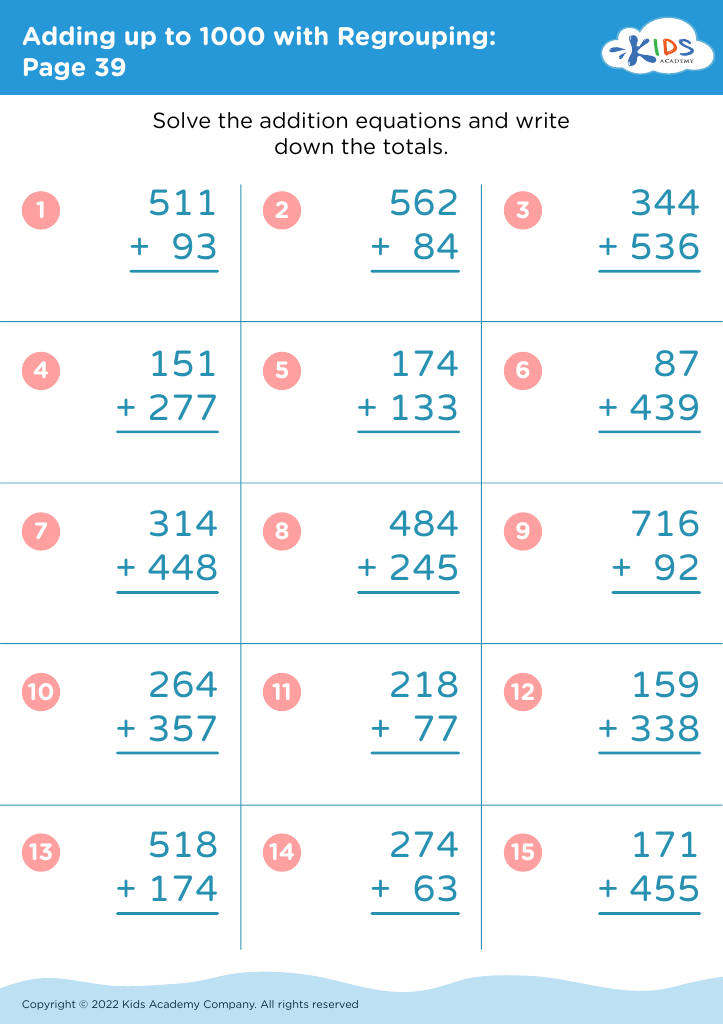








Understanding patterns in Grade 2 addition is crucial for foundational mathematical development. At this stage, children are beginning to grasp more complex concepts, and recognizing patterns significantly enhances their number sense. When parents or teachers prioritize pattern recognition, they enable students to identify relationships between numbers, which aids in mental math skills and problem-solving.
Patterns in addition, such as using doubles (e.g., 4+4) or applying the commutative property (e.g., 3+5 is the same as 5+3), streamline the addition process and build confidence in children. Moreover, this understanding lays the groundwork for more advanced mathematical concepts, such as skip counting and later multiplication and division.
Additionally, recognizing patterns fosters critical thinking and analytical skills that are essential beyond mathematics. When children can see how numbers relate and operate within a structured framework, they are more equipped to tackle real-world mathematical problems, enhancing their academic success.
Therefore, parents and teachers should actively engage with and reinforce pattern recognition in addition, turning it into an enjoyable learning process that builds a solid mathematical foundation while bolstering children's confidence and enthusiasm for learning math.