Understanding equations Grade 2 Addition Worksheets
4 filtered results
-
From - To
Explore our engaging Grade 2 Addition Worksheets focused on "Understanding Equations". Designed to build foundational math skills, these worksheets help students effectively learn the properties of addition and how to formulate equations related to real-world scenarios. Through interactive and colorful exercises, children will practice writing and solving simple addition equations, enhancing both their numerical fluency and problem-solving abilities. By connecting addition with equation comprehension, these resources promote critical thinking and prepare students for future mathematical concepts. Ideal for classroom use or at-home practice, our Grade 2 worksheets are perfect for making learning fun and intuitive for young learners.
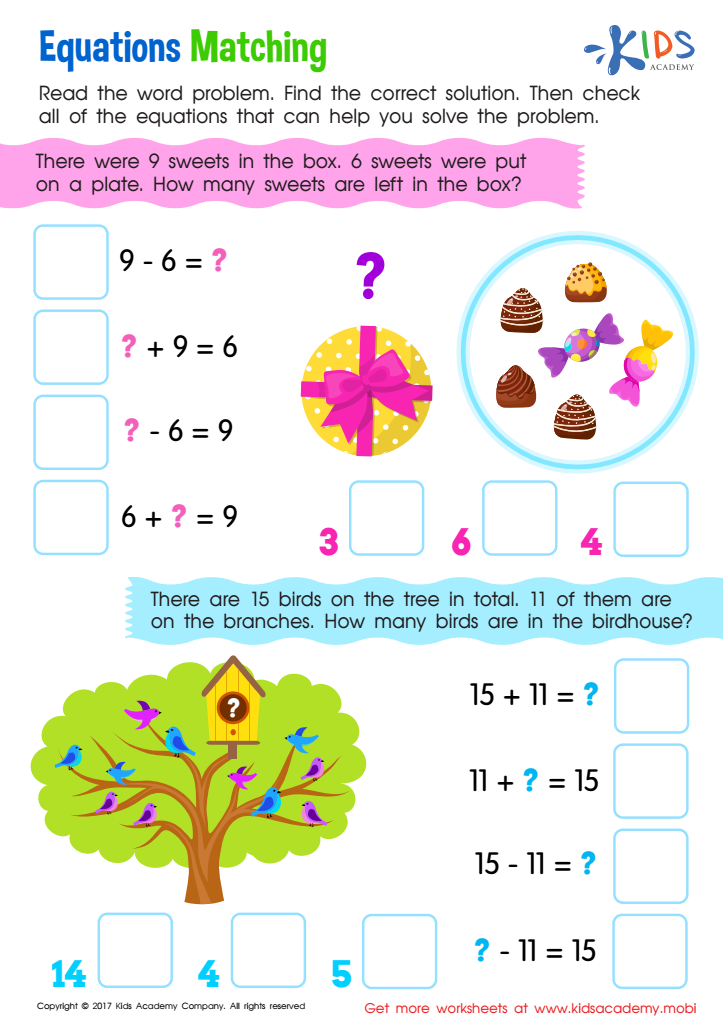
Equations Matching Word Problems Worksheet
 Assign to My Students
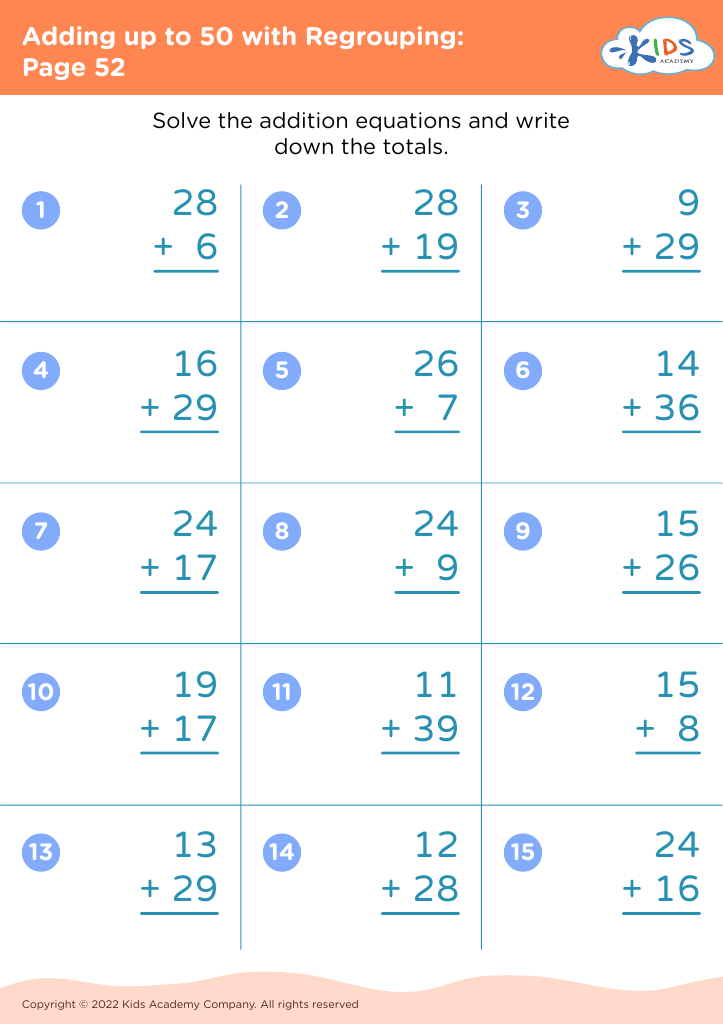
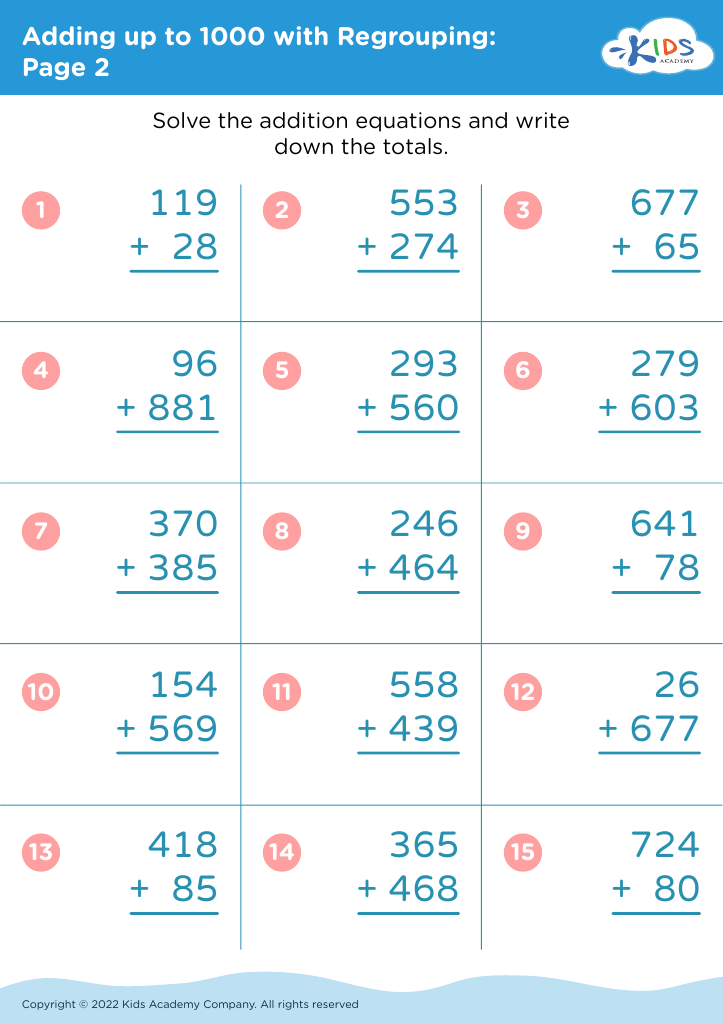
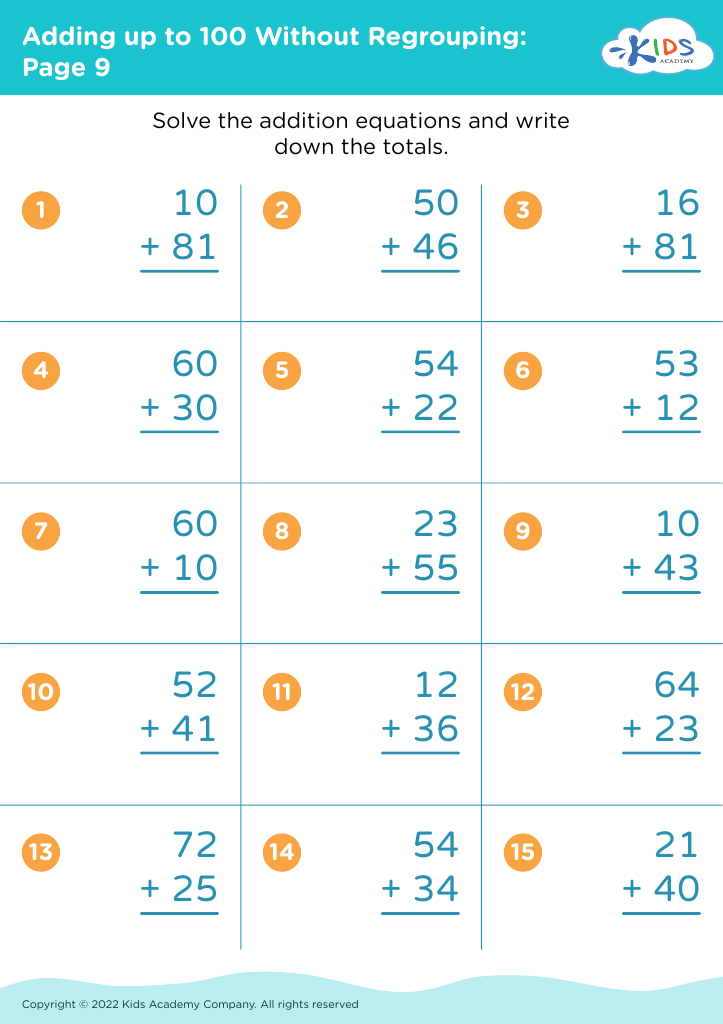








Understanding equations, particularly in Grade 2 addition, is crucial for both parents and teachers as it forms the foundation for students’ mathematical development. At this stage, children begin to grasp fundamental concepts of number relationships and operations. Knowing how to construct and interpret equations helps them make sense of addition in a structured way, reinforcing their ability to solve problems and apply strategies effectively.
Parents and teachers should care because a strong grasp of these concepts fosters confidence in young learners, which is vital for their overall attitude towards math. Children learn not just to compute answers but to understand the “why” behind the operations, promoting critical thinking and reasoning skills. This foundational knowledge also sets the groundwork for more complex mathematics in later grades, such as subtraction, multiplication, and division.
Moreover, promoting a solid understanding of equations encourages collaboration and discussion in classrooms and homes, helping children articulate their thought processes. When parents actively engage in their child's learning, they reinforce lesson content and create a supportive learning environment. Ensuring that students feel comfortable with interval addition sets them on a path toward greater academic success, paving the way for future achievements in math and beyond.