Understanding money Grade 2 Addition Worksheets
3 filtered results
-
From - To
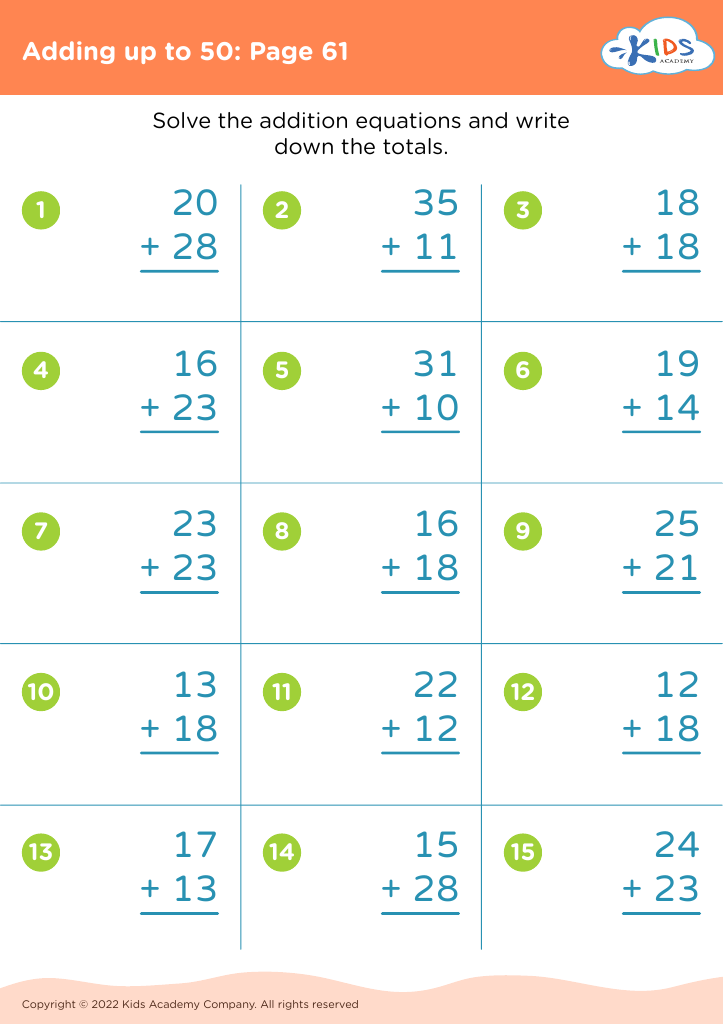
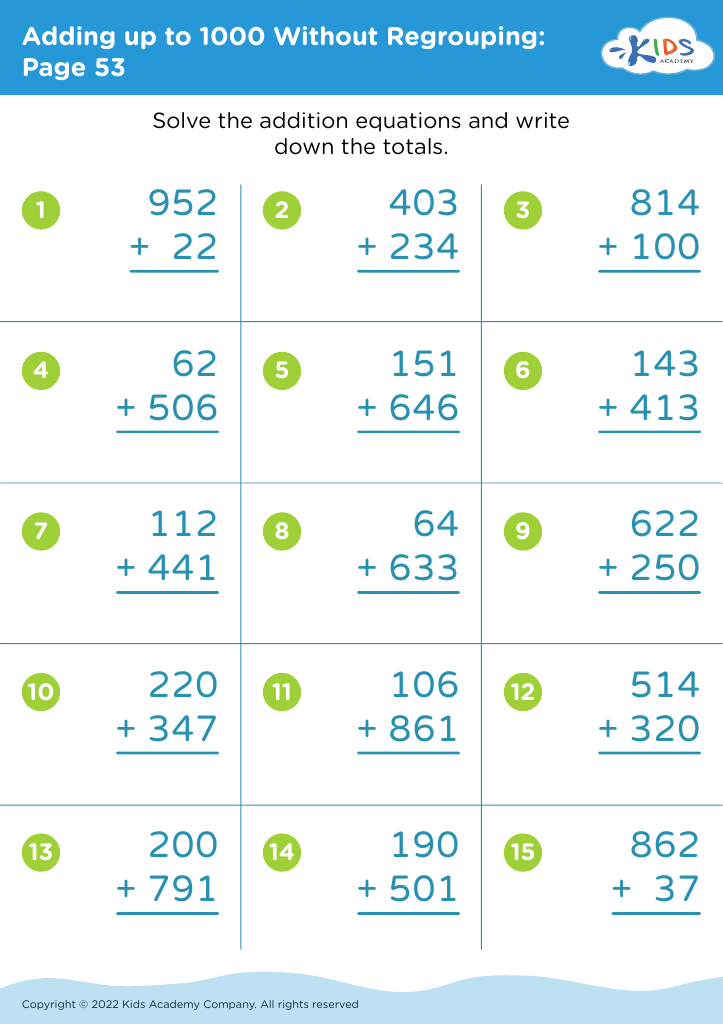
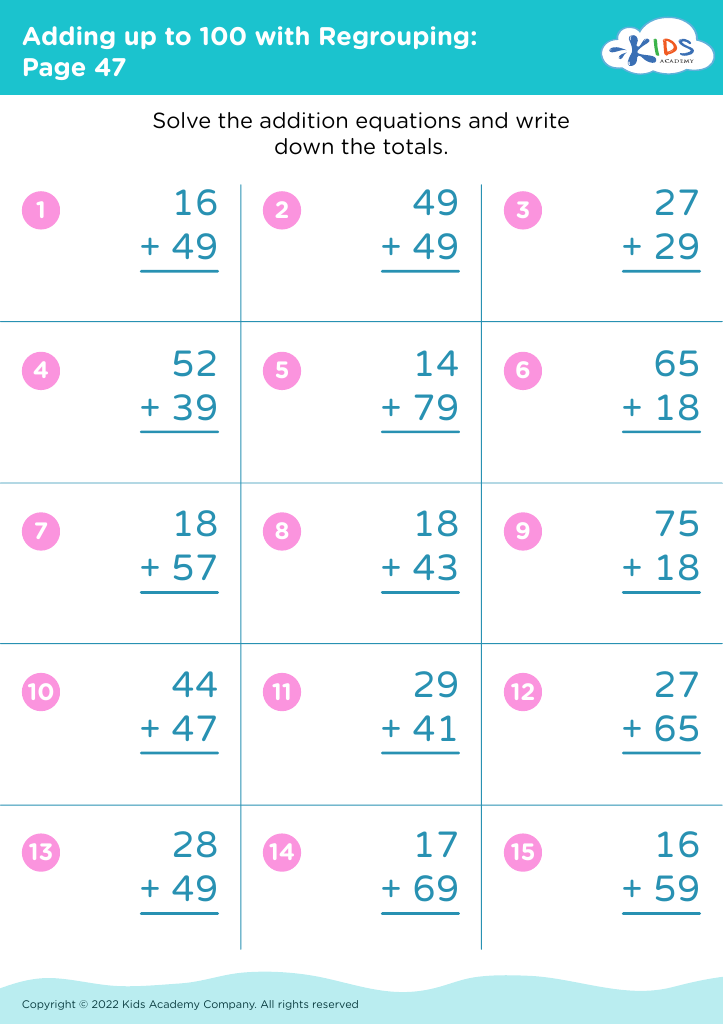
Welcome to our “Understanding Money Grade 2 Addition Worksheets” page! Designed specifically for second graders, our worksheets introduce key mathematical concepts related to money while reinforcing addition skills. Students will engage with fun activities that involve counting coins, adding up different denominations, and solving practical money-related problems. These interactive exercises not only enhance students' counting abilities but also foster an understanding of real-world financial literacy. Whether you’re seeking extra practice at home or supportive materials for classroom learning, these worksheets are perfect for developing essential math skills in an enjoyable and educational way. Start your money math adventure today!








Understanding money is a crucial skill for second-grade students, as it lays the foundation for financial literacy that will benefit them throughout their lives. In Grade 2, the concept of addition is often applied to money, enabling children to make sense of real-world transactions. When parents and teachers focus on teaching money in conjunction with addition, they help students develop critical thinking and problem-solving skills.
Learning to identify coins and their values, as well as adding them up, cultivates not only mathematical abilities but also a sense of responsibility and independence in students. Engaging with money helps them understand the value of goods and services and introduces fundamental concepts like budgeting, saving, and spending wisely.
Additionally, when parents and teachers actively participate in activities that involve money—such as playing store or counting allowances—it fosters a collaborative learning environment, making the experience enjoyable and memorable.
By emphasizing the importance of understanding money through addition, parents and teachers empower children to make informed financial decisions as they grow, ensuring they are equipped to navigate an increasingly complex financial world in the future.