Understanding number sequences Grade 2 Addition Worksheets
3 filtered results
-
From - To
"Understanding Number Sequences Grade 2 Addition Worksheets" is a fantastic resource designed to enhance math skills in young learners. These engaging worksheets focus on teaching second graders how to recognize and extend number sequences using addition. Packed with fun and interactive activities, they help develop pattern recognition, logical thinking, and basic arithmetic skills. Ideal for classroom or home practice, these worksheets support the gradual building of confidence in math. Through consistent practice, students will better understand number relationships, laying a solid foundation for future mathematical concepts. Give your child a head start with these expertly crafted educational tools.
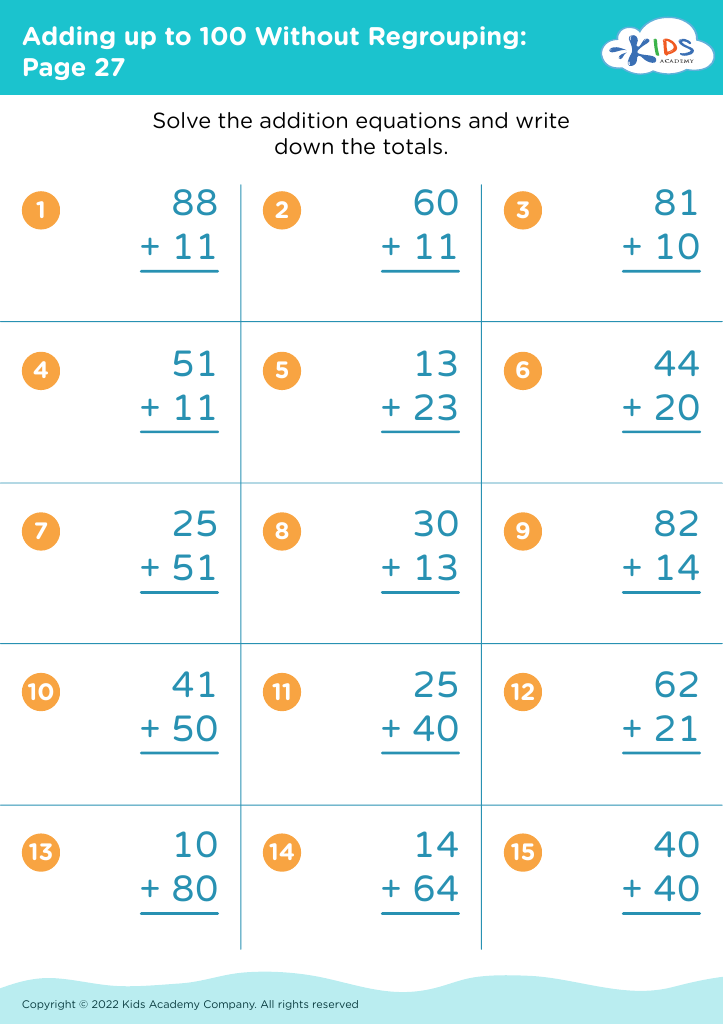
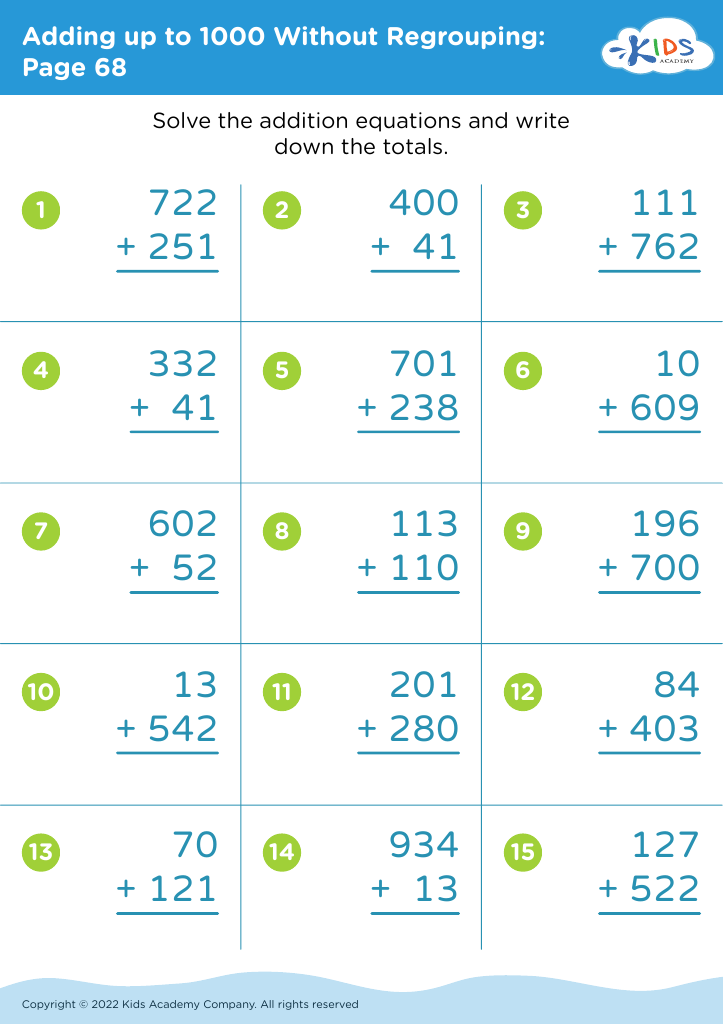
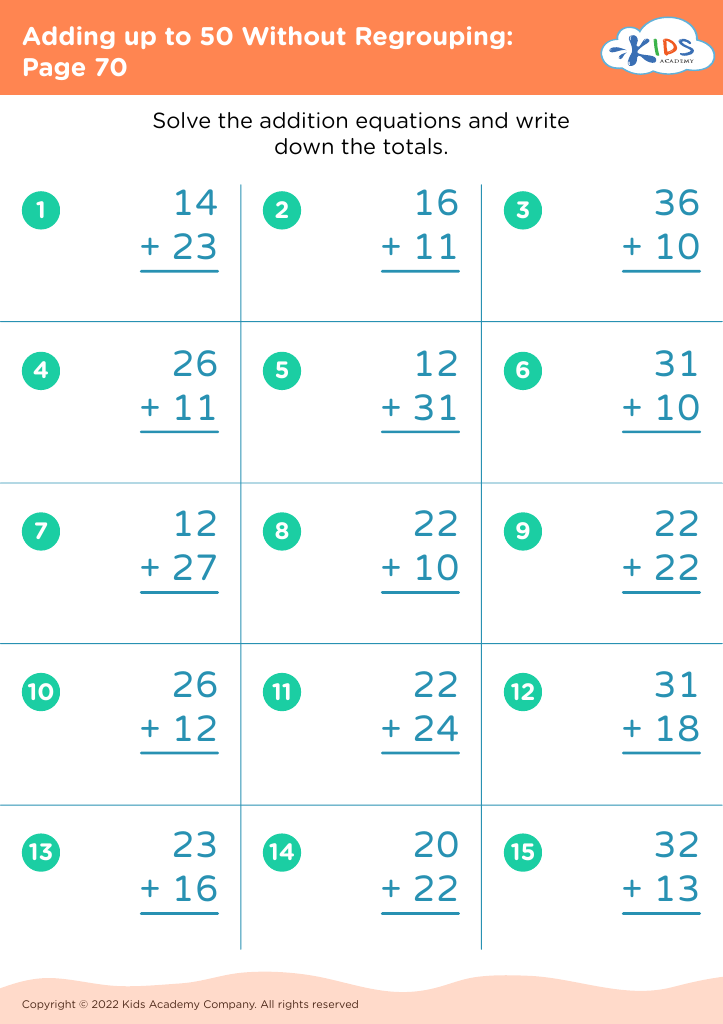








Understanding number sequences and grade 2 addition is vital for young learners. At this stage, children are developing foundational math skills that will support advanced mathematical concepts in later grades. Number sequences help students recognize patterns, an essential skill not only in math but also in problem-solving across different subjects. For instance, recognizing a sequence like 2, 4, 6, 8 helps children understand the concept of counting by twos and lays the groundwork for multiplication.
Addition in grade 2 is critical because it enables students to perform basic calculations with confidence. Mastery of addition facts enhances mental math skills and reduces the cognitive load when tackling more complex problems. This fluency allows students to focus on developing deeper problem-solving strategies rather than getting bogged down by basic calculations.
Parents and teachers should care because a solid understanding of these early math concepts fosters a positive attitude towards math, reduces mathematical anxiety, and accommodates future learning opportunities. Encouraging and nurturing these skills can lead to academic success and perseverance, nurturing curious, confident learners. Ultimately, supporting children in mastering number sequences and addition equips them with the tools necessary for both academic and real-world scenarios, laying a robust foundation for lifelong numeracy skills.