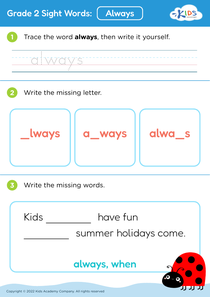
Understanding seasons Grade 2 Addition Worksheets
3 filtered results
-
From - To
Discover our "Understanding Seasons Grade 2 Addition Worksheets" at Kids Academy! These engaging and educational worksheets are designed specifically for second graders to help them improve their math skills through fun, seasonal themes. Each worksheet combines essential addition practice with fascinating facts about the four seasons, making learning both enjoyable and informative. By incorporating vibrant illustrations and relatable scenarios, our worksheets ensure that children can grasp math concepts effortlessly while staying curious about the world around them. Equip your child with the tools to succeed in math and develop a deeper understanding of the changing seasons with this specially crafted resource!
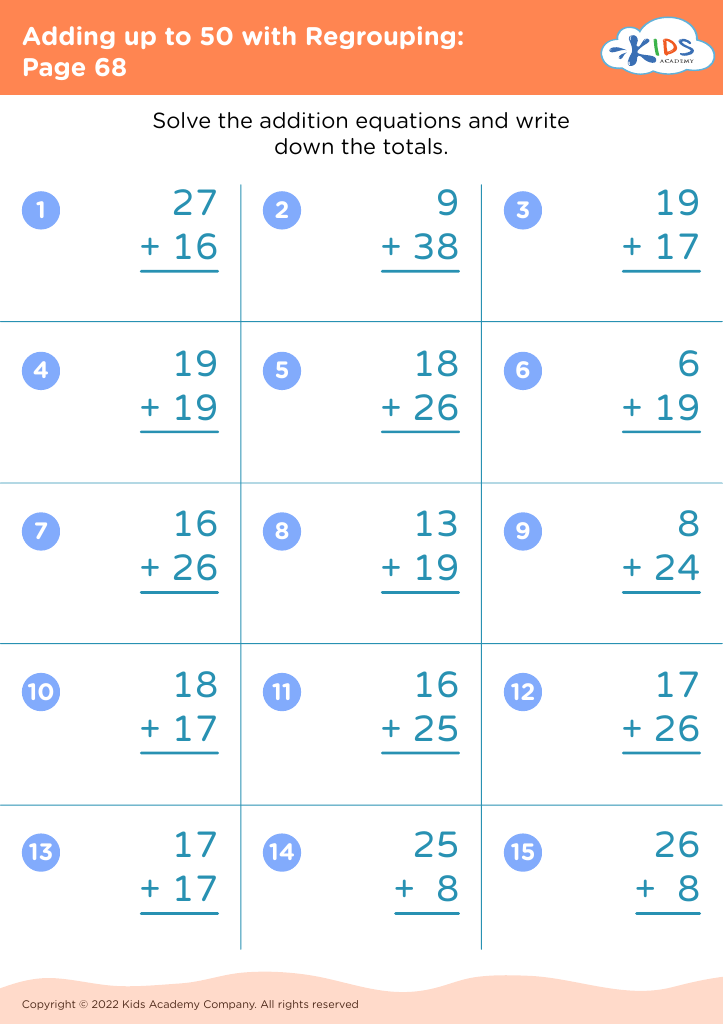
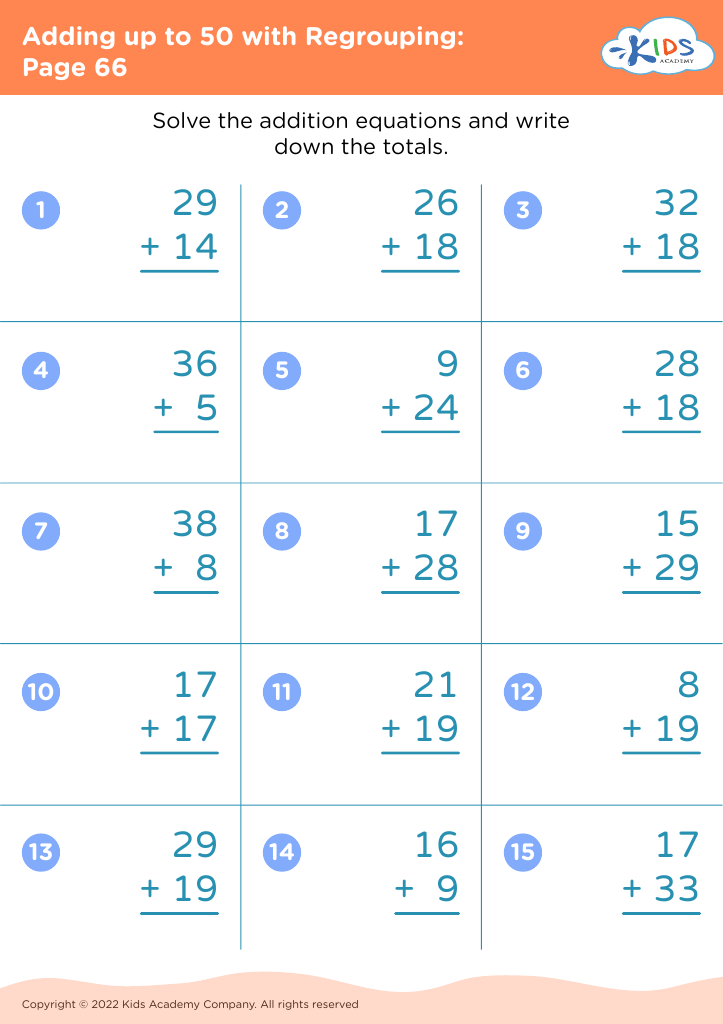
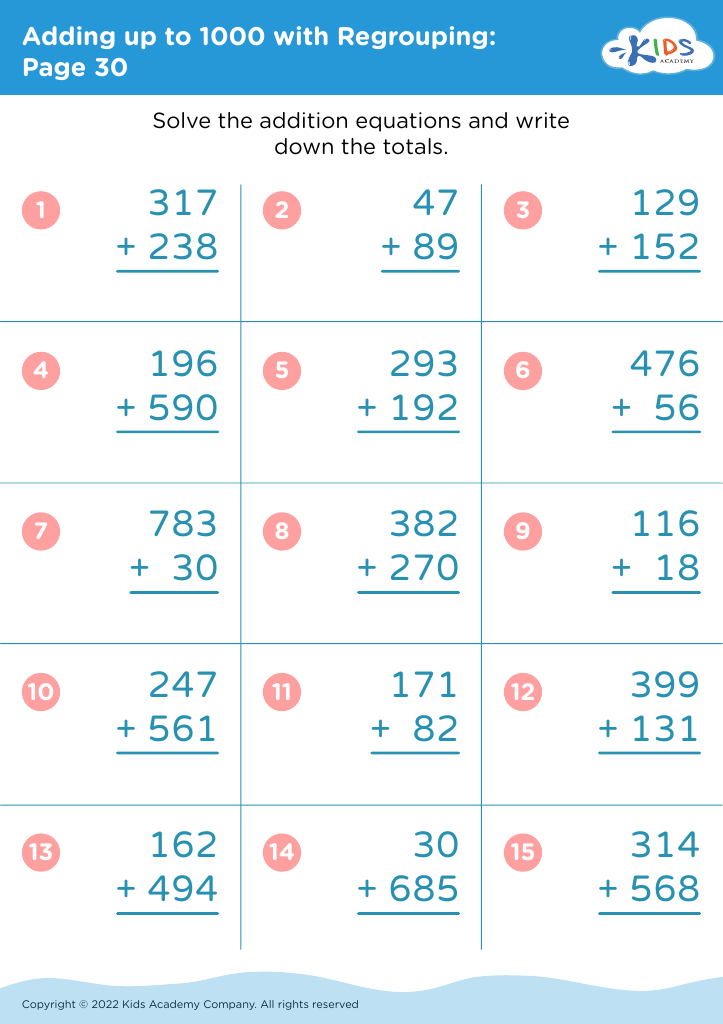








Understanding seasons and second-grade addition are fundamental aspects of a child's early education that parents and teachers should prioritize. First, seasons represent a basic yet crucial component of Earth Science. By understanding the cyclical nature of seasons, children learn about changes in weather, the environment, and how plants and animals adapt. This knowledge builds a foundation for higher-level scientific concepts and fosters a sense of curiosity about the natural world.
Secondly, second-grade addition spans much more than just arithmetic skills. It lays the groundwork for all future math learning, including more complex operations such as subtraction, multiplication, and division. Developing strong addition skills at an early age can significantly enhance a child’s problem-solving abilities, logical thinking, and academic confidence.
By linking seasons and addition, educators can create interdisciplinary lessons that are both engaging and comprehensible. For example, counting the number of sunny days or measuring temperature changes through seasons can provide practical, hands-on addition practice. This approach encourages children to see the relevance of math in everyday life.
In summation, grasping the concept of seasons and mastering second-grade addition are not isolated layers of knowledge. They serve as cornerstones for holistic development, fueling a student’s intellectual and observational growth. Thus, integrating these two areas effectively can foster a well-rounded, inquisitive, and capable learner.