Visual Learning Grade 2 Addition Worksheets
3 filtered results
-
From - To
Explore our Visual Learning Grade 2 Addition Worksheets, designed to enhance students' understanding of addition through engaging visual strategies. These worksheets combine colorful visuals with hands-on activities to help young learners grasp key addition concepts, making math enjoyable and accessible. From picture-based problems to interactive exercises, our resources support diverse learning styles, catering to visual learners and fostering confidence in math skills. Ideal for classroom use or at-home learning, these worksheets encourage critical thinking and problem-solving through practical, real-world applications. Help your second graders master addition with our fun and effective visual learning tools! Start the journey to math success today!
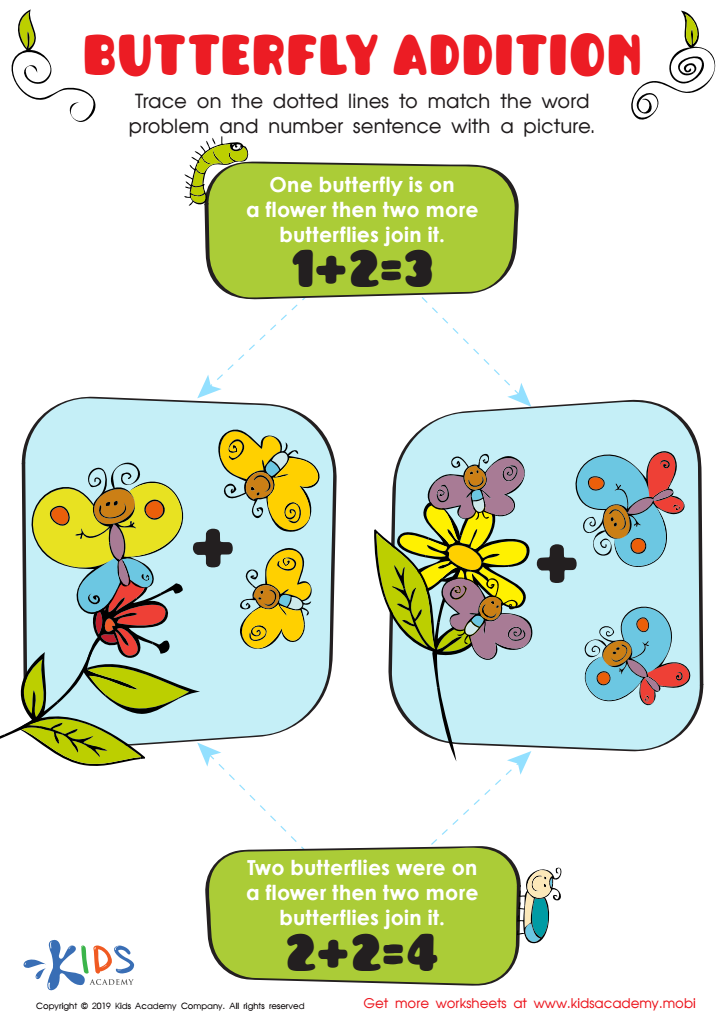
Butterfly Addition Worksheet
 Assign to My Students
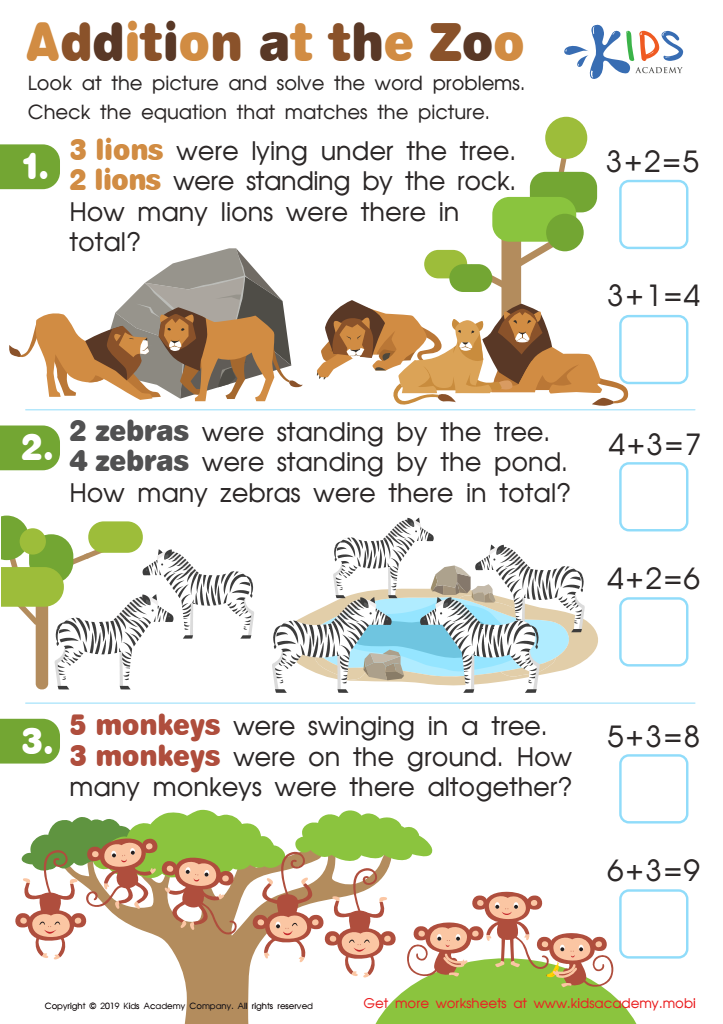
Addition at the Zoo Worksheet







Parents and teachers should care about visual learning in Grade 2 addition because it significantly enhances a child's understanding of mathematical concepts. At this age, children are exploring abstract ideas and benefit tremendously from concrete, visual representations that make these ideas tangible. Visual learning engages multiple senses and helps to establish connections, making math not just a series of rote processes, but an engaging subject.
Using tools like number lines, arrays, and visual aids, children can visualize addition, which builds their foundational skills. When they can see the relationship between numbers, they are more likely to grasp concepts like regrouping and combining quantities, leading to improved problem-solving abilities. Furthermore, visual learning encourages collaboration and discussion among students, fostering a sense of community and confidence in sharing ideas.
Incorporating visual strategies can also support diverse learning styles, ensuring that all students have a pathway to comprehend mathematics. Ultimately, promoting visual learning in Grade 2 addition not only supports academic success but also nurtures a positive attitude toward math, laying the groundwork for future learning. Parents and teachers, as guides in this journey, can create an enriched environment where children feel empowered to explore and enjoy mathematics.