Visual representation comprehension Grade 2 Addition Worksheets
5 filtered results
-
From - To
Enhance your second grader’s addition skills with our engaging Visual Representation Comprehension worksheets! Designed specifically for Grade 2, these worksheets use vivid illustrations and relatable scenarios to make learning addition fun and intuitive. Students will practice interpreting visual elements, applying their understanding to solve addition problems, and strengthening their critical thinking skills. By integrating visual aids, children can improve their comprehension, solidifying their foundational math knowledge. Ideal for classroom activities or at-home practice, our worksheets foster a love for math while helping young learners grasp essential concepts. Download now and support your child’s journey to becoming a confident mathematician!
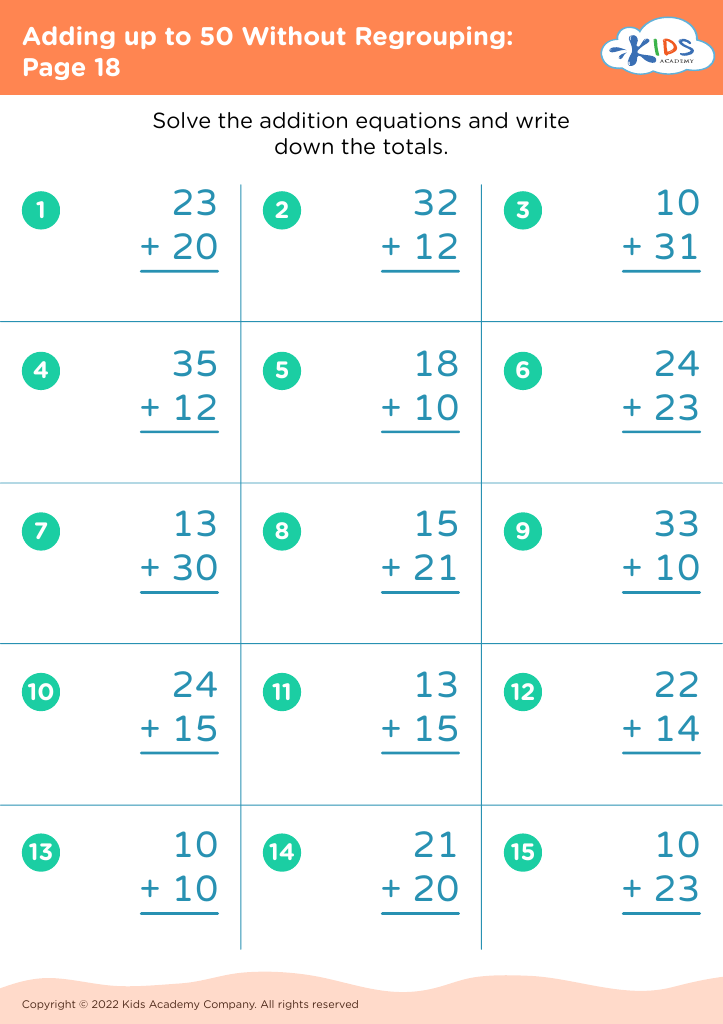
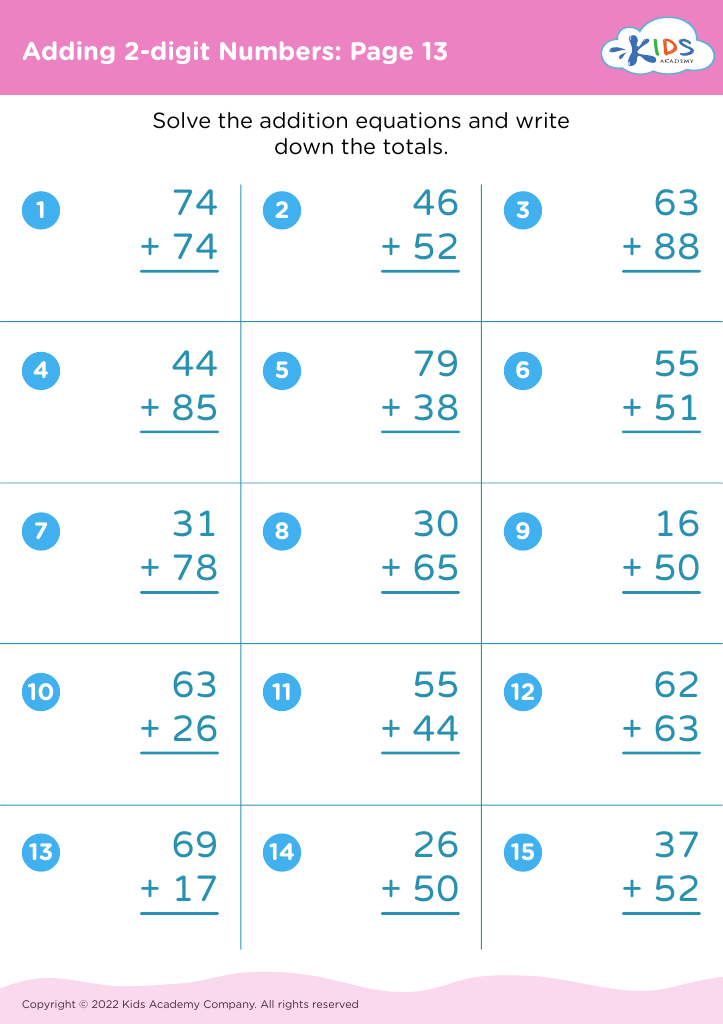
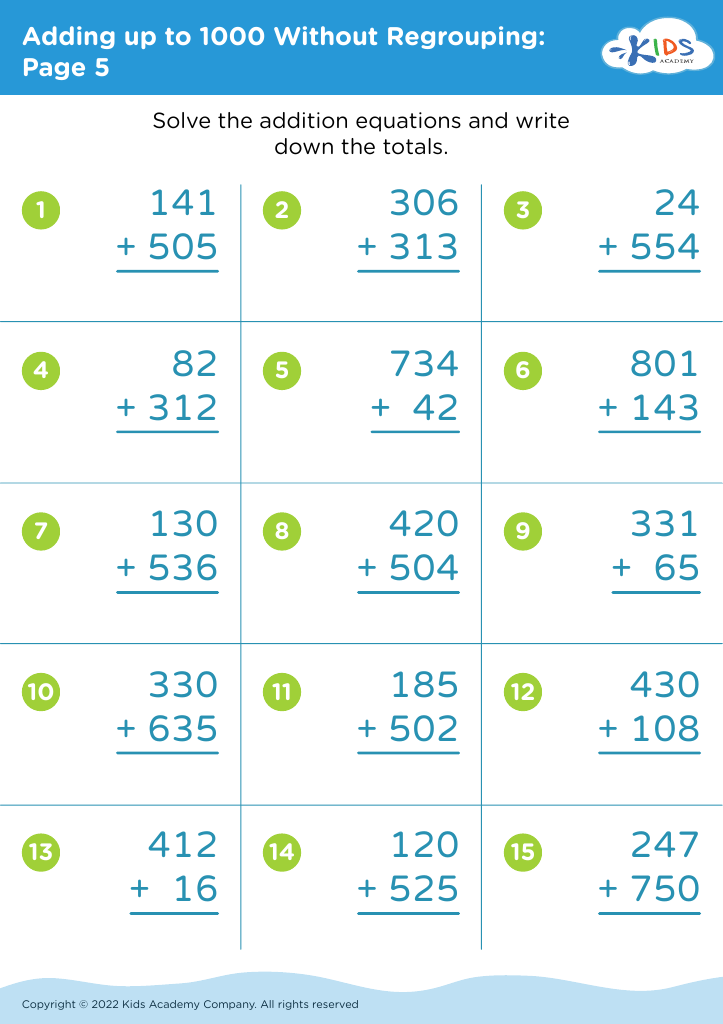
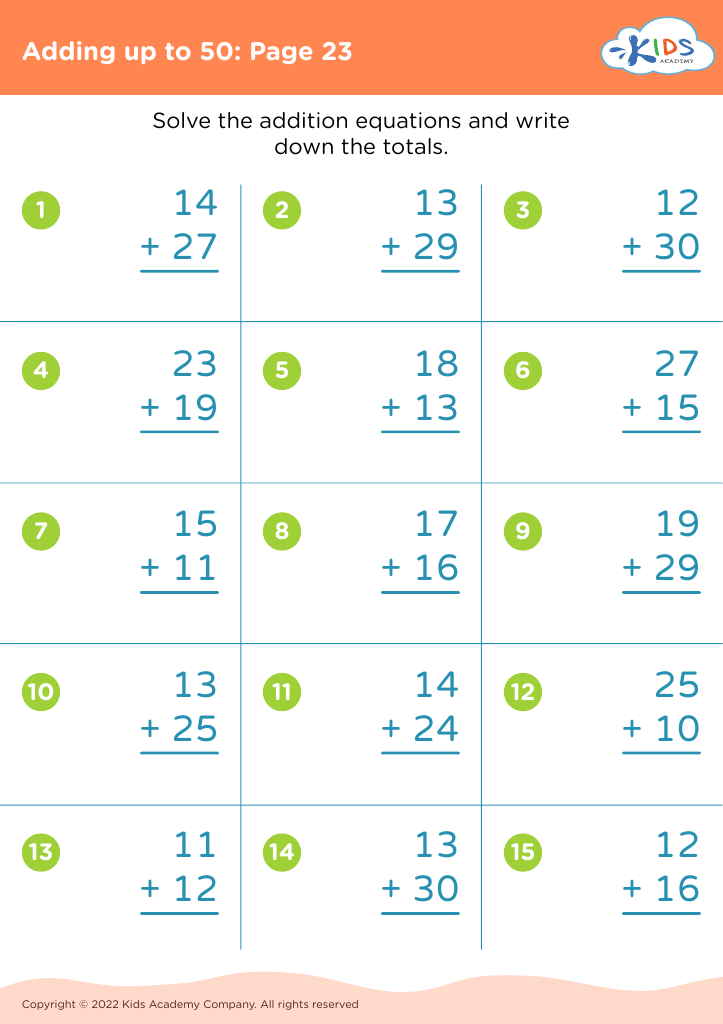
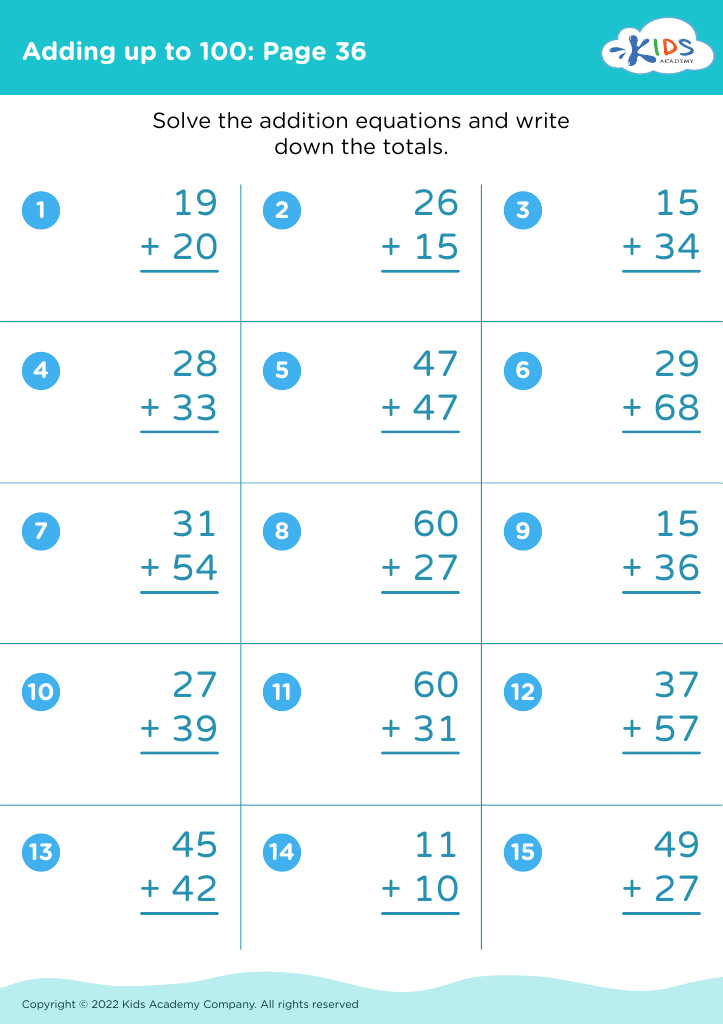








Visual representation comprehension in Grade 2 addition is crucial for fostering a solid foundation in mathematics. At this stage, children are transitioning from concrete to abstract thinking, and visual aids such as number lines, ten frames, or pictorial representations can enhance their understanding of numerical concepts. When parents and teachers prioritize visual learning, they help students grasp the idea of addition as combining quantities, which deepens their comprehension of number sense and mathematical relationships.
Visual representations also cater to diverse learning styles. Some children may struggle with traditional algorithms but excel in interpreting graphical data. By allowing children to visualize problems, we help them build confidence, encourage curiosity, and foster a positive attitude towards math.
Moreover, visual comprehension supports problem-solving skills. As students learn to interpret and create their visual aids, they develop critical thinking skills that extend beyond mere addition. This comprehensive approach not only improves their current performance but also lays the groundwork for more complex mathematical concepts in the future.
Ultimately, when parents and teachers emphasize visual representation, they invest in their child's success by making math more accessible, engaging, and enjoyable, ultimately cultivating lifelong learners.