Recognizing number patterns Grade 2 Numbers Worksheets
3 filtered results
-
From - To
Discover our engaging Grade 2 Recognizing Number Patterns worksheets designed to enhance your child's mathematical skills! These interactive resources focus on identifying, completing, and creating number patterns, fostering critical thinking and problem-solving abilities. Aligned with educational standards, our worksheets are perfect for classroom and home use, making learning fun and effective. With colorful designs and age-appropriate challenges, children will reinforce their understanding of sequences while boosting their confidence in math. Dive into a variety of exercises that spark curiosity and promote a love for learning. Explore our worksheets today and help your child master number patterns with ease!
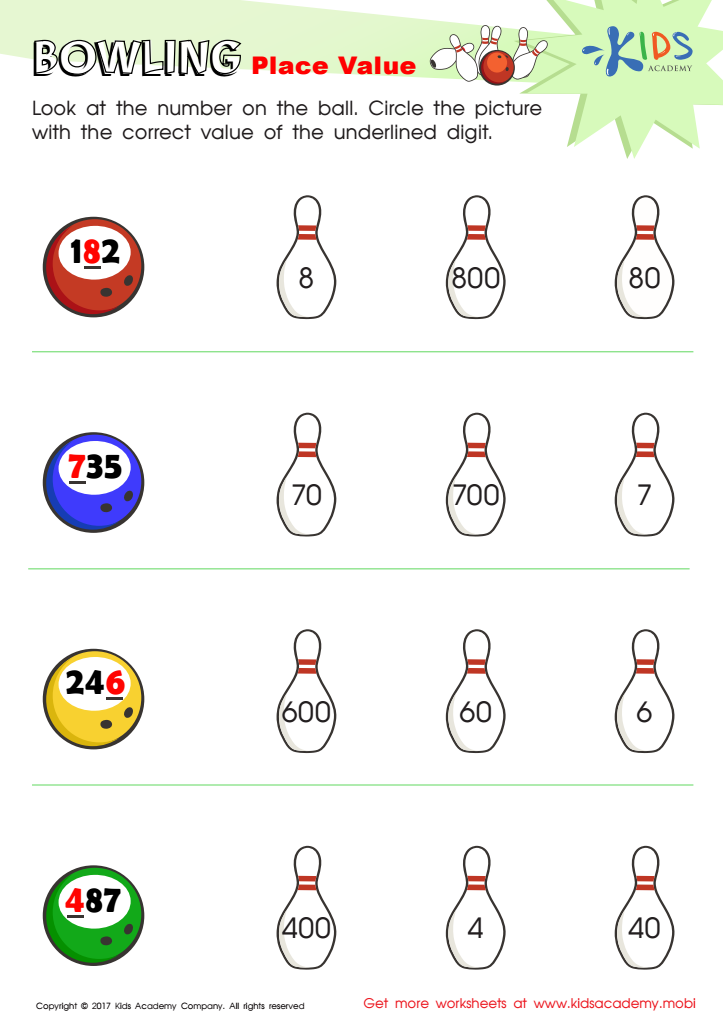
Place Value Worksheet
 Assign to My Students
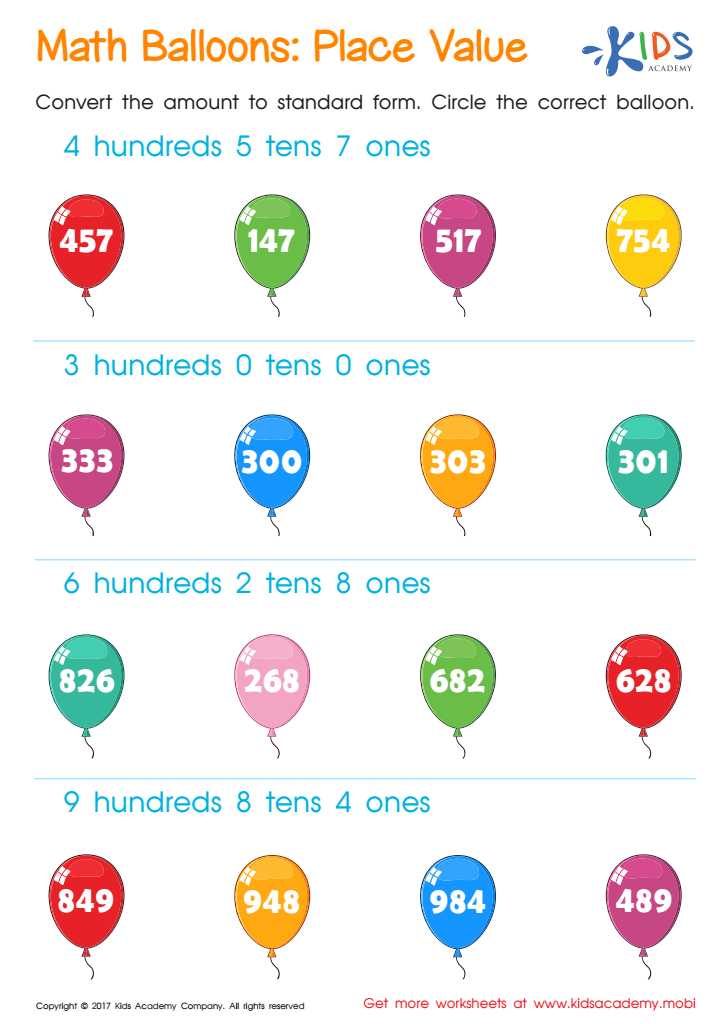
Place Value Printable Worksheet
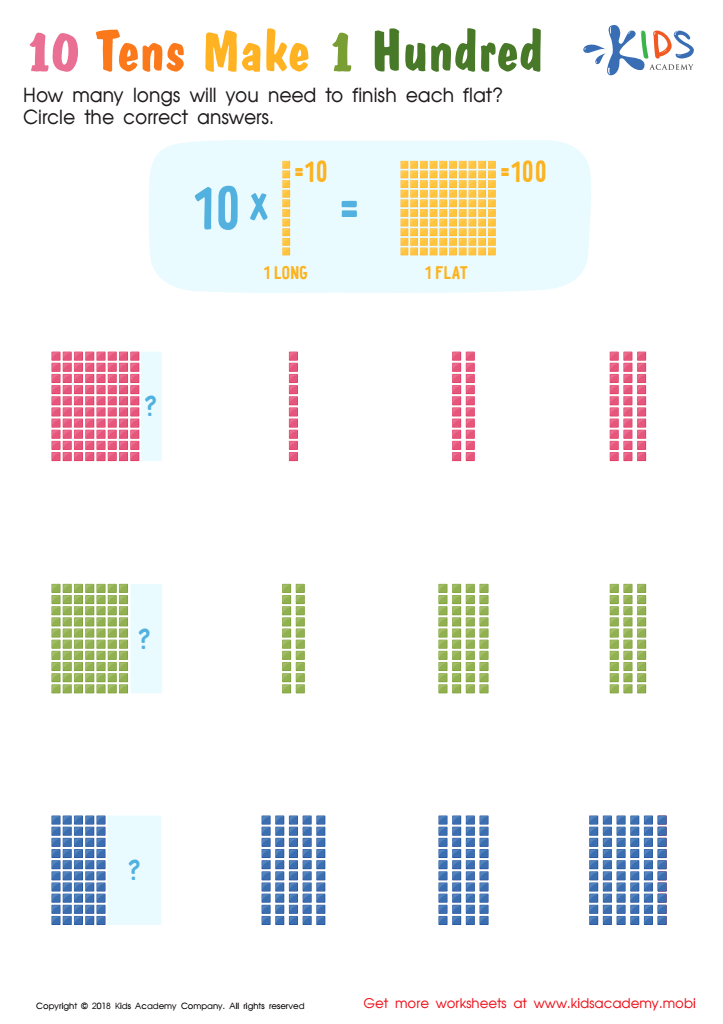
10 Tens Make 1 Hundred Worksheet








Recognizing number patterns is crucial for second graders as it lays the foundational skills necessary for future math understanding. When parents and teachers emphasize pattern recognition, students develop critical thinking abilities and mathematical reasoning skills, which are essential for solving complex problems later in their education.
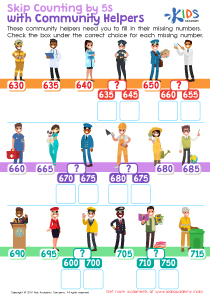
Identifying patterns helps children understand the relationships between numbers, fostering an early appreciation for mathematics beyond rote memorization. For instance, when students notice patterns in counting (like skip counting by 2s or 5s), they can quickly grasp multiplication concepts, setting the stage for greater mathematical mastery.
Moreover, recognizing number patterns enhances children's ability to predict outcomes and make informed guesses, a skill that transfers beyond math into analytic thinking across various subjects, including science and literacy. As they learn to identify and describe patterns, students build confidence in their math abilities, encouraging a positive attitude towards learning in general.
Engaged parents and teachers can create learning experiences that highlight the importance of patterns, such as using everyday examples in nature or art. Ultimately, caring about this skill ensures that children have the tools and confidence to succeed in their future academic endeavors.