Learning addition Grade 2 Math Worksheets
3 filtered results
Difficulty Level
Grade
Age
-
From - To
Subject
Activity
Standards
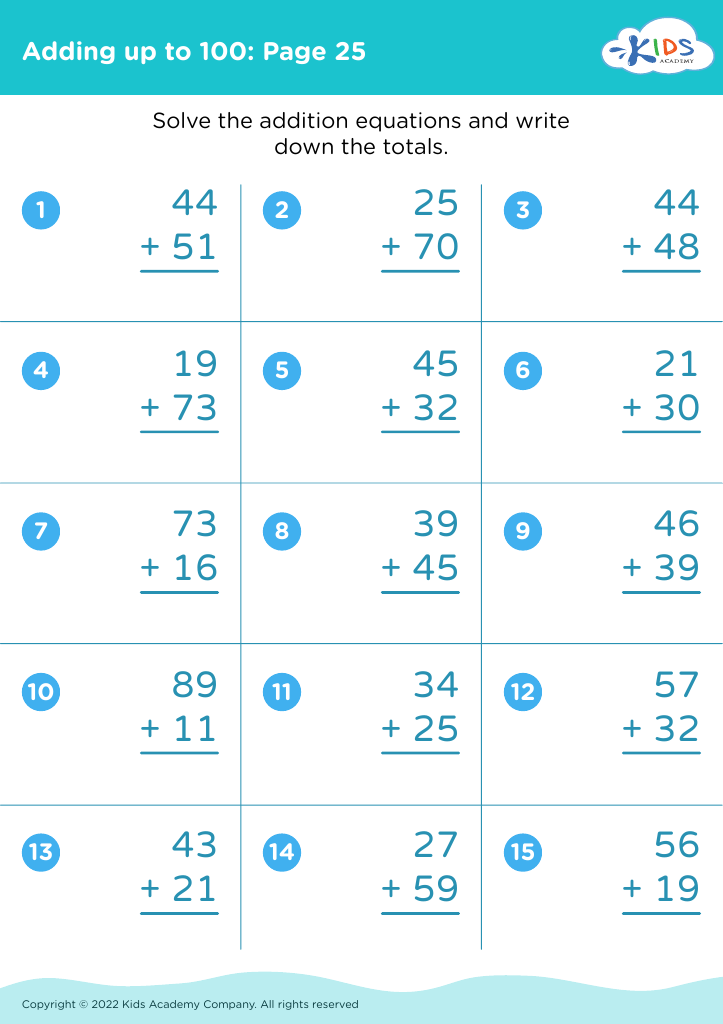
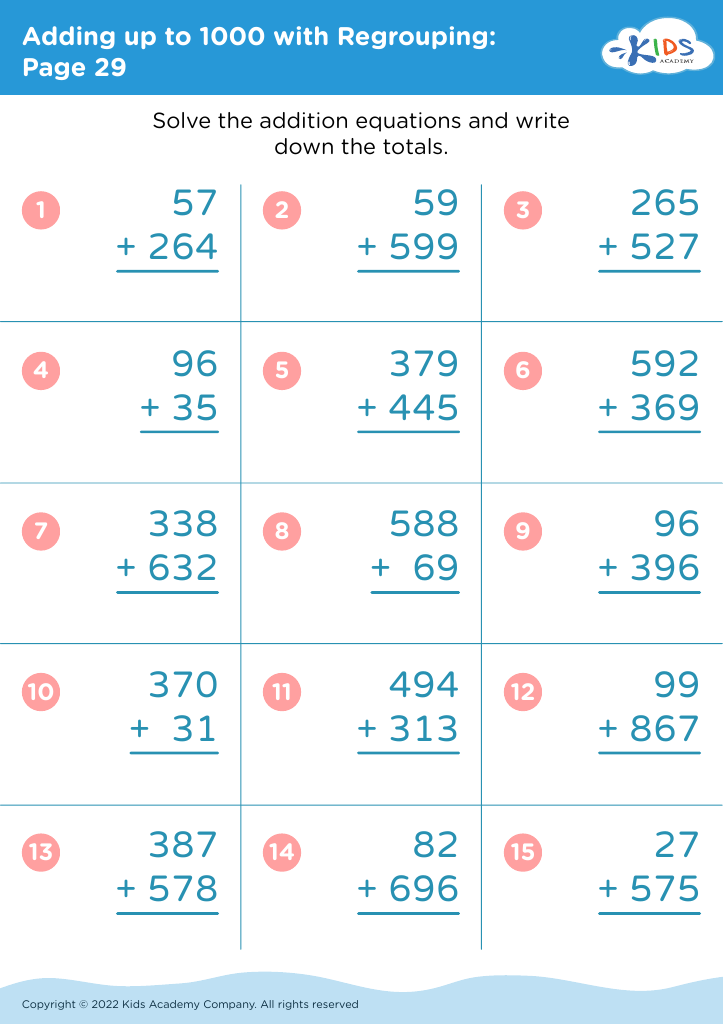
Welcome to our Grade 2 Math Worksheets on learning addition! Designed to strengthen foundational math skills, our engaging worksheets provide a variety of activities that make practicing addition fun. Through colorful visuals and interactive exercises, students will develop confidence in adding numbers, understanding single and double-digit problems. Perfect for classroom use or homeschooling, these worksheets cater to various learning styles and pacing. Explore our range of addition worksheets that promote critical thinking and problem-solving skills while preparing your child for future math challenges. Start the addition adventure today, and watch your second grader excel in math!
Favorites
With answer key
Interactive
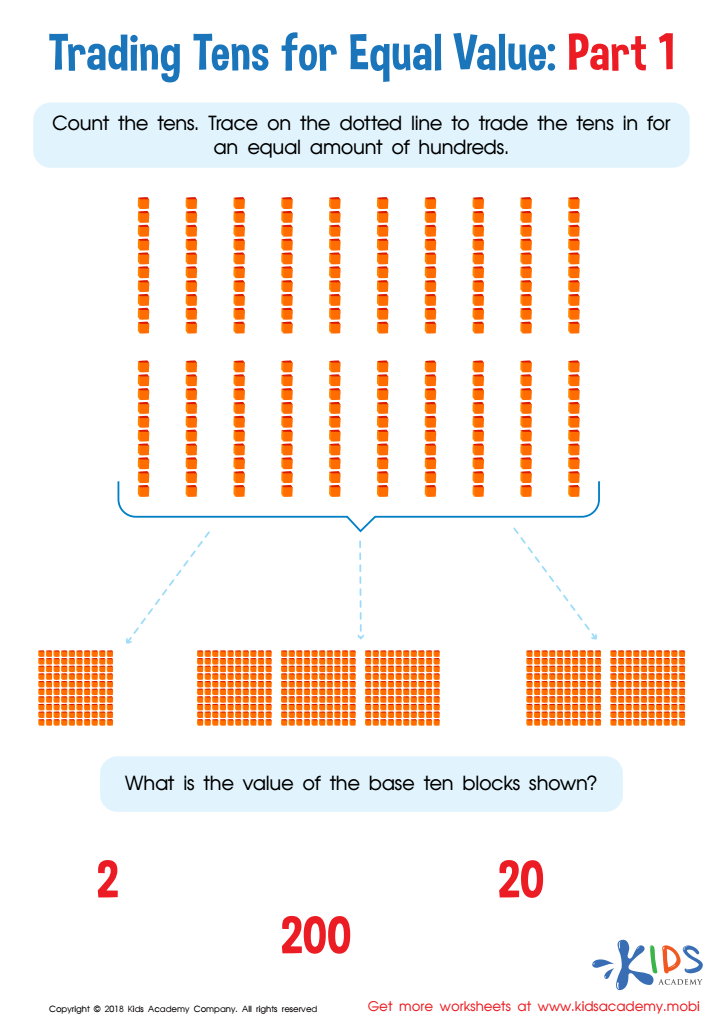
Trading Tens for Equal Value Worksheet: Part 1
This worksheet helps 3rd graders count large numbers and recognize base numbers. It lists 10 cubes and asks students to identify the hundreds, then circle the base blocks. This colorful pdf provides a fun, visual way to help students strengthen their math basics.
 Assign to My Students
Trading Tens for Equal Value Worksheet: Part 1
Worksheet
Join Kids Academy for Free
Who is primarily going to use this learning content?








Learning addition in Grade 2 mathematics is crucial for several reasons. First, it serves as a foundational skill that is essential for all future mathematical learning. Mastering addition helps students develop a strong number sense, which is vital for understanding more complex concepts in math, such as subtraction, multiplication, and even fractions.
Additionally, addition is a skill that children encounter in daily life, from calculating the total number of items in a shopping cart to understanding basic budgeting concepts. By gaining confidence and competence in addition, students become more enthusiastic about math and are less likely to encounter math anxiety later on.
Moreover, addition fosters critical thinking abilities. When teachers and parents encourage problem-solving through addition, children learn to approach challenges logically and creatively. It also promotes cognitive development, enhancing memory retention and concentration, which are beneficial in all subjects.
Lastly, engaging children in learning addition, whether through games or real-world scenarios, strengthens their relationship with parents and teachers. Collaborative learning experiences create an environment of support and interest, ensuring that children feel motivated and valued in their educational journey. Therefore, investing attention and resources in mastering addition is essential for building confidence and competence in young learners.