Logical thinking development Grade 2 Math Worksheets
10 filtered results
Difficulty Level
Grade
Age
-
From - To
Subject
Activity
Standards
Enhance your Grade 2 student's logical thinking abilities with our engaging math worksheets! Designed specifically for second graders, these worksheets promote problem-solving skills and critical thinking through fun and interactive exercises. Students will explore various activities that challenge them to identify patterns, analyze relationships, and draw conclusions. Perfect for classroom use or at-home reinforcement, our materials cater to diverse learning styles, ensuring every child can succeed. Foster a love for mathematics while building essential analytical skills that will benefit them in future academic endeavors. Dive into our collection and watch your child's confidence in logical reasoning grow!
Favorites
With answer key
Interactive
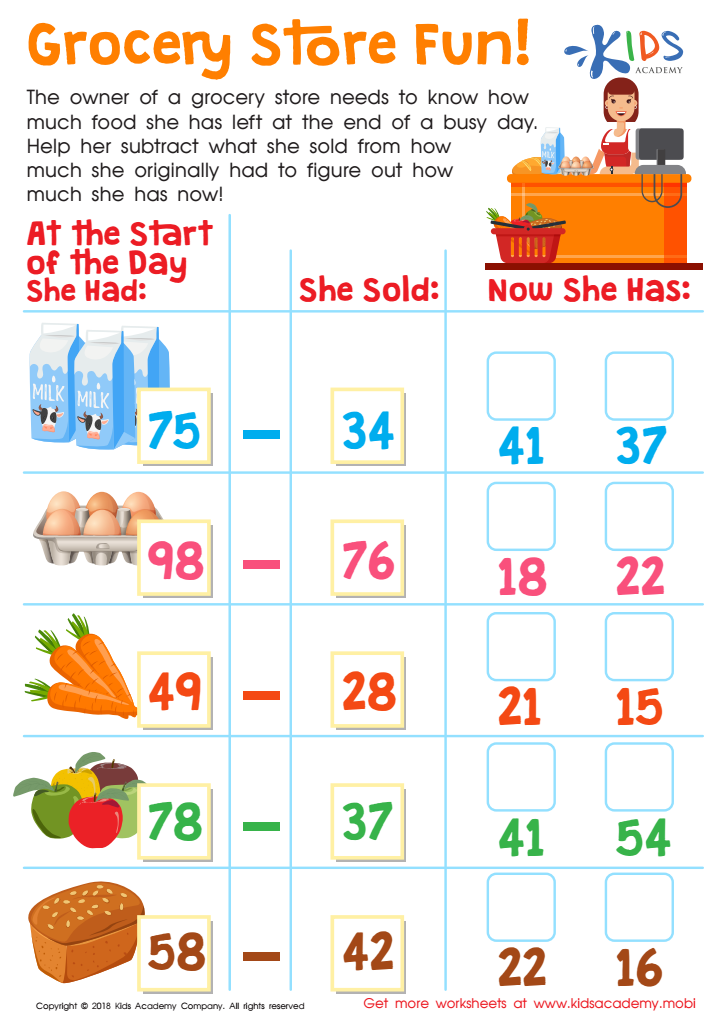
Grocery Store Fun! Worksheet
Let your kids have fun with this store worksheet. It requires them to help the owner by subtracting what she has sold from the original amount to figure out how much is left. Have them read and solve the equations in the printout to give the store owner the answer.
 Assign to My Students
Grocery Store Fun! Worksheet
Worksheet
Tricky Problems Worksheet: Part 2
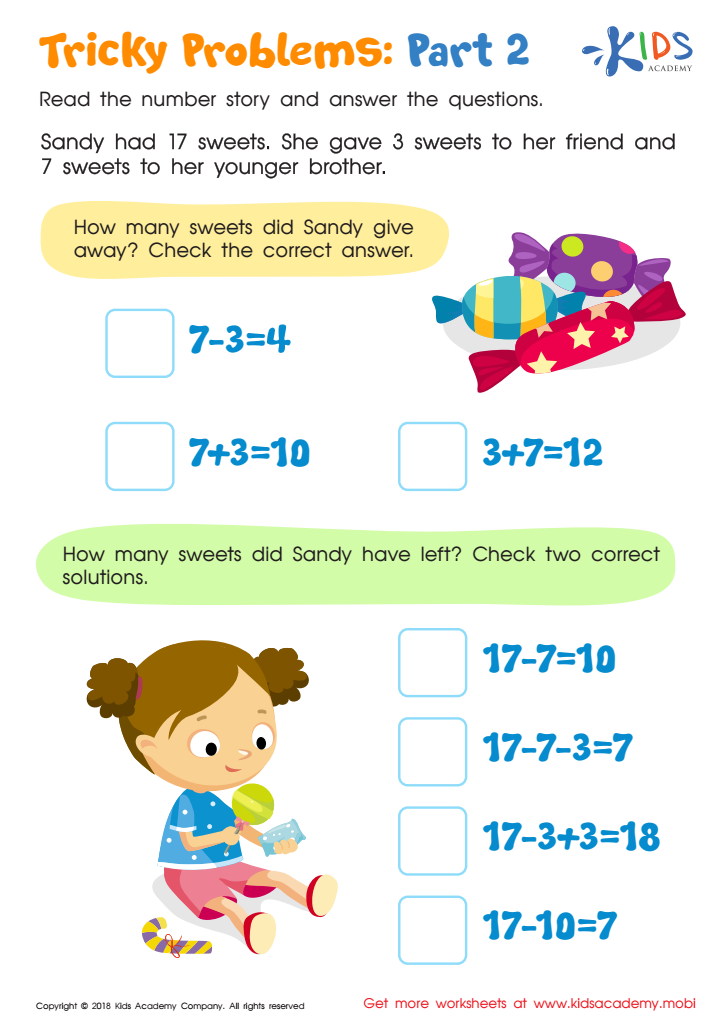
Help your little math learner visualize number stories with this engaging worksheet. They'll connect pictures to the story and use math facts to find the sums. After that, they'll be able to identify the correct number sentences to match. Let them practice and get better at problem solving!
Tricky Problems Worksheet: Part 2
Worksheet
Match the Word Problems Worksheet
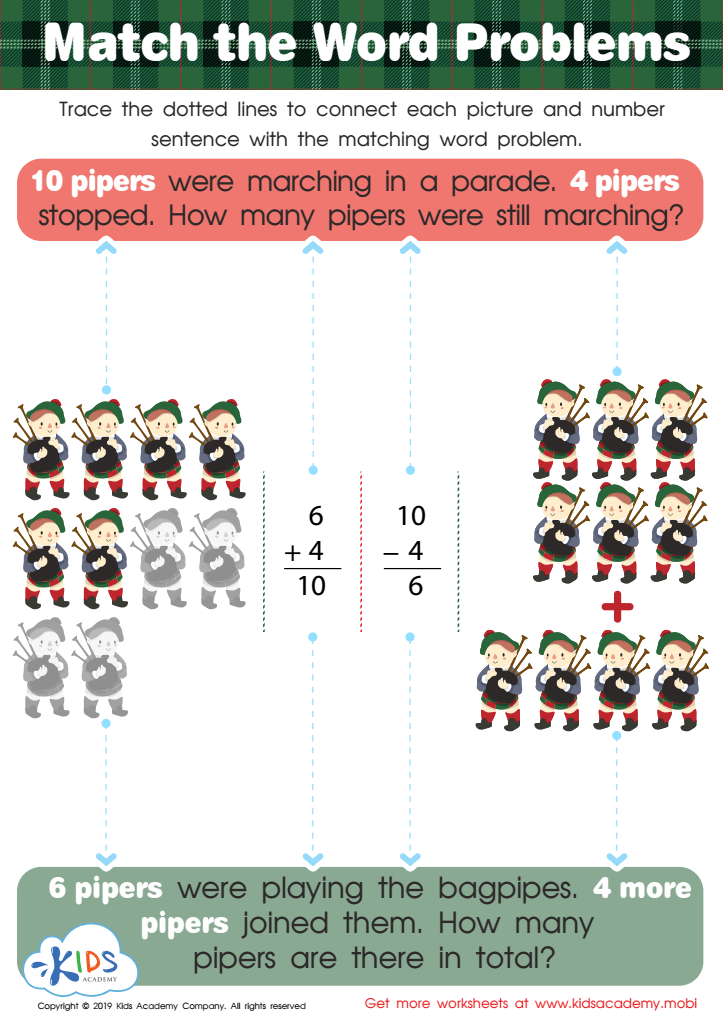
Read this word problem to your kids: Help them understand how it can be translated into a number problem. Trace the dotted lines to see how each picture and number sentence match the problem. With this worksheet, you can show your kids how easy it is to transform a word problem into a number problem.
Match the Word Problems Worksheet
Worksheet
Using Number Sentences to Solve Problems Worksheet
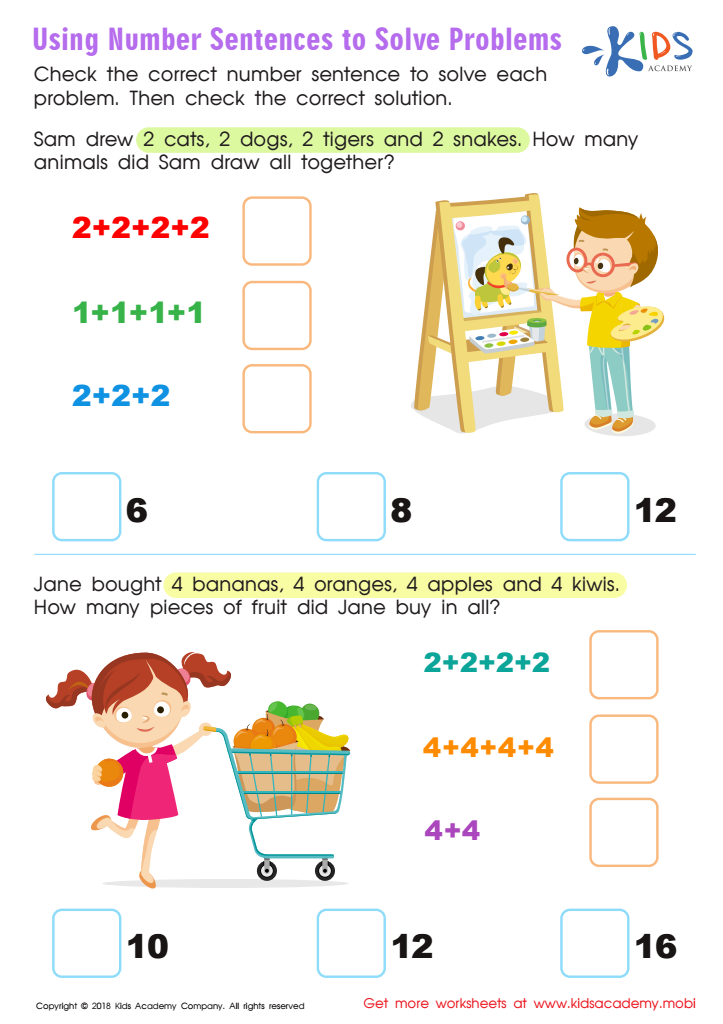
Solving math problems requires an efficient strategy. Picture representation can help young mathematicians with basic addition problems, especially when it involves repeated addends. As they gain confidence, they'll be able to apply their number sentence solving abilities to more complex equations.
Using Number Sentences to Solve Problems Worksheet
Worksheet
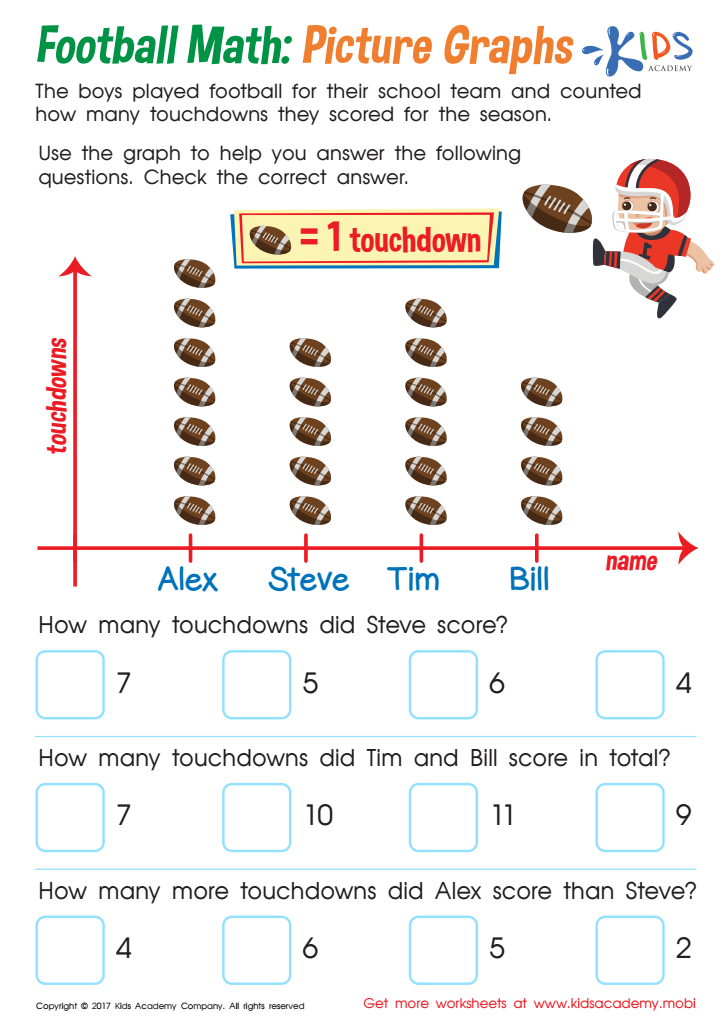
Football Math Worksheet
It uses football-themed data to compare teammates' touchdowns. Perfect for motivating your child and helping them learn to read graphs in a fun way!
Motivate your child to learn to read graphs with this fun and sporty picture graph worksheet! Football-themed data is used to compare teammates and their touchdowns, sure to delight your little sports fan. Perfect for teaching data analysis in an engaging way!
Football Math Worksheet
Worksheet
Join Kids Academy for Free
Who is primarily going to use this learning content?






Logical thinking is essential in Grade 2 math as it forms the foundation for problem-solving and critical thinking skills that children will use throughout their educational journey and beyond. At this stage, students begin to understand patterns, relationships, and basic operations, crucial for advanced mathematical concepts in later grades.
Parents and teachers should emphasize logical thinking in math for several reasons. Firstly, it enhances a child's ability to analyze and approach problems methodically, fostering a sense of confidence in their abilities. Secondly, developing practical reasoning skills at this early stage allows children to make connections between mathematical concepts and real-world situations, cultivating a deeper understanding of their environment.
Moreover, logical thinking lays the groundwork for subjects beyond math, including science and literacy, where reasoning is equally vital. Engaging children in activities that nurture these skills can lead to better academic performance and improved decision-making capabilities. By prioritizing logical thinking development, parents and teachers contribute to a child’s overall cognitive growth, setting them up for success in future learning endeavors and life skills. Fostering these skills now encourages a curious and inquisitive mindset, promoting lifelong learning.