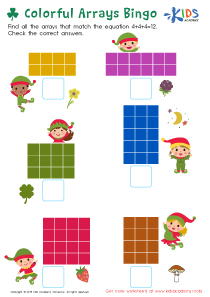
Practice division Grade 2 Math Worksheets
3 filtered results
-
From - To
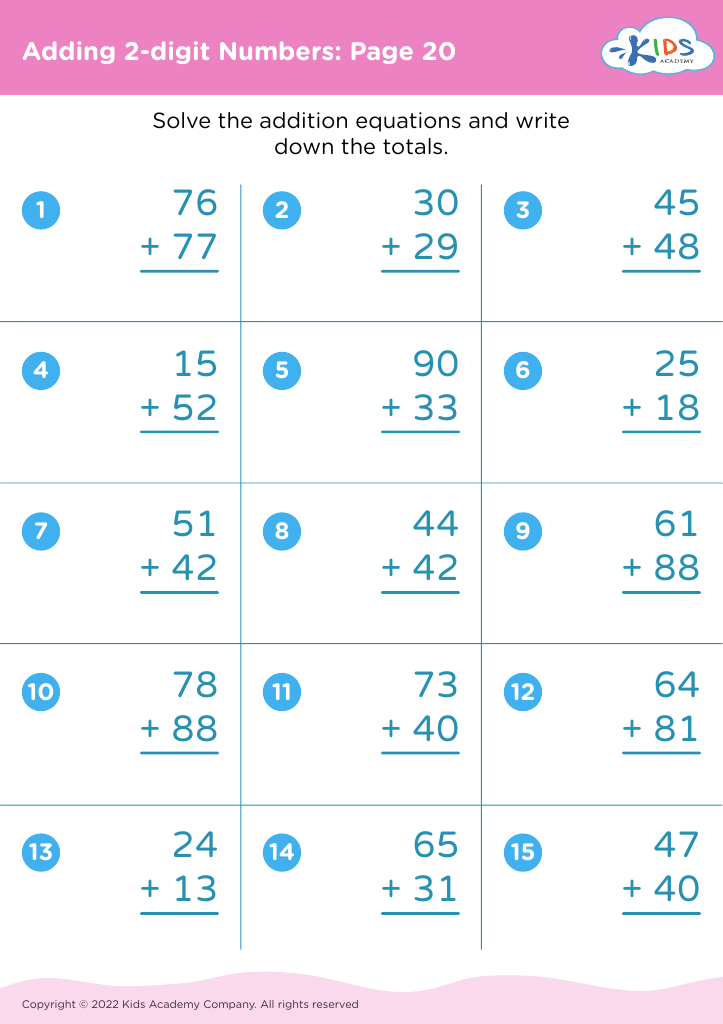
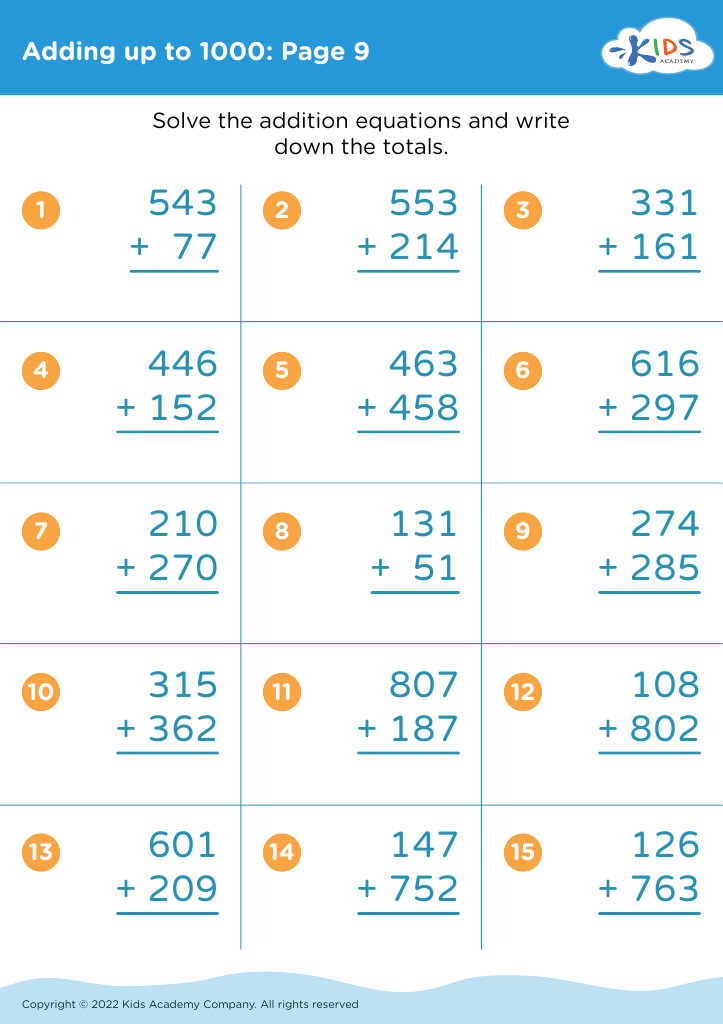
Boost your child's division skills with our Grade 2 Math Worksheets from Kids Academy! These engaging practice sheets are designed to build confidence and proficiency in basic division concepts. Featuring a variety of fun and challenging problems, each worksheet provides a hands-on way for second graders to master dividing numbers. Perfect for daily practice, homework, or extra review, our worksheets support both in-class learning and at-home study. Help your young learner excel in math with our expertly crafted practice division worksheets, available to download now from Kids Academy.
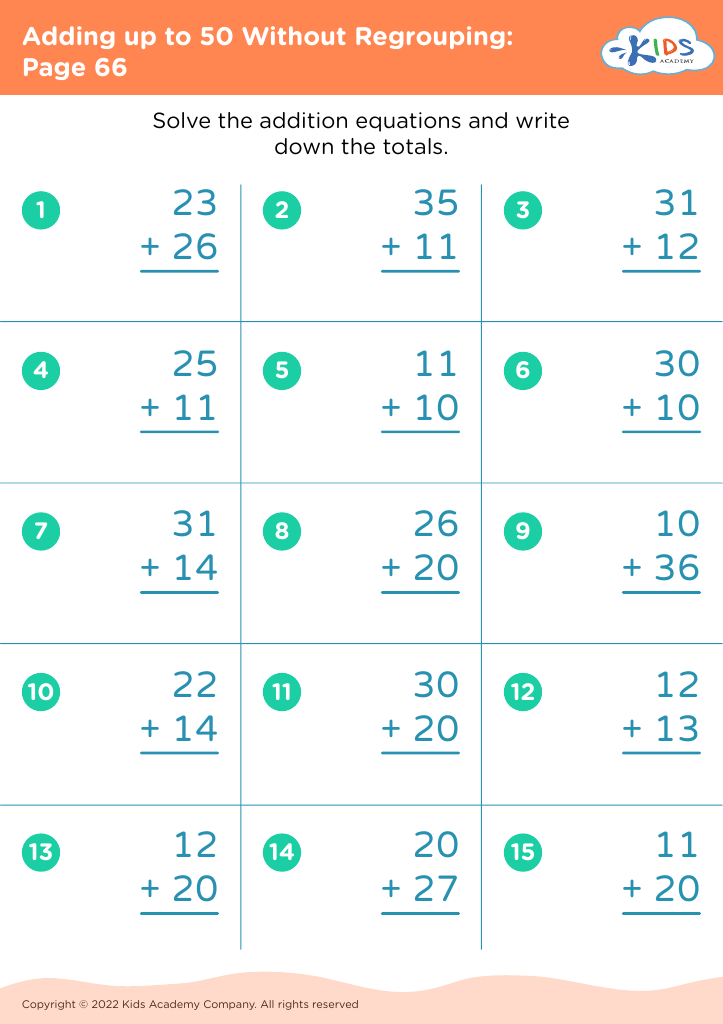







Parents and teachers should care about practicing division in Grade 2 math because it's a critical foundational skill that supports a child’s overall mathematical development. At a young age, students are beginning to expand their understanding of numbers and how they relate to one another. Introducing division concepts early helps children grasp the idea of sharing and distributing items evenly, which is a practical life skill.
Moreover, division is interconnected with other mathematical areas such as multiplication, fractions, and algebra. When children practice division, they reinforce their multiplication skills because the two operations are inversely related. This strengthens their arithmetic foundation and boosts their ability to solve more complex problems in the future.
Additionally, learning division at an early age can enhance cognitive skills like logical thinking, problem-solving, and analytical capabilities. By breaking down problems into smaller, more manageable parts through division, students learn to approach challenges methodically and with confidence.
Lastly, early competence in math fosters a positive attitude toward the subject, reducing math anxiety and cultivating a growth mindset. This encouragement and support from parents and teachers can make a significant impact, setting the stage for long-term academic success and ensuring students have the skills needed for everyday life.