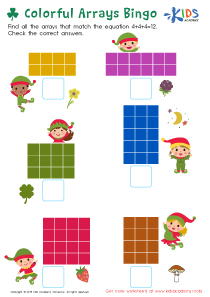
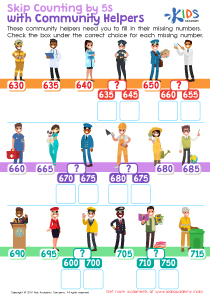
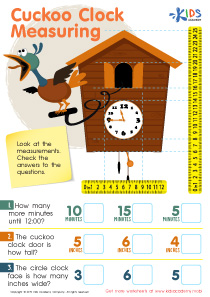
Our Problem-Solving Practice Grade 2 Math Worksheets are expertly designed to help young learners sharpen their mathematical reasoning skills. These worksheets bring engaging challenges that cover a variety of topics, from addition and subtraction to logic puzzles and word problems. Each activity encourages critical thinking and application of different strategies to find successful solutions. Perfect for classroom and at-home learning, these practice sheets not only help build a solid foundation in math but also enhance analytical and problem-solving abilities in a fun and interactive way. Equip your second graders with the tools they need to excel in math!
Check out this FREE Grade 2 Trial Lesson on Math!

Add Within 1,000 Understanding What It Means to Regroup 2 Addends

Favorites
With answer key
Interactive
  • Grade 2
  • Problem-solving practice
  • Math
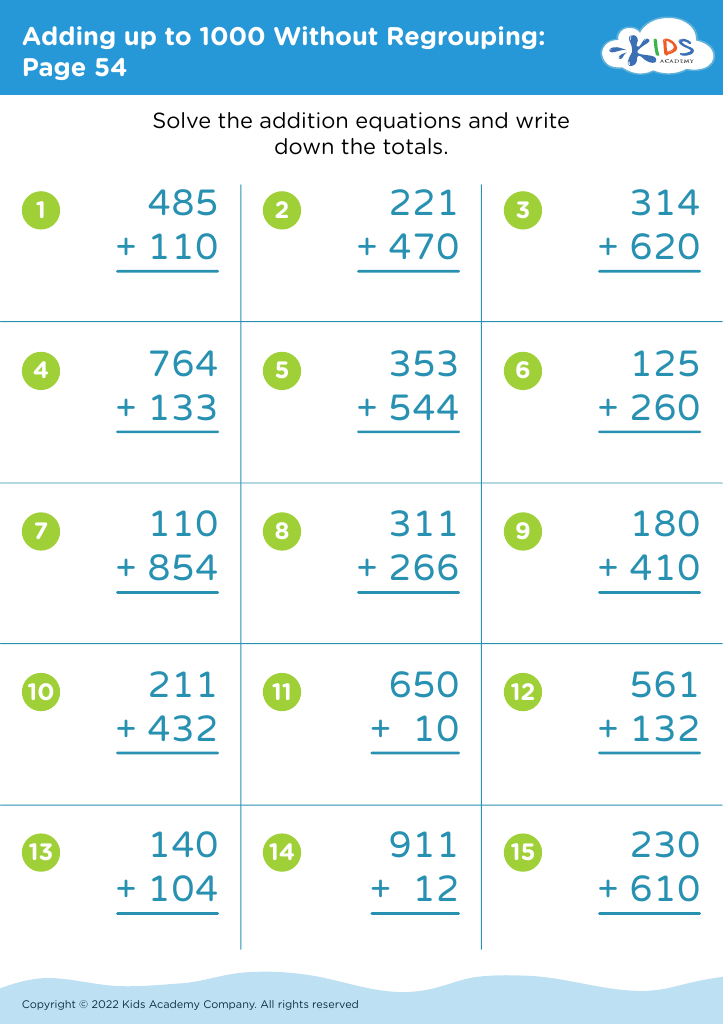
Adding up to 1000 Without Regrouping: Page 54
Worksheet
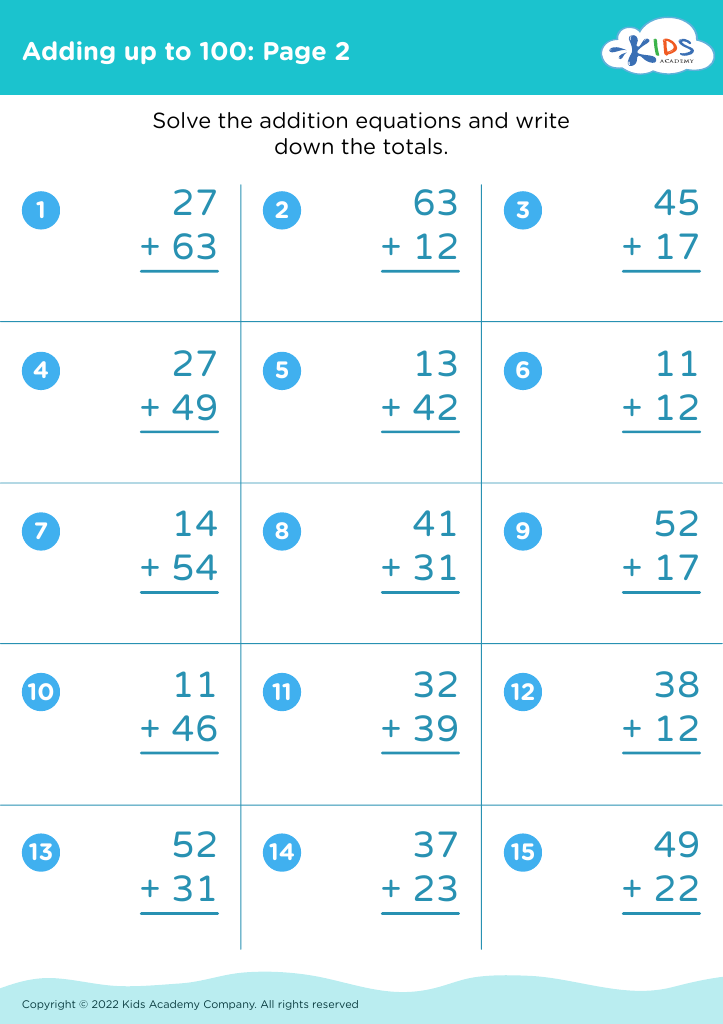
Adding up to 100: Page 2

Adding up to 100: Page 2

Adding up to 100: Page 2
Worksheet
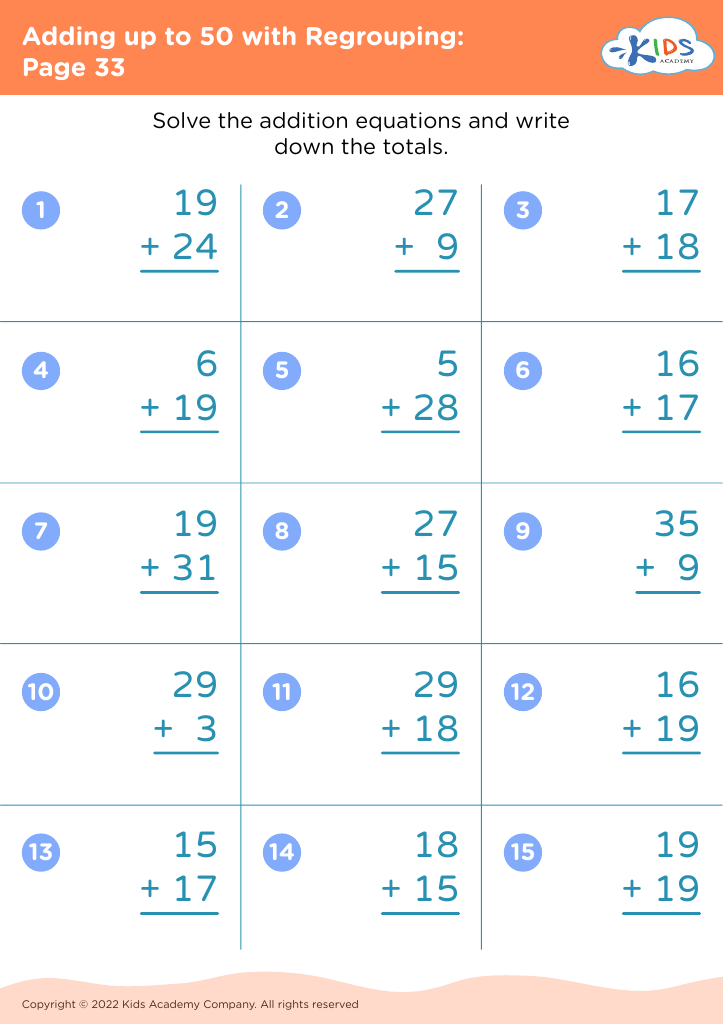
Adding up to 50 with Regrouping: Page 33
Worksheet
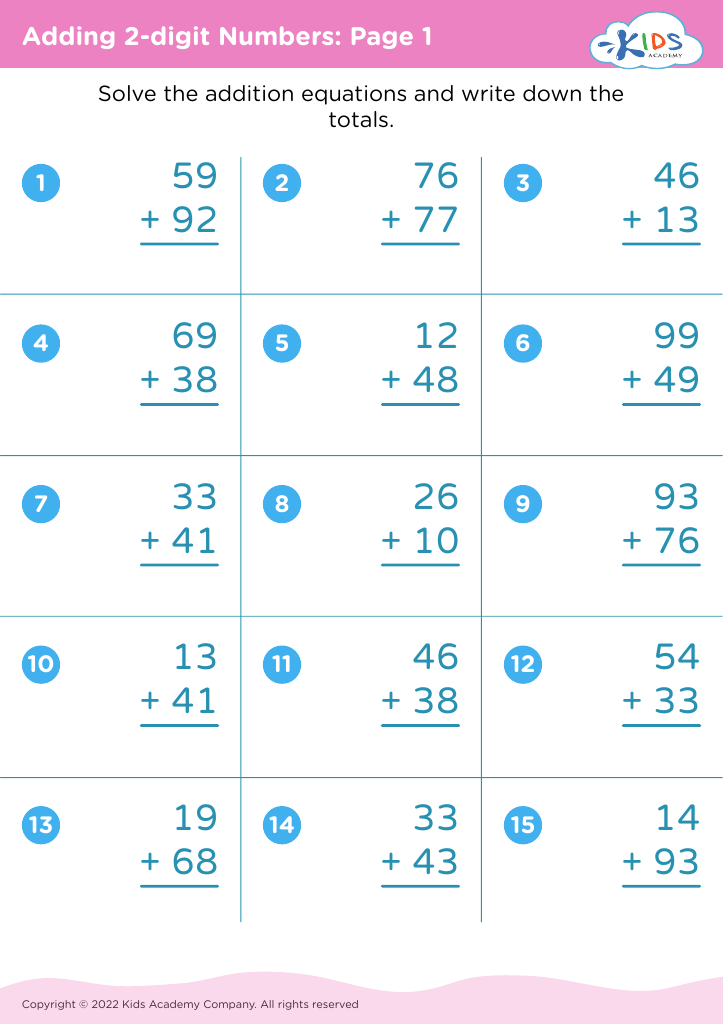
Adding 2-digit Numbers: Page 1

Adding 2-digit Numbers: Page 1

Adding 2-digit Numbers: Page 1
Worksheet
Adding Numbers: Conservation Worksheet

Adding Numbers: Conservation Worksheet

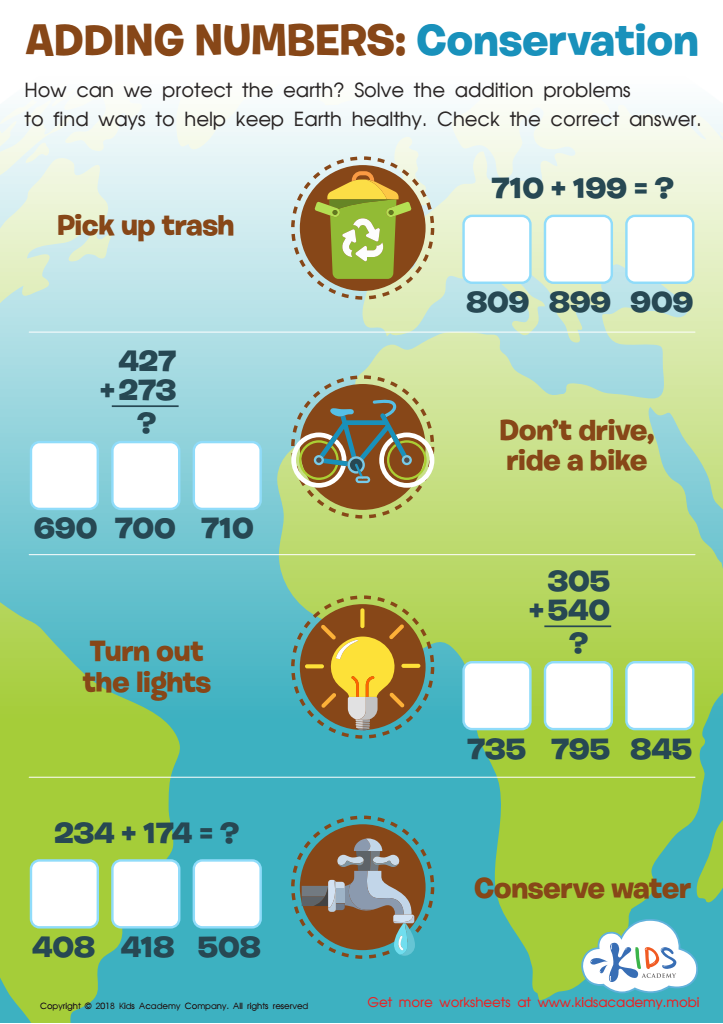
We all live on the Earth, which provides us with the vital necessities for survival. Unfortunately, we too often take advantage of this, causing pollution, water wastage and global warming. Help teach your kids how we can protect our planet - ask them to come up with good ideas and work together to find solutions. Challenge them to solve the subtraction problems to see what they can do to help keep the Earth healthy.
Adding Numbers: Conservation Worksheet
Worksheet
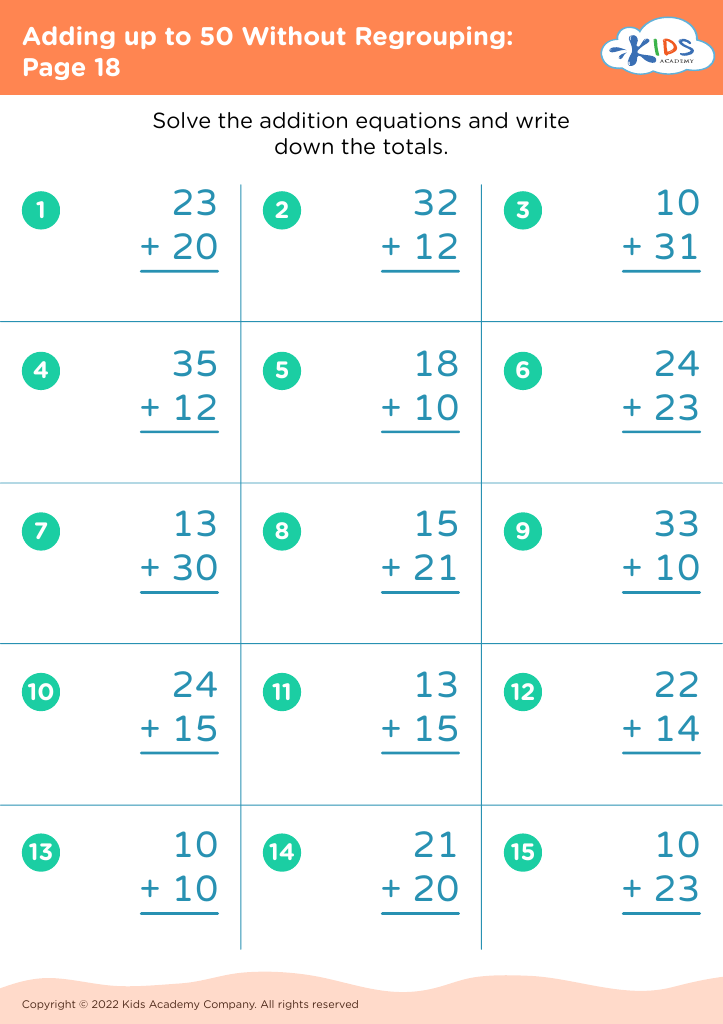
Adding up to 50 Without Regrouping: Page 18
Worksheet
What Is a Line Plot? Worksheet

What Is a Line Plot? Worksheet

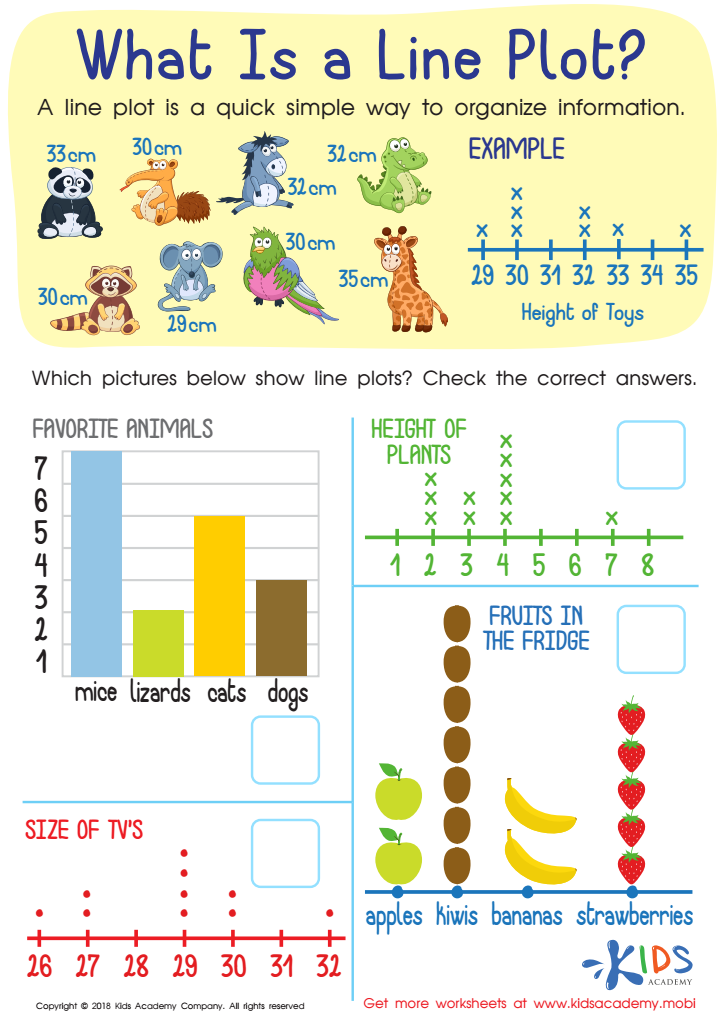
A line plot is an ideal method to organize data. For example, if your child needs to arrange objects for easy recognition, draw a line plot. This worksheet can help teach the skill. Kids must identify correct pictures that display line plots.
What Is a Line Plot? Worksheet

Worksheet
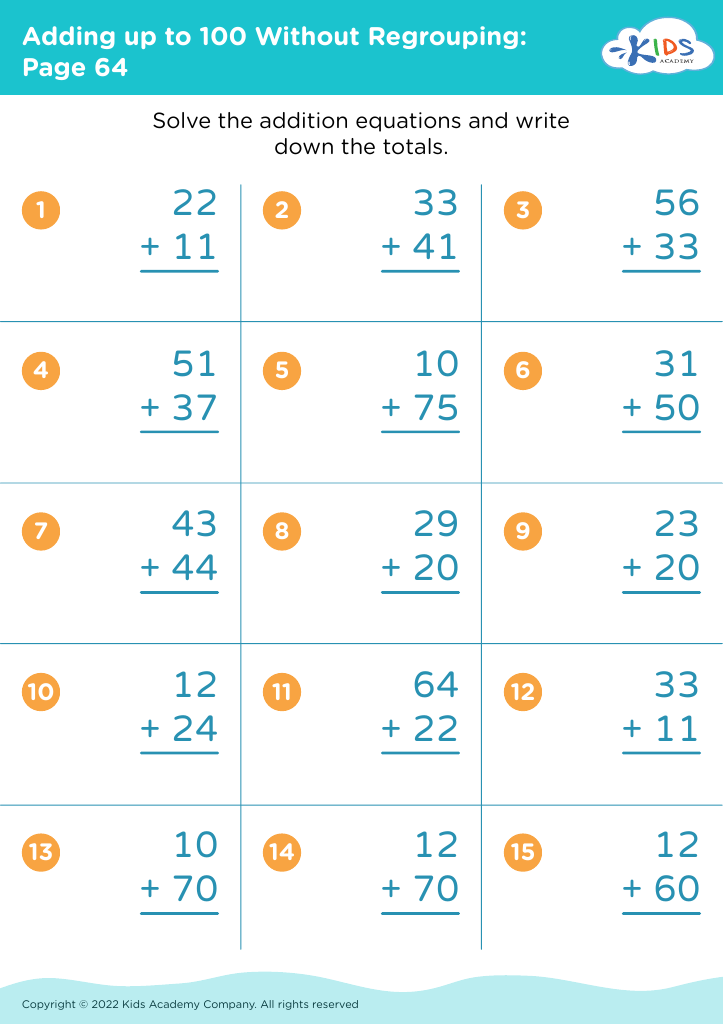
Adding up to 100 Without Regrouping: Page 64
Worksheet
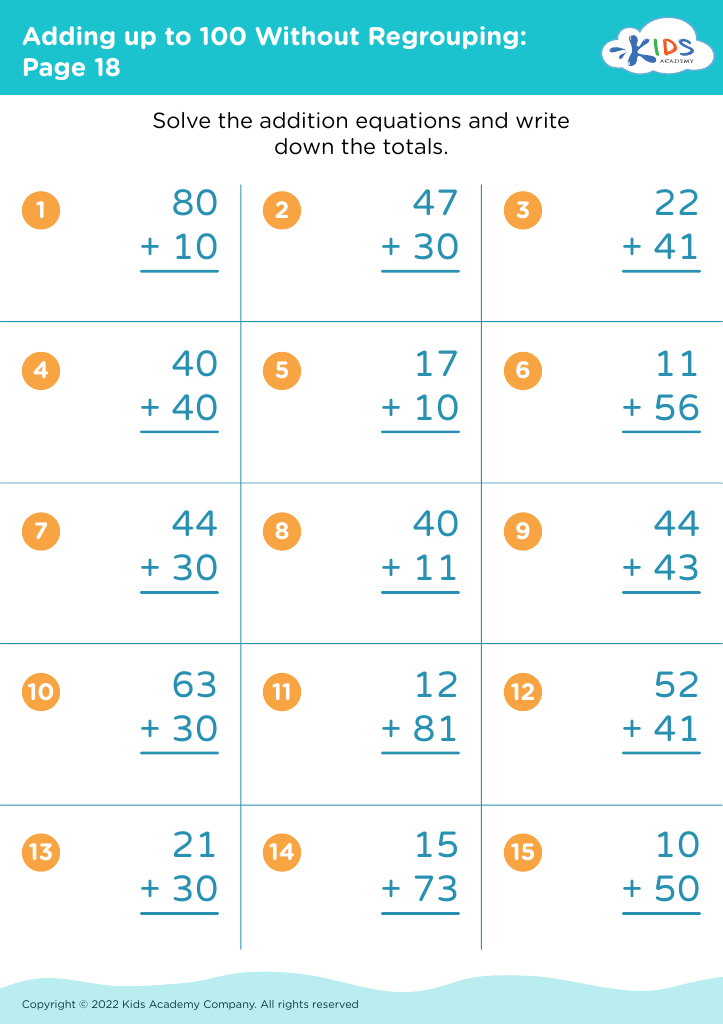
Adding up to 100 Without Regrouping: Page 18
Worksheet
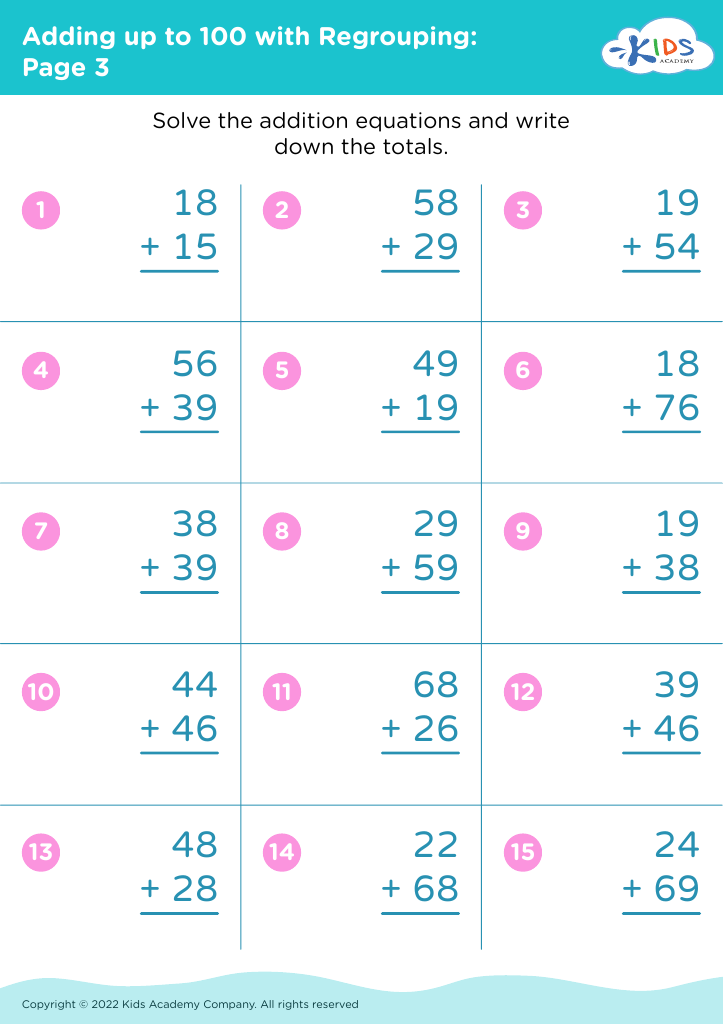
Adding up to 100 with Regrouping: Page 3
Worksheet
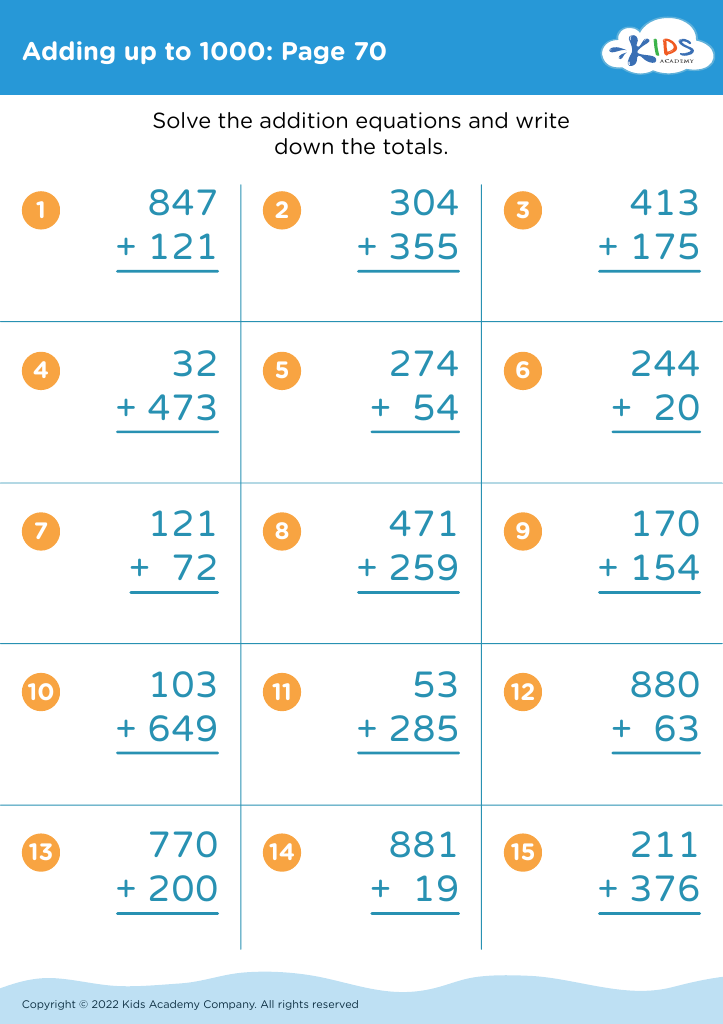
Adding up to 1000: Page 70

Adding up to 1000: Page 70

Adding up to 1000: Page 70
Worksheet
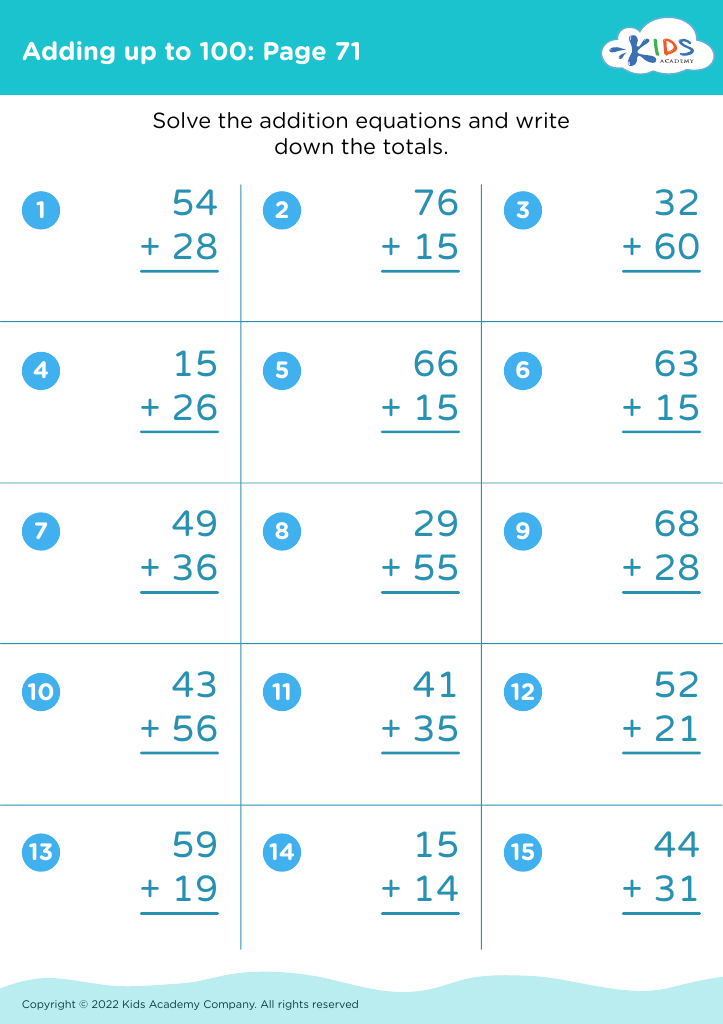
Adding up to 100: Page 71

Adding up to 100: Page 71

Adding up to 100: Page 71
Worksheet
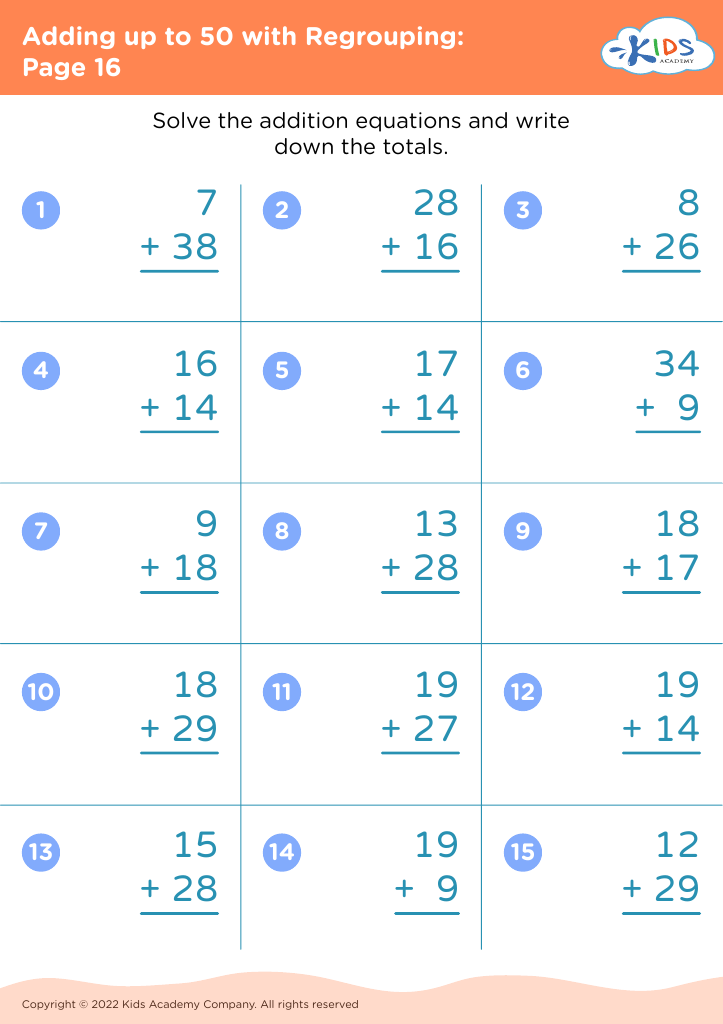
Adding up to 50 with Regrouping: Page 16
Worksheet
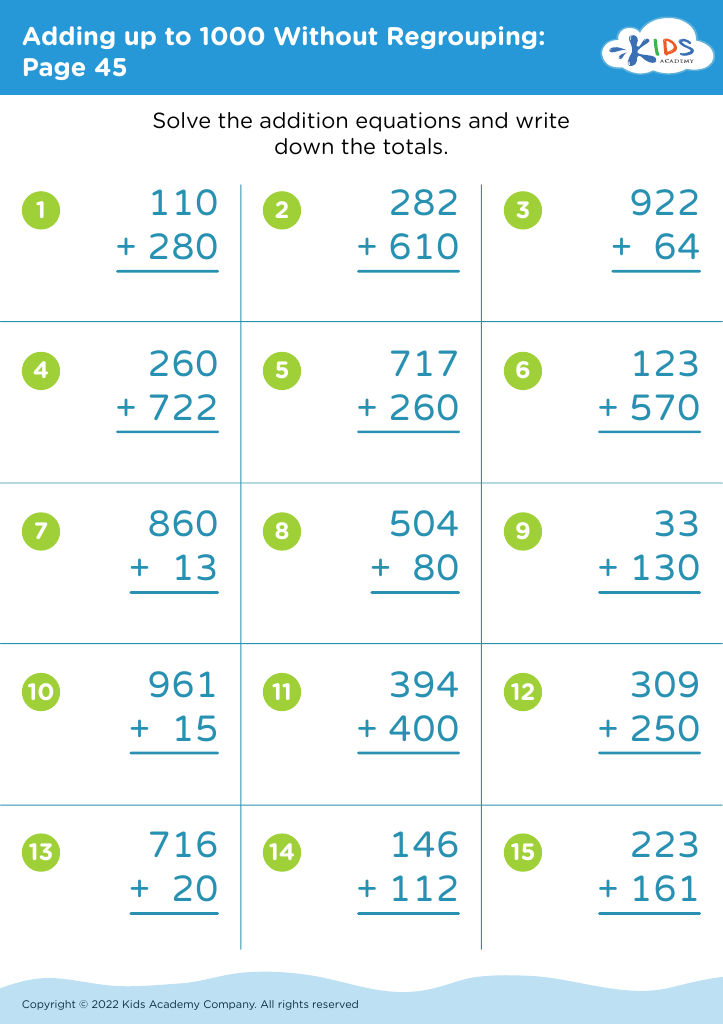
Adding up to 1000 Without Regrouping: Page 45
Worksheet


Problem-solving practice in Grade 2 math is essential for laying a strong foundation in both cognitive and emotional development for young children. At this critical stage, students transition from simple arithmetic to more complex mathematical concepts. It is crucial for parents and teachers to nurture these skills to enhance logical reasoning and critical thinking abilities.

Firstly, problem-solving activities enable children to apply mathematical concepts in various real-life situations, fostering a deeper understanding beyond rote memorization. This practical application encourages a mindset geared towards analytical thinking, which is vital in all aspects of life.

Moreover, engaging in problem-solving tasks helps children develop persistence and resilience. As they encounter challenges and work through them, they learn valuable lessons about perseverance and adaptability—qualities that will benefit them throughout their academic journeys and beyond.

Additionally, working on problem-solving with peers or under the guidance of a teacher promotes cooperative learning. It teaches children how to communicate their ideas effectively, listen to others, and build collaboratively on different perspectives to find solutions.

Therefore, by focusing on problem-solving practice in Grade 2 math, parents and teachers are investing in the holistic development of children, equipping them with essential skills that will serve as building blocks for future success in academics and life.