Contextual understanding Grade 2 Building Vocabulary Worksheets
3 filtered results
Difficulty Level
Grade
Age
-
From - To
Subject
Activity
Standards
Enhance your child's vocabulary with our Contextual Understanding Grade 2 Building Vocabulary Worksheets. Designed for second graders, these fun and educational printable worksheets help young learners grasp new words through context. By reading sentences and choosing the appropriate words, kids enhance their vocabulary skills and comprehension. Our resources focus on practical usage, ensuring students not only learn new words but understand their meanings in various contexts. Perfect for classroom lessons or home practice, these worksheets are a valuable tool for solidifying reading foundations and boosting language development. Empower your child’s reading journey with our expertly-crafted vocabulary worksheets.
Favorites
With answer key
Interactive
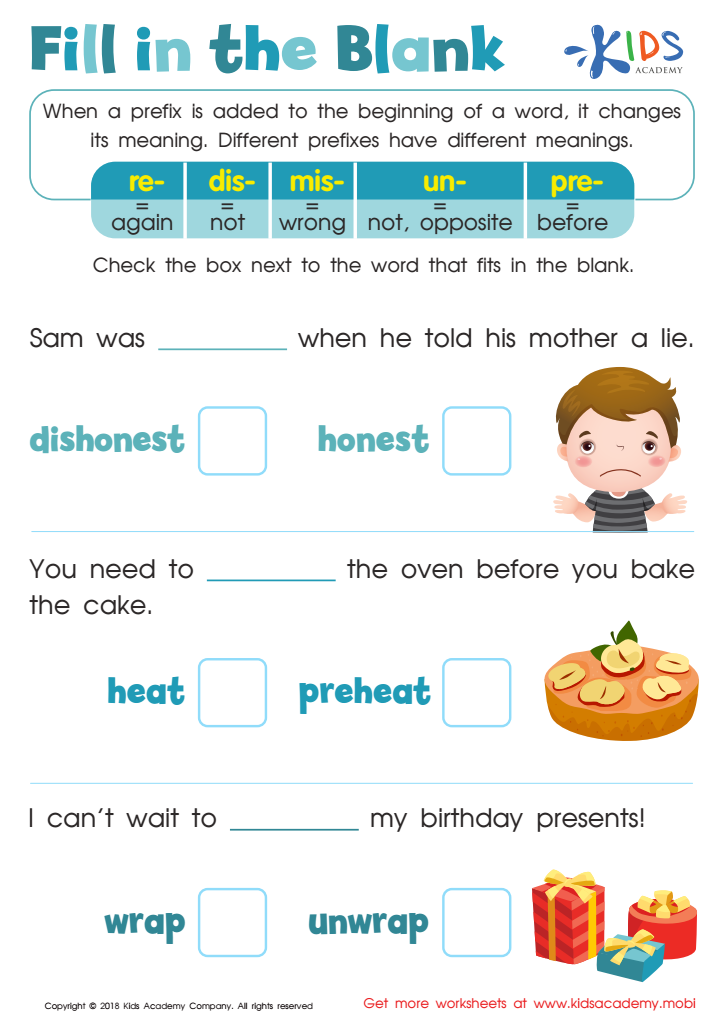
Reading: Fill in the Blank Worksheet
Students can practice understanding the meaning of common prefixes with this worksheet. They read sentences and pick the correct word with the appropriate prefix to complete it. Downloadable and a great addition to reading and vocabulary resources, this helps improve comprehension with mastery of the skill!
 Assign to My Students
Reading: Fill in the Blank Worksheet
Worksheet
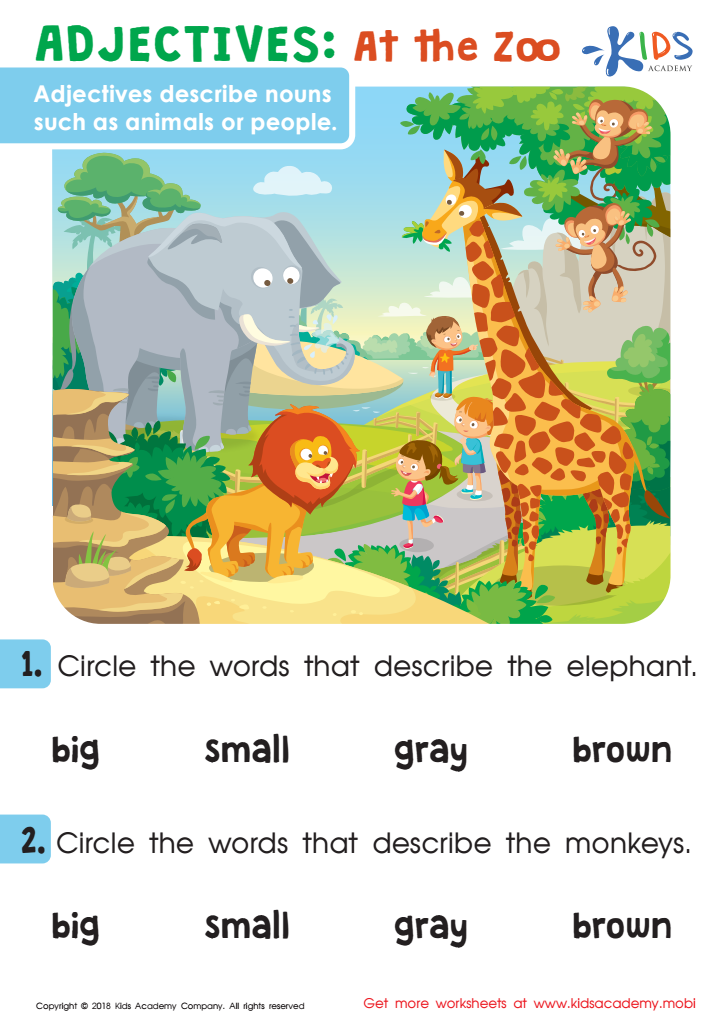
Adjectives: At The Zoo Worksheet
Take your kids to the zoo and ask them about their favorite activities and animals. This worksheet is a great way for kids to learn about adjectives. Explain that adjectives describe nouns like people or animals (e.g. big, tall, dark). Look at the printout with your kids and help them circle words that describe the animals in the picture.
Adjectives: At The Zoo Worksheet
Worksheet
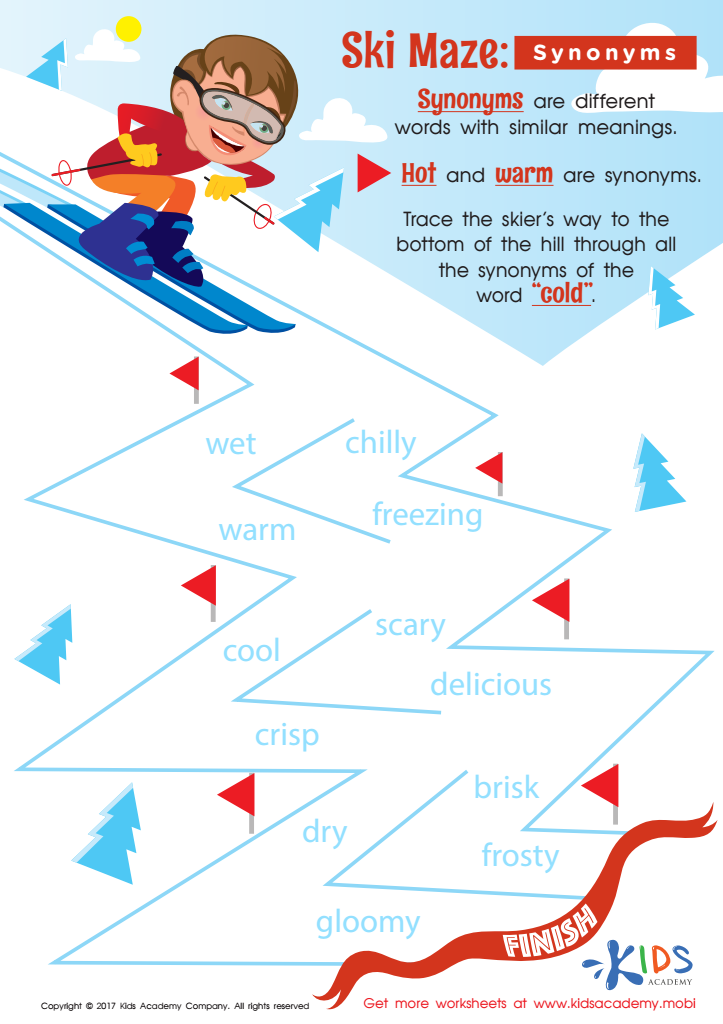
Free Printable Synonym Worksheet
Our free printable synonym worksheet for 2nd grade will help kids learn similar words to expand their vocabulary. Kids will have fun challenging themselves to find all the words that are synonyms for “cold”. Enhance their language and writing with this joyful worksheet!
Free Printable Synonym Worksheet
Worksheet
Join Kids Academy for Free
Who is primarily going to use this learning content?






Contextual understanding in building vocabulary is crucial for Grade 2 students as it solidifies foundational literacy skills essential for their academic growth. At this pivotal stage, children are transitioning from learning to read to reading to learn, making it vital for them to grasp the meaning of words within various contexts. Emphasizing contextual understanding goes beyond rote memorization; it teaches students to infer meaning, recognize nuances, and apply words effectively in their spoken and written expressions.
Parents and teachers should care about this because a robust vocabulary enhances comprehension, critical thinking, and communication skills. When children understand words contextually, they can better understand texts, follow instructions, and express their thoughts clearly. Contextual understanding also encourages curiosity and engagement with reading, fostering a love for learning that extends beyond the classroom.
Moreover, it equips students with the ability to tackle unfamiliar words and complex texts independently, laying the groundwork for lifelong learning. By supporting contextual vocabulary building, parents and teachers help students develop cognitive flexibility, improve academic performance, and build confidence in their linguistic abilities. This holistic development is essential for future educational success and effective communication in broader social interactions.