Shape Recognition Grade 2 Building Vocabulary Worksheets
4 filtered results
-
From - To
Boost your second grader's vocabulary and shape recognition skills with our comprehensive worksheets! Our "Shape Recognition Grade 2 Building Vocabulary Worksheets" seamlessly blend vocabulary development with engaging activities that focus on identifying and naming various shapes. Designed by educational experts, these worksheets inspire learning through fun exercises, enhancing kids' understanding of geometric shapes. Perfect for classroom or home use, children will build essential vocabulary while mastering shape recognition. Help your child advance their reading and math skills simultaneously—ideal for curious learners eager to explore and grow. Unlock new learning adventures with Kids Academy today!
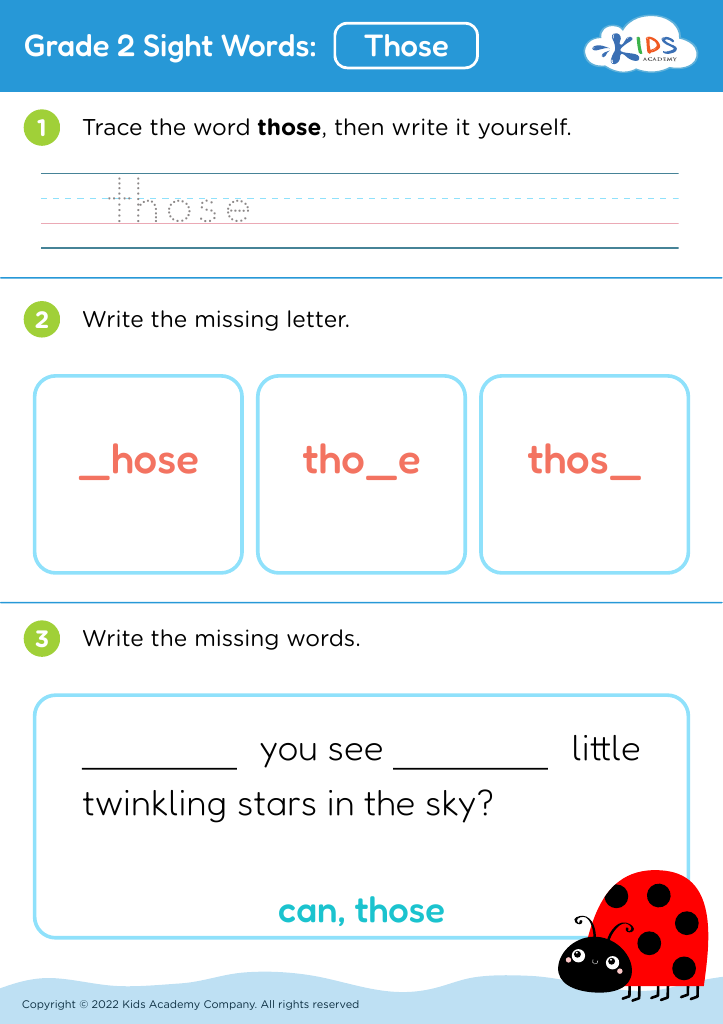
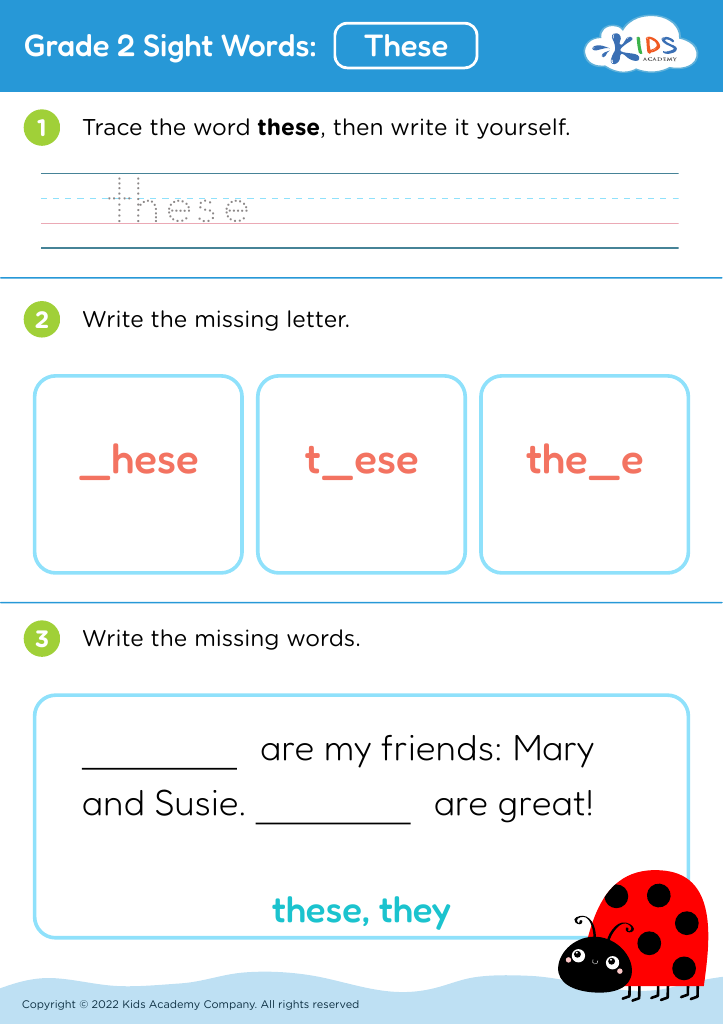
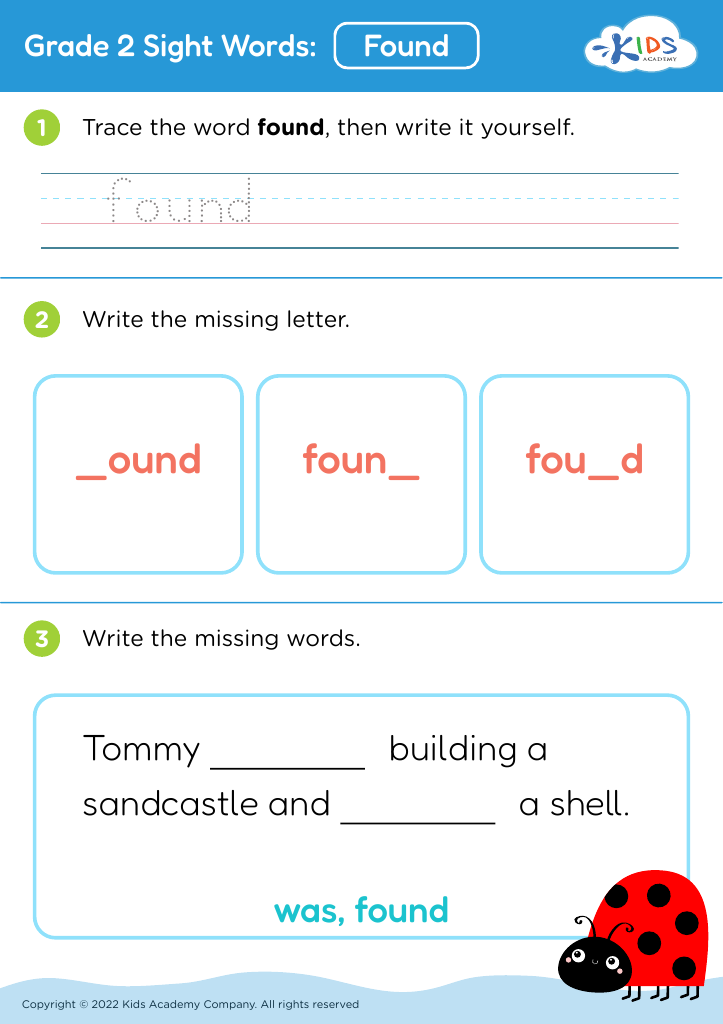








Shape recognition in second grade is fundamental because it serves as a cornerstone for both mathematical proficiency and broader educational development. By this age, students are beginning to solidify their understanding of basic geometric shapes, which is crucial for more advanced math concepts, like area, perimeter, and spatial reasoning, in later grades. Recognizing and naming shapes lays the groundwork for these future skills and promotes problem-solving abilities.
Moreover, shape recognition is not limited to math alone; it boosts cognitive development by enhancing visual-spatial awareness, which is critical for everyday tasks and other subjects, including science and art. A robust vocabulary for shapes allows children to communicate their ideas clearly and understand instructions better, fostering a more inclusive and effective learning environment.
Incorporating shape recognition into a child's vocabulary development also helps them make connections with objects in the real world. Whether they're discerning the difference between squares and rectangles at home, or recognizing patterns in nature, this skill equips them with the tools needed for critical thinking and precise communication.
Teachers and parents should emphasize this aspect of education because it plays a significant role in intellectual development. Activities involving shape games, puzzles, and drawings can make learning both fun and impactful, setting a strong foundation for future academic success.