Simplifying Fractions Grade 2 Building Vocabulary Worksheets
3 filtered results
-
From - To
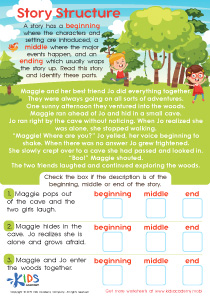
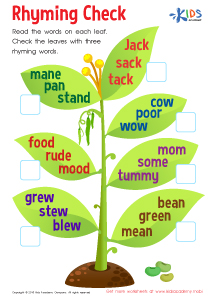
Welcome to our "Simplifying Fractions Grade 2 Building Vocabulary Worksheets" page! These engaging and interactive worksheets are designed to help second graders understand and simplify fractions while expanding their mathematical vocabulary. Each worksheet is age-appropriate, featuring colorful illustrations and clear instructions to enhance learning. Students will practice identifying equivalent fractions, demonstrating their knowledge of concepts like numerators and denominators. Our worksheets encourage critical thinking, enabling young learners to grasp essential math skills with confidence. Perfect for classroom use or homeschooling, these resources aim to foster a love for math and vocabulary building in early learners. Explore our worksheets now and simplify learning!
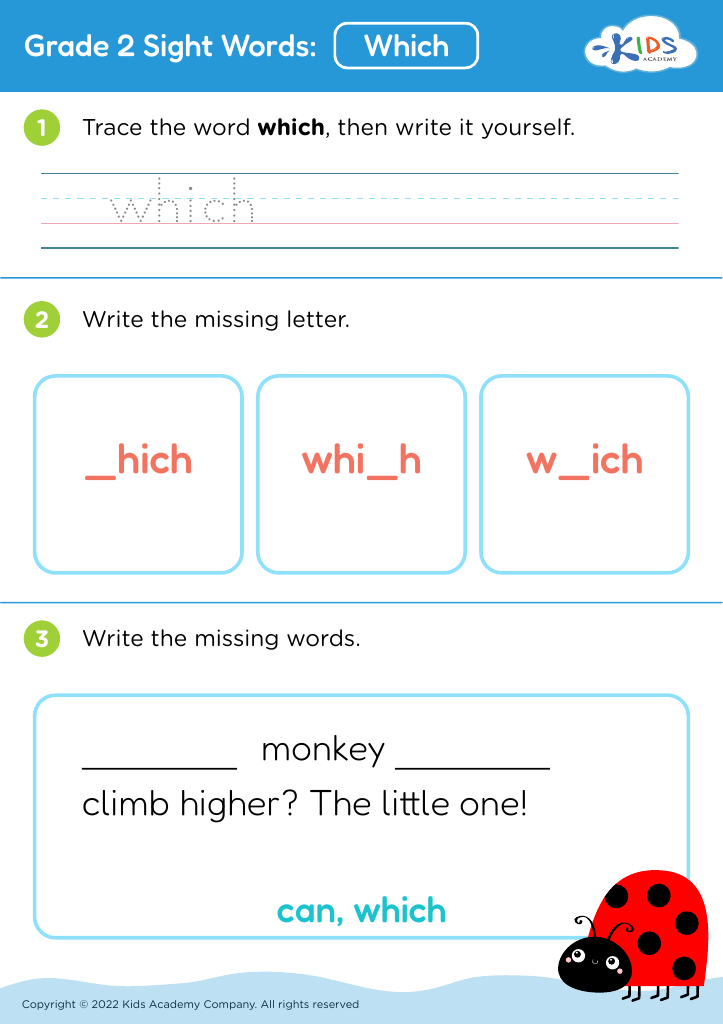








Simplifying fractions is a fundamental concept that lays the groundwork for a child's mathematical understanding. For parents and teachers, emphasizing this skill in grade 2 is crucial for several reasons. Firstly, it enhances a child's number sense, fostering an appreciation for relationships between numbers. By simplifying fractions, students learn to identify equivalent values, promoting critical thinking and problem-solving skills.
Moreover, simplifying fractions builds vocabulary as children encounter terms like “numerator,” “denominator,” and “equivalent.” This vocabulary foundation is essential for future math learning, making complex concepts more accessible as they progress through their education.
Teachers and parents play a vital role in this development. They can facilitate engaging discussions and practical activities that encourage exploration and application. For example, cooking, measuring, or exploring patterns with blocks can make learning tangible and relatable.
Additionally, a strong grasp of fractions boosts confidence, laying the foundation for more advanced concepts such as addition, subtraction, and proportional reasoning. By prioritizing fraction simplification in grade 2, parents and teachers are not just teaching math; they are nurturing critical life skills that support academic growth and build a lifelong positive attitude towards learning.