Attention to Detail Grade 2 Reading Worksheets
3 filtered results
Difficulty Level
Grade
Age
-
From - To
Subject
Activity
Standards
Enhance your second grader's reading skills with our engaging "Attention to Detail" worksheets! Designed to boost comprehension and observation, these worksheets help young learners develop the ability to focus on key information in a text. Through a variety of fun activities, such as matching visuals, answering questions, and summarizing stories, kids will practice identifying important elements and making connections. Our user-friendly printable format makes it easy to incorporate these creative exercises into your daily routine, ensuring your child becomes a more confident and detail-oriented reader. Explore the joy of reading with these targeted worksheets today!
Favorites
With answer key
Interactive
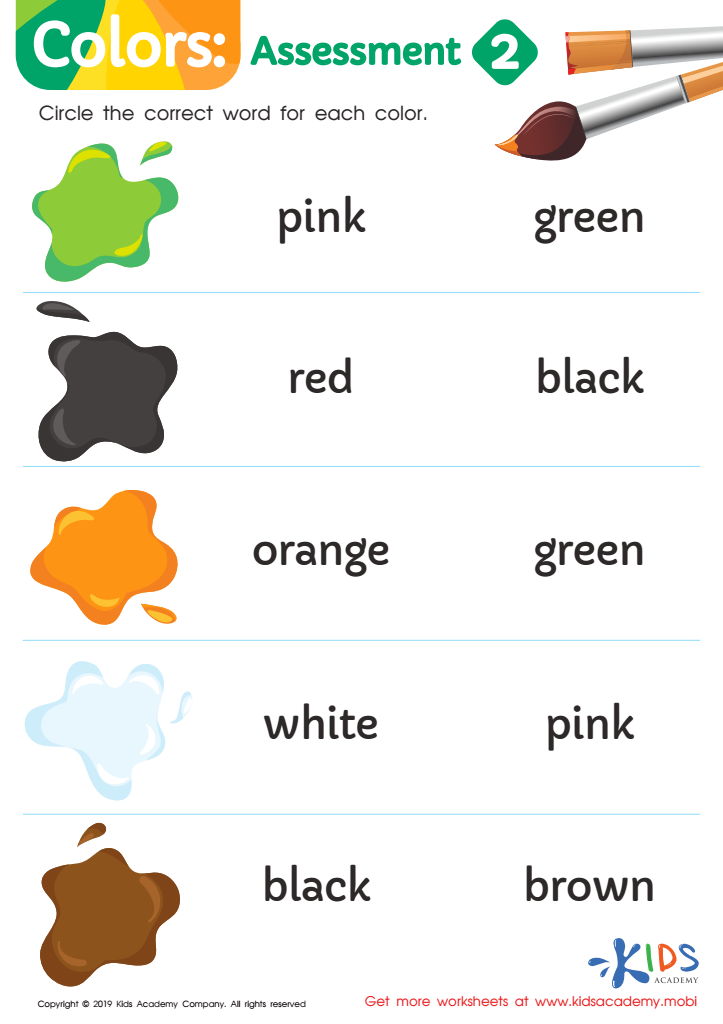
Colors: Assessment 2 Worksheet
Teach color words to young students to build fluency and confidence. Check knowledge with an assessment worksheet. Have students look at paint samples and circle the correct color word. This assessment helps parents and teachers measure a child’s accuracy when reading color words.
 Assign to My Students
Colors: Assessment 2 Worksheet
Worksheet
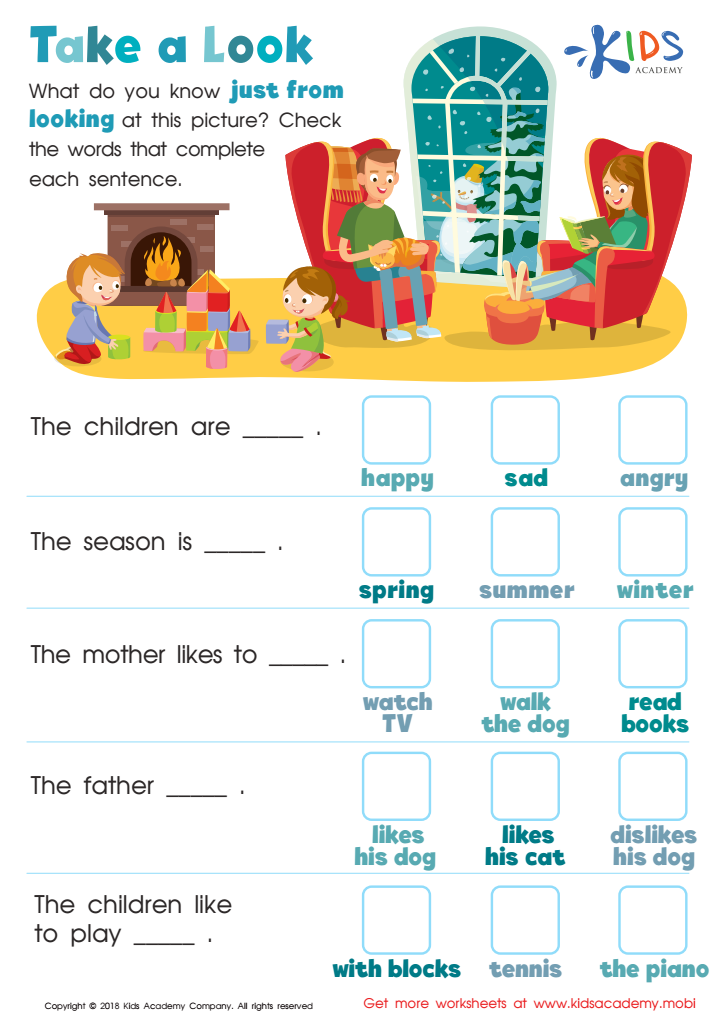
Take a Look - Part 1 Worksheet
Young learners gain understanding when using picture clues when reading. Looking at illustrations can help students learn the meaning of key vocabulary when reading fiction or informational text. Ask your students to look at the worksheet and observe what they can learn from the picture. It's a great comprehension strategy for early readers.
Take a Look - Part 1 Worksheet
Worksheet
Join Kids Academy for Free
Who is primarily going to use this learning content?








Attention to detail in Grade 2 reading is crucial for both parents and teachers, as it serves as a foundational skill for literacy development. At this stage, students begin to make connections between written and spoken language, forming the basis for comprehension and critical thinking. Parents and teachers should care because enhanced attention to detail helps children better decode words, understand punctuation, and grasp sentence structure—elements that are vital for effective reading.
Encouraging children to pay attention to details cultivates their ability to recall information, identify key themes, and analyze text more deeply. This skill not only boosts reading proficiency but also promotes overall academic achievement, as children who can scrutinize details in reading often excel in subjects like math and science where precision is crucial.
Furthermore, fostering this skill helps students develop a habit of careful analysis that extends beyond academics, improving their observation and decision-making skills in everyday life. Parents and teachers can support this by incorporating activities that encourage detail-oriented thinking, such as reading comprehension exercises, storytelling, and working with graphic organizers. In short, caring about attention to detail ultimately equips children with essential cognitive tools that benefit their educational journey and personal growth.