Story sequencing Grade 2 Reading Fiction Worksheets
4 filtered results
-
From - To
Enhance your Grade 2 students' reading skills with our engaging Story Sequencing fiction worksheets! Designed to reinforce comprehension, these worksheets encourage young learners to identify and arrange story events in the correct order. With vibrant illustrations and age-appropriate texts, students will enjoy recognizing key plot points and connecting them logically from beginning to end. This fun-filled activity not only boosts reading proficiency but also fosters critical thinking and narrative understanding. Perfect for classroom use or home practice, our Story Sequencing worksheets provide an interactive way for children to deepen their appreciation of fictional stories. Discover the joy of reading through sequencing today!
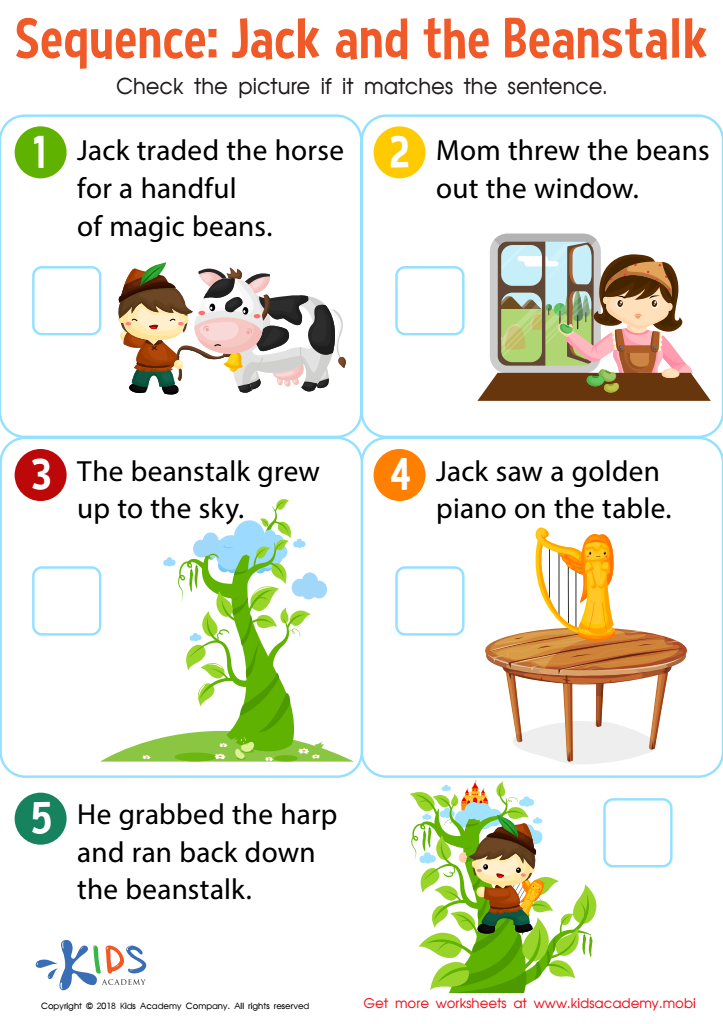
Sequence: Jack and The Beanstalk Worksheet
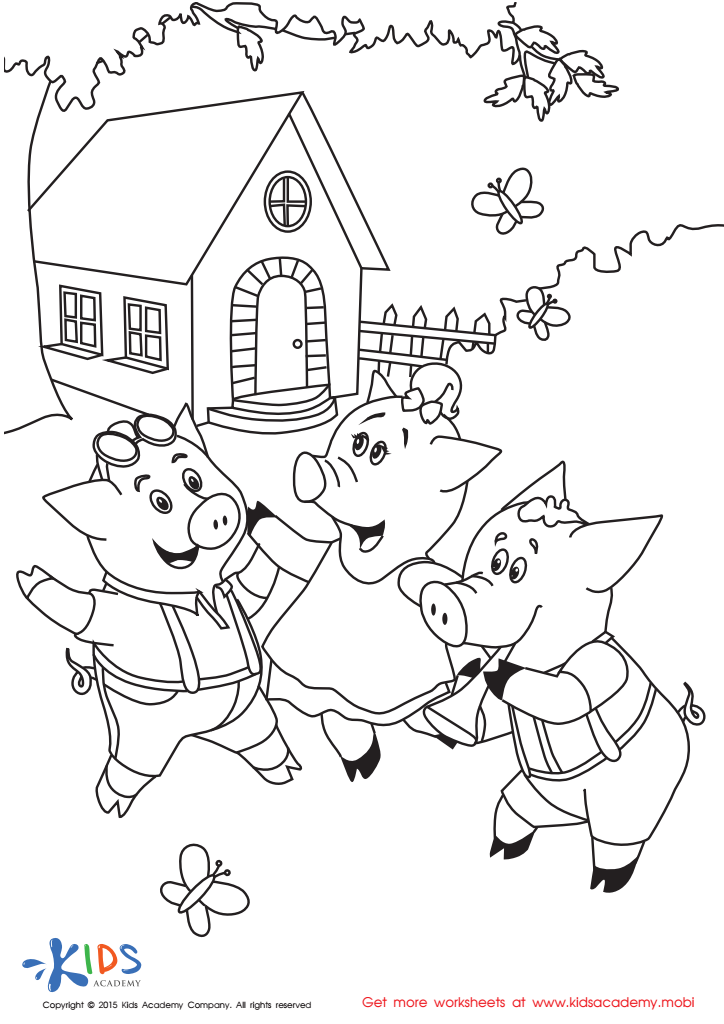
Folktales Printable PDF Worksheet: The 3 Little Pigs
 Assign to My Students
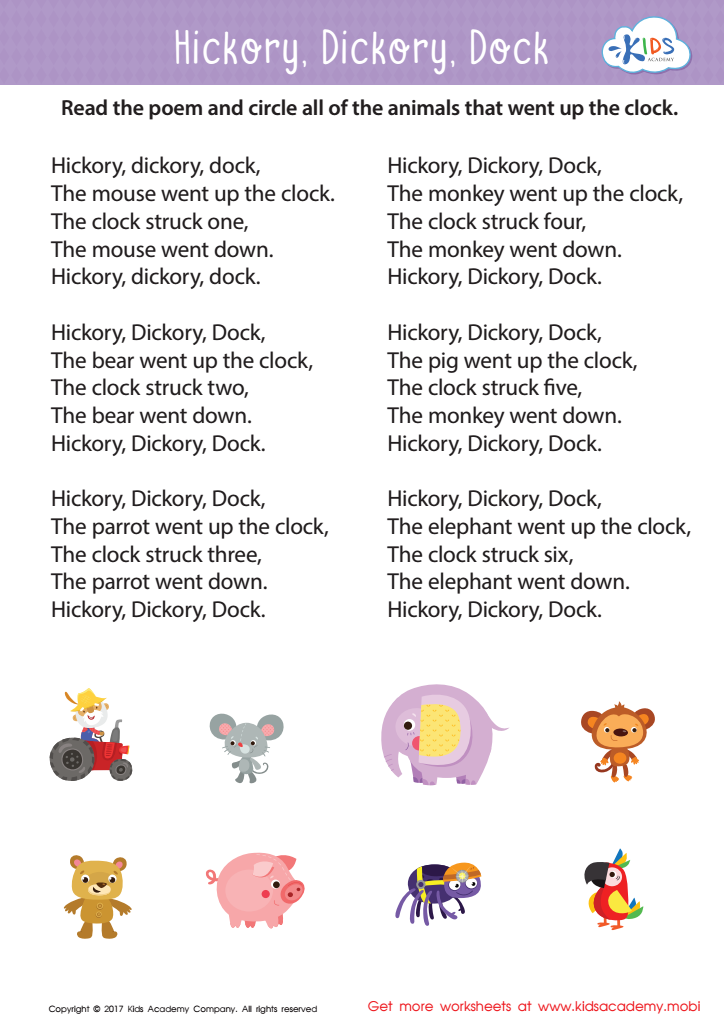
Hickory Dickory Dock Sequencing Worksheet
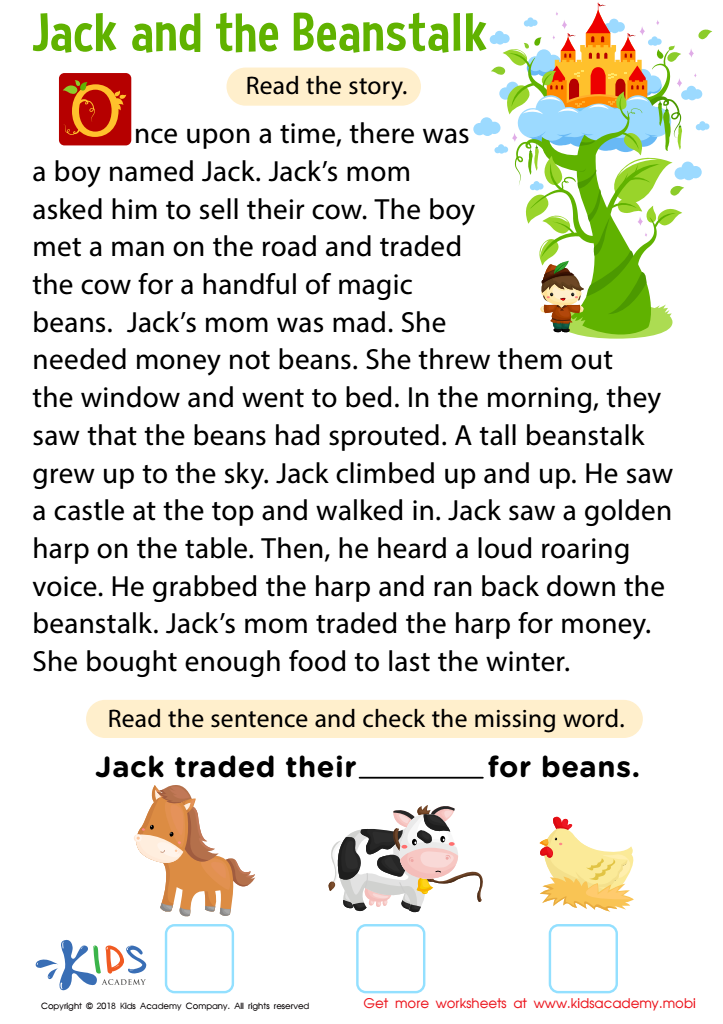
Jack and Beanstalk Worksheet







Story sequencing is a fundamental skill in Grade 2 reading that empowers young learners to comprehend and engage with fiction more deeply. This skill involves organizing events in the order they occur, helping students identify key plot components such as the beginning, middle, and end of a story. When parents and teachers focus on story sequencing, they facilitate enhanced critical thinking and comprehension abilities.
Caring about story sequencing is vital because it supports language development and vocabulary acquisition. As students articulate the sequences, they reinforce their understanding of story structure and expand their expressive language skills.
Moreover, mastering sequencing encourages stronger analytical skills, enabling children to make predictions, infer characters' motivations, and draw connections between elements of the story. This not only enhances reading comprehension but also fosters a love for storytelling.
Lastly, implementing story sequencing activities can strengthen parent-child and teacher-student relationships through shared storytelling experiences. Engaging in discussions about narratives reinforces a supportive learning environment, promoting confidence in reading abilities. Overall, because story sequencing lays the groundwork for future literacy skills and creativity, it is essential for parents and teachers to prioritize this educational focus as crucial to early childhood development.