Vocabulary enhancement Grade 2 Rhyming Words Worksheets
3 filtered results
Difficulty Level
Grade
Age
-
From - To
Subject
Activity
Standards
Explore our engaging Vocabulary Enhancement Grade 2 Rhyming Words Worksheets, designed to help young learners boost their language skills through fun, interactive activities. These expertly created resources focus on building rhyming word recognition and phonetic awareness, essential for developing reading fluency and comprehension in second graders. Each worksheet provides a variety of exercises, from word matching to fill-in-the-blank, that encourage creativity and linguistic growth. Perfect for classroom or home learning, our worksheets are an enjoyable way to reinforce vocabulary knowledge while making learning a delightful experience for your child.
Favorites
With answer key
Interactive
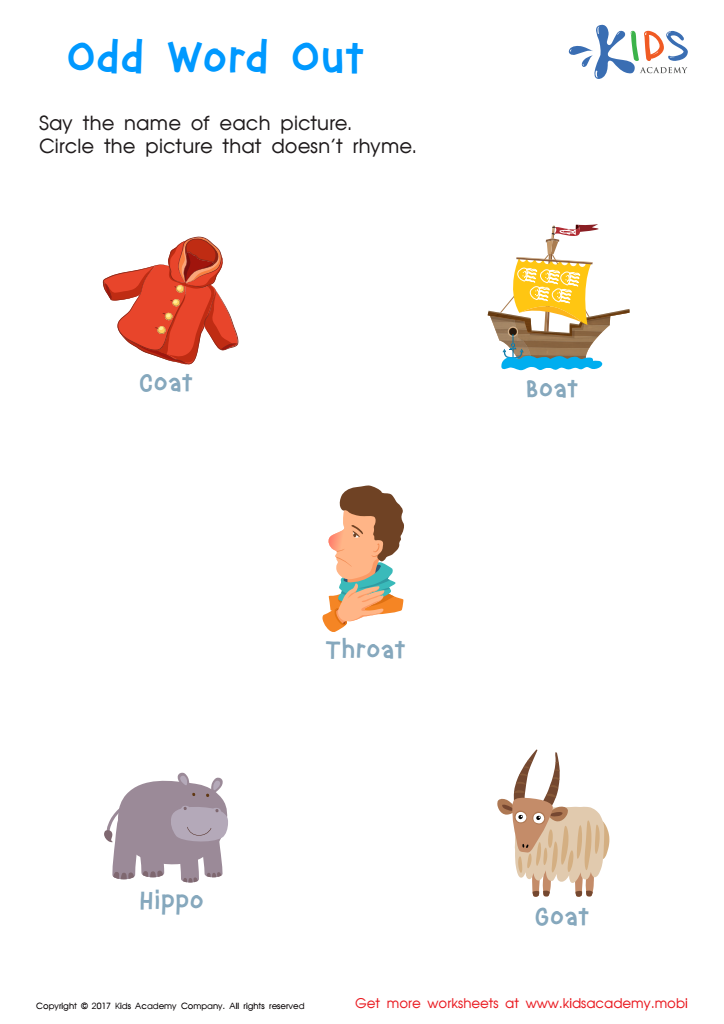
Odd Word Out Rhyming Worksheet
Try this worksheet to help your child practice finding odd words out and build their knowledge of rhyming words. They'll use problem solving and create their own words with enough room to write them down!
 Assign to My Students
Odd Word Out Rhyming Worksheet
Worksheet
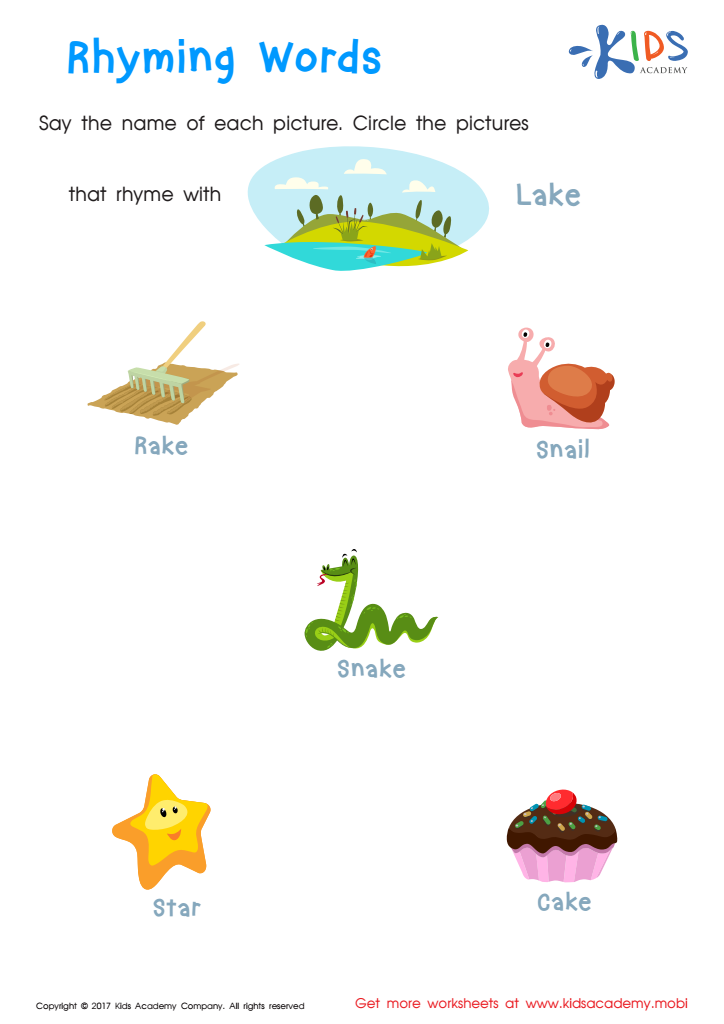
Rhyming Words Rhyming Worksheet
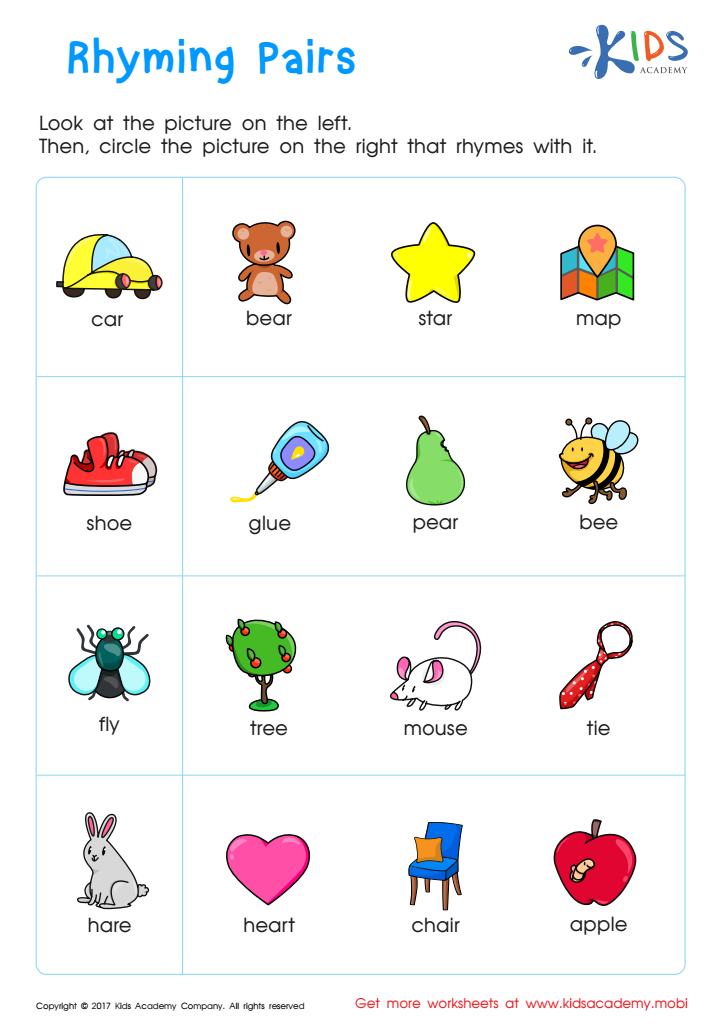
This worksheet is great for honing pre-reading skills. It helps kids make connections between pictures and written words, use problem-solving, and recognize sounds and words that rhyme. Have fun exploring rhyming words with your child, and they'll be rhyming in no time!
Rhyming Words Rhyming Worksheet
Worksheet
Join Kids Academy for Free
Who is primarily going to use this learning content?





Vocabulary enhancement, particularly through rhyming words in Grade 2, plays a crucial role in a child's linguistic and cognitive development. Firstly, rhyming helps young learners recognize sound patterns, which boosts their phonemic awareness – a critical pre-reading skill. Understanding how sounds in words relate to one another lays a solid foundation for reading fluency and spelling skills.
Secondly, rhyming expands a child’s vocabulary in a playful and engaging manner. Engaging with rhyming words makes the learning process enjoyable and memorable, helping children to retain new word meanings and forms. Children are more likely to develop a love for words and reading when learning feels like play.
Moreover, grasping rhymes contributes to enhanced listening and speaking skills. It encourages children to pay close attention to the sounds and rhythms of words, promoting better pronunciation and oral expression. This ability can improve communication skills, making interactions more effective and confident.
Finally, rhyming activities stimulate a child's creativity and imagination. Crafting their own rhymes can empower children to think inventively, extending their learning beyond rote memorization. Therefore, parents and teachers should care about vocabulary enhancement through rhyming at this stage, as it cultivates a well-rounded linguistic foundation, setting the stage for future academic success.