Comparing Fractions Grade 2 Sight Words Worksheets
8 filtered results
-
From - To
Enhance your Grade 2 students' understanding of comparing fractions with our engaging Sight Words Worksheets! Designed to reinforce essential math concepts using familiar vocabulary, these worksheets will help students visualize and differentiate between fractions effectively. Featuring a variety of interactive activities, including fraction bars and number lines, children will boost their confidence in both reading and math. Perfect for classroom use or homework, our resources cater to diverse learning styles, ensuring each student can master essential fraction comparisons while improving their sight word recognition. Empower your young learners with these fun and educational worksheets today!
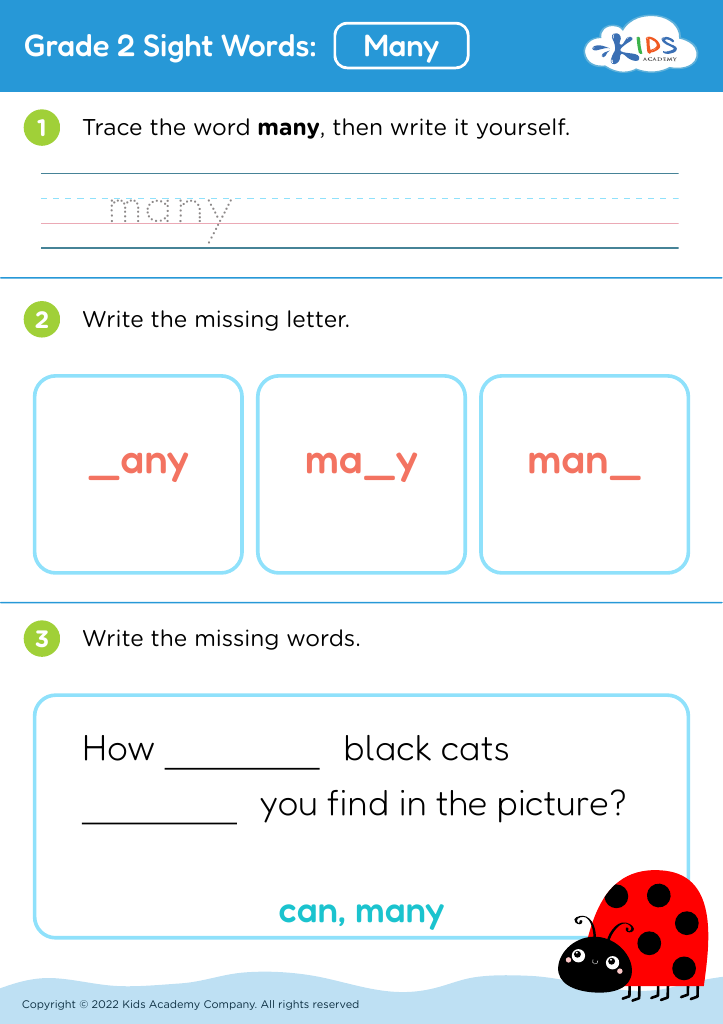
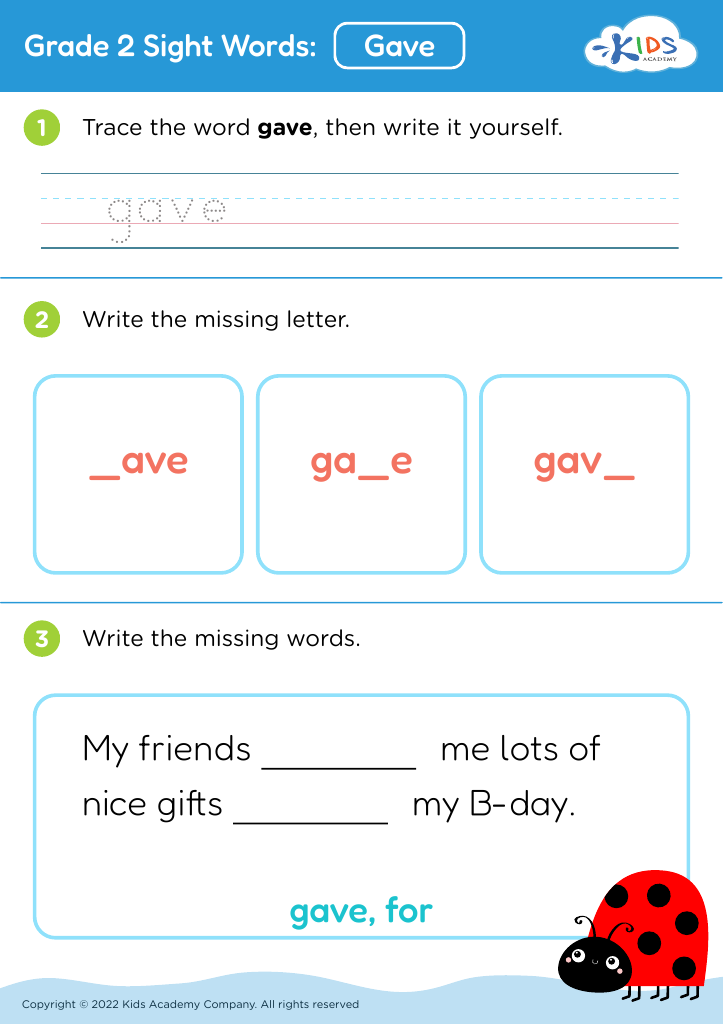
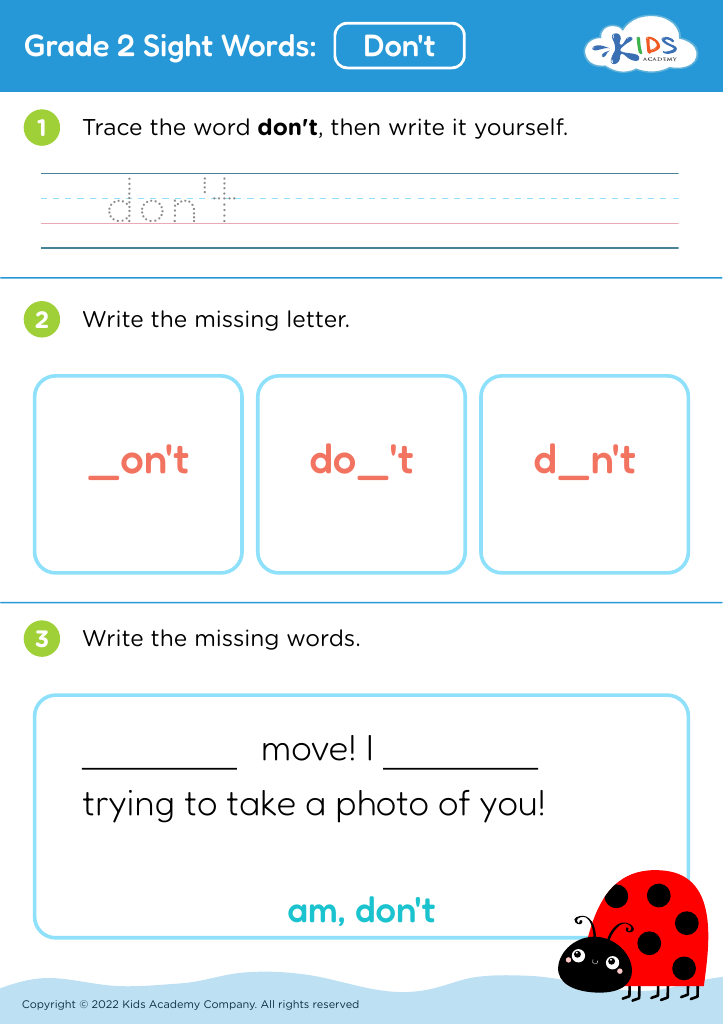
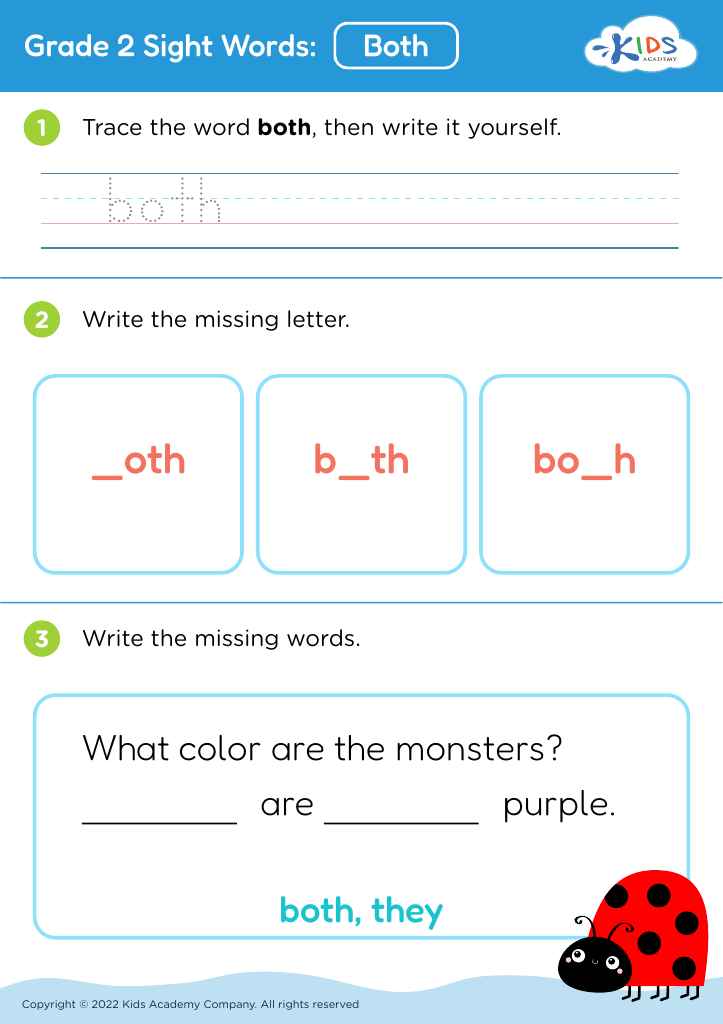
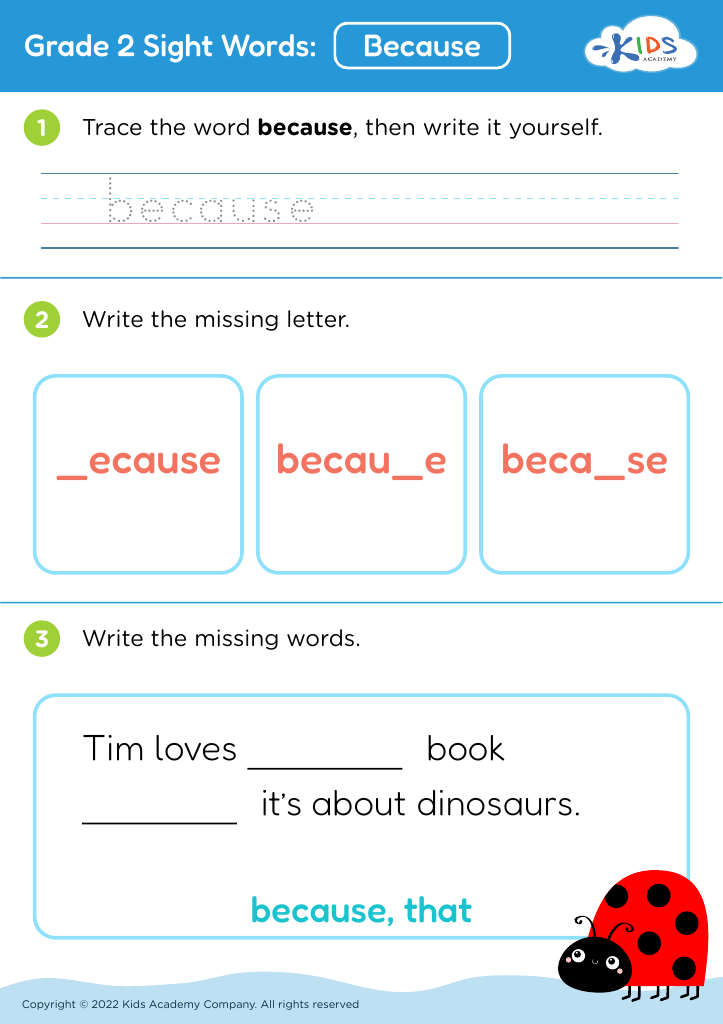
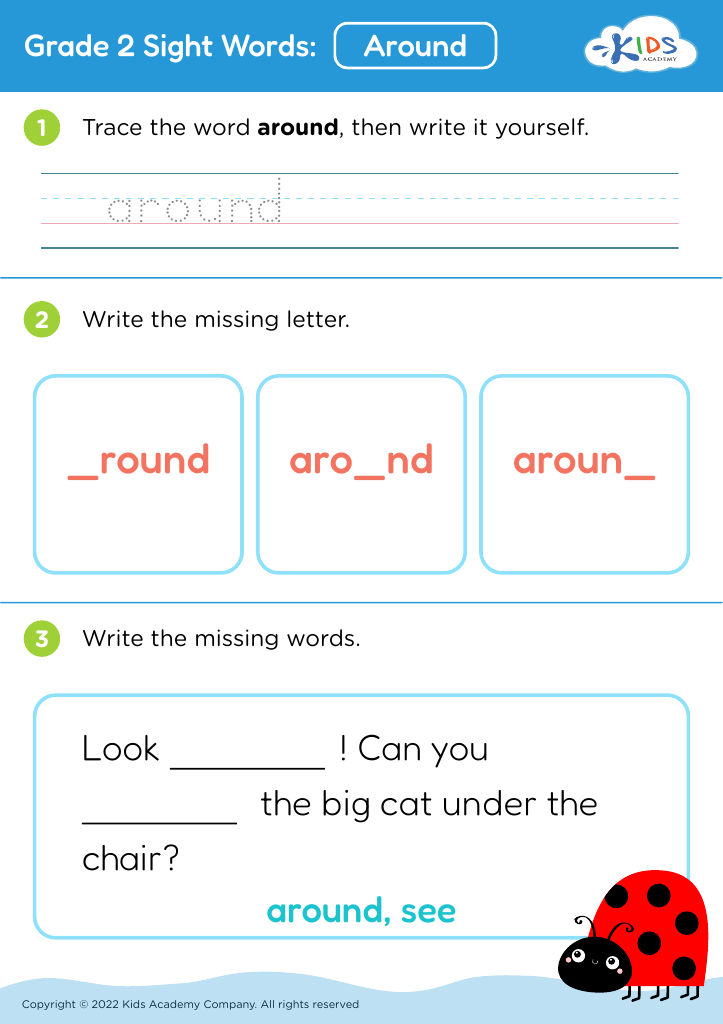








Comparing fractions is an essential mathematical skill for second graders, forming a foundation for future math learning. Parents and teachers should care about teaching comparing fractions because it helps students develop critical thinking and reasoning skills. When children learn to compare fractions, they enhance their understanding of sizes and relationships through engaging activities that promote a hands-on approach to learning.
Using grade 2 sight words makes these concepts more accessible for young learners, encouraging their vocabulary development alongside mathematical comprehension. Familiar language can help reduce anxiety around math, making students more willing to engage in problem-solving and discussions.
Additionally, comparing fractions exposes learners to basic concepts of numerators, denominators, and how to analyze parts of a whole. Understanding fractions is not only pivotal in math but also connects to everyday life—calculating measurements in cooking, dividing food sharing with friends, and understanding data.
By fostering a positive attitude towards fractions early on, parents and teachers can empower children to build confidence and mastery in math, setting them up for success in more complex concepts in the future. Engaging children with relatable language and concepts is key to nurturing a lifelong love and understanding of mathematics.