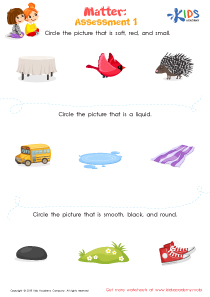
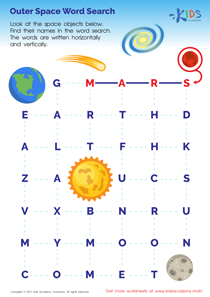
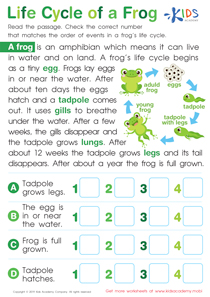
Critical thinking skills Grade 2 Science Worksheets
3 filtered results
-
From - To
Enhance your second grader's learning with our engaging Critical Thinking Skills Science Worksheets! Designed specifically for Grade 2 students, these worksheets aim to develop analytical reasoning and problem-solving abilities through exciting science-related activities. Each worksheet encourages students to explore concepts in a hands-on, interactive way, promoting curiosity and deeper understanding. From classifying animals to identifying plant life cycles, your child will engage with essential scientific principles while honing their critical thinking skills. Perfect for home or classroom use, these resources are ideal for fostering a love of science and encouraging thoughtful inquiry. Download now to inspire your young scientist today!
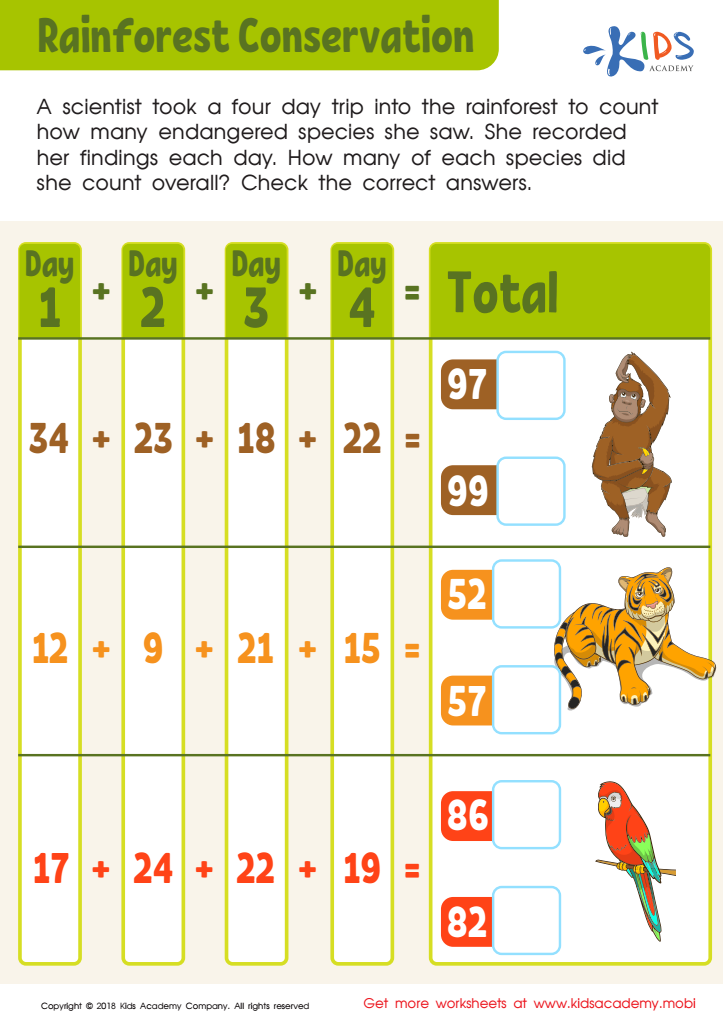
Rainforest Conservation Worksheet
 Assign to My Students
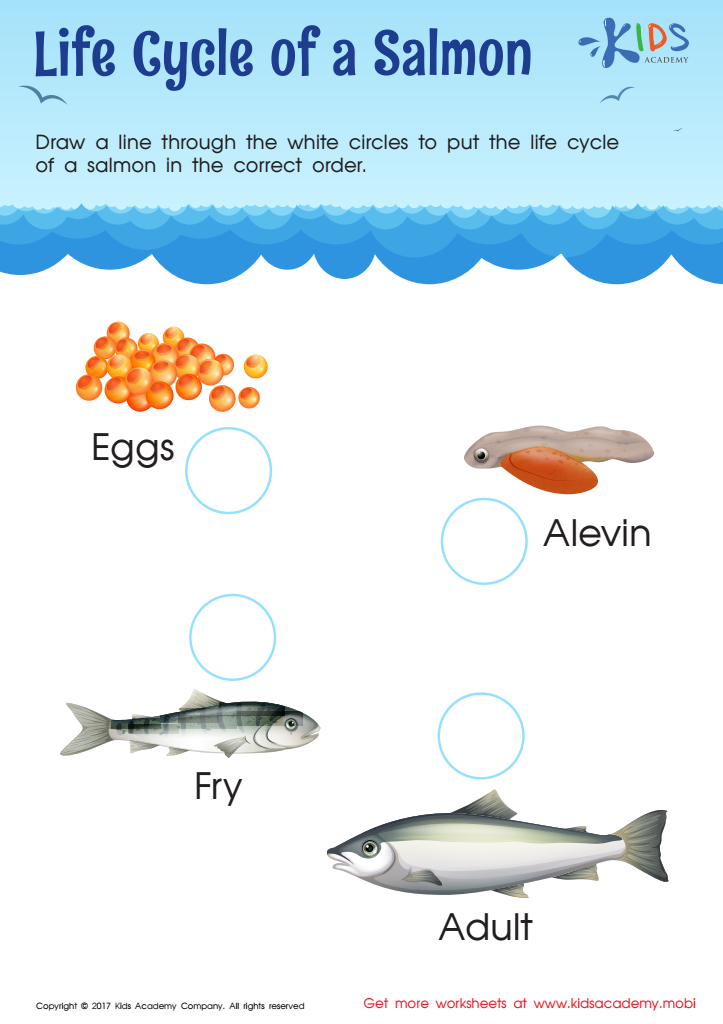
Cycle Of Salmon Worksheet
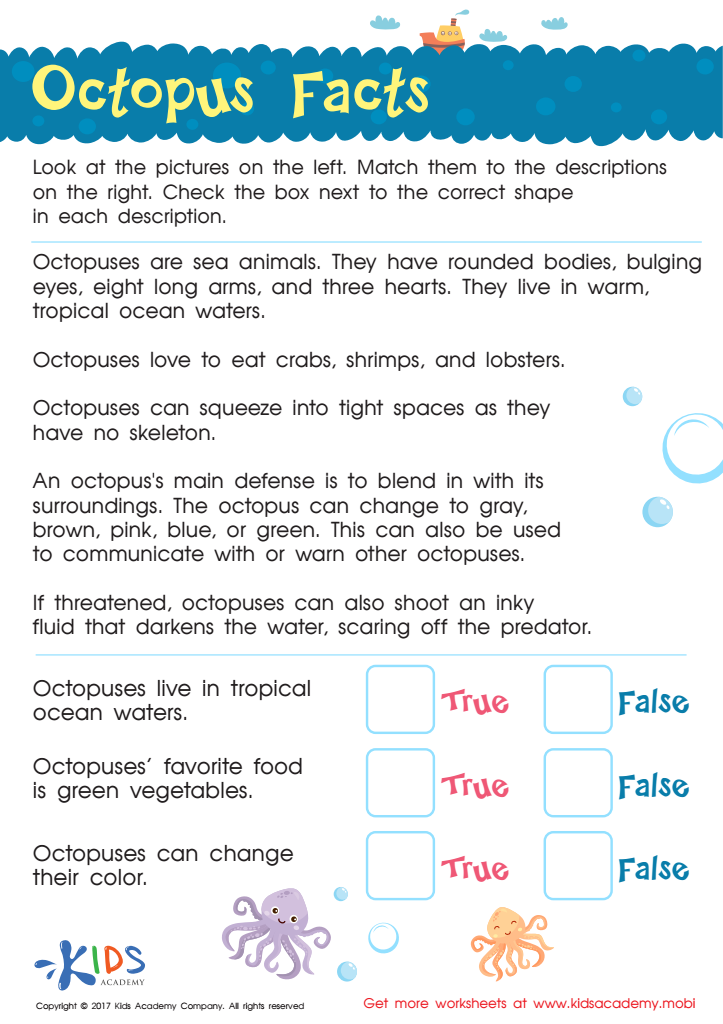
Octopus Facts Worksheet For Kids






Critical thinking skills are essential for second-grade students, particularly in the context of science education. At this stage, children begin to explore the world around them and form their understanding of fundamental scientific concepts. By fostering critical thinking, parents and teachers can help kids develop the ability to ask questions, make observations, and draw conclusions based on evidence. This skill set encourages curiosity and creativity, enabling children to think independently and engage deeply with the material.
Moreover, critical thinking in science promotes problem-solving abilities. When children analyze scientific phenomena, they learn to identify problems, hypothesize solutions, and test their ideas through experimentation. This experiential learning process instills a sense of confidence when facing challenges, preparing them for more complex situations in the future.
Furthermore, critical thinking assists students in differentiating between fact and opinion, helping them to navigate an increasingly complex world. In an age where misinformation is prevalent, having the ability to reason and evaluate information critically is invaluable. Encouraging these skills in grade 2 not only prepares children for academic success but also nurtures informed, thoughtful citizens who can contribute positively to society. Thus, investing in critical thinking development at this stage is crucial for lifelong learning and engagement.