Color Identification Grade 3 Alphabet Worksheets
3 filtered results
-
From - To
Explore our engaging "Color Identification Grade 3 Alphabet Worksheets" designed to enhance your child's learning experience! These worksheets promote color recognition and reinforce alphabet skills in a fun and interactive way. Ideal for third graders, each activity encourages creativity as students identify and match colors with letters, enriching their vocabulary and cognitive abilities. With vibrant illustrations and effective exercises, these worksheets cater to diverse learning styles. They are perfect for classroom use or at-home learning, providing parents and educators with valuable resources to support young learners on their educational journey. Download now to inspire a love for learning through colors and letters!
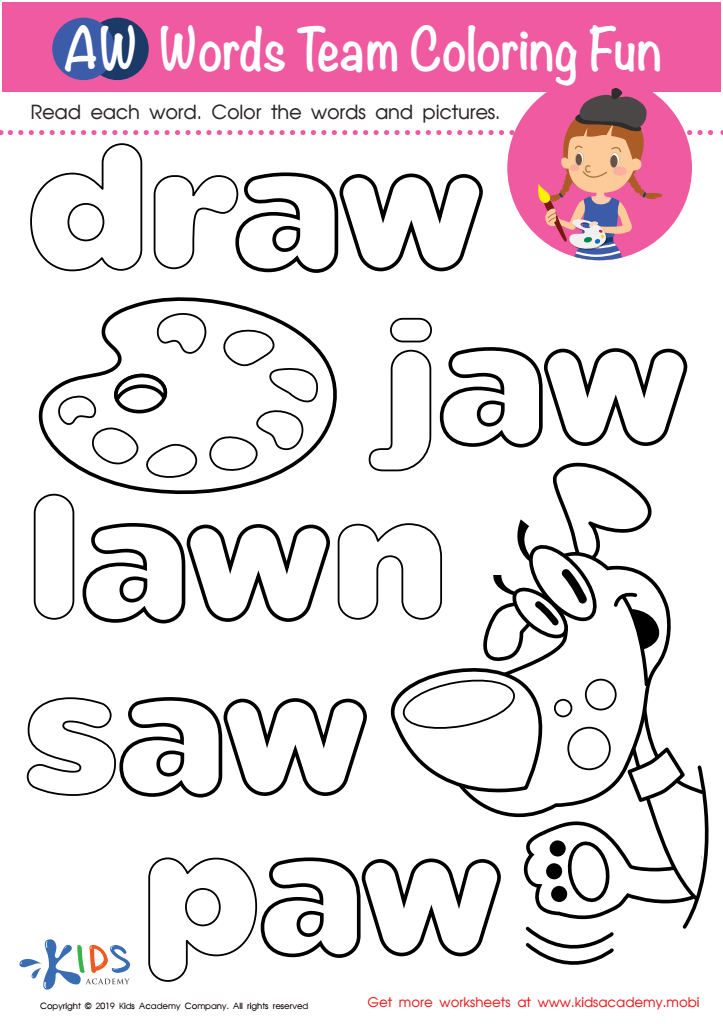
AW Words Team Coloring Fun Worksheet
 Assign to My Students
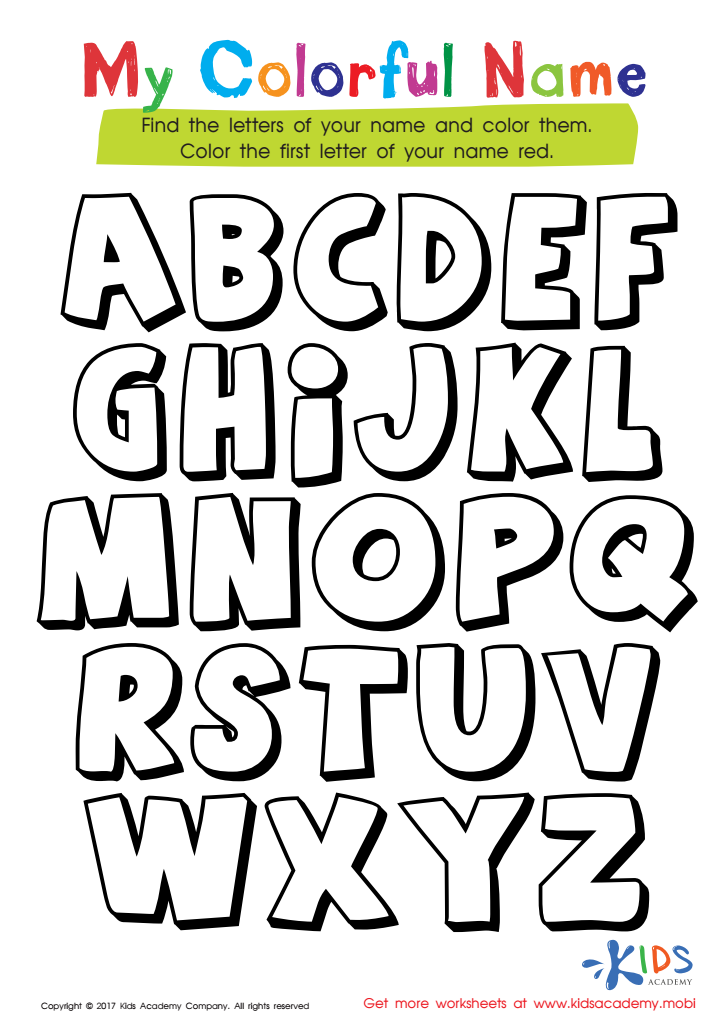
My Colorful Name Worksheet
Assign to My Students
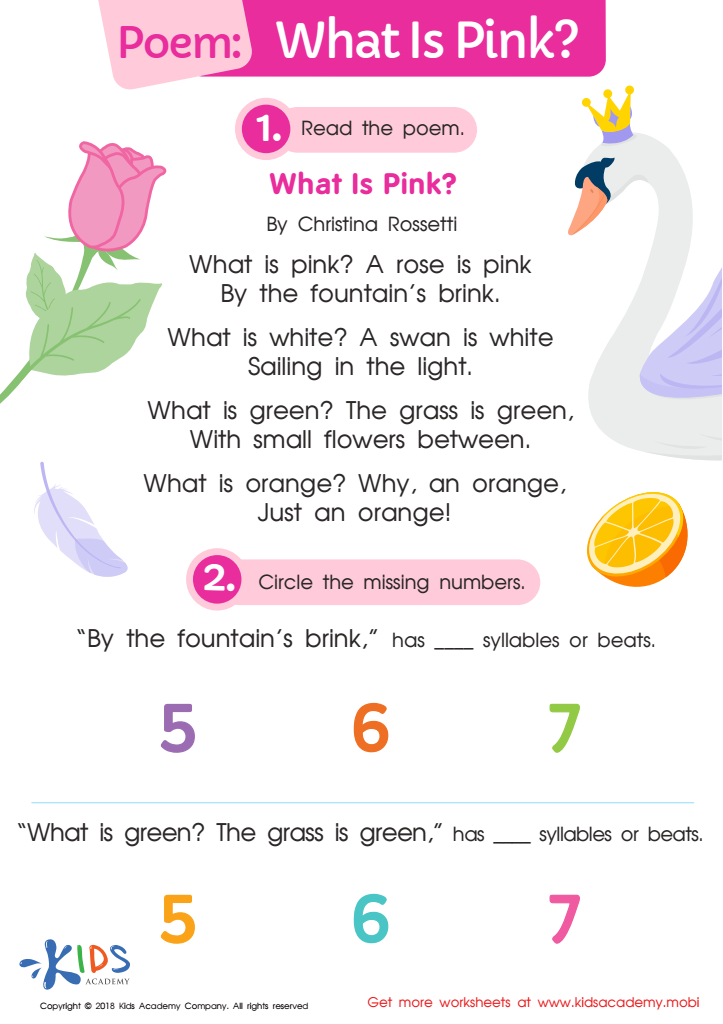
Poem: What Is Pink? Worksheet








Color identification is a fundamental skill that extends beyond mere recognition; it plays a crucial role in a child's overall development, particularly in Grade 3. Firstly, color identification aids in cognitive development. Children in this age group are at a critical stage of learning, where they begin to associate colors with objects, emotions, and ideas. Understanding colors enhances their ability to categorize and differentiate, which is vital for problem-solving and critical thinking skills.
In addition, recognizing colors can significantly boost literacy. When children identify colors associated with letters of the alphabet, they learn to connect words with meaning. For example, "red" for "A" can trigger memorable associations, making reading and vocabulary acquisition easier.
Moreover, color identification promotes creativity and self-expression. Art and creative projects often rely on color usage, allowing children to communicate ideas visually. This fosters emotional intelligence as they learn to interpret their feelings and the feelings of others through colors.
Lastly, in fostering teamwork and social skills, recognizing colors enhances communication during group activities. Parents and teachers should regard color identification as a foundational skill, essential for academic success, emotional development, and creative expression in their children.