Word Recognition Grade 3 Alphabet Worksheets
3 filtered results
Difficulty Level
Grade
Age
-
From - To
Subject
Activity
Standards
Enhance your third grader's literacy skills with our engaging Word Recognition Grade 3 Alphabet worksheets! Designed to help students master essential vocabulary, these printable activities focus on recognizing, reading, and understanding words effectively. Each worksheet encourages interactive learning, featuring fun exercises like matching, filling in gaps, and word searches that reinforce letter-sound connections. By working through these worksheets, children improve their reading fluency while building confidence in their language abilities. Ideal for classroom practice or at-home learning, our resources are tailored to meet the needs of young learners and make the journey to reading success enjoyable. Start fostering a love for words today!
Favorites
With answer key
Interactive
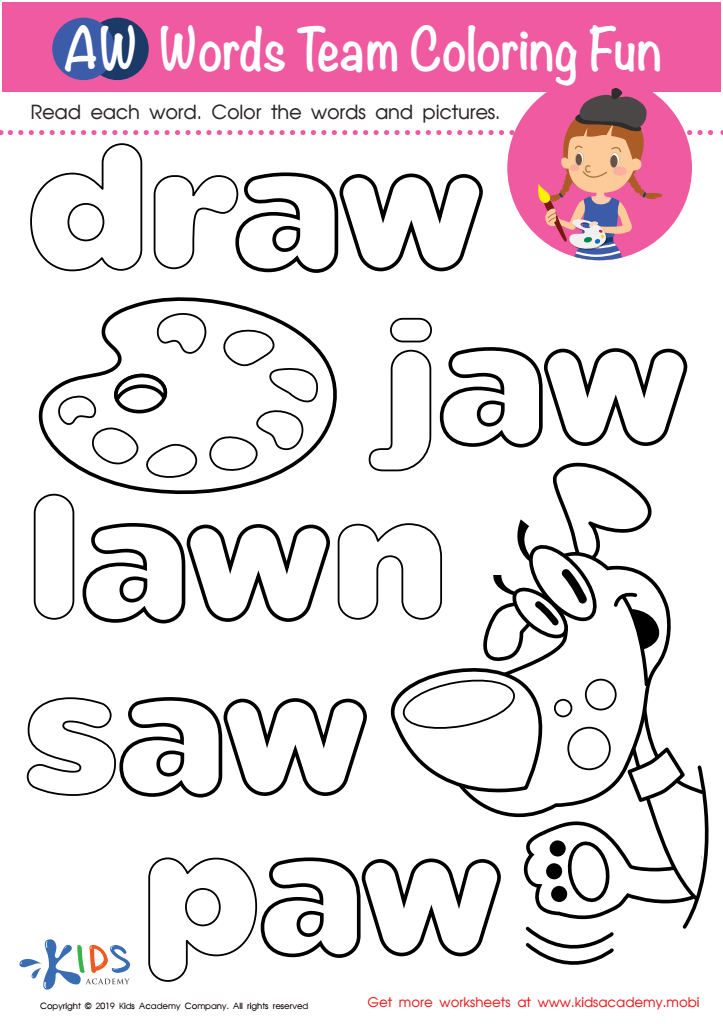
AW Words Team Coloring Fun Worksheet
Coloring words they can read is a blast for little learners! This worksheet offers emerging readers the chance to practice and gain confidence in reading words from the -aw family, while also improving fine-motor and creativity skills. Without knowing it, they'll learn about phonetic teams along the way!
Download (PDF)
 Assign to My Students
Assign to My Students
AW Words Team Coloring Fun Worksheet
Worksheet
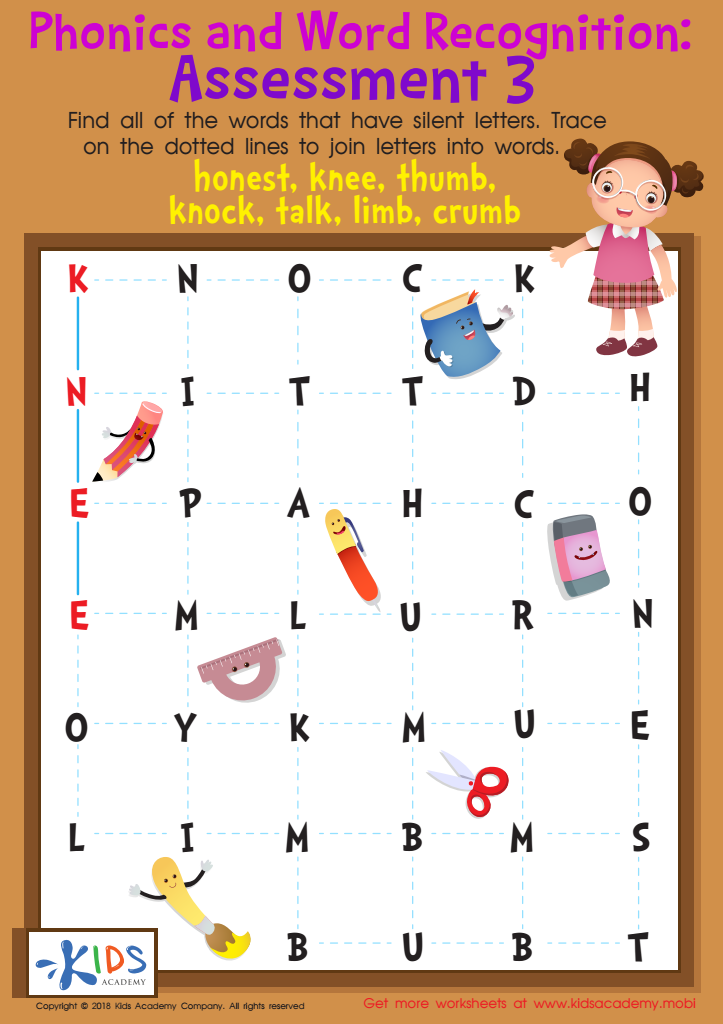
Phonics and Word Recognition: Assessment 3 Worksheet
Silent letters can be tricky for kids learning to read and write. Show them how they work with words like 'knee' and 'dumb'. Then, challenge them to come up with their own. Give them a worksheet with silent letters and trace the lines to join the letters into words.
Phonics and Word Recognition: Assessment 3 Worksheet
Worksheet
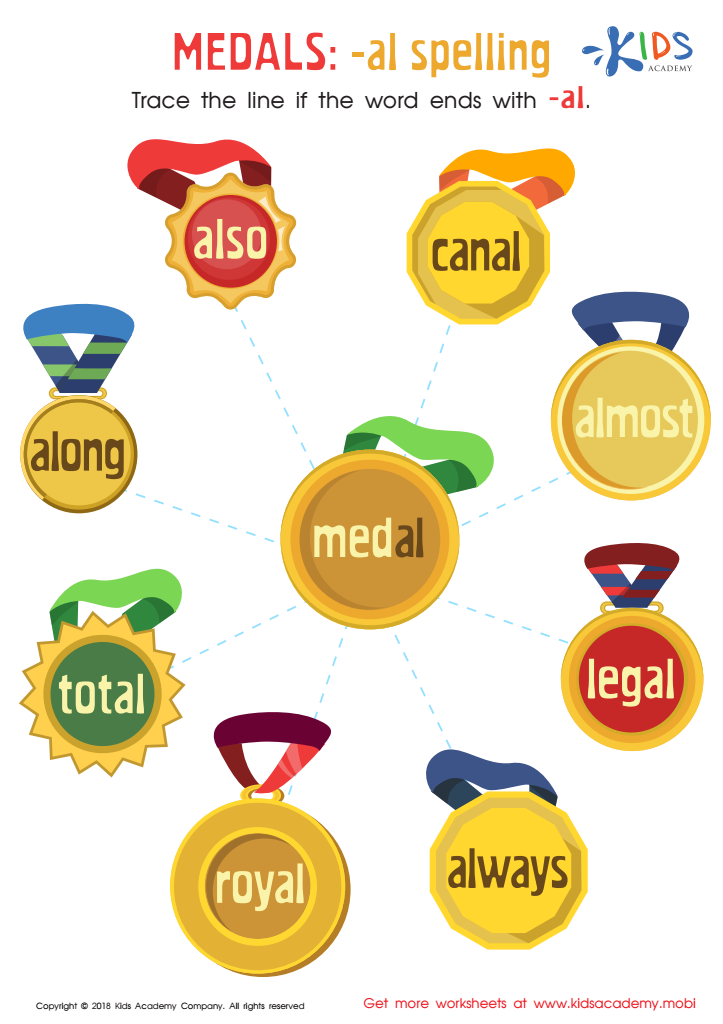
Medals: Al Spelling Worksheet
Have your students list common words ending with -al. See how many they can give and spell. Give examples of your own, assisting with spelling. Now review the words in the worksheet. Guide students to trace the line for each word ending with -al. 80 words
Medals: Al Spelling Worksheet
Worksheet
Join Kids Academy for Free
Who is primarily going to use this learning content?








Word recognition is a fundamental skill vital for literacy development in third graders. Around this age, students transition from learning to read to reading to learn, making the ability to quickly recognize words critically important. Strong word recognition skills facilitate comprehension, enabling children to grasp and retain what they read, which is essential for success in all academic areas.
Teachers and parents should prioritize word recognition for several reasons. First, it supports vocabulary development; as students recognize words, they can encounter and learn new vocabulary in context. This also builds spelling skills since recognizing words in print reinforces their understanding of phonetic structures. Secondly, strong word recognition helps strengthen a child’s confidence in reading, motivating them to engage more actively with texts and improving their overall attitude towards learning.
Moreover, difficulties with word recognition can hinder academic progress. Early intervention and targeted teaching strategies can help struggling readers catch up, ensuring they stay on track with their peers. Ultimately, fostering word recognition in third graders sets a solid foundation for future academic success, encouraging a lifelong love of reading and learning. Therefore, teachers and parents should actively engage in promoting this essential skill.