Color Identification Grade 3 Phonics Worksheets
3 filtered results
-
From - To
Unlock your child's potential with our engaging Color Identification Grade 3 Phonics Worksheets! Designed specifically for third graders, these worksheets seamlessly combine phonics practice with color recognition, making learning fun and interactive. Each activity encourages students to identify and associate colors with various words, enhancing their vocabulary while reinforcing essential reading skills. The visually appealing designs captivate young learners, making it easier to focus and learn effectively. Perfect for both classroom use and at-home practice, our worksheets support diverse learning styles and promote independent exploration. Download now and watch your child thrive in their reading and color identification journey!
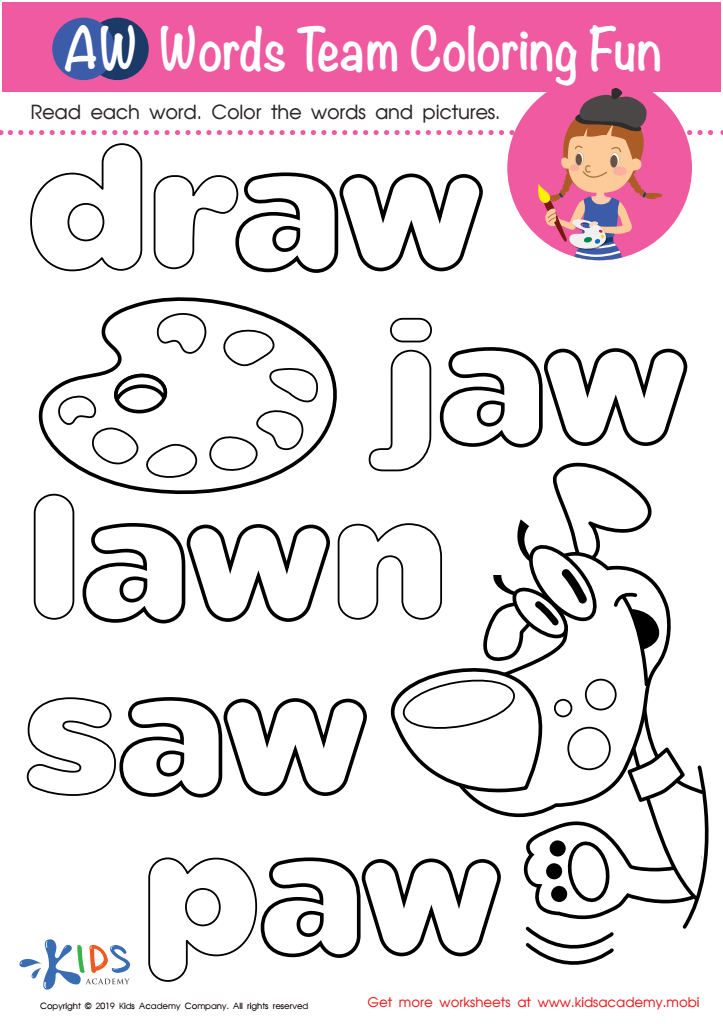
AW Words Team Coloring Fun Worksheet
 Assign to My Students
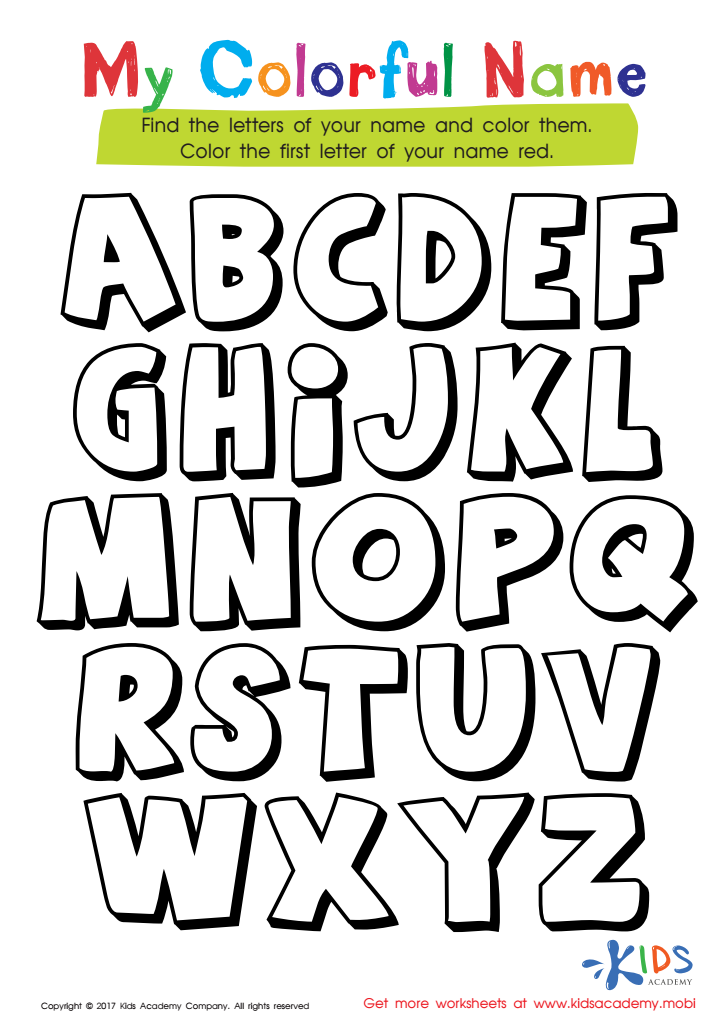
My Colorful Name Worksheet
Assign to My Students
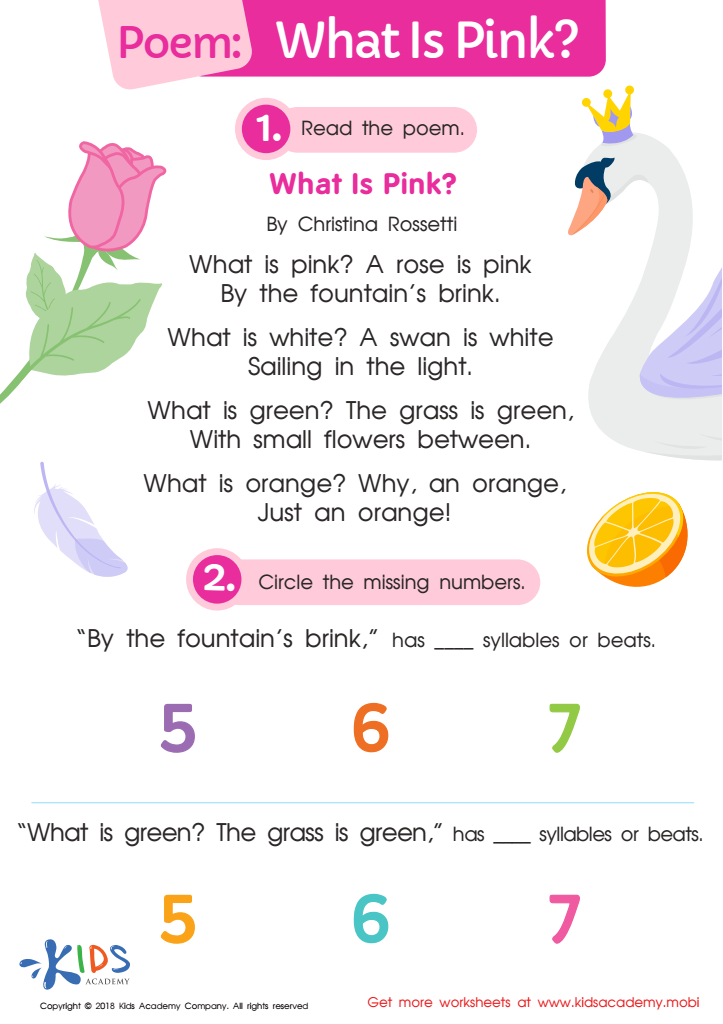
Poem: What Is Pink? Worksheet




Color identification is a crucial aspect of early education, particularly in Grade 3 phonics, as it engages young learners in multiple ways. Firstly, it enhances visual literacy, allowing students to connect words and sounds with colors, which can aid memory retention. For example, associating the color 'red' with the word ‘red’ not only helps in word recognition but also reinforces phonetic sounds, fostering a deeper understanding of language.
Moreover, understanding color can enhance creative expression. When students are encouraged to link colors with their emotions or stories, it stimulates imaginative thinking, enriching their vocabulary as they describe feelings associated with various colors.
Additionally, color identification supports cognitive development. Engaging with colors can improve focus and attention span, essential skills for reading and writing proficiency. The integration of colors in phonics activities, like color-coded phoneme cards, makes learning more dynamic and enjoyable, promoting enthusiasm and motivation.
Finally, teaching color identification alongside phonics cultivates an inclusive classroom environment. It invites diverse learning styles, ensuring that visual learners, for instance, can grasp phonetic concepts in a way that resonates with them. Thus, prioritizing color identification in phonics not only aids academic success but also nurtures overall developmental skills in young learners.