Animal Classification Grade 3 Worksheets
3 filtered results
Difficulty Level
Grade
Age
-
From - To
Subject
Activity
Standards
Discover our engaging Animal Classification Grade 3 Worksheets designed to enhance your students' understanding of the animal kingdom! These worksheets provide interactive activities that help third graders learn about various animal groups, including mammals, reptiles, birds, and amphibians. Packed with colorful illustrations and fun exercises, they promote critical thinking and classification skills. Ideal for classroom use or homework, these resources cater to different learning styles, making complex concepts accessible and enjoyable. Foster a love for science while ensuring your students develop essential skills in identifying and categorizing animals. Start exploring the diverse world of animals with our comprehensive worksheets today!
Favorites
With answer key
Interactive
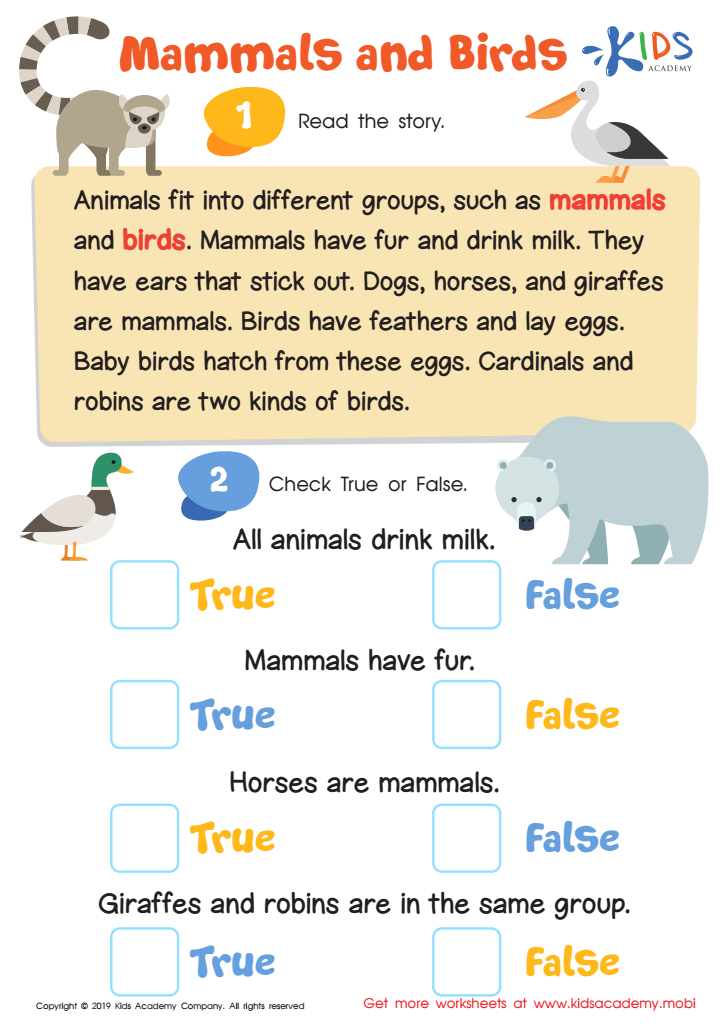
Mammals and Birds Worksheet
This worksheet challenges kids to read an informational text and review science facts about mammals and birds. Have them read the passage then mark statements true or false. Remind them to go back to the text if they get stuck! Get started now and help your child enhance multiple skills in one go!
 Assign to My Students
Mammals and Birds Worksheet
Worksheet
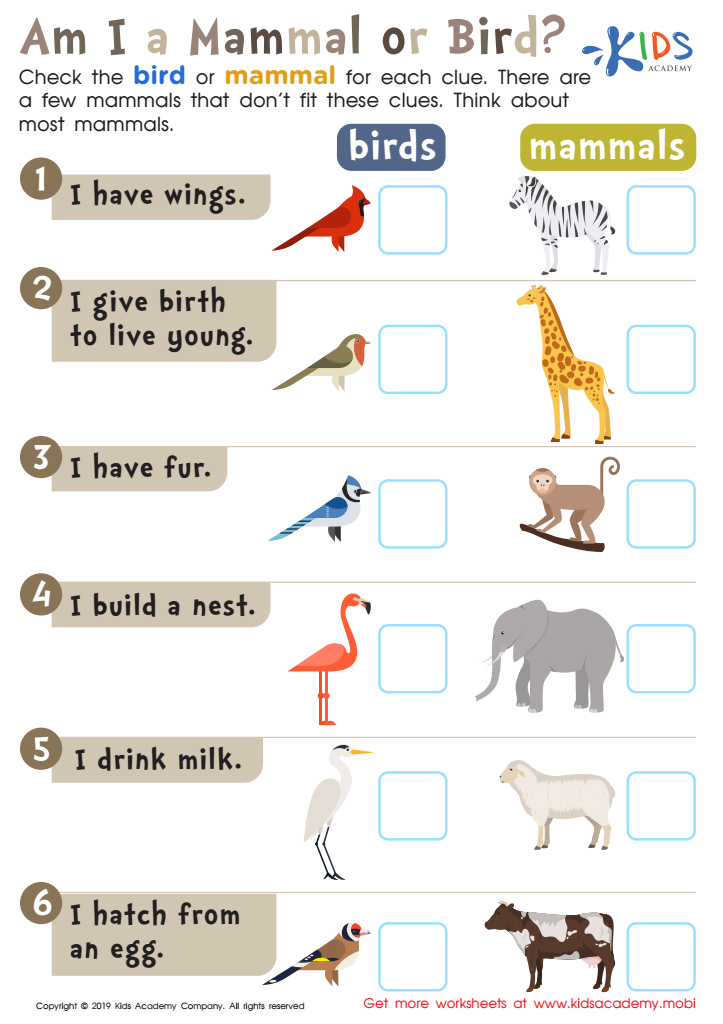
Am I a Mammal or Bird? Worksheet
We categorize animals into groups such as mammals, birds, reptiles, etc. This worksheet helps kids understand the difference between birds and mammals. Read through the clues and think about each one. Then decide if it describes a bird or mammal, check the box and complete!
Am I a Mammal or Bird? Worksheet
Worksheet
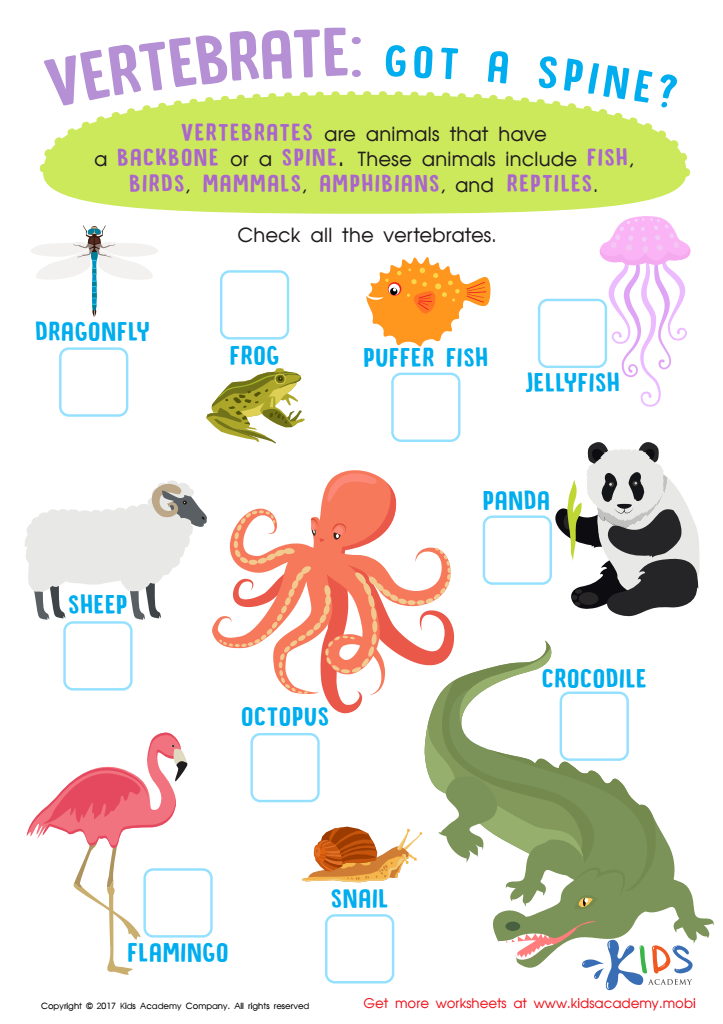
Vertebrates Animals Worksheet for 3rd Grade
This 3rd grade worksheet introduces your child to the wonders of vertebrate animals. They will have fun sorting them from those without a spine, while learning more about the animal kingdom!
Vertebrates Animals Worksheet for 3rd Grade
Worksheet
Join Kids Academy for Free
Who is primarily going to use this learning content?








Animal classification is an essential aspect of early science education, particularly for third-grade students. Understanding how animals are organized into categories helps children develop critical thinking skills and encourages them to observe and compare different species. By learning about classifications such as mammals, birds, reptiles, amphibians, and fish, children gain insight into the characteristics that define various animal groups. This foundational knowledge fosters curiosity about the natural world and nurtures a sense of exploration as students engage in hands-on activities and research.
Furthermore, animal classification promotes awareness of biodiversity and environmental conservation. By understanding the relationships between different species, students learn about ecosystems and the importance of preserving habitats. This knowledge empowers them to make informed decisions about protecting wildlife and the environment.
For parents and teachers, teaching animal classification aligns with fostering scientific literacy and engaging students in meaningful discussions about ethics and responsibility toward living creatures. It also provides various cross-curricular opportunities, linking science with art, writing, and even math through graphing animal characteristics. In essence, animal classification serves as a gateway to broader learning experiences, igniting lifelong interests in biology, conservation, and the wonders of the animal kingdom.