Enhances number recognition Grade 3 Worksheets
3 filtered results
-
From - To
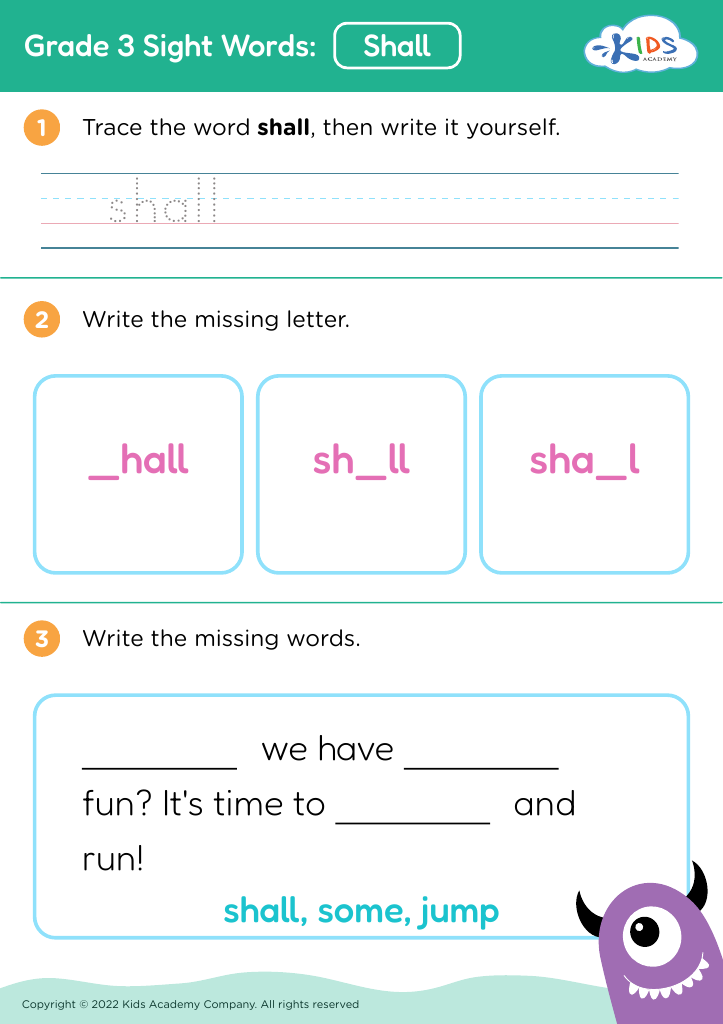
Enhance your third grader's number recognition skills with our engaging worksheets! Designed specifically for Grade 3 students, these worksheets provide a variety of activities that make learning fun and effective. Each worksheet focuses on recognizing and interpreting numbers, helping young learners build a strong foundation in math. From exercises involving counting and number matching to challenging puzzles and games, our resources cater to diverse learning styles. Encourage your child's confidence in mathematics while reinforcing essential skills. Explore our collection of printable worksheets today and watch your child excel in number recognition with enjoyable and interactive learning experiences!
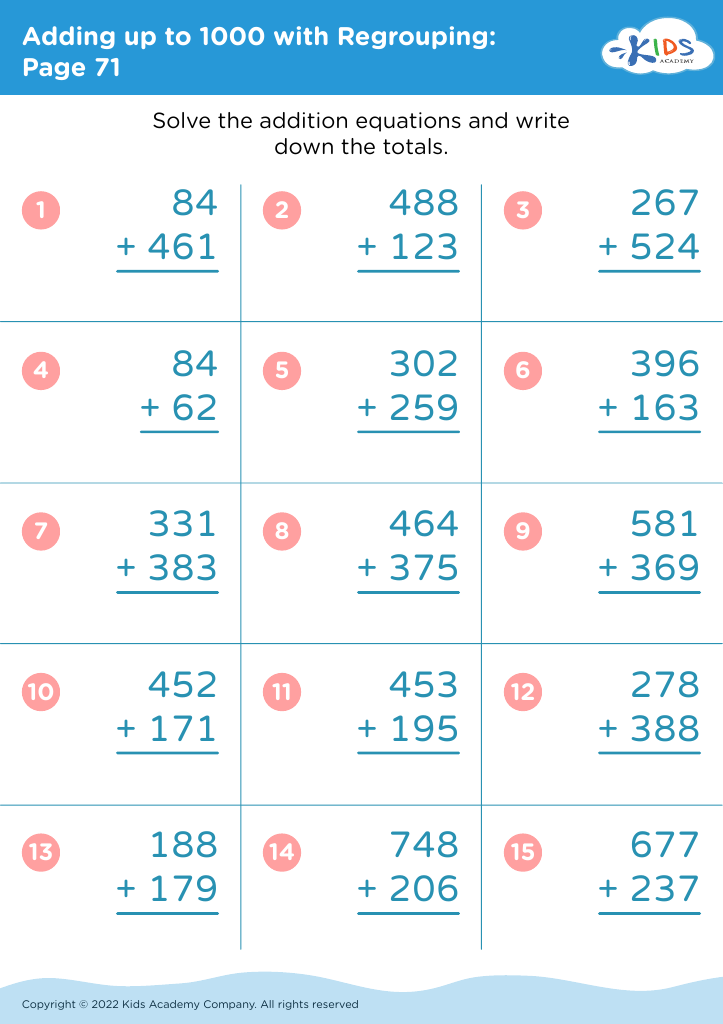
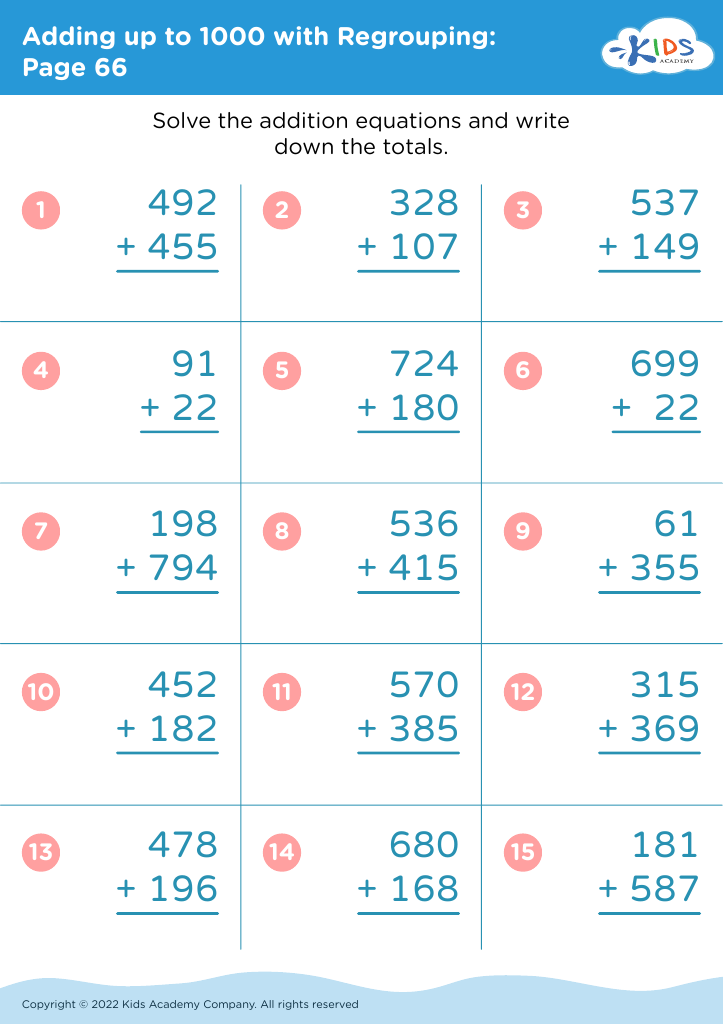






Enhancing number recognition in Grade 3 is crucial for a child's mathematical development, as it lays the foundation for more advanced concepts. At this stage, students are typically transitioning from basic number formation to understanding their value and relationships. Mastering number recognition helps students develop confidence in their mathematical abilities, which is vital for fostering a positive attitude toward learning math.
Parents and teachers should prioritize this skill because it opens up avenues for problem-solving and critical thinking. When students can quickly recognize numbers, they can perform calculations more efficiently and engage with real-world math applications, such as budgeting or measuring. It also plays a role in encouraging mathematical discourse among peers, boosting collaborative learning experiences.
Furthermore, enhanced number recognition assists in identifying learning gaps early, enabling timely interventions. Teachers can tailor lessons to address these gaps, while parents can reinforce these concepts at home with games and practical activities.
Overall, by emphasizing number recognition in Grade 3, both parents and teachers contribute to building a robust mathematical foundation that will serve students throughout their educational journey and into adulthood. Ensuring success in this area cultivates lifelong learners who perceive math as both enjoyable and valuable.