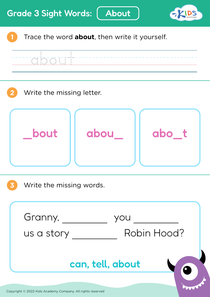
Fine motor skills (writing) Grade 3 Worksheets
6 filtered results
Difficulty Level
Grade
Age
-
From - To
Subject
Activity
Standards
Enhance your Grade 3 students' fine motor skills with our engaging writing worksheets! Designed to support handwriting development, our printable activities help strengthen hand-eye coordination, grip, and control. From practicing letter formation to engaging exercises that promote fluency, these worksheets cater to various learning styles, ensuring every child gains confidence in their writing abilities. With creative prompts and activities that inspire imagination, your students will enjoy honing their skills while exploring exciting themes. Perfect for classroom practice or at-home learning, our fine motor skills writing worksheets provide a fun and effective way to enhance your child’s handwriting and fine motor development.
Favorites
With answer key
Interactive
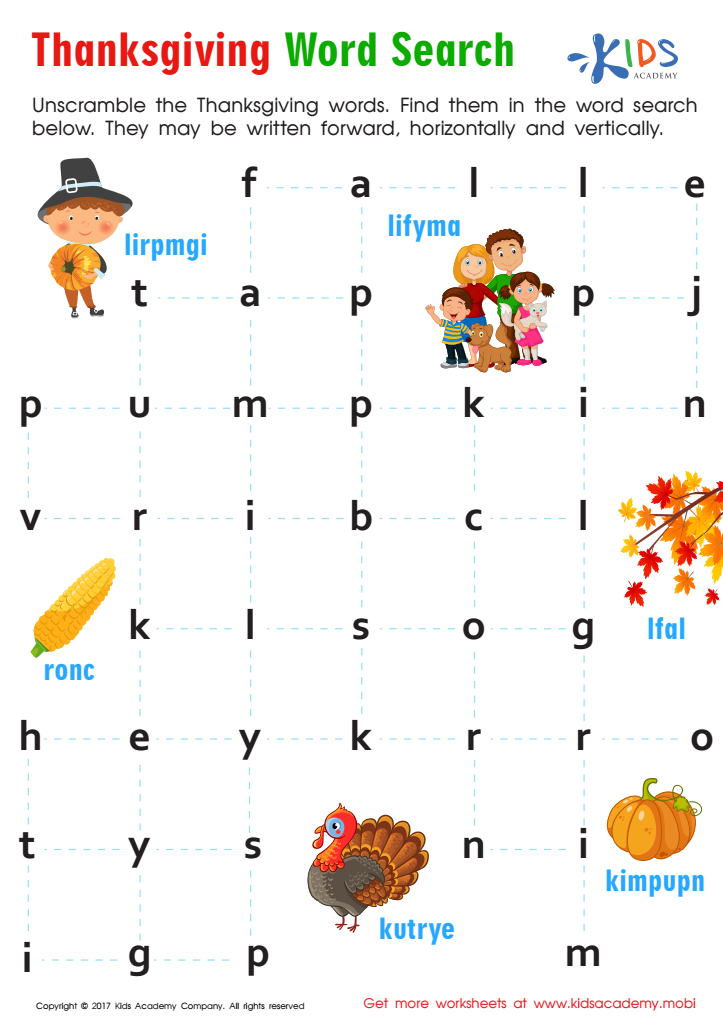
Thanksgiving Word Search Sight Words Worksheet
Unscramble letters to find Thanksgiving-themed sight words with this free worksheet! It's an exciting way to boost your child's reading skills. Download the PDF and enjoy!
 Assign to My Students
Thanksgiving Word Search Sight Words Worksheet
Worksheet
Join Kids Academy for Free
Who is primarily going to use this learning content?







Fine motor skills, particularly in writing, are crucial for Grade 3 students as they lay the foundation for academic success and everyday tasks. At this age, children are transitioning from learning to write to writing to learn. Proficient fine motor skills enable them to engage effectively with their curriculum, express their thoughts, and demonstrate understanding through written assignments.
Parents and teachers should be concerned with the development of these skills since they directly impact a child’s confidence and self-esteem. Well-developed fine motor skills lead to neater handwriting, enhancing readability and comprehension. Students who struggle might find school frustrating, leading to negative attitudes towards learning.
Additionally, fine motor skill development is linked to other essential skills such as problem-solving, concentration, and hand-eye coordination. Activities that promote fine motor skills, such as drawing, using scissors, and constructing with small objects, can be integrated into both home and classroom environments, fostering a supportive approach.
In sum, the focus on fine motor skills in Grade 3 reflects their importance not just academically, but also in everyday life, as they empower children to communicate effectively and build a strong foundation for future learning experiences.