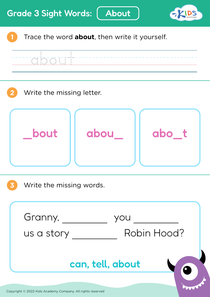
Learn new vocabulary Grade 3 Worksheets
3 filtered results
Difficulty Level
Grade
Age
-
From - To
Subject
Activity
Standards
Discover our engaging Grade 3 vocabulary worksheets designed to enhance your child's language skills! Our carefully crafted resources offer a fun and interactive way for third graders to expand their vocabulary through various activities. Each worksheet focuses on essential vocabulary development, making it easy for students to learn new words through context and application. Rich with colorful illustrations and well-structured exercises, our materials are perfect for both classroom learning and at-home practice. Boost your young learner's confidence and communication skills with our comprehensive vocabulary worksheets, tailored specifically for Grade 3 students. Visit us now to explore and access these valuable resources!
Favorites
With answer key
Interactive
Join Kids Academy for Free
Who is primarily going to use this learning content?







Parents and teachers should care deeply about helping Grade 3 students learn new vocabulary because vocabulary knowledge is essential for reading comprehension, communication, and overall academic success. At this age, children are transitioning from learning to read to reading to learn, making a rich vocabulary vital for understanding more complex texts in subjects like science and social studies.
Building a robust vocabulary also enhances children's ability to express their thoughts clearly and effectively, both in spoken and written forms. This skill is critical for developing critical thinking and reasoning abilities. Moreover, a strong vocabulary can foster confidence in students, encouraging them to participate more actively in discussions and classroom activities.
Additionally, comprehension of vocabulary data shows that students with an extensive vocabulary tend to perform better on standardized tests, which can impact their educational opportunities in the future. Early exposure to new words via reading, conversational practices, or word games cultivates a love for language and learning, ultimately contributing to lifelong academic enthusiasm and success. Therefore, both parents and teachers play a crucial role in nurturing a child's vocabulary development during these formative years.