Shape identification Grade 3 Worksheets
7 filtered results
-
From - To
Enhance your Grade 3 students' geometric understanding with our Shape Identification worksheets! Designed to support young learners, these engaging activities help develop essential skills in recognizing, naming, and categorizing various shapes. From circles and squares to triangles and rectangles, our worksheets incorporate fun illustrations and interactive exercises to keep children motivated and excited about learning. Perfect for classroom use or at-home practice, our resources align with educational standards, ensuring a solid foundation in geometry. Foster creativity and critical thinking with these high-quality materials that make shape identification both enjoyable and effective for your students! Download now and watch their confidence soar!
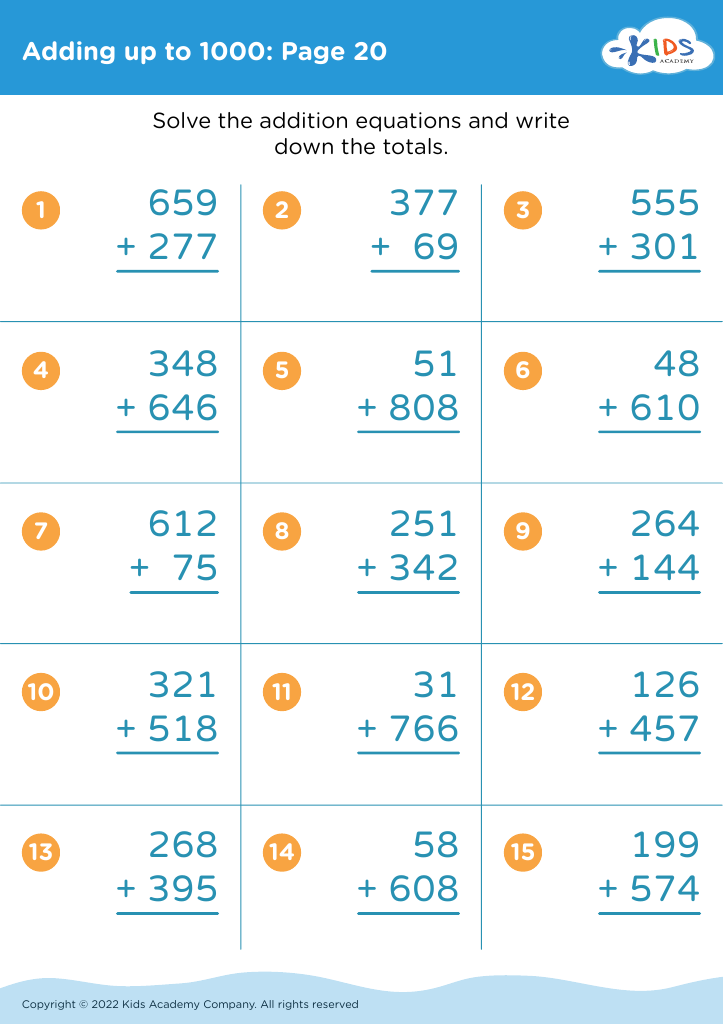
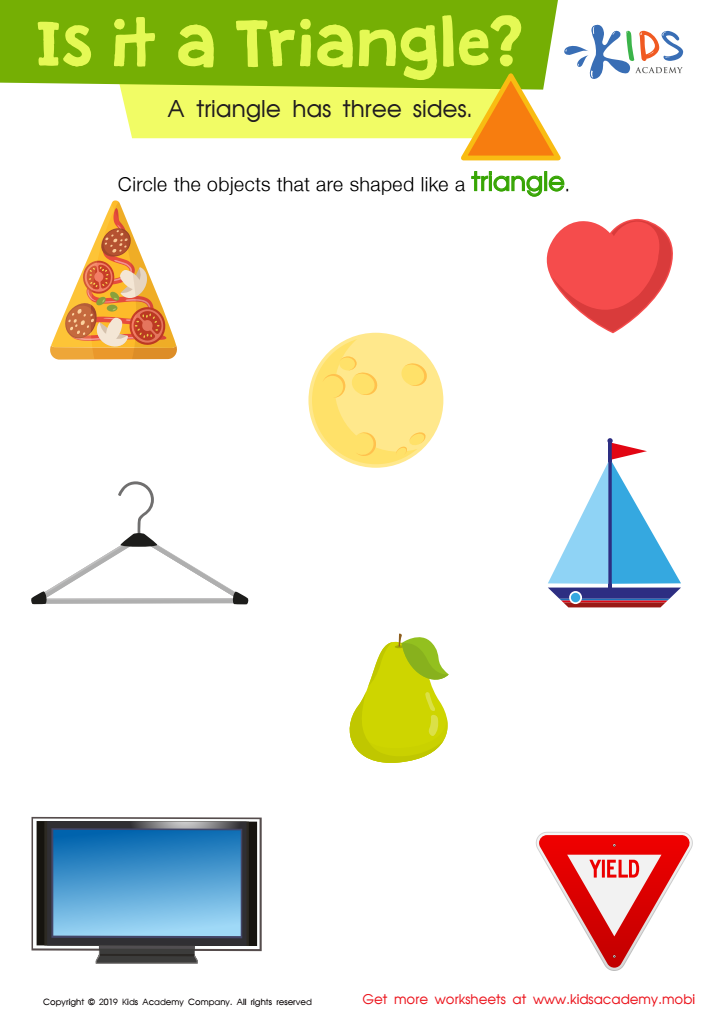
Is It a Triangle? Worksheet
 Assign to My Students








Shape identification is a fundamental skill in Grade 3 math that plays a crucial role in a child's overall development. Parents and teachers should prioritize this skill for several reasons. Firstly, shape recognition enhances spatial reasoning, fostering critical thinking and problem-solving abilities. As children identify and manipulate different shapes, they build a foundation for more complex mathematical concepts, such as geometry and measurement.
Moreover, shape identification is linked to everyday life applications. Understanding shapes helps children navigate their environment, which aids in tasks such as reading maps, recognizing patterns, and engaging in construction or art activities. This knowledge can promote creativity and innovation, as children learn to combine shapes to form new objects.
Additionally, teaching shape identification supports cognitive development. It encourages observation, classification, and comparison skills, which are essential for academic success across subjects. Collaborative activities involving shape exploration can also enhance social skills, as students work together to share ideas and solutions.
In summary, shape identification not only enriches a child's mathematical understanding but also equips them with valuable life skills, making it a critical focus for parents and teachers alike. Investing time in this area ultimately contributes to a child's holistic development and readiness for future learning challenges.