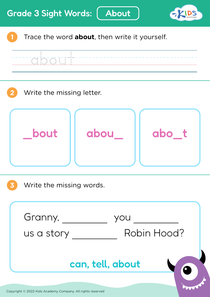
Syllable identification Grade 3 Worksheets
3 filtered results
-
From - To
Enhance your third grader's reading abilities with our expertly crafted Syllable Identification Grade 3 Worksheets. Designed to develop essential literacy skills, these engaging worksheets help students master the art of breaking down complex words into manageable parts, improving pronunciation and reading fluency. Each worksheet offers interactive activities that make learning fun, promoting better understanding and retention of syllable patterns. Perfect for both classroom and home use, these resources align with educational standards, ensuring your child remains on the path to reading success. Explore our collection and give your third grader a head start in literacy!
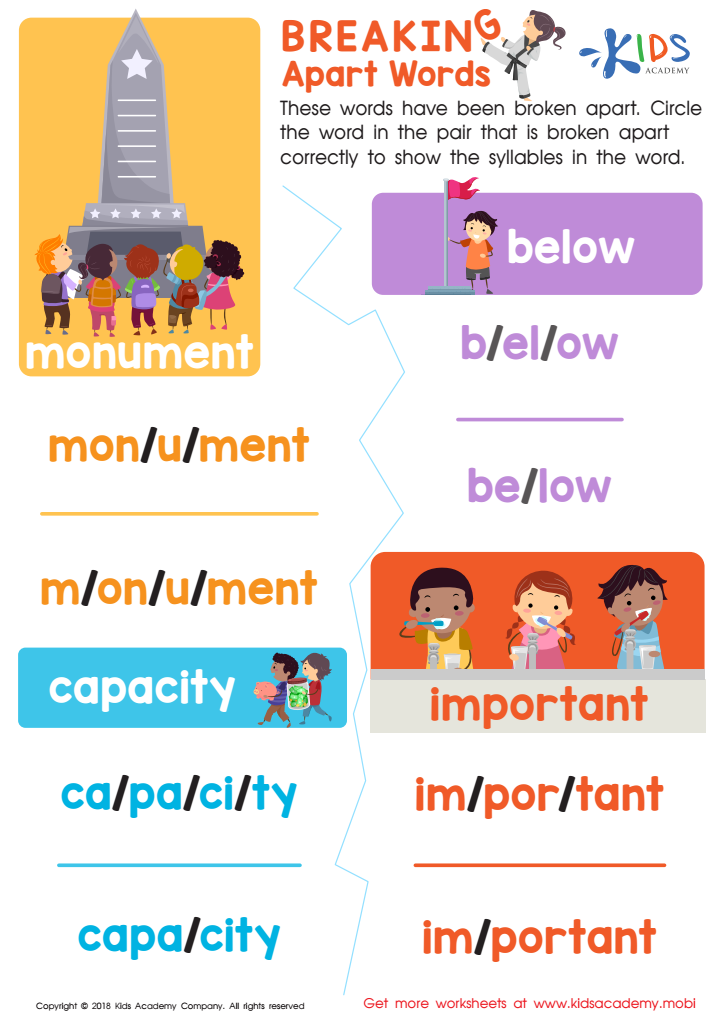
Breaking Apart Words Worksheet
 Assign to My Students
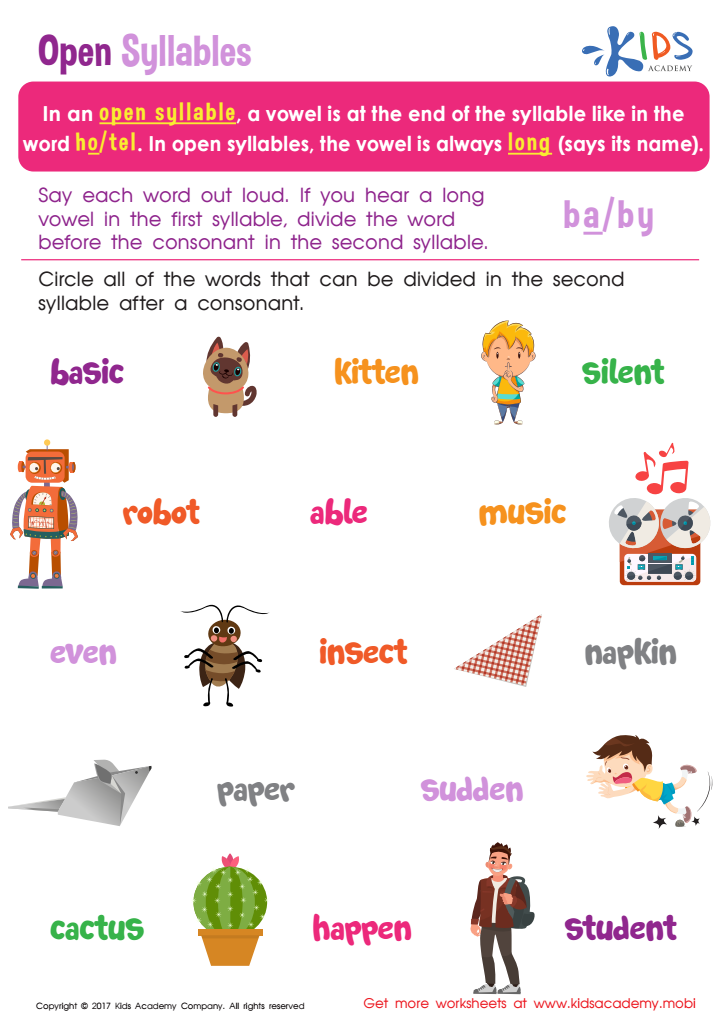
Open Syllable Printable Worksheet
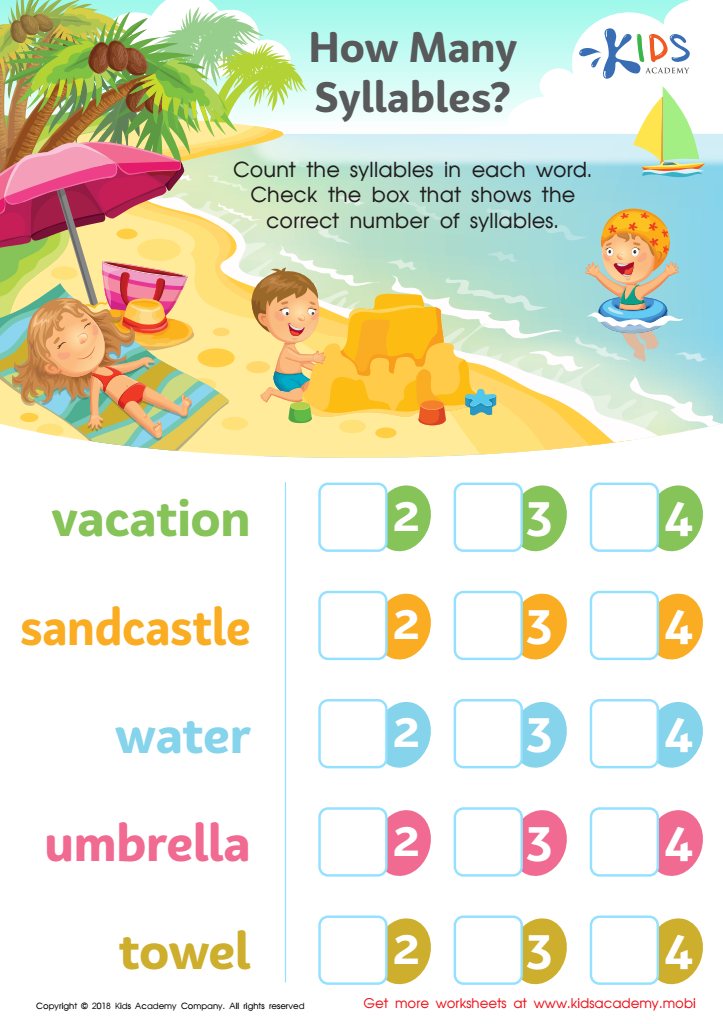
How Many Syllables Worksheet






Syllable identification is essential for third graders because it significantly impacts their reading and writing skills, fundamental elements in their educational journey. First, understanding syllables helps students break down complex words into manageable parts, making decoding easier and improving their reading fluency. As they encounter more challenging vocabulary, their ability to identify and pronounce them correctly relies on their knowledge of syllable division.
Moreover, recognizing syllables aids in spelling. When children can hear and segment words into syllables, they are more likely to spell accurately. For instance, knowing "regardless" splits into re-gard-less helps them spell the word without errors.
Furthermore, syllable awareness enhances comprehension. By efficiently decoding words, students can focus on understanding the text, leading to better knowledge retention and increased enjoyment of reading. This comprehension is crucial for success across all subjects, not just Language Arts.
Imparting this skill also benefits writing. When students spell and pronounce words correctly, they can convey their thoughts more effectively, fostering better communication skills, which are vital throughout their lives.
Encouraging syllable identification in third graders lays a solid foundation for literacy development, empowering them with the tools to excel academically and communicate confidently. Parents and teachers should prioritize this skill as a stepping-stone to broader learning and lifelong success.